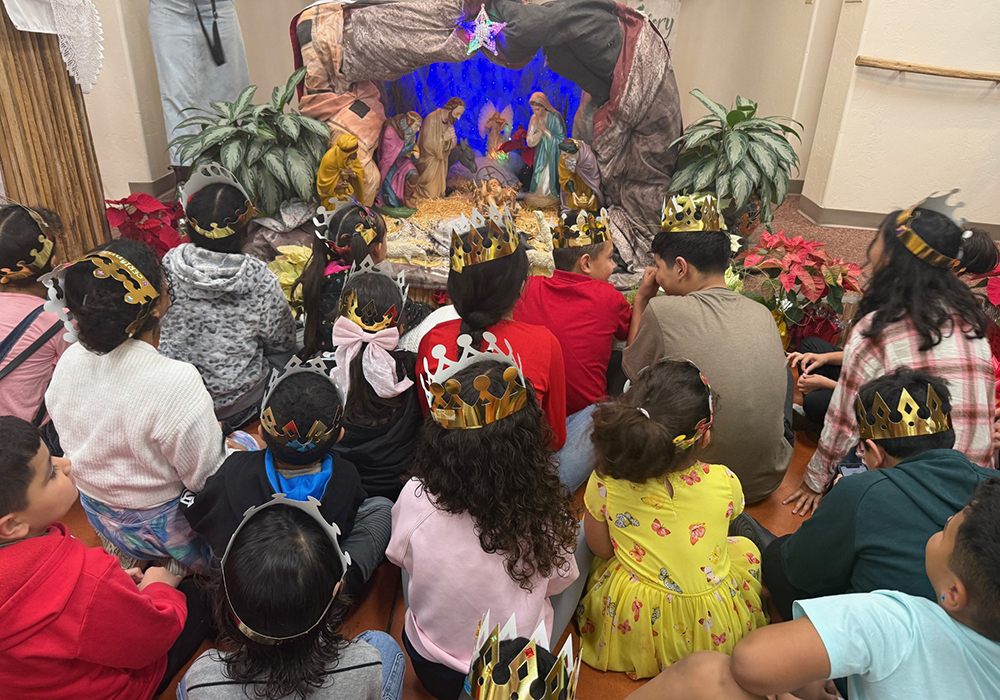
Migrant children wearing golden cardboard crowns gather around a large Nativity scene at a church where the advocacy group Salvavision organized a Three Kings Day celebration in Tucson, Arizona, on Sunday, Jan. 4, 2026. (Anita Snow)

by Anita Snow
Migrant children wearing golden cardboard crowns gathered around a large Nativity scene Jan. 4 to honor the Holy Family and the three Magi during an early celebration of Epiphany, known in the Spanish-speaking world as Día de los Reyes.
These several dozen children, mostly from Mexico and other parts of Latin America, got help from student nurse volunteers as they decorated their crowns with stickers and faux gems during the event organized by a nonprofit group based in Tucson.
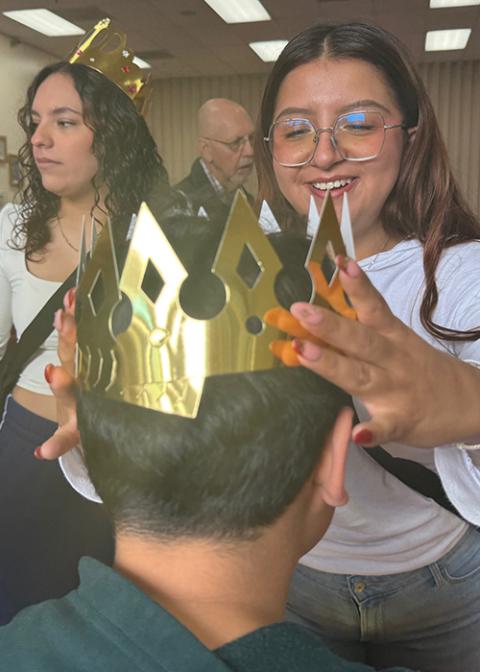
A nursing student volunteer helps a young boy try on his golden crown during a Three Kings Day celebration organized by the advocacy group Salvavision in Tucson, Arizona, Jan. 4, 2026. (Anita Snow)
"Jesus always has his arms open to receive us," Fr. Raymond Riding, a priest of the Missionary Servants of the Most Holy Trinity, told the children in Spanish, picking up the newly born baby Jesus from the manger to show them. "Jesus always wants to be born in our hearts."
Epiphany, celebrated on Jan. 6, concludes the 12 days of Christmas and marks the day the Wise Men presented their gifts of gold, frankincense and myrrh to baby Jesus.
The Epiphany celebration in Tucson was at St. Kateri Tekakwitha Parish, named for the first Native American woman saint, canonized in 2012, who was the daughter of a Mohawk chief and an Algonquin Catholic mother. The parish serves many Pascua Yaqui and Tohono O'odham people in the area.
The nonprofit Salvavision, which ministers to migrant families seeking asylum in the United States, organized the event for the children to reconnect with the traditions of their homelands while offering some joy after a stressful year amid the Trump administration’s immigration crackdown.
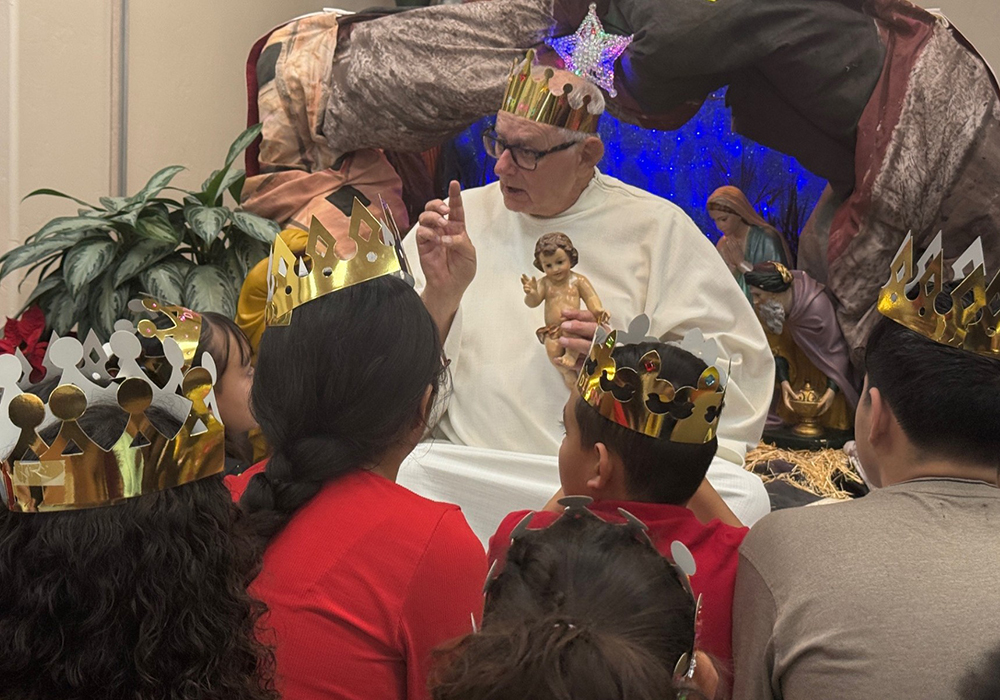
Fr. Raymond Riding, a Trinity missionary working in Tucson, Arizona, chats with migrant children about the baby Jesus during a Three Kings Day celebration on Jan. 4, 2026, telling them Christ's arms are always open to them. (Anita Snow)
Día de los Reyes, also known as Día de los Reyos Magos or Three Kings Day, is the most important gift-giving day of the Christmas season in many parts of Latin America, with children in the U.S. territory of Puerto Rico placing hay under their beds for the Wise Men’s camels.
"It was so beautiful," said Dora Rodriguez, the founder of Salvavision and a former migrant herself who almost died 45 years ago on her journey north from her native El Salvador. "These families really need this."
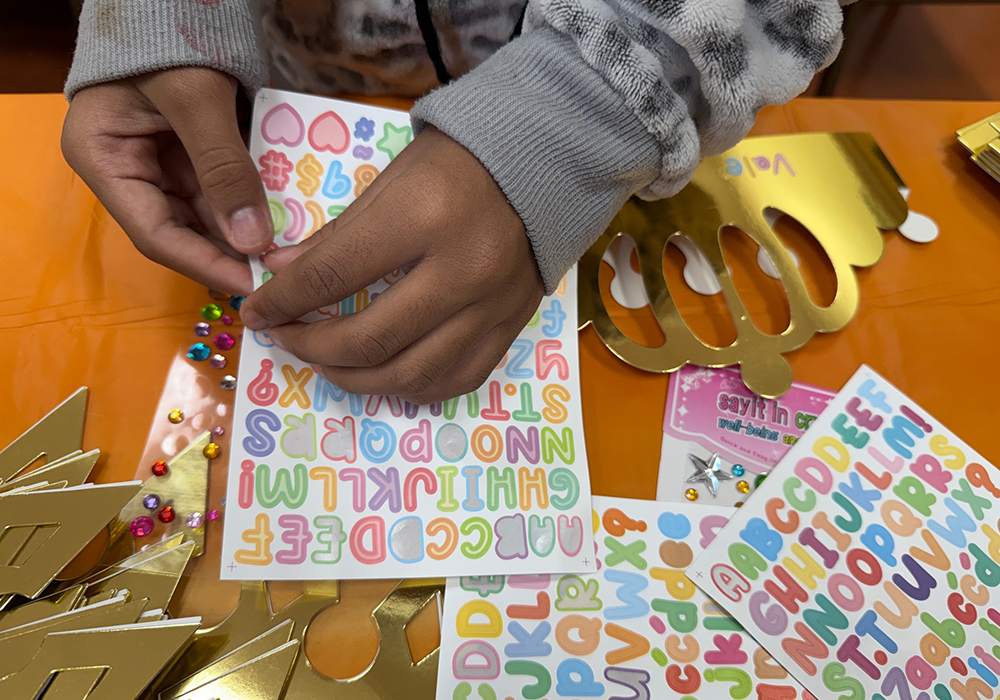
A young migrant boy uses stickers to decorate a golden cardboard crown during a Three Kings Day celebration organized by the advocacy group Salvavision in Tucson, Arizona, Jan. 4, 2026. (Anita Snow)
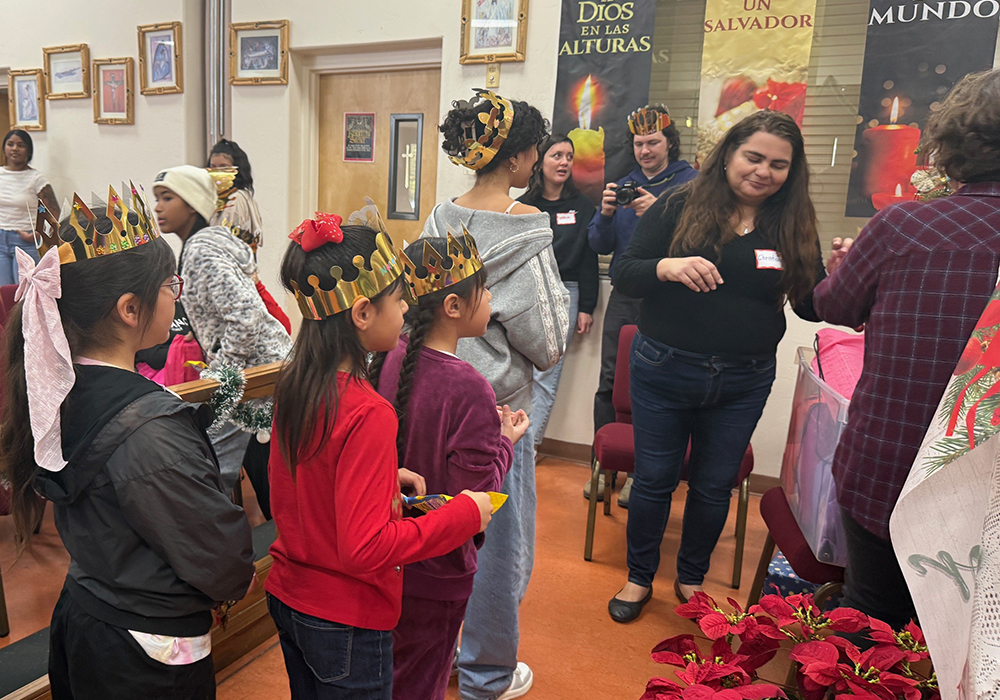
Migrant girls line up for gifts distributed to several dozen children during a Three Kings Day celebration organized by Salvavision in Tucson, Arizona, on Jan. 4, 2026. (Anita Snow)
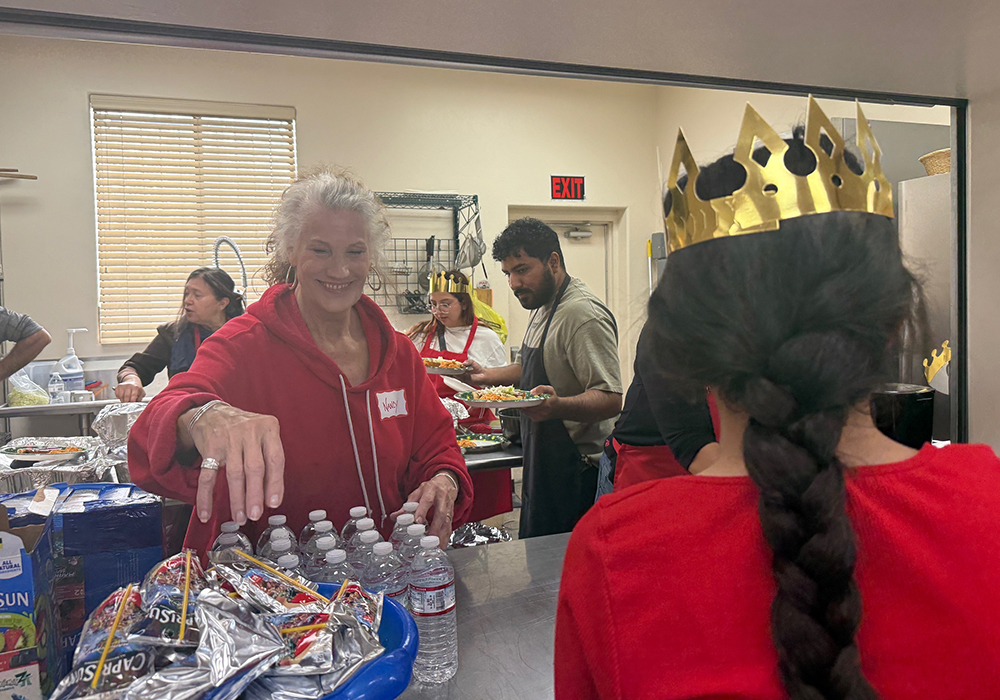
Volunteer Nancy Garcia serves water and a meal to a young migrant girl during a Three Kings Day celebration organized by Salvavision in Tucson, Arizona, on Jan. 4, 2026. (Anita Snow)
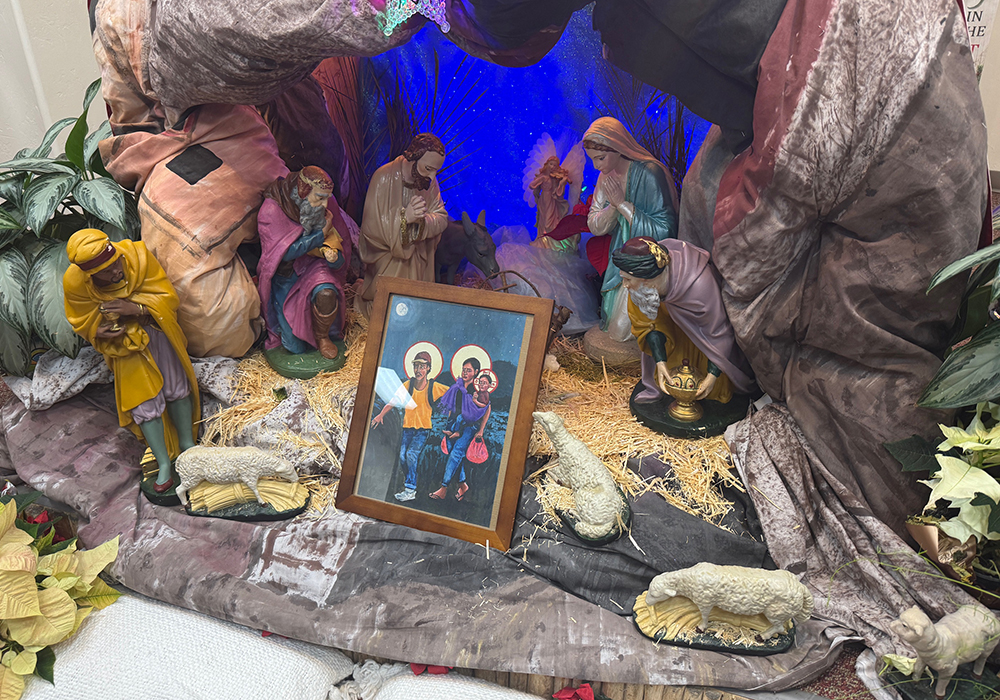
A painting of a migrant father, mother and child depicted as the Holy Family sits on the Nativity scene during a Three Kings Day celebration in Tucson, Arizona, on Jan. 4, 2026. (Anita Snow)
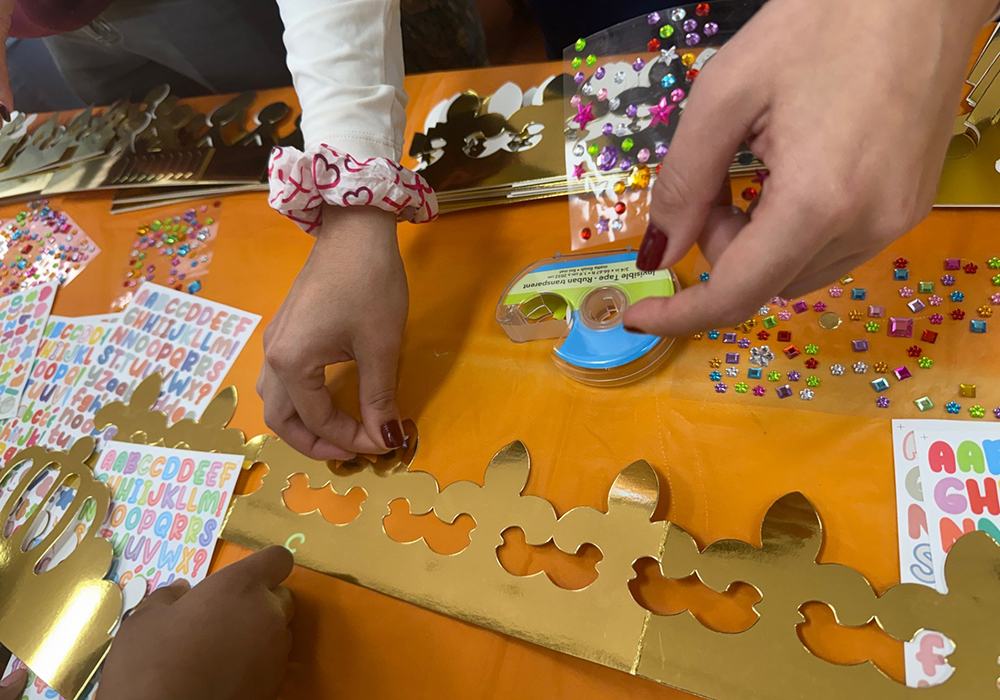
A student nurse volunteer helps a migrant child decorate a golden cardboard crown with stickers during a Three Kings Day celebration organized by Salvavision in Tucson, Arizona on Jan. 4, 2026. (Anita Snow)
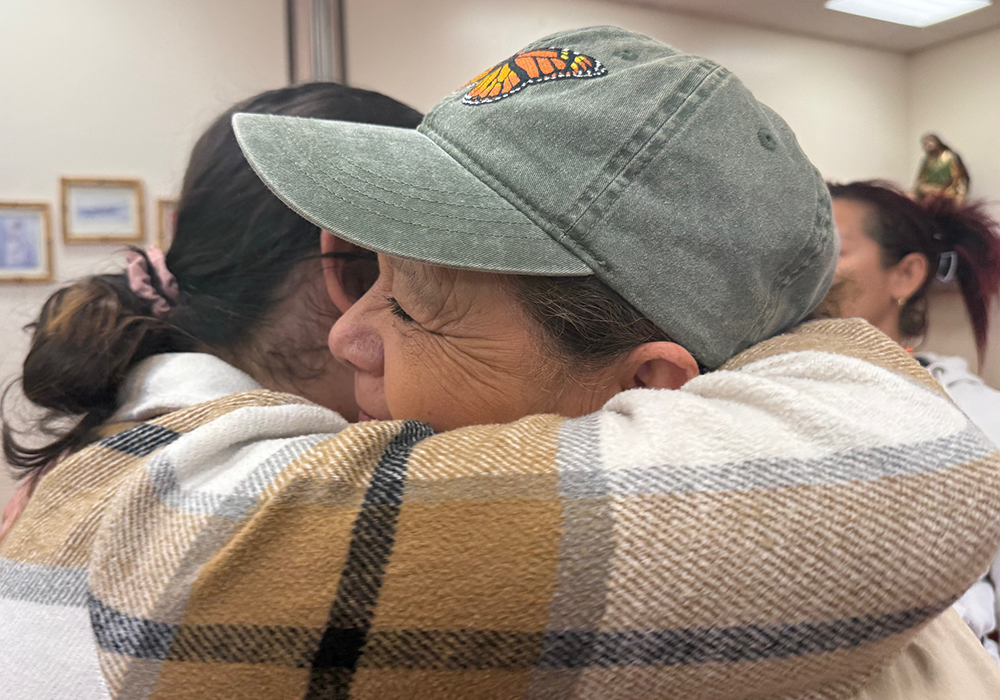
Salvavision founder Dora Rodriguez, right, shares a warm embrace with a member of her board of directors at the conclusion of the celebration organized by the group in Tucson, Arizona, Jan. 4, 2026. (Anita Snow)
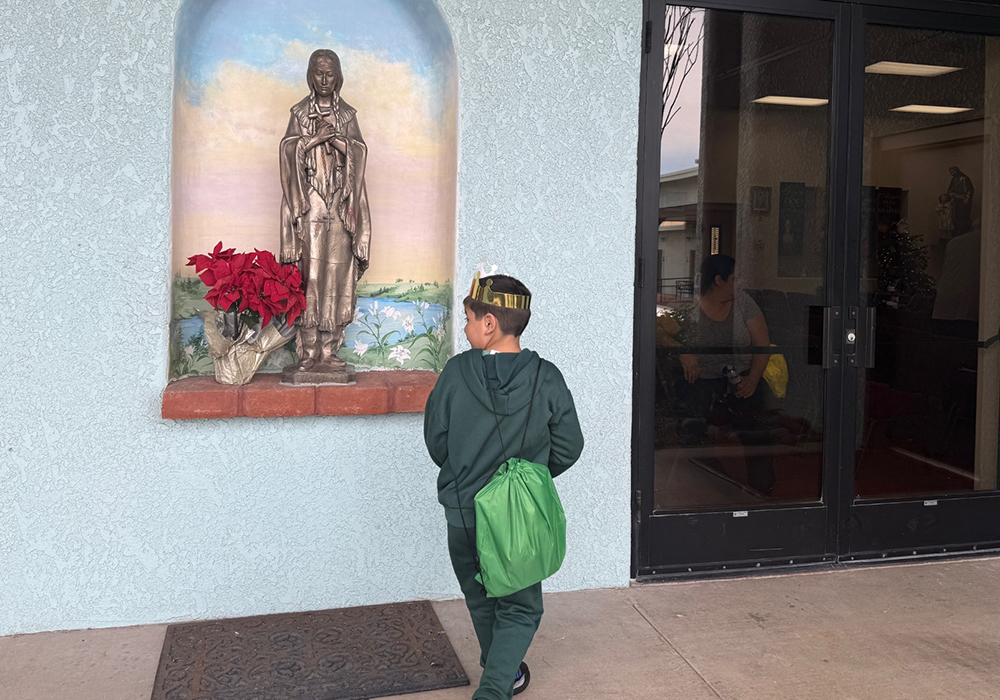
A young migrant boy wearing a cardboard crown walks by a statue of St. Kateri Tekakwitha, the first Native American woman saint who lends her name to a parish in Tucson, Arizona, where a Three Kings Day celebration was organized Jan. 4, 2026. (Anita Snow)
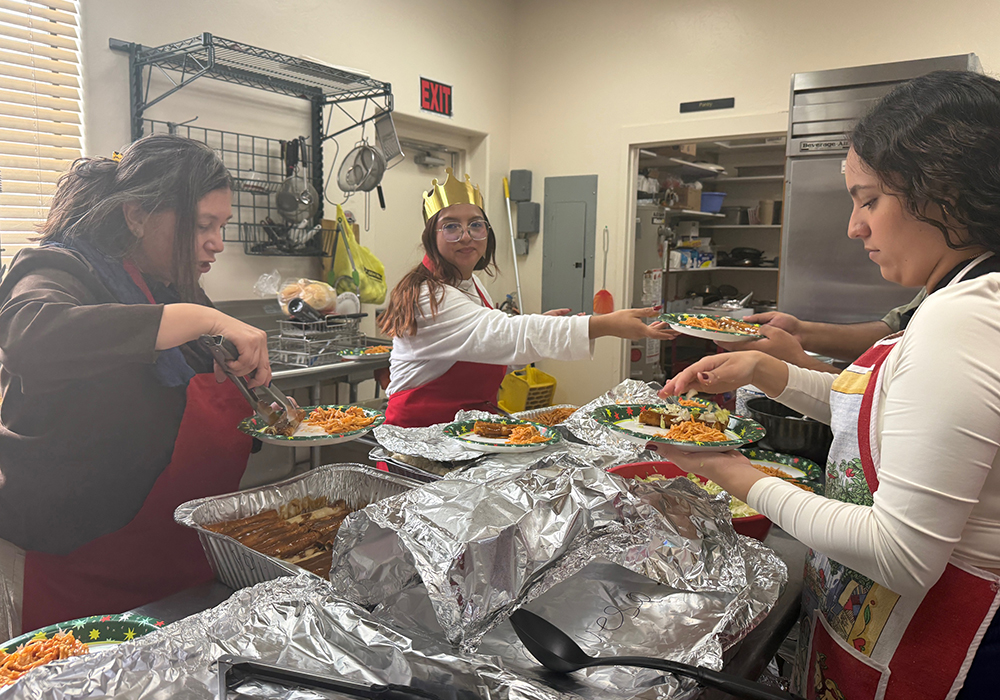
Volunteers with the group Salvavision prepare a Mexican meal for migrant families in the kitchen of a parish in Tucson, Arizona, during a Three Kings Day celebration on Jan. 4, 2026. (Anita Snow)
Rodriguez said she had expected a larger turnout, but many Venezuelan families called to cancel after the Trump administration captured Venezuelan President Nicolás Maduro and his wife and transported them to the U.S., where they face drug charges.
"They were just too scared, not knowing what could happen to them," said Rodriguez, a well-known migrant advocate in Tucson.
Advertisement
Now a U.S. citizen with grown children, Rodriguez recounted her harrowing journey to the U.S. in a memoir released earlier this year, Dora: A Daughter of an Unforgiving Terrain. Thirteen other people she was traveling with on that harrowing trip died in Arizona's Organ Pipe Cactus National Monument when they were abandoned in the sweltering July heat.
At the Three Kings Day party on Sunday, families were served a spicy Mexican meal of tacos, beans and rice made by volunteers in the parish kitchen, along with homemade cookies and traditional purple, green and yellow king cake, called rosca.
The children also lined up patiently to receive presents in large shiny gift bags that they were instructed not to open until they got home.