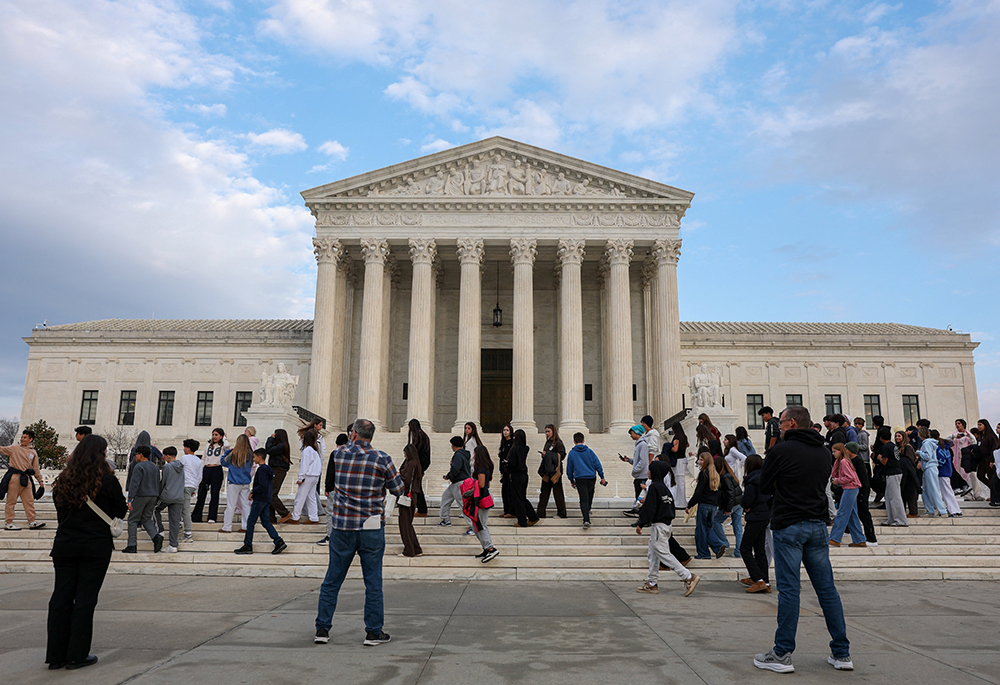
People walk near the U.S. Supreme Court in Washington Feb. 25, 2026. The U.S. Conference of Catholic Bishops is among the organizations that filed amicus briefs Feb. 26, 2026, opposing President Donald Trump's effort to change birthright citizenship. The court is scheduled to hear oral arguments in the case, Trump v. Barbara, April 1. (OSV News/Reuters/Kylie Cooper)
by Carol Zimmermann
In an amicus brief filed with the U.S. Supreme Court Feb. 26, the nation's U.S. bishops cited nine popes, passages from the Bible and their own pastoral statements to defend the God-given dignity of all people while stressing an urgent need to oppose the president's "immoral" executive order against birthright citizenship.
The 29-page brief filed by the U.S. Conference of Catholic Bishops along with Catholic Legal Immigration Network (CLINIC) emphasized from its opening paragraphs that the Catholic Church stands for "treating people humanely, treating people with the dignity that they have," quoting remarks made by Pope Leo XIV last year. The brief said this view extends "to immigrants in the United States without legal status and their American children who were born in the United States."
In another brief also filed that day, more than 14 women's religious orders in the United States along with Hope Border Institute and Network Lobby for Catholic Social Justice joined a broad range of faith-based groups in similarly opposing the denial of birthright citizenship issued by President Donald Trump on his first day in office this term.
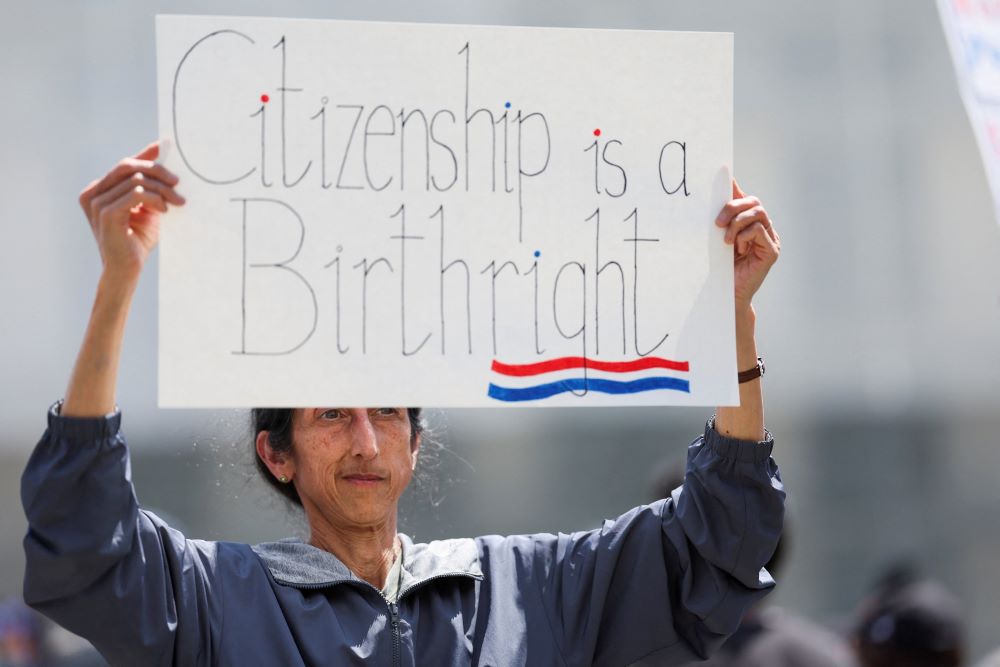
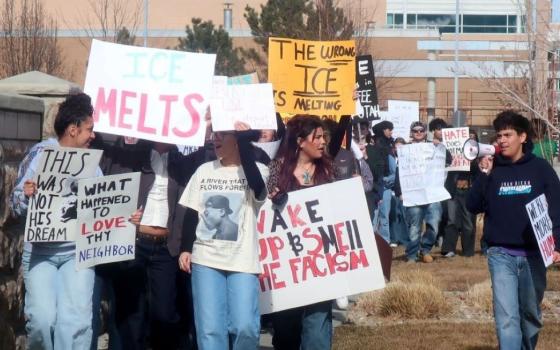
A demonstrator holds a sign as people protest on the day Supreme Court justices hear oral arguments over U.S. President Donald Trump's bid to broadly enforce his executive order to restrict automatic birthright citizenship, outside the U.S. Supreme Court in Washington May 15, 2025. (OSV News/Reuters/Leah Millis)
The order, which has not gone into effect, would end guaranteed citizenship for children born in the United States if their parents are in this country either illegally or temporarily.
On April 1, in Trump v. Barbara, the court will hear oral arguments challenging Trump's order.
The case hinges on interpretation of the 14th Amendment to the Constitution, ratified in 1868 which states that: "All persons born or naturalized in the United States, and subject to the jurisdiction thereof, are citizens of the United States and of the State wherein they reside."
Dozens of briefs have been filed both in favor and against the president's order. Supporters have argued that the 14th Amendment was primarily meant to ensure that those who were formerly enslaved and their children were granted U.S. citizenship, not the broad benefit that people put on it today.
Since Trump issued the order several federal courts around the country have blocked the government from enforcing it, leading the administration to ask the nation's high court to weigh in.
Advertisement
The brief submitted by the U.S. bishops states that this case, at its core "is not solely a question about citizenship status or the Fourteenth Amendment. It is a question of whether the law will affirm or deny the equal worth of those born within our common community — whether the law will protect the human dignity of all God's children."
The 47-page brief filed by the coalition of faith groups emphasized that birthright citizenship as "embodied in the Citizenship Clause of the Fourteenth Amendment demonstrates a commitment by the United States to welcome the stranger."
It said this value was central to all the faith groups that signed the friend of the court brief and was supported in their religious texts. "Welcoming the stranger is a broadly shared and indelible ethic," it said, adding that the "enshrinement of birthright citizenship in the Fourteenth Amendment also has a deep connection with the Nation's history as a haven for those escaping religious persecution."
The brief filed by the U.S. Conference of Catholic bishops and CLINIC said Trump's order would leave children of migrants "stateless" and without legal protection or access to services.
"As Catholics, our faith compels us to protest laws that deny the dignity of the human person and harm innocent children, particularly when such laws resurrect the very injustices the Fourteenth Amendment was enacted to repudiate," it said.
A court decision is expected by late June or early July.