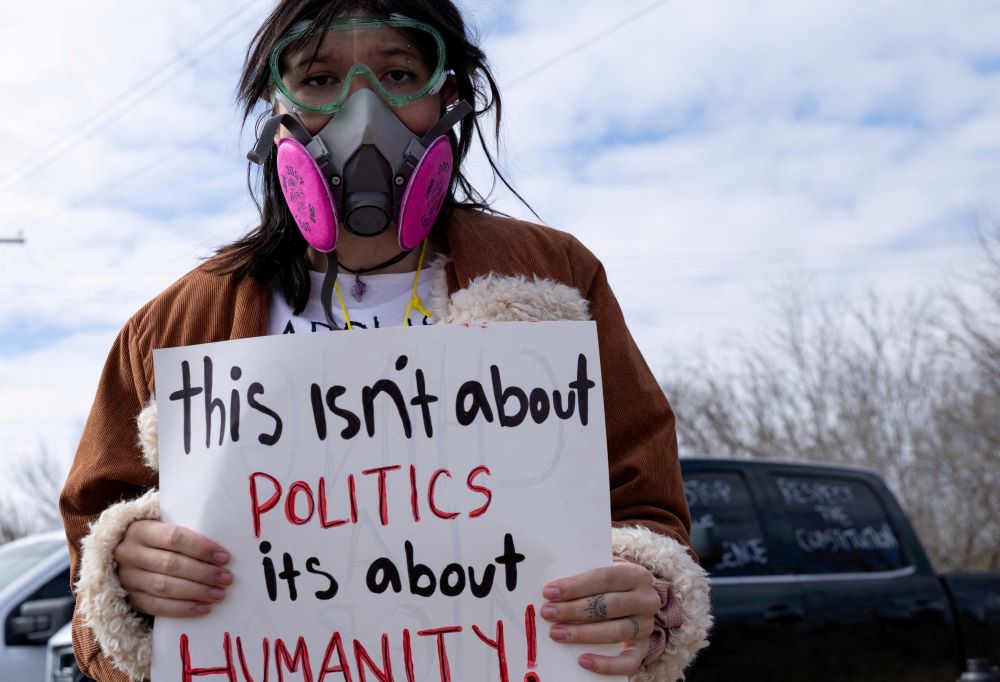
Elizabeth Anne Jolly holds a sign as she protests hours after 5-year-old Liam Conejo Ramos and his father, Adrian Conejo Arias, returned home after a judge ordered them to be released from Immigration and Customs Enforcement detention at the South Texas Family Residential Center in Dilley, Texas, Feb. 1. (OSV News/Reuters/Kaylee Greenlee)

by Brian Fraga
Staff Reporter
Amid heightened partisanship and increasing criticism of the federal government's ongoing immigration crackdown, a growing number of U.S. Catholic bishops have issued statements and pastoral letters expressing the church's solidarity with migrants and its interest in bridging the nation's political divide.
"When we forget that every human being is created in the image of God — body and soul united, destined for communion — we begin to see one another not as brothers and sisters, but as obstacles and threats. Political life then becomes a contest of power rather than a shared pursuit of the common good," Baltimore Archbishop William Lori wrote in a pastoral letter released Feb. 9.
Lori was among at least three bishops who released letters in the last week. Those statements followed public condemnation of political division and calls for unity and human dignity from Archbishop José Gomez of Los Angeles, Bishop Anthony Taylor of Little Rock, Arkansas, and Archbishop Paul Etienne of Seattle in late January, among others.
The U.S. Conference of Catholic Bishops on Nov. 12 released a "Special Message on Immigration" that concluded: "We oppose the indiscriminate mass deportation of people."
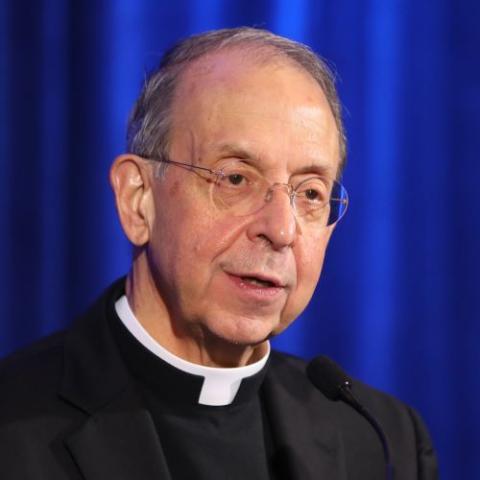
Archbishop William Lori of Baltimore (OSV News/Bob Roller)
In Lori's 29-page letter, titled "In Charity & Truth: Toward a Renewed Political Culture," he takes the occasion of the upcoming 250th anniversary of the founding of the United States to address a moment of "grace and responsibility."
Quoting Popes Benedict XVI, Francis and Leo XIV throughout the document, Lori addresses the political challenges facing the nation. He also calls on Catholics and people of goodwill to see beyond divisions and work to renew the country in a spirit of fraternity and humility.
"The political crisis of our time is, at its root, a spiritual crisis," Lori wrote, adding that the political atmosphere becomes "toxic" when souls become "untethered from the love that grounds them."
"Healing the political crisis therefore requires tending to the spiritual crisis beneath it: the crisis of hope, identity, and communion," Lori wrote.
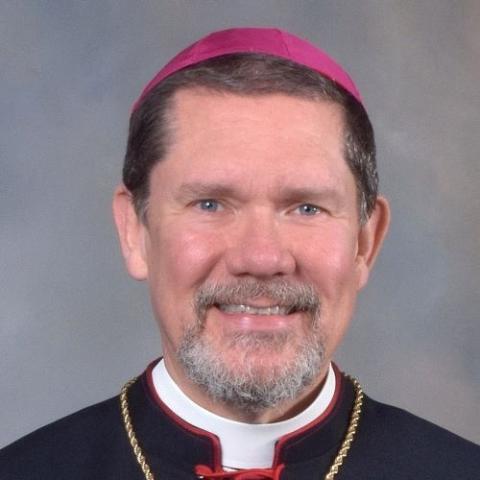
Bishop John Keehner of Sioux City, Iowa (OSV News/Courtesy Diocese of Sioux City)
Bishop John Keehner of Sioux City, Iowa, wrote a shorter pastoral letter, released Feb. 4, that addressed how heavily armed federal immigration agents have been carrying out the Trump administration's campaign of mass deportation.
"Many of our immigrant brothers and sisters — some of whom worship beside us each Sunday, whose children learn in our schools, and whose hands labor quietly to sustain our communities — are living with profound fear and uncertainty," he said.
"As their shepherd, I cannot remain silent when members of our human family suffer," Keehner wrote. He urged "all people of goodwill" to stand in solidarity with immigrant families that he said "contribute so much to the life of our parishes and communities."
"Many are fleeing violence, poverty or instability," Keehner wrote. "Many are parents seeking safety for their children. Many are already woven into the fabric of our parishes and neighborhoods. Their hopes are not foreign to us but rather mirror the hopes of every family striving for a better life."
Keehner also encouraged policymakers to pursue "responsible, comprehensive immigration reform that is orderly, just and compassionate, provides clarity rather than chaos and reflects the values we profess as a nation."
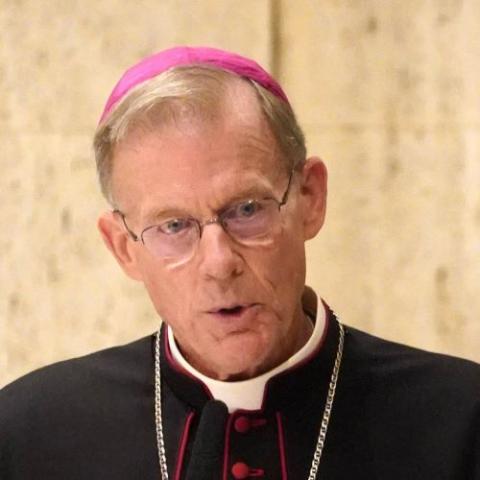
Archbishop John Wester of Santa Fe, N.M. (OSV News/Gregory A. Shemitz)
Archbishop John Wester of Santa Fe, New Mexico, also called upon lawmakers to pursue immigration policies that balance a nation's right to regulate its borders with showing compassion, protecting human dignity and seeking just and humane solutions.
"Strong policies and humane treatment are not mutually exclusive; in fact, justice demands both," Wester wrote in his "Statement on Human Dignity, Immigration, and the Gospel Call to Compassion," released Feb. 6.
In the statement, Wester took issue with recent comments by U.S. House Speaker Mike Johnson, a Louisiana Republican, who invoked the New Testament to defend the Trump administration's draconian immigration and border policies. In speaking with reporters on Feb. 3, Johnson was asked about Pope Leo XIV's critiques of the U.S. government's mass deportation agenda.
"Borders and walls are biblical," said Johnson, a Southern Baptist who claimed that the Bible also expects immigrants to assimilate. "We haven't had a lot of that going on," Johnson added.
Highlighting Johnson's comments, Wester called it "deeply concerning when theological language and sacred texts are used to diminish the fundamental dignity of human beings created in the image of God."
Advertisement
While saying that Catholic social teaching upholds the rights of nations to manage their borders, Wester said that right is "never absolute" and that it must be tempered by laws and policies that reflect the dignity of people while being ordered toward justice, mercy and the common good.
"To suggest that compassion, dignity, and respect for the stranger are merely personal virtues rather than obligations of society betrays a fundamental misunderstanding of Christian ethics," Wester said. "The Gospel is not a collection of sound bites for political advantage; it is the call to love our neighbors as ourselves, to defend the defenseless, and to remember that every human being bears the imprint of God."
"Reducing Scripture to a political tool,"' he said, "undermines its transformative power and our shared humanity."
Lori suggested in his letter that synodality offers important wisdom for civic as well as ecclesial life.
"Synodality in politics does not dissolve disagreement," Lori wrote. "It expects it, because diverse people will inevitably see the world from different angles. What it seeks is not forced unity, but a way of engaging differences that honors dignity, practices patience, and seeks the common good."
While not specifically addressing U.S. immigration policy, Lori's pastoral letter suggested that a "mature Catholic political presence" would defend life in all its stages, advocate for the poor and vulnerable, and insist on racial and social justice, among other principles.
"This vision transcends party lines," Lori wrote. "It is neither conservative nor progressive. It is Catholic."