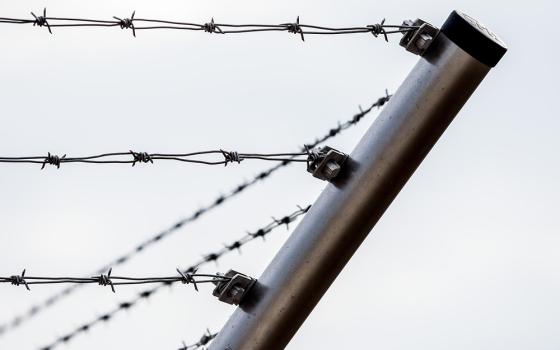
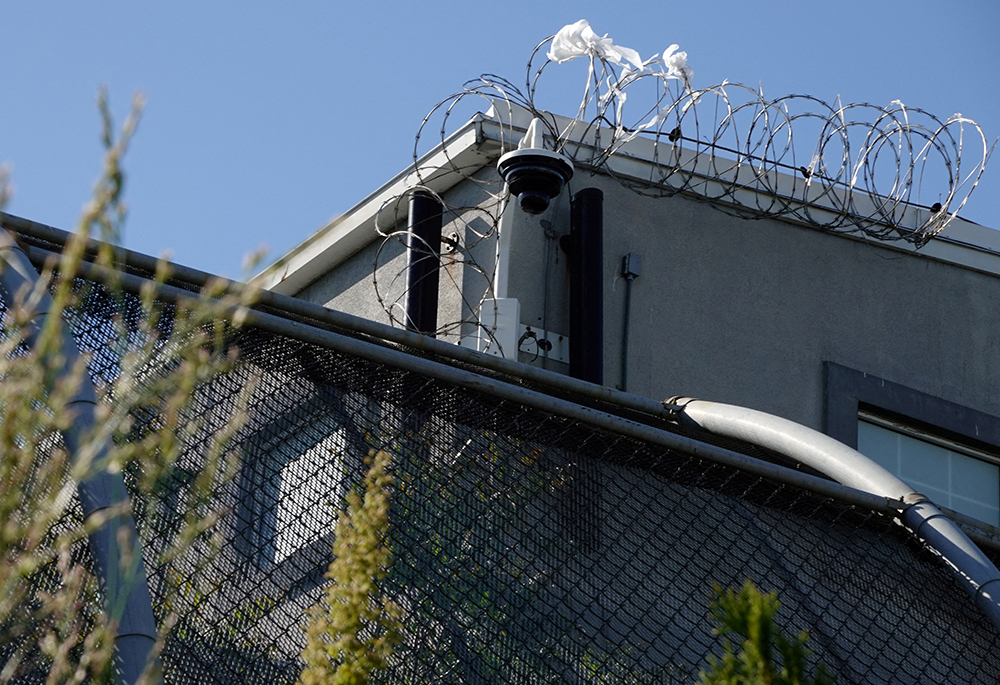
A surveillance camera sits outside of Delaney Hall, a 1,000-person detention center operated by private prison company GEO Group for Immigration and Customs Enforcement (ICE), in the Ironbound neighborhood of Newark, New Jersey, May 10, 2025. (OSV News/Reuters/Bing Guan)

The U.S. Conference of Catholic Bishops has issued a stark critique of the Trump administration's announcement that it plans to double its federal immigration detention capacity.
"The thought of holding thousands of families in massive warehouses should challenge the conscience of every American," said Bishop Brendan Cahill of Victoria, Texas, chairman of the bishops' Committee on Migration.
"Whatever their immigration status, these are human beings created in the image and likeness of God, and this is a moral inflection point for our country," he said in a Feb. 20 statement issued by the bishops' conference.
According to the plan, announced Feb. 19, the administration intends to spend an estimated $38.3 billion from last year's reconciliation bill to implement a new detention model by the end of fiscal year 2026. This figure, Cahill noted, vastly outstrips other immigration-related expenditures, amounting to "nearly fifty times the annual budget for the entire immigration court system and almost five times the funding provided this year to operate the federal prison system."
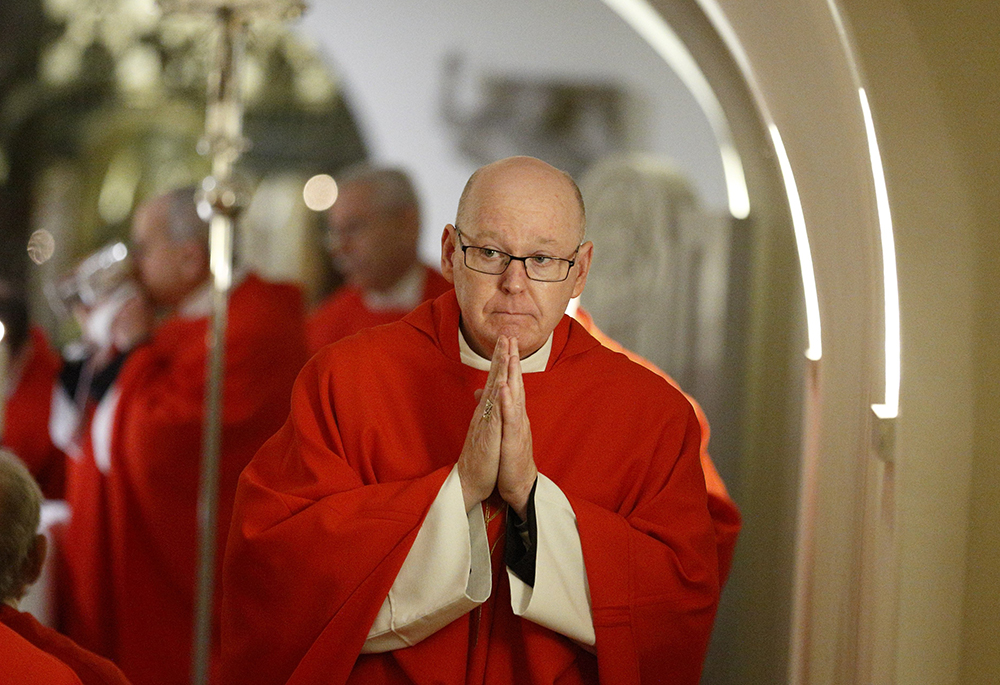
Bishop Brendan J. Cahill of Victoria, Texas, returns to his seat after receiving Communion as bishops from Arkansas, Oklahoma and Texas concelebrate Mass in the crypt of St. Peter's Basilica during their "ad limina" visits to the Vatican Jan. 20, 2020. (CNS/Paul Haring)
Under the proposal, immigration authorities would open eight so-called "mega-centers," each reportedly capable of detaining between 7,000 and 10,000 people.
"Aside from the internment camps used to incarcerate Japanese Americans in the 1940s, such facilities have no precedent in American history," the statement said.
Cahill described these plans as deeply disturbing and said they challenged the moral sensibilities of Americans.
"These plans are deeply troubling. The federal government does not have a positive track record when it comes to detaining large numbers of people, especially families, and the proposed scale of these facilities is difficult to comprehend," Cahill said.
He added that the "private prison industry is who stands to gain the most from this supercharging of immigration detention."
Cahill also said the bishops' conference had "unequivocally opposed the indiscriminate mass deportation of people and raised concerns about existing conditions in detention centers." The statement underscored a lack of access to pastoral care for detainees and reiterated the bishops' long-held opposition to expanding family detention, citing its "harmful impacts on children in particular."

A drone view of a warehouse that U.S. Immigration and Customs Enforcement (ICE) plans to convert into a regional processing center for immigration detainees in Merrimack, New Hampshire, Feb. 14, 2026. (OSV News/Reuters/CJ Gunther)
In November 2025, during their plenary assembly in Baltimore, the bishops issued a special message on immigration, characterized as a statement that was a "particularly urgent way of speaking as a body of bishops," the first of that kind in 12 years. That document, approved overwhelmingly by the body, outlined deep concerns about current immigration policies and their effects on families and communities.
In that message, the bishops said they were "disturbed when we see among our people a climate of fear and anxiety around questions of profiling and immigration enforcement." They expressed sadness over what they described as "the state of contemporary debate and the vilification of immigrants," and voiced specific alarm about "the conditions in detention centers and the lack of access to pastoral care."
The November message also touched on the human toll of immigration enforcement, lamenting that "some immigrants in the United States have arbitrarily lost their legal status" and that parents "fear being detained when taking their children to school."
The bishops framed their concerns as rooted in Catholic social teaching, calling for "meaningful reform of our nation's immigration laws and procedures."
Echoing longstanding church teaching, they also reaffirmed that human dignity and national security are not inherently in conflict and emphasized the need for safe, orderly pathways that protect individuals from exploitation.
While the bishops acknowledged the right of nations to regulate their borders, they signaled unease with the scale and character of the current U.S. federal approach, particularly its reliance on large-scale detention.
Advertisement
Cahill's February remarks reinforce this position, urging both the administration and Congress "to lead with right reason," as he put it. He asked them to reconsider the financial and moral costs of the proposed detention expansion, and to "pursue a more just approach to immigration enforcement that truly respects human dignity, the sanctity of families, and religious liberty."
Last week, the National Catholic Reporter reported that a growing number of Catholic bishops had individually issued pastoral letters emphasizing solidarity with immigrants and warning against a corrosive national climate. Baltimore Archbishop William Lori, in a 29-page letter released Feb. 9, said, "The political crisis of our time is, at its root, a spiritual crisis."
His letter followed similar appeals from Archbishops José Gomez of Los Angeles and Paul Etienne of Seattle, and Bishop Anthony Taylor of Little Rock, Arkansas.
Other bishops addressed the human impact of enforcement actions more directly. Bishop John Keehner of Sioux City, Iowa, described immigrant families living with "profound fear and uncertainty" as federal agents carried out mass deportation efforts. Keehner wrote, "As [the immigrants'] shepherd, I cannot remain silent when members of our human family suffer."
Archbishop John Wester of Santa Fe, New Mexico, likewise urged lawmakers to balance border regulation with compassion, stating, "Strong policies and humane treatment are not mutually exclusive; in fact, justice demands both."