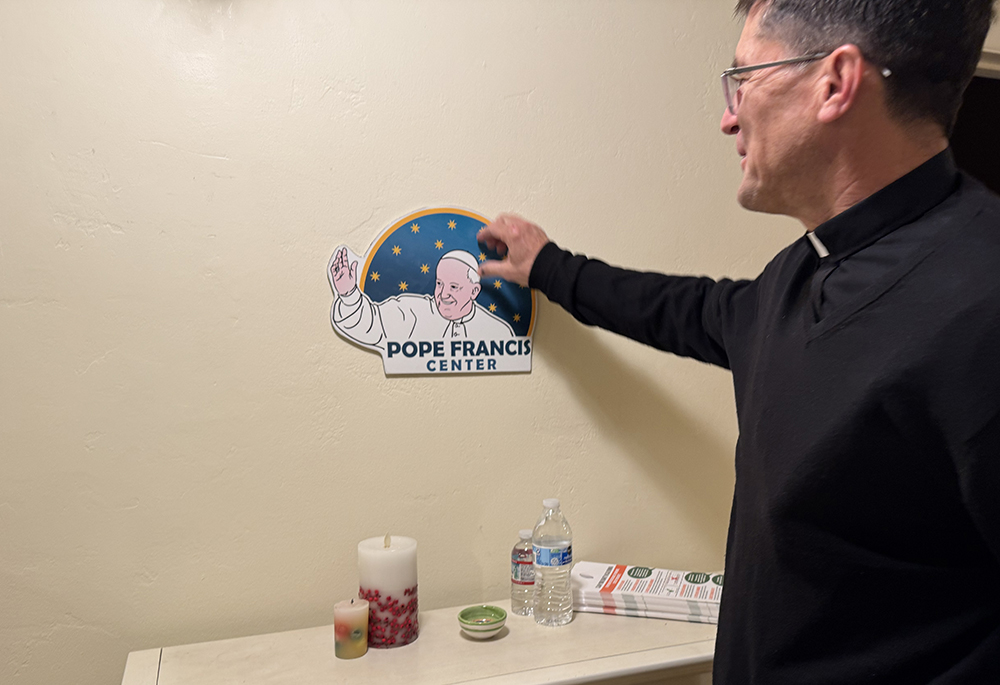
Jesuit Fr. Scott Santarosa, the pastor of Our Lady of Guadalupe Parish in San Diego, points out the Pope Francis Center's logo in the front entrance of the building. (Anna Weaver)

by Anna Weaver
After the Sunday evening Mass at Our Lady of Guadalupe Parish in San Diego in early January, a couple walked the short distance over to the parish's former convent and new Pope Francis Center.
The couple, parishioners at Our Lady of Guadalupe for 35 years, came to inquire about U.S. citizenship classes. After a short wait, they met with Brinkley Johnson, the center's founding manager and navigator, who referred them to a local nonprofit that offers classes.
This type of interaction is what the new immigrant resource center was designed for, said Our Lady of Guadalupe's pastor, Jesuit Fr. Scott Santarosa.
"That's what the navigators are going to do, is meet with people, find out what their needs are and try to connect them with resources that exist," he said. "The idea is to take the trust that people have in the church and parlay it into the center."
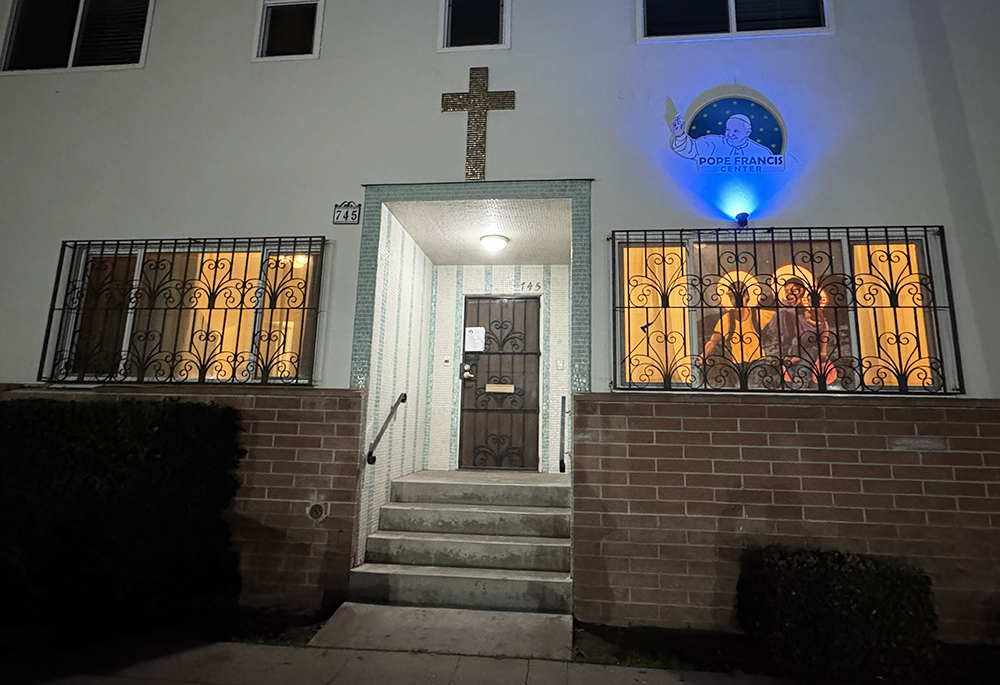
At the Pope Francis Center in San Diego, a depiction of the Holy Family as Latin American migrants hangs in the window, and a small spotlight shines on the smiling face of Pope Francis. (Anna Weaver)
The Pope Francis Center evolved from a temporary shelter the parish had set up for migrant workers. The shelter closed due to a lack of migrants coming across the border following a change in immigration policy under President Donald Trump's administration. After that, Santarosa said the parish began envisioning converting the former convent into an immigrant resource center.
The center has three focus areas. It offers spiritual and emotional support through an accompaniment ministry for court dates, ICE check-ins and immigration appointments. Volunteers help immigrants navigate available resources, determine their needs and provide essential supplies. The center also partners with the American Bar Association's Immigration Justice Project to offer legal consultations and referrals and plans to collaborate with other local faith-based service agencies.
Since 95% of the parishioners are of Latino or Mexican heritage, many have been directly affected by the recent immigration policy changes.
"In this new administration, people are worried about their own safety," Santarosa told the National Catholic Reporter on Jan. 11. "One woman said: 'It feels like we're being hunted like animals.' "
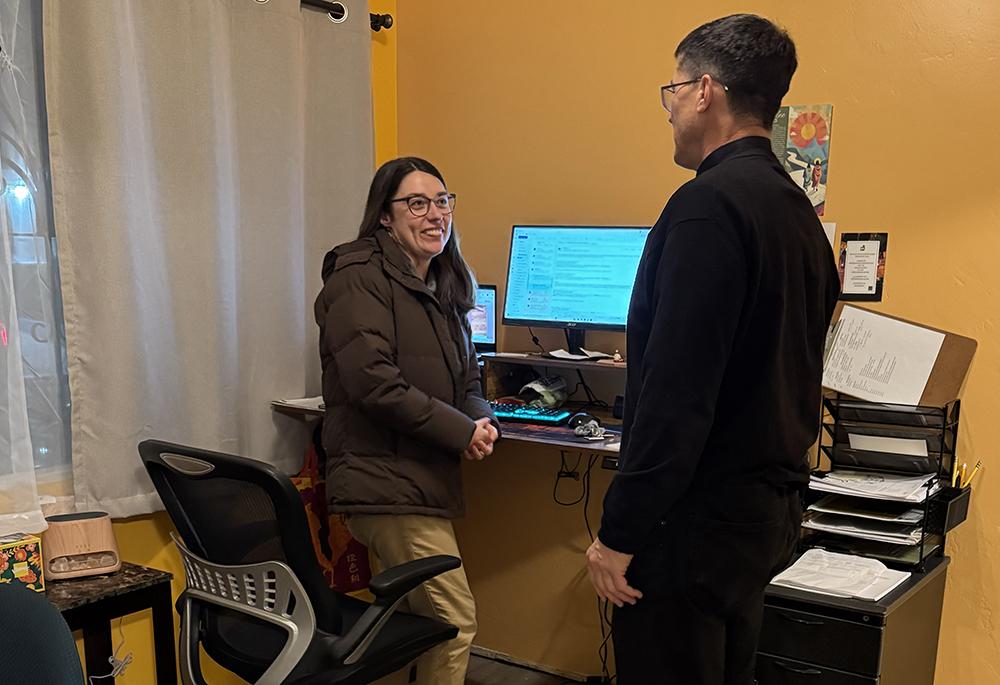
In the front office of the Pope Francis Center in San Diego, founding manager and navigator Brinkley Johnson speaks with Jesuit Fr. Scott Santarosa, the pastor of Our Lady of Guadalupe Parish, which operates the center. (Anna Weaver)
He said the members of his parish "were vulnerable and needed resources, especially legal resources."
Parishioners voted to name the center after the late Pope Francis, a champion of immigrants, and his smiling visage is spotlighted on the outside of the building.
Inside the two-story building, there are still renovations and updates being done, but the main areas have been open for business since Jan. 5. Almost all the work that's been done on the building was completed by parishioners, who donated their time, labor, materials and supplies, under the guidance of Fr. Hung Nguyen, one of the parish's parochial vicars. There's also a long list of parishioners interested in volunteering.
Downstairs, there's a small waiting area with a framed picture of Francis greeting visitors, along with office and meeting space, a kitchen, a chapel and a playroom for kids while their parents are in appointments. Upstairs are additional meeting rooms and future guest rooms, which Santarosa envisions students could use during immersion experiences.
But the center's programs will evolve as the parish sees how it is being used.
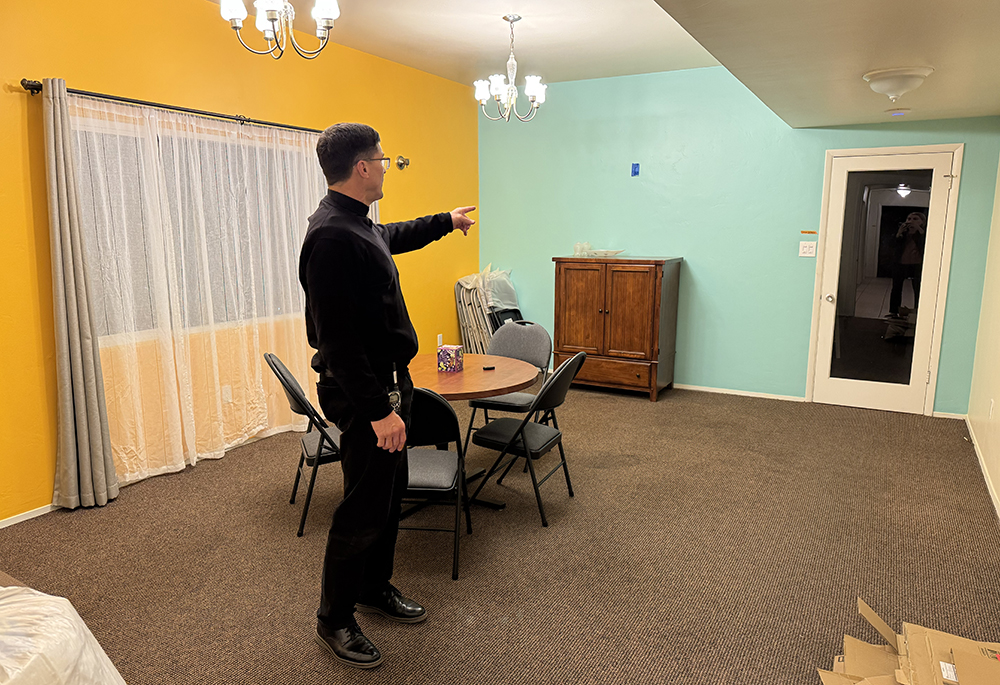
Jesuit Fr. Scott Santarosa, the pastor of Our Lady of Guadalupe Parish in San Diego, points out areas of the Pope Francis Center on a recent January evening. (Anna Weaver)
"In some ways, in order to build this, we need to know what people's needs are," said Johnson. "And the only way we can know is if we say, 'Come and talk to us.' "
"I think that this center represents a conception of church, which is broader than just a place you come for sacraments, but a place you come for other needs to be served," Santarosa said. "We don't come to church just with the spiritual need being filled, but we come to church honestly and openly as people of multiple needs. Right now, given these times, the need for practical services is clear. And if the church can provide it, I think we ought to."
Other parishes across the country are similarly becoming more involved with immigration support efforts.
'The idea is to take the trust that people have in the church and parlay it into the center.'
—Jesuit Fr. Scott Santarosa, pastor of Our Lady of Guadalupe Parish
At St. Andrew Catholic Church in Portland, where about half the congregation is Latino or Hispanic, a community-wide meeting was held last year to determine parishioners' priorities for immigration support.
From that, several ideas emerged, including help with legal paperwork, such as transferring property rights and parental rights if one or both parents are deported. An Immigration Action Committee meets monthly and a free notary is available on the first Sunday of each month.
The parish brought in counselors to speak with children about a parent's potential deportation. St. Andrew parishioners also established an immigrant support fund that could help with things like sending individuals to immigration-related workshops, organizing paperwork or assisting a family with rent or food.
Fr. Dave Zegar, St. Andrew's pastor, said he sees a lot of fear among his parishioners and hopes they can see the church as a place to turn.
"I think people need that emotional support at this time," he said. "To me, that's the biggest thing."
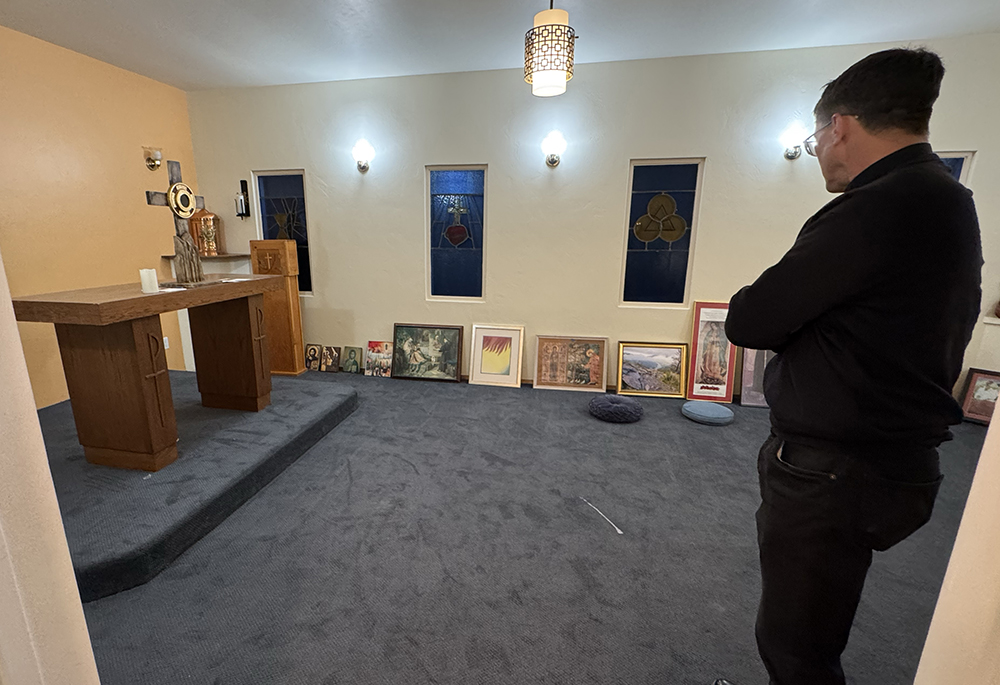
Jesuit Fr. Scott Santarosa, the pastor of Our Lady of Guadalupe Parish in San Diego, looks into the chapel of the Pope Francis Center on the parish grounds. (Anna Weaver)
In Palmyra, Pennsylvania, the migrant justice ministry at Holy Spirit Catholic Church started a speaker series focusing on migrants and Catholic social teaching. Guest speakers have included priests, pastoral theologians and those serving at the U.S.–Mexico border, to help "the community discern how the Gospel calls us to respond to migrants and refugees with compassion, clarity and justice," said the pastor, Fr. Michael Metzgar.
At Old St. Patrick's Church in Chicago, the parish already has a well-established immigrant and refugee ministry. All the same, Peggy Burke, the ministry's co-chair, said the parish is looking for more ways it can help.
Among the new initiatives are sponsorships for Venezuelan families seeking asylum, assistance with setting up apartments for refugees, an advocacy committee that meets with legislators and a court accompaniment program.
Advertisement
Burke said the ministry had received an influx of volunteers wanting to help.
"They're worried and want to do something," Burke said. "That's usually their first sentence or their first words: 'I want to do something.' "
Burke says she has seen other Chicago-area parishes that didn't previously have any immigration or refugee efforts start them in the past year. A growing number of parishes have joined the Catholic Charities of the Archdiocese of Chicago's efforts to host refugee and immigrant families.
"You cannot walk away from the poor and those on the margins and those that really need assistance," Burke said. "Going back to the Gospel message of 'Whatsoever you do for the least of my brothers, you do for me.' … You can't accept anything less."