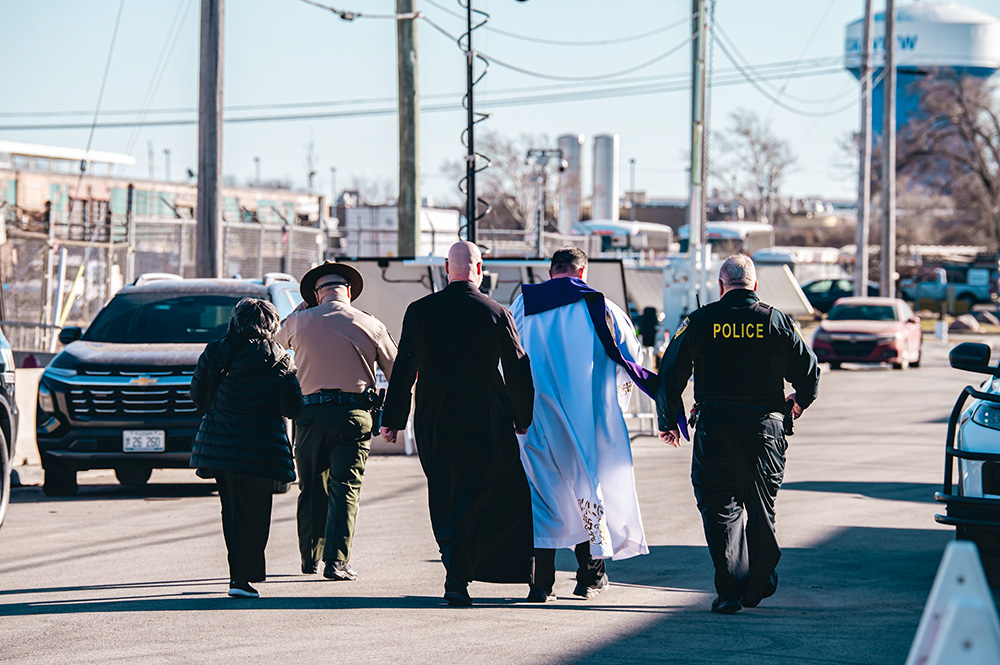
Scalabrinian Fr. Leandro Fossá, pastor of Our Lady of Mount Carmel Parish (second from right); Claretian Fr. Paul Keller, missionary priest and provincial leader (center); and Sr. Alicia Gutierrez, a member of the congregation of the Society of Helpers (left) walk toward the ICE Broadview detention center escorted by two officers on Feb. 18, 2026. (Courtesy of Coalition for Spiritual and Public Leadership/Derek Carter)

The long-awaited message arrived late Ash Wednesday morning. After months of denied access, unanswered emails, and a federal lawsuit, the Department of Homeland Security notified a small group of Catholic clergy and women religious that they would be permitted to enter the U.S. Immigration and Customs Enforcement detention facility in Broadview, Illinois — just in time for Ash Wednesday.
By midafternoon, three religious crossed into the facility together: Scalabrinian Fr. Leandro Fossá, pastor of Our Lady of Mount Carmel Parish; Claretian Fr. Paul Keller, missionary priest and provincial leader; and Sr. Alicia Gutierrez, a member of the congregation of the Society of Helpers. Their entry marked the first time in months that Catholic leaders had been allowed inside Broadview to administer sacraments to detainees.
The visit followed a preliminary injunction issued Feb. 12 by U.S. District Judge Robert Gettleman, who ruled that DHS had "substantially burdened plaintiffs' exercise of religion."
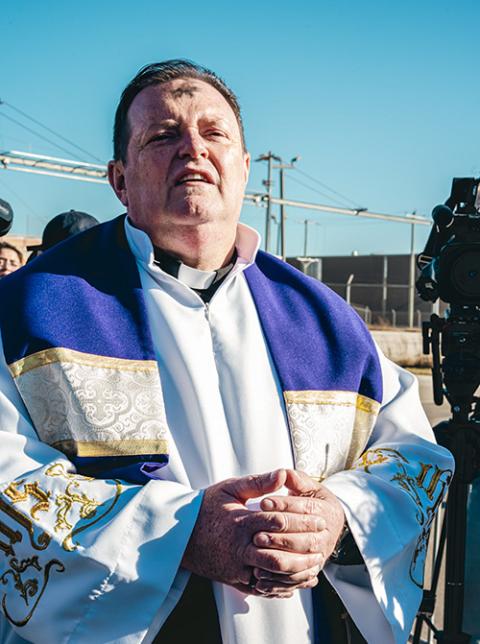
Scalabrinian Fr. Leandro Fossá, pastor of Our Lady of Mount Carmel Parish, outside the ICE Broadview detention center, Feb. 18, 2026 (Courtesy of Coalition for Spiritual and Public Leadership/Derek Carter)
The decision stemmed from a lawsuit filed in November by the Coalition for Spiritual and Public Leadership, which challenged DHS restrictions on prayer, pastoral visits and sacramental care. The court found that the government failed to demonstrate a compelling interest or that its policies were the least restrictive means available.
"The day we were finally allowed to get in, it was a very emotional day," Fossá told the National Catholic Reporter. "We also had the privilege and blessing of being able to be in contact with these migrants who were living a situation that would change all their dreams that they came to America with."
Keller said that entering a space defined by confinement and fear did not feel like victory. "Being able to go into a place where people are detained, where they're panicked, where they've been taken from their families, there's no win-win. It's kind of a lose-lose scenario," he said.
Still, he emphasized that the principle at stake was simple: "That detained people have a right to their exercise of religion and that everyone benefits by them having access to pastoral care."
When the delegation arrived at the Broadview facility around 3 p.m., they were told there were no detainees inside. A transport van was expected later in the afternoon. Rather than leave, the three waited.
As they waited, Fossá took note of the atmosphere inside the facility. After months of silence and denial from DHS, the kindness of facility officers' reception surprised him. The officers, employed by a private security company, accommodated requests for Communion, ashes and confessions. "You didn't feel any animosity," Fossá said. "We felt welcomed."
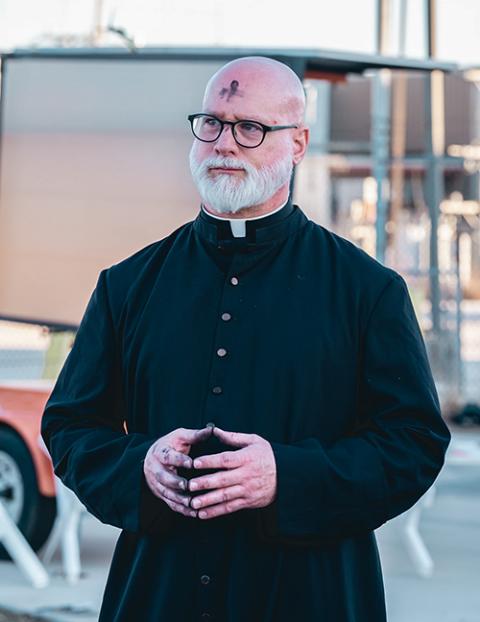
Claretian Fr. Paul Keller, missionary priest and provincial leader, outside the ICE Broadview detention center, Feb. 18, 2026 (Courtesy of Coalition for Spiritual and Public Leadership/Derek Carter)
Just after 4 p.m., five detainees were brought in. All had been detained earlier that day. The Broadview facility functions primarily as a processing center, where people are held shortly after arrest. Keller described the detainees as visibly shaken, with "glazed stares" and tears, particularly the first person who entered the room.
The service was brief. Fossá led the opening prayer and introduction. Gutierrez distributed Communion. Keller imposed ashes. Confession was offered, but none of the detainees requested it. Fossá explained that their urgency lay elsewhere. "They wanted to get in contact with the Mexican consulate," he said. "Their first need was also to talk to the consulate to see what were the next steps."
When it came time to impose ashes, Keller departed from the traditional Ash Wednesday Catholic formulas of: "Repent and believe in the Gospel" and "Remember that you are dust and to dust you shall return." Instead, he offered a different invocation, saying: "Find hope and strength in the sign of the cross."
"There was no way they needed to repent of anything. My hands were dirty with ashes, but as a society, we're the ones with dirty hands. It's not they that need to repent. It's the country and our actions that we need to repent of," he told NCR.
Gutierrez's experience inside the facility was shaped by the prayerful gathering that preceded the visit. "The prayers and songs calmed me down," she said in a statement. "There was a sense of peace, of joy and love." She carried that energy with her as she entered. "I felt I was a messenger, carrying all our good feelings and blessings for those we would meet."
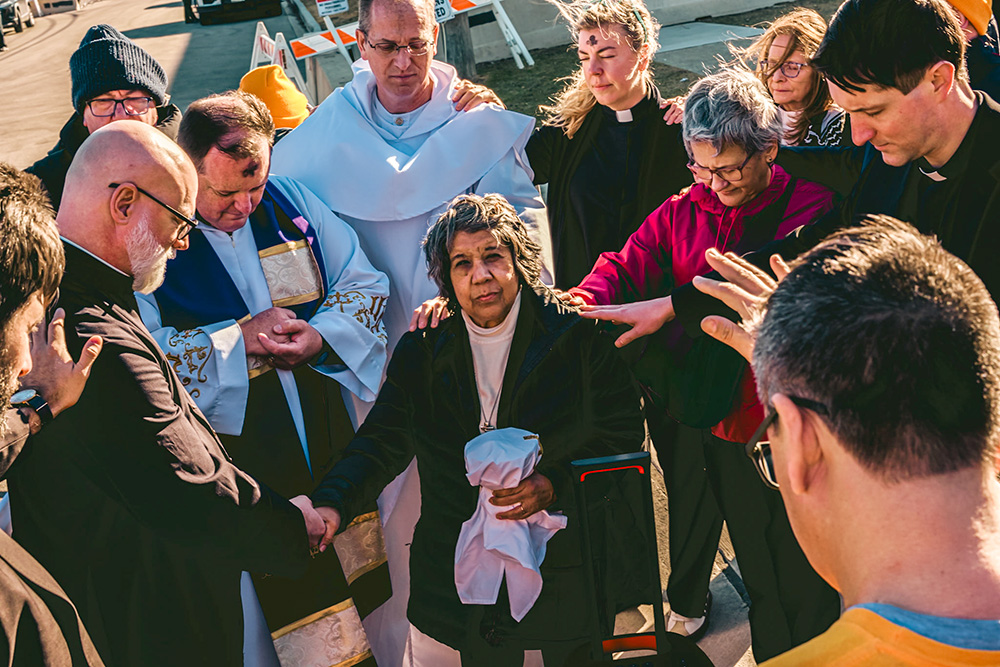
Sr. Alicia Gutierrez, a member of the congregation of the Society of Helpers, holds a chalice while being blessed by Chicago interfaith clergy outside the ICE Broadview detention center, Feb. 18, 2026. (Courtesy of Coalition for Spiritual and Public Leadership/Derek Carter)
Holding the chalice, she said, "I felt I was holding a treasure and wanted to protect it with my life if needed."
The encounter lasted only a short time, but its emotional intensity lingered. At the end of the service, the three religious prayed together. "We prayed, thanking God, and we cried," Fossá said. "We had the privilege to experience that in that moment we were instruments of God for them."
The visit took place amid growing concern about conditions inside the Broadview facility. According to the coalition's lawsuit, ICE had denied access not only to clergy but also to advocates and elected officials, even as reports of deteriorating and inhumane conditions increased. Over the past year, the coalition organized outdoor Masses, processions and public prayer services calling for pastoral access and Communion inside the facility.
Similarly, in Minnesota, a coalition of faith groups and clergy has filed a lawsuit against DHS, alleging that the agency violated their religious freedom by denying them access to immigrant detainees at the Bishop Henry Whipple Federal Building, where local ICE offices operate.
Advertisement
Filed Feb. 23 by Jesuit Fr. Christopher Collins, the Minneapolis Area Synod of the Evangelical Lutheran Church in America, and the Minnesota Conference of the United Church of Christ, the suit claims the government's actions breach the First Amendment and the Religious Freedom Restoration Act by barring clergy from offering pastoral care, prayer and sacraments to migrants.
The lawsuit follows repeated failed attempts by clergy to access detainees, including on Ash Wednesday, during an immigration enforcement campaign known as Operation Metro Surge.
Inside Broadview, Keller noted, pastoral care extended beyond detainees. The group offered ashes to staff members as well, several of whom accepted. "Pastoral care is for anyone and everyone," he said.
All three expressed hope that Ash Wednesday would mark the beginning of sustained access rather than a one-time exception prompted by litigation. Keller pointed to the court order itself, which anticipates ongoing pastoral care to be negotiated between DHS and the plaintiffs.
"I want to believe that it was a beginning of many blessings," Gutierrez said, "as well as a continuation of visits that will grow and bring about strength, faith and courage to the Detainees who will continue to arrive until only God knows."