(Unsplash/Rui Silva, SJ)

by Jim McDermott
As our country reels over the killing of Minneapolis resident Renée Good by an Immigration and Customs Enforcement agent, another video from the next day in Minnesota has begun circulating. In it, a Native American woman and her partner beg the police to come to their home and save them from ICE agents demanding entry to arrest the DoorDash delivery worker who had fled into the couple's home.
Over more than 13 minutes, this terrified couple, who have an infant, move through fear, grief, shame and incandescent fury. Their journey captures so much of what it is to live in America today, and also perhaps what it means to be a Catholic living in the midst of it.
As the video opens, we see ICE agents in the couple's yard while the camera operator, unseen, begs someone on 911 to send the police. The woman keeps repeating to the operator that they were just ordering DoorDash. She and her partner are clearly dumbfounded to find themselves in this situation. It's relatable and terrifying. At first neither she nor her partner express any concern for the DoorDash worker. It's clear that they just don't want to be put in danger.
Eventually the woman speaks by phone with the police. The officer tells her she can either let ICE in, or she and her partner will be arrested for harboring a fugitive. Horrified, the two of them decide they have to acquiesce. We watch as they descend into the basement of their home where the DoorDash worker, eyes wide with terror, is hiding. As she pleads with them in Spanish, talking about her children, the woman apologizes, saying there's nothing they can do.
Advertisement
But as they walk the delivery employee up their stairs, the immensity of their situation begins to hit them. "I don't know what to do," the speaker says, weeping. "I'm Native American. This is against everything I stand for."
And somehow saying that begins a shocking change in her. At the door, rather than turning the woman over, the homeowners demand that the ICE agents produce a warrant. When the lead agent tries to talk them down, they point out that he's had his hand on his gun the entire time.
The longer the couple stand their ground, the more strength they get. They begin shouting at the ICE agents, insisting that they produce a warrant or get off their property. Eventually, their neighbors come out and stand on the lawn. Finally, to the shock of everyone watching, the agents get in their cars and drive away. It's kind of a miracle.
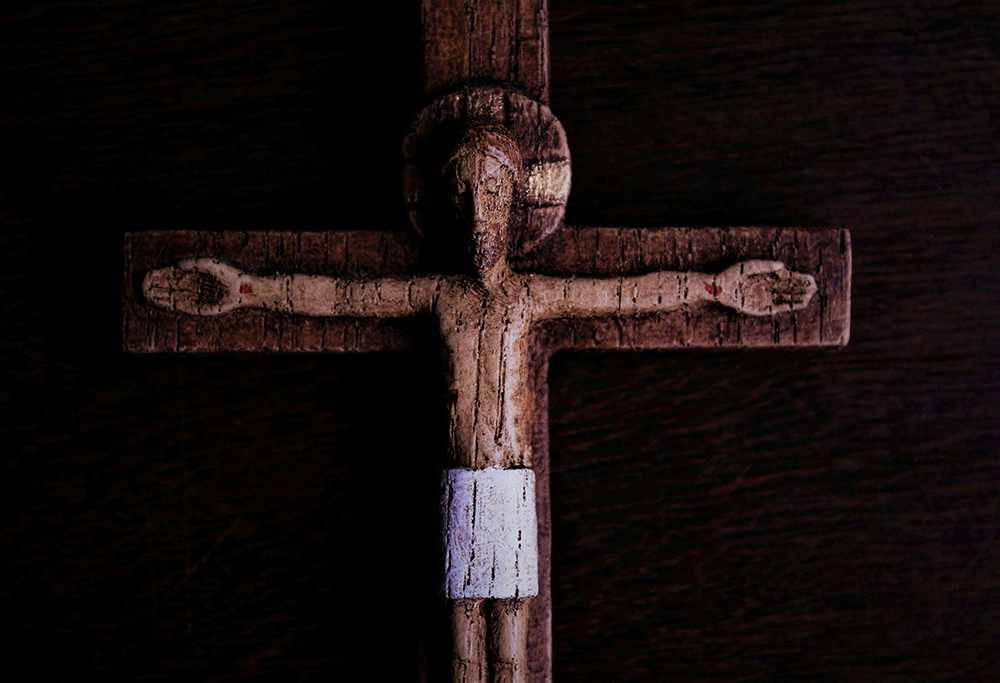
Some theologies of the cross represent Jesus' sacrifice as some sort of weird cosmic math equation: Jesus' death equals forgiveness of everyone's sins. Others instead approach the cross as the final and fullest act of the love that Jesus had been expressing and revealing all along.
Our place is with those on the margins. But that's not to say we shouldn't feel afraid or even unwilling. Christianity isn't about perfection, it's about conversion.
His ministry had been grounded in the belief that those whom the community rejected or ignored were actually the cornerstones of the kingdom of God. Time and again, those were the people he associated with and around him he forged community. And he was condemned precisely for that by some of the leaders in his community. The cross served to express the fullness of his conviction.
Rather than reaching out to the shunned and endangered, as Good and her wife did, the couple in the DoorDash video are desperate at first not to be in the middle of all this. "We were just ordering DoorDash," they say over and over. No doubt many of us feel the same — none of us asked to be in the middle of any of this.
But here we are, faced with our own versions of the cross of Christ. Our place is with those on the margins. But that's not to say we shouldn't feel afraid or even unwilling. Christianity isn't about perfection, it's about conversion. When Jesus was deciding on leadership for the church, he chose two deeply imperfect men who had each first rejected the call of Christ — Peter and Paul. And when he himself faced the ultimate test, the first thing he did was to beg God that the bitter cup being offered might be taken away, just as this Minneapolis couple did.
Then he — and eventually they — walked into the darkness and showed the shunned, the demonized and the forgotten just how important and beloved they are.