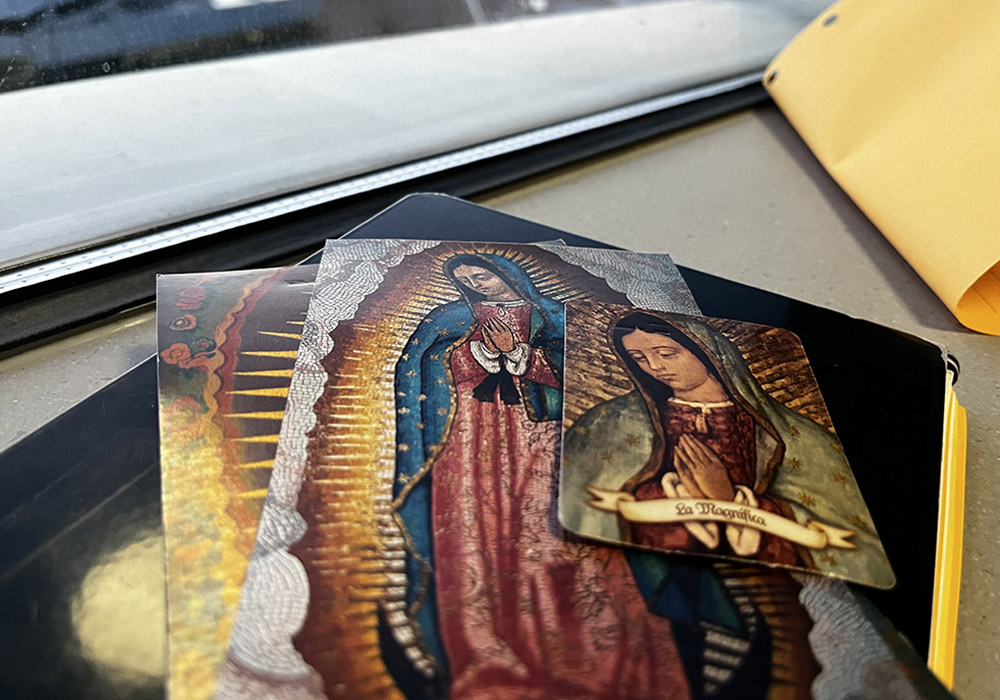
The feast day of Our Lady of Guadalupe is Dec. 12. (Steven Salido Fisher)

by Marissa Flores Madden
From a childhood tradition of enjoying a special taco dinner to performing Matachines (a traditional Indigenous dance) alongside my Mexican spouse at our Spanish language Mass, I have celebrated the feast of Our Lady of Guadalupe my whole life.
My German American mother first introduced this feast day to my siblings and me as a story of a Marian apparition that ended with a tilma full of roses and an inexplicable image of Our Lady. Only later did I learn that it was equally a story of solidarity with people who had been colonized, of accompaniment with people living on the margins and of representation of Indigenous peoples within a heavily westernized Catholic tradition.
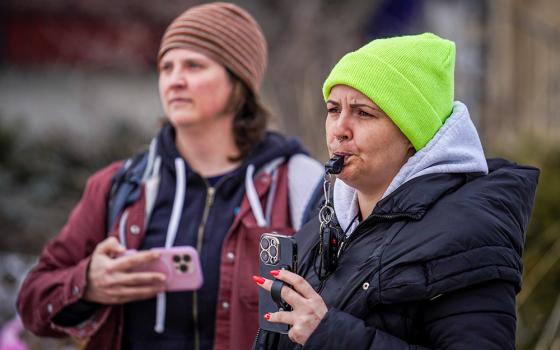
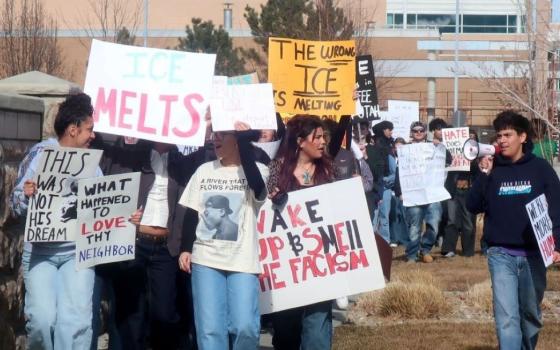
Set against the backdrop of a violent conquest, Mary appears as an Aztec princess and comforts Juan Diego as only a mother can. Centuries later, Our Lady of Guadalupe would be named the patroness of Mexico, and her image would be used as a symbol for numerous modern social justice movements, including calls for comprehensive immigration reform in the U.S. and recent public witnesses held throughout the country to protest the current state of immigration enforcement.
In December 2023, my spouse and I danced with the Matachines at our parish. For us, the celebration of the feast of Our Lady of Guadalupe had been a melding of our two families' devotions, but it quickly became more than a cultural or religious celebration: it was our annual practice of expressing our deepest desires for a child.
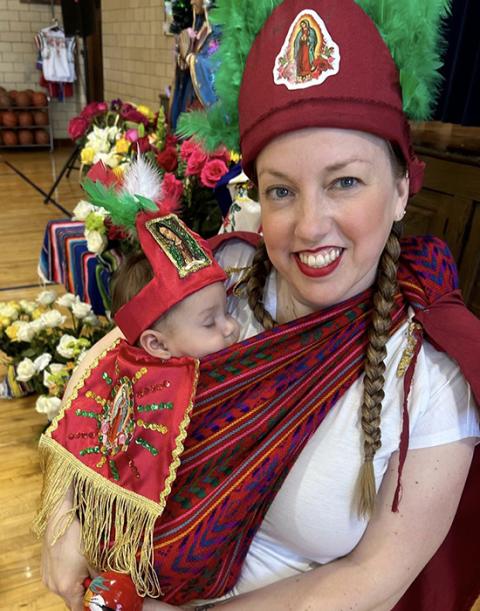
The author and her daughter celebrate Our Lady of Guadalupe in 2024. (Courtesy of Marissa Flores Madden)
That year was different. Just days after we celebrated Our Lady of Guadalupe, we found out that I was pregnant; when we shared the news with my sister-in-law, she instantly exclaimed, "La Virgen! La Virgen de Guadalupe!" While I'm not sure our little miracle, Frida, is worthy of Vatican review, there was a clear connection between our devotion to Guadalupe and our much longed-for pregnancy. I made a vow to dance with my baby the following year.
Frida was just four months old when I wrapped her in my rebozo and began to practice the Matachines dance once again. Often used to support women in various positions during labor or by Mexican mothers to wear their babies, this same multicolored woven shawl was the cloth that had adorned our wedding altar and the wrap that had embraced my belly during early labor pains. Now it held Frida tucked close to my beating heart, while the rattling of the maracas and the rhythm of the dance lulled her to sleep; each step no longer a prayer of petition, but an expression of profound gratitude.
As I will forever be grateful for the gift of our daughter, I assumed I would continue dancing each year; I had hoped to teach Frida the steps and eventually to dance alongside her. Perhaps someday I still will — but not this year. In January, the government rescinded immigration enforcement guidance that had previously designated houses of worship, schools and hospitals as "protected areas." Since then, I have been hesitant to attend large Hispanic gatherings.
Advertisement
With daily reports of enforcement based on racial profiling — regardless of immigration status or criminal record — it would seem no one who looks Hispanic is safe. Just imagining that our baby could experience the trauma of an immigration raid on our faith community was more than enough to motivate me to switch parishes and no longer attend Spanish language liturgies or celebrations.
The church where we once expressed our deepest desires and our most profound gratitude, where our families' stories intertwined, is no longer a place of sanctuary. Our community is left waiting for a new tilma full of roses and another miraculous image, for signs that we are loved amid a violent backdrop of uncertainty and evidence that God is with us in our suffering.
Our community is left waiting for a new tilma full of roses and another miraculous image, for signs that we are loved amid a violent backdrop of uncertainty and evidence that God is with us in our suffering.
No, we will not dance the Matachines this year — how could I dance when my body aches in fear? But Frida is fearless. She danced in the womb and danced, earthside, long before she could walk, kneeling and wiggling her whole body to the beat of any tune within earshot. Now that she can walk, she dances from corner to corner of the living room to merengue and salsa, rancheras and reggaeton.
We dance with the Von Trapp children and with Mickey Mouse and all his friends. We will continue to dance, still expressing our deepest desires and most profound gratitude. Only this year, we will dance at home in the safety of each other, held by the starry cloak of La Virgencita, tucked away in the protection of her promise to us all, "Are you not in the hollow of my mantle, in the crossing of my arms? Do you need anything more? Let nothing else worry you."