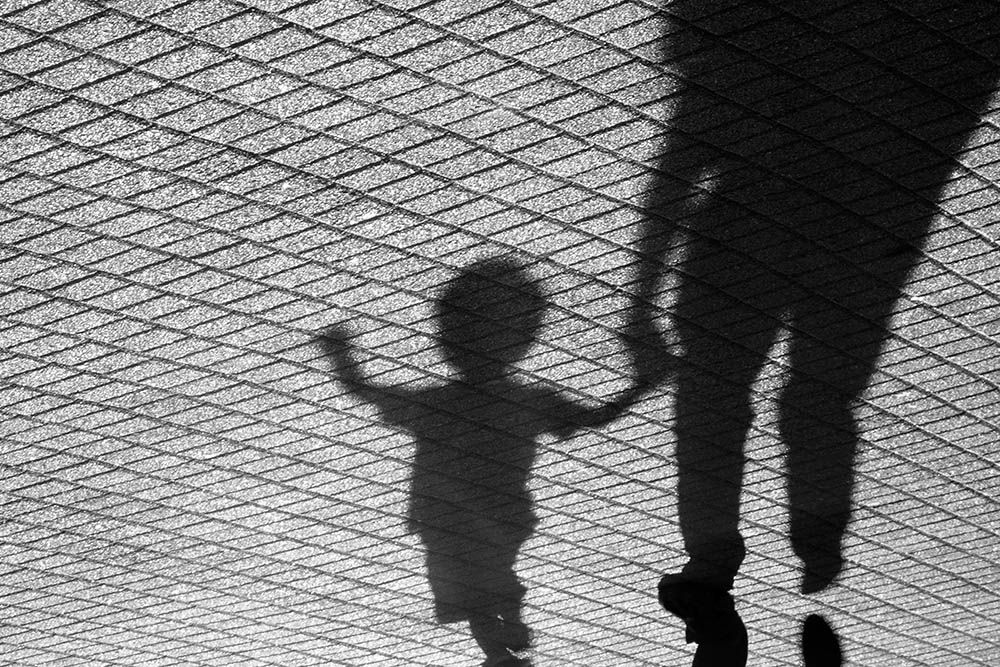
(Dreamstime/Alexlinch)
Let me take you to a warm April day when a little boy on the street stopped me in my tracks and changed both of our lives forever.
I was volunteering with the Sant'Egidio community, which serves the poor and works for peace. We stuffed water bottles, sandwiches, hand sanitizers and socks into canvas bags and split off into small groups to meet and listen to people on the street.
My group walked to a nearby shelter that had closed for renovations, but where people had hung canvas blankets from the scaffolding to create a makeshift shelter out of the sidewalk. Dozens of recent migrants and local homeless people congregated there, just blocks from Union Station and the U.S. Capitol. Some people sat on crates outside the canvas or on old mopeds waiting for the next food delivery job. Others rested behind the curtains on piles of filthy sleeping bags.
As we arrived, people came toward us and calmly accepted everything we offered. We stayed to talk and see how they were doing. As we were standing there, a tall young man emerged from a slit in the canvas.
"Beby! Beby!" he implored. I didn't understand, but signaled with my eyes that I was listening. He went behind the canvas curtain and returned, with a surprise.
The little boy looked about 3 years old. "Hola" — I squatted and greeted him, noticing his smooth chubby cheeks, bare feet and happy smile. He wore a T-shirt and a pair of sagging dress pants and didn't seem to be wearing underwear. A pretty young woman emerged behind him and smiled shyly. She had long curly black hair pulled back in a low ponytail and beautiful skin just like the boy. I couldn't decide who the boy looked like more, mom or dad.
Thankfully, two of our volunteers spoke Spanish. The mother and father told us they had entered the country a couple of weeks before, and after 10 or so days in a shelter, a charitable stranger had offered them a plane ticket to Washington, D.C. And so they flew — later I learned it was their first time on a plane — with nothing but the clothes on their backs, cellphones and plastic bags containing a few documents.
Advertisement
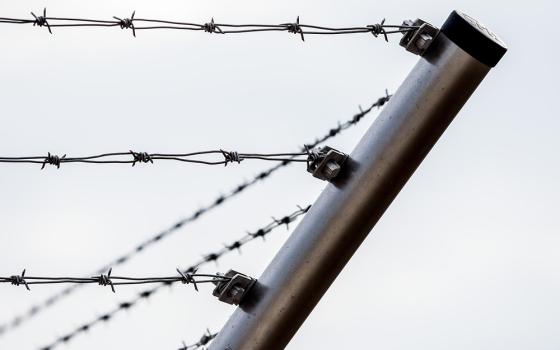
The man pointed at crude stitches lining the outer edge of his palm, a cut from barbed wire, he said. The wound had become swollen and red. They said they had been sleeping on the street for three days. "Ratos!" is all I understood. He used his hand to show how he swatted the rats away so the boy could sleep at night.
The boy needed Pull-Ups. They needed water, food, money, medicine, clothing, shoes, a place to go, a place to stay, a school for the boy, jobs — the more I thought about it, the more their need grew, a universe of need expanding at warp speed.
What do you do when you think the face of Christ is looking at you through the eyes of a 3-year-old boy?
At first, we focused on the immediate. Dan gave them a Visa gift card he had for emergency situations. Patrick and I drove to Walmart and scanned the shelves for supplies. "What about this?" I kept asking as we filled the cart with antibiotic cream, bandages, Pull-Ups, granola bars, water and apple sauce. "Yeah, OK, I guess, sure," Patrick replied, as disoriented as I was to what they might need most. We returned to the shelter with the supplies and were received with more sincere "gracias" than I felt we deserved. They asked for nothing more.
I returned home in a kind of shock. As the minutes passed, the realization that I had just left a 3-year-old sleeping on the street punched my gut. How could I sleep that night knowing where that boy was? His face was now tattooed in my heart. But what could I do? Bring them to my house? And then what? Oh Lord, what do I do?
I wish I could tell you that boy's name. I wish I could tell you more about their harrowing experiences. The family is still so dear to me now, and I must protect their identities.
The realization that I had just left a 3-year-old sleeping on the street punched my gut. How could I sleep that night knowing where that boy was? His face was now tattooed in my heart.
People say that migrants leave their countries out of desperation, but I tell you that it is something else that gives strength to a person who swims across a raging river with a small child on his back. It is something else that moves a mother's feet through a swamp after she has witnessed a person being executed for defying a thief in the world's most dangerous jungle.
That "something" is hope, and it is, actually, the very opposite of desperation. My soul recognized that hope in the father's eyes when he yelled, "Baby," and again when I bent down and greeted the boy, I saw it in his eyes, too. I felt it in my own heart the moment I knew we had to get that child off the street. It was the moment my hope entwined itself with theirs.
So, what happened? I took a breath and remembered that no woman is an island. I asked for help, writing an email to as many people as I could — something I had never done. A wave of generosity rose up so large and fast, it felt like a tide coming in. It humbles me to this day.
Vivian was the first. She dropped everything, drove to the closed shelter and picked the family up that night. She got them into a hotel, brought them food and much kindness. Maritza collected clothing and supplies. Countless others sent me money for the family. After no luck trudging around the city with Vivian to find a spot in a shelter, the Dorothy Day Catholic Worker House offered the family a room where they stayed for three weeks. Then through one connection after another, the family was accepted into a church program that supports them with housing, legal aid, English lessons and more. Vivian and I became their mentors in this program.
As of this writing, mother and father have jobs, and the boy is doing well in school. They still hope for a better future, most of all for the boy — that is why they came here — and we hope with them, even amid these difficult times. We celebrate birthdays, holidays and random Saturday night dinners together. My Spanish is very slowly getting un poco mejor. And their English is, too. There is much to be grateful for, but it is never easy nor truly stable for them. Together, we figure out the many hard things, day by day, as they come.
Now every time I see the boy, he runs to me for a hug. "Tía Dani! Tía Dani!" he exclaims, and my heart swells with hope.