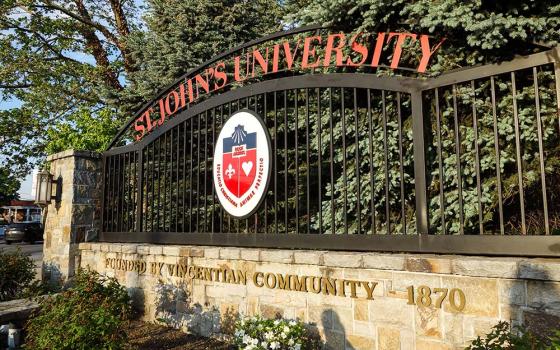
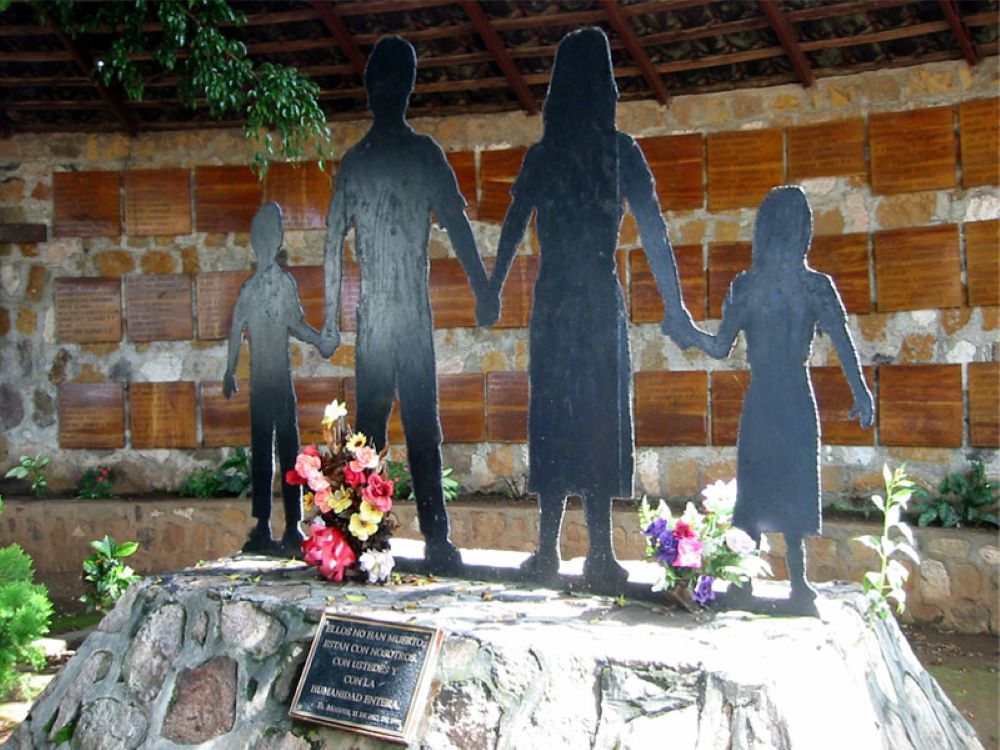
A memorial marks the 1981 massacre site at El Mozote, Morazan, El Salvador. U.S.-trained Salvadoran troops killed 1,000 people there. (Wikimedia Commons/CC BY-SA 3.0/Eric Rojas)

by Jason Berry
Few contemporary writers on the southern hemisphere match Alma Guillermoprieto's mix of steely realism, nuanced profiles and tender evocations of landscape and towns, stylistically echoing Balzac and Didion.
While promoting Looking for History, a softcover edition of her second collection of articles reported from Latin America, Guillermoprieto spoke to a large audience at Loyola New Orleans in 2010. In the question period, a student stood and, voice shaking, said that her family in Honduras was forced to sell their farm: "The narcos gave us no choice." Another young woman, also a Honduranian, blurted, "My family too!"
Guillermoprieto, dark haired with a patrician bearing, let a moment pass. Her upslanted eyebrows and pursed lips telegraphed compassion. "It is happening now in Guatemala, too," she said. "And I am afraid it will keep happening elsewhere." An eerie silence sank into the room.
Born in Mexico in 1949, Guillermoprieto broke into journalism in the late 1970s reporting from Nicaragua for The Guardian. A few years later, covering Central America for The Washington Post, she ventured into a remote Salvadoran village, El Mozote, a zone rife with guerrilla forces battling the dictatorship. Her January 1982 report for the Post described the aftermath of mass murder and rape by U.S.-trained Salvadoran troops on a maddened rampage over unfounded beliefs of collaboration with the enemy.
The New York Times' Raymond Bonner published a graphic account the same day. Their reports inflamed the Reagan administration, which was pumping military support into Central America. U.S. State Department officials denounced the reports as inaccurate, and the Times recalled Bonner from Latin America; he left but later reconciled with the paper. Subsequent investigations by the U.N. and other agencies confirmed the horrific massacre that the two journalists had exposed, spawning books, articles and TV coverage by others. The initial reports of more than 400 dead rose to 1,000 after further forensic investigations.
El Mozote is considered the worst atrocity in modern Latin American history.
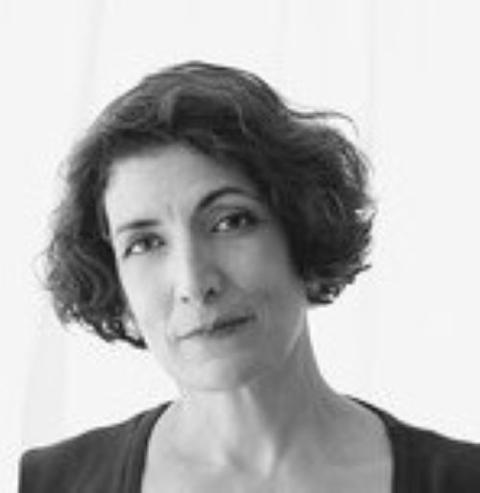
Alma Guillermoprieto was one of two reporters who broke the story of the massacre at El Mozote, El Salvador, in 1982. (Gregory Allen)
Guillermoprieto went on to report for Newsweek, The New Yorker and The New York Review of Books, for which her three-part series on Colombia's drug cartel earned a 2023 George Polk Journalism Award. She later received a MacArthur Fellowship and membership in the American Academy of Arts and Sciences, among other honors. She has published several books in Spanish in addition to six written in English.
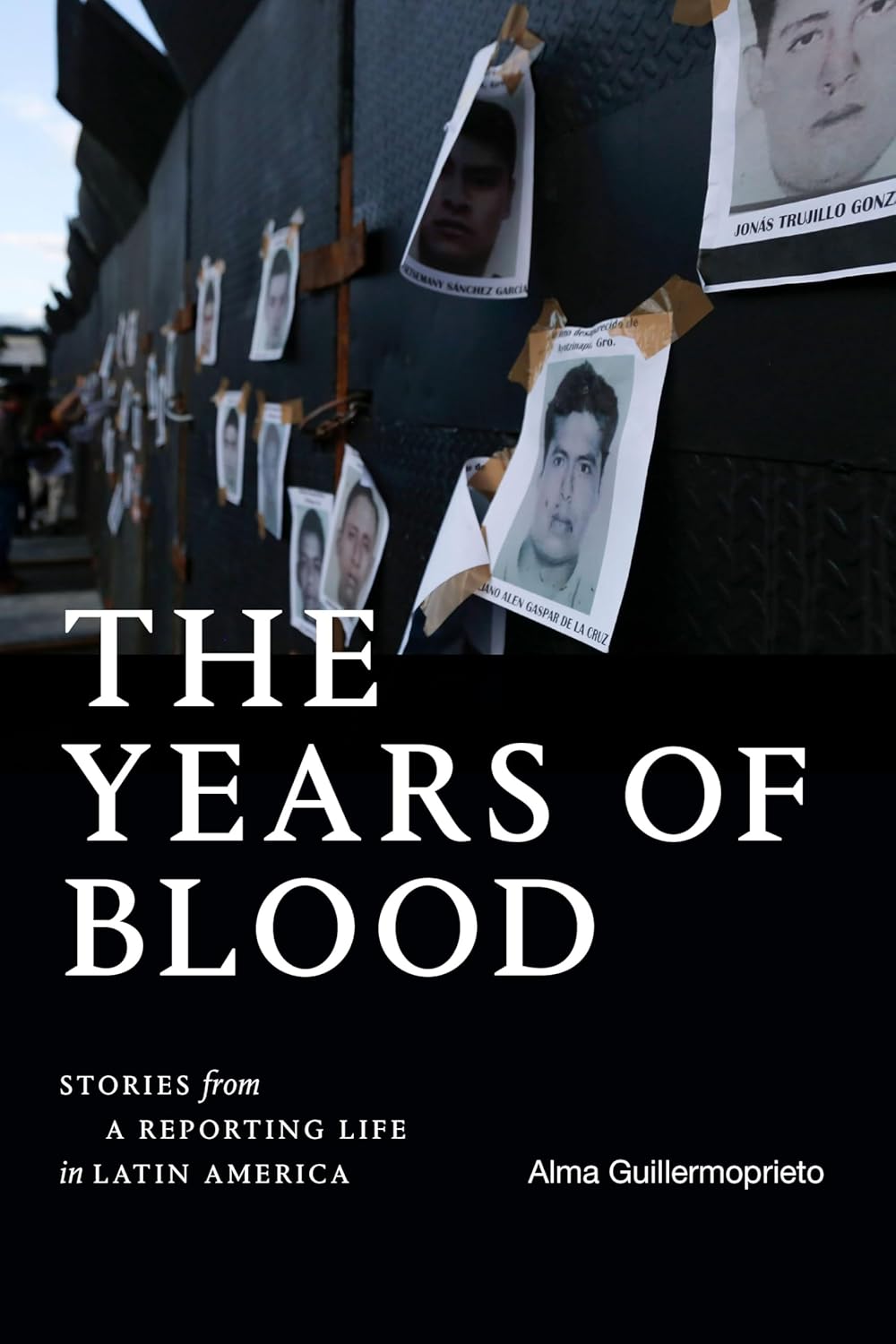
Guillermoprieto's latest book, The Years of Blood, belongs in every library for its chronicle of Latin America in turmoil and the textures of daily life. The work includes her 2010 account of the legacy of Archbishop Oscar Romero, who was shot to death in 1980 while celebrating Mass in San Salvador. She captures the spiritual odyssey of a man deeply misunderstood by popes John Paul II and Benedict XVI, whose views on liberation theology lumped Soviet Marxism with Christian base communities which mined ideals from Jesus' words on solidarity with the poor.
"Romero watched in horror as campesinos in his parish were displaced, threatened, terrorized and increasingly shot, stabbed, or hacked to death by underfed, underage soldiers wielding machetes against their own kind," Guillermoprieto writes. Romero was a conformist whose bleak epiphany came when a Jesuit friend organizing peasants was shot dead on a rural road with two of his parishioners.
She continues:
"All Romero's contradictory feelings about church and duty, repression and human dignity, his native distrust of radicalism and politics, his caution and, no doubt, his fear appear to have resolved themselves at that moment. With the same methodical determination that seems to have characterized his rise to the archbishopric, he spent the next three years organizing human rights watchdog groups."
NCR recently spoke by phone with Guillermoprieto about the book. This interview has been edited for length and clarity.
NCR: Did your background draw you to write about Archbishop Romero?
Guillermoprieto: I was raised an atheist. My parents divorced when I was young. My mother went to Los Angeles and I spent five years there; I was 12 when we came back. I wanted to be a dancer and joined a modern dance company in Mexico. At 16 I moved to New York with my mother. I migrated from the Martha Graham school to the Merce Cunningham studio. I got into journalism several years later. In 1978, as the Sandinistas were struggling to overthrow the Somoza regime, I went to Nicaragua as a freelancer with a few connections and ended up stringing for The Guardian.
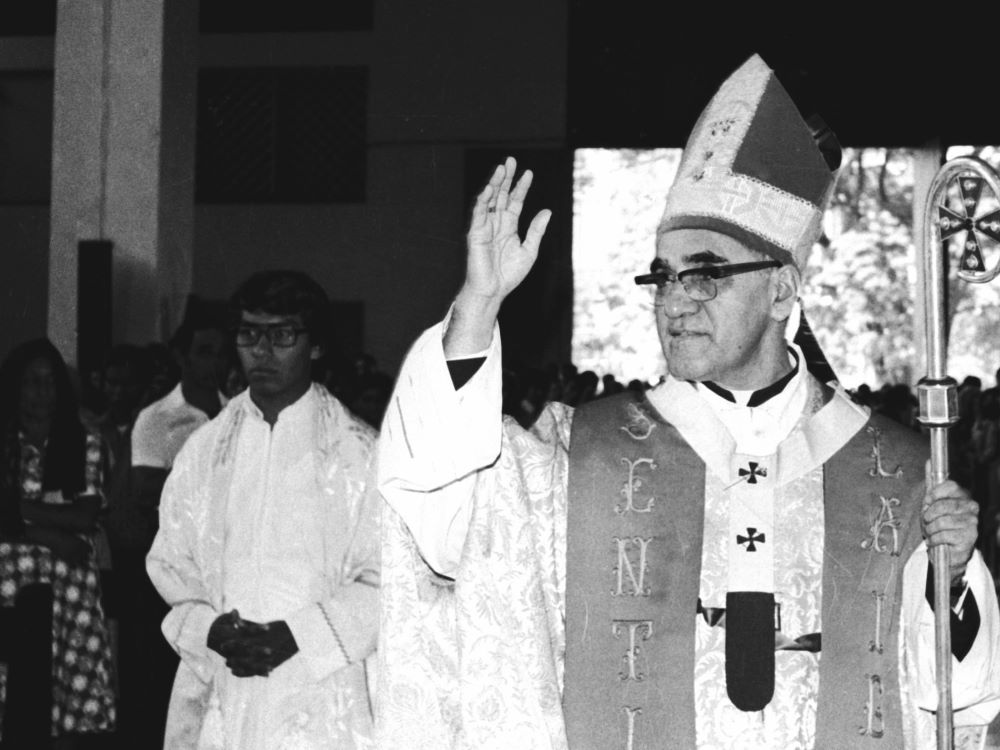
Archbishop Óscar Romero greets worshipers in San Salvador, El Salvador, in an undated photo. Romero was assassinated in 1980 while celebrating Mass in San Salvador. (CNS/Octavio Duran)
There are many things I find moving about Romero. One was the humility of his evolution, how he saw the world change around him and decided he had to change. I think the strength of his convictions and example of his martyrdom left a legacy in El Salvador.
The church in Cuba endured severe persecution under Fidel Castro, yet by 2015, as I learned when reporting there, the church upheld the social safety net with help from international charities. Do you find that elsewhere?
The church in Cuba was a last recourse for human rights, protection of the weakest in providing food and medical supplies. That is the story throughout Latin America, certainly in El Salvador, Chiapas in Mexico, in Colombia, even though theology of liberation is not a big thing as such today. The inheritance is that this is the church's primary mission, for all its many conflicts and contradictions, sex being number one right up there. At least among priests I know, though they would not identify themselves as part of theology of liberation, it's become more assimilated into a way of life.
You divide your time between Mexico City and Bogota, Colombia. Looking back, how would you explain your career?
As one huge accident. (laughs) That's all I can say. In the midst of this prolonged train crash of Latin American history I managed to stay interested and not cynical. And I typed. I've typed a lot. Mountains of paper. A book is a selection of those mountains. I'm getting old and there isn't going to be another collection. I live in two places — really three, if you count the time I spend in New York — because I'm restless and easily bored. This is why journalism was a great discovery for me. It's a door into so many worlds, and there isn't any way to be bored. I'm pretty shy; it's been a problem all my life. You hide behind a notebook and look out at the world and you don't need permission. It's the greatest job in the world.
How do you find out about the world?
I read El Pais, The Guardian, The Washington Post and the Times. I keep away from social media. I only have Netflix. And I talk to many of my friends involved in human rights and politics. I haven't been a news reporter in many years. I've done longform nonfiction narrative — that's a technical description. I'm like a fisher fish, one that lives in caves with a fishing rod coming out of the forehead, waiting for the right morsel to come by. I spend my time looking for the morsel that says, "Write!" Every single story in this book has come about that way.
Your earlier book, Dancing with Cuba, on spending time in your early 20s teaching modern dance in Havana, is largely favorable toward Fidel Castro. How do you assess him today?
It's too easy to say he was insane and a monomaniac and led Cuba down a path of absolute ruin. While all of this is true, it doesn't really reflect what Cuba was like for the people living in it. It is a place where many people loathed the revolution because their status in society had been snatched away. And other people had a sense of purpose and heroism that is hard to come by. Cuba today is overwhelmingly sad and beyond tragedy; it's unspeakable. The loss of everything, food, electricity, transportation and hope.
Advertisement
And though I didn't spend that much time in Venezuela, I suspect that the early Hugo Chavez years were like that, a similar kind of hope. It all went down under (Nicolás) Maduro. Latin America is a place of no consequence to power centers of the world. So to feel all of a sudden like actors on the world stage is incredibly important. I would add this about Fidel: The tragedy is that he so misconceived the revolution.
Given the impact of the drug cartels as a kind of shadow government, do you think that legalizing cocaine would be a way of reducing their control and violence?
It's too late. It's no longer just the drug trade; they have become a mafia. Drugs are not all they truck. They transport women and children as slaves or for money to let them try to get to another country. They transport anything that's illegal; they have evolved. It is huge.
The introduction to Years of Blood is from a speech you gave some years ago, saying that as a young reporter you never thought your career would be consumed by one topic, the impact of the drug cartels in Latin America. How do you find hope?
The attempt as a reporter is not to give in to despair even as you're reflecting terrible things that must be set down for the record. I've always tried to think of the Latin America that I live in. If it were all so terrible people would commit suicide; there is a tremendous capacity for creating beauty and joy that moves me and keeps me going, what I see around me every day.