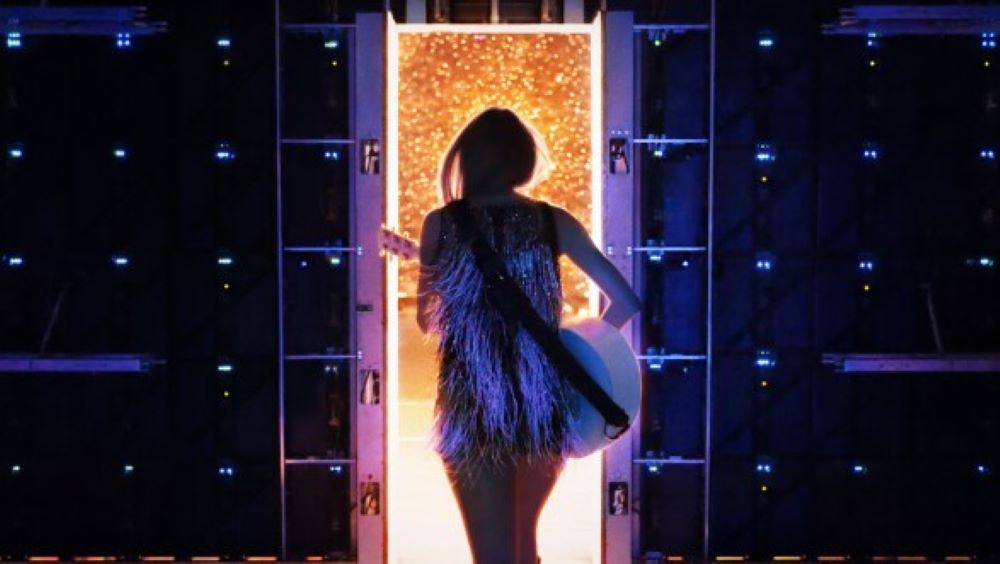
The six-part Disney+ docuseries "Taylor Swift: The End of an Era" highlights the performer's 2023-2024 Eras Tour. (Disney+)

by Lindsay Simpson
In the final episode of "The End of an Era," the new docuseries on Taylor Swift's record-breaking Eras tour, Swift reflects on the tour's legacy: "People come to the show who have different lived experiences and have different beliefs and we can have these moments of connectivity … it's about being accepting of all kinds of passion that we feel throughout our human experience. There’s something so unifying about that."
Over the course of the six episodes now streaming on Disney+, we are treated to plenty of behind-the-scenes footage: fans dancing, singing and crying; interviews with dancers and other crew; and insight from Swift and her family on how they pulled off a two-year, 149-show tour. But beneath the fringe and confetti lies an illustration of Catholic social teaching worth considering as we enter a new year. The connectivity and community Swift and others highlight in "The End of an Era" are really the principles of subsidiarity and participation in action.
Pope Francis taught that subsidiarity "allows everyone to assume his or her own role in the healing and destiny of society." Throughout "The End of an Era," we see micro and macro celebrations of human dignity and the common good.
Kameron Saunders, fan-favorite Eras Tour dancer, is featured in several episodes of the documentary. He shares his struggles with body image in his professional dance career. Saunders' thoughtful comments on how Swift and the Eras Tour crew affirmed his identity and recognized his joy and skill in dancing are inspiring; we see how the opportunity offered him a sense of belonging. The Eras Tour's uniquely inclusive environment empowered participants like Saunders to contribute their gifts to the experience for other dancers, fans and workers; for Saunders, dancing and positivity was his offering, and his impact has endured past the tour's end.
Similarly, backup singer Jeslyn Gorman recounts being diagnosed with cancer mid-tour, completing treatment and boarding a plane to rejoin the tour. In a backstage huddle in Episode 3, Gorman praises Swift. "You like to shed light on people," she said. "It's never a 'me,' it's always a 'we.' " These moments highlight the value of recognizing one another as individuals with gifts to contribute.
The docuseries invites a sense of hopefulness about the power of human connection.
Over and over, we see how the Eras Tour wouldn't be the international catalyst for joy that it was without the diverse individuals who performed and supported one another through struggle and growth; everyone from the security guards and venue workers to fans, tour personnel and Swift herself contributed to this mutuality. Differences were acknowledged, celebrated and invited to continuously shape the tour as it happened. The docuseries features many shots of security guards dancing with fans, tour personnel cheering each other on when they solve logistical challenges and Swift humbly learning choreography she knew would delight longtime fans.
Swift seems to genuinely delight in her responsibility to the common good. We see the Grammy-winning singer painstakingly pen handwritten notes to every single crewmember, accompanying unexpected bonuses. Swift reportedly paid $197 million in such bonuses to truck drivers, caterers, musicians, dancers and other tour personnel, a rare and potentially life-changing act for many. What the docuseries doesn't show, but has been well documented, is that Swift reportedly donated to food banks and hunger relief organizations in nearly every one of the 51 cities on The Eras Tour.
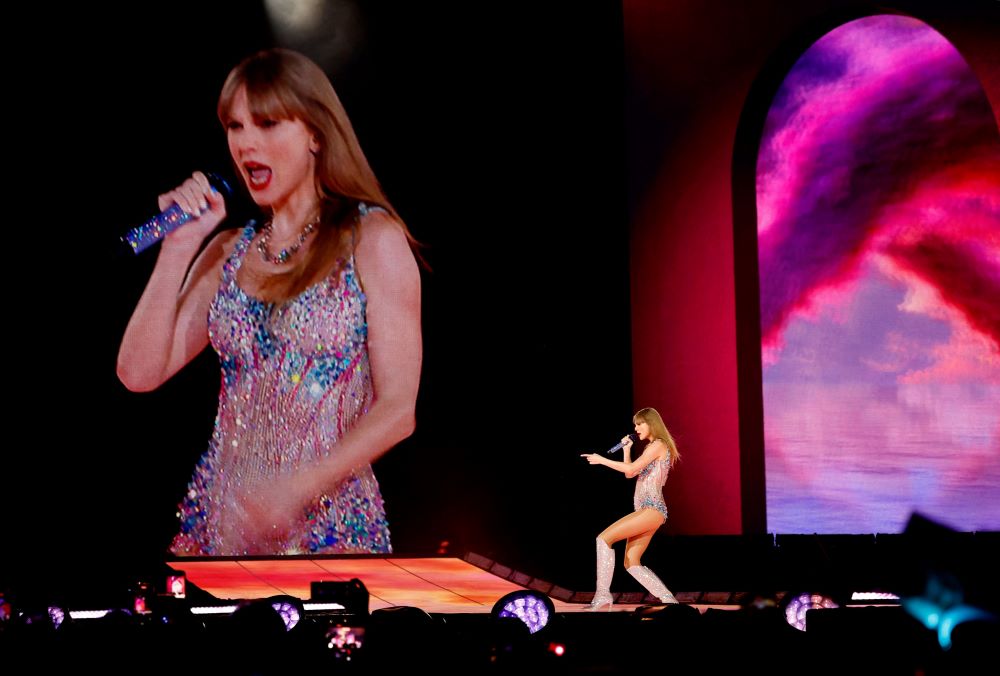
Singer Taylor Swift performs at her concert for the international "The Eras Tour" in Tokyo, Japan, Feb. 7, 2024. (OSV News/Reuters/Kim Kyung-Hoon)
The leadership of Jesus in the Gospels communicates that the role and responsibility of those in power is to look after the good of all. "The End of an Era" offers a window into the practice of this value that created a space for people to thrive.
It is not an exaggeration to say that what made Swift's sixth concert tour such a phenomenon is the fans' commitment to participation, in the fullest sense of the word. In the docuseries, we witness more than just concertgoers with elaborate handmade costumes; we see strangers-turned-friends swaying together to songs from two or 20 years ago, live marriage proposals, millions of fans trading handmade friendship bracelets, and a consistent environment of safety, authenticity and love.
Advertisement
As Andrea Swift, Taylor's mother, shares in Episode 1, "The thing that's so special, it is that community. When they get into that stadium and celebrate, not just what's happening on that stage, but what's happening with them, and how they honor each other and love each other, it just became this movement."
Whether you went to multiple Eras shows or are a curious bystander, you're likely to find that the docuseries invites a sense of hopefulness about the power of human connection. "The type of people that are showing up are of different sizes, are of different ages, are of different races, are of different backgrounds and spaces … and can come to this show for three and a half hours and feel the same." Saunders reflects in the final episode. "You leave it different. You leave it better. You leave it warmer. You leave it more giving, more kind, more tolerant. That is the stuff of legend."