
(Unsplash/Patrick Fore)
In Luke's Gospel, Jesus pauses during his triumphal entry into Jerusalem to weep over the holy city. His lament is heartbreaking: "If you had only recognized on this day the things that make for peace" (Luke 19:42)!
Jesus' cry, though specific to his time and place, is also eternal and universal. Pause on the outskirts of Gaza, Kiev or Khartoum, and behold the relentless devastation of war. Pause anywhere in America and behold the blistering polarization of everything. If only we could recognize the things that make for peace!
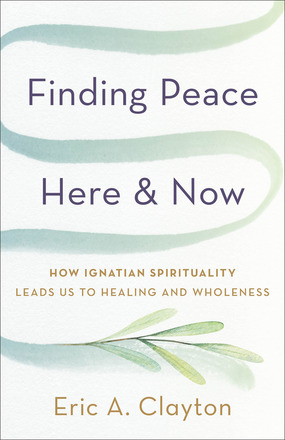
But what are those things? In his new book, Finding Peace Here and Now, Eric Clayton answers that question by directing our gaze back to the human heart: the only place from which either strife or solace can spring. It is not enough to wring our hands and pray for peace, Clayton insists: "If peace is what we desire, then we need to practice it."
How, then, does one practice peace? What are the repetitive, foundational movements that precede mastery — the spiritual equivalents of piano scales or basketball set shots? Whether we aspire to be peacemakers on the national or global stage, or (more likely) prefer the intimate theater of family, parish or neighborhood, we must first discover the way to peace in our own hearts. Clayton's subtitle reveals his roadmap: How Ignatian Spirituality Leads Us to Healing and Wholeness.
'If peace is what we desire, then we need to practice it.'
—Eric A. Clayton
As deputy director of communications for the Jesuit Conference of Canada and the U.S., Clayton is an able guide to Ignatian spirituality — as demonstrated by his weekly "Now Discern This" column and his two earlier books, which linked the wisdom of St. Ignatius of Loyola to personal storytelling (Cannonball Moments) and even Star Wars (My Life with the Jedi).
He is also a credible witness to the suffering that results from an absence of peace, having traveled — in his positions with Catholic Relief Services and now the Jesuit conference — to distressing places around the globe, putting a human face on both misery and resilience. With this book, Clayton brings to bear the light of the Jesuits' founder on another of his passions. Drawing on the Spiritual Exercises, he offers fundamental Ignatian principles that can orient us in the direction of peace.
That this approach is neither mystifying for novices nor tedious for veterans of the Exercises is a mark of the author's ability to thread the needle. One of Clayton's greatest strengths as a writer is his gift for storytelling, which he uses to good purpose here. Each chapter starts in a surprising place: attending the birth of his daughter during COVID-19, seeing "The Sixth Sense" for the first time, or struggling to thin out his closet. These relatable stories pull us in and provide fresh points of entry to the Exercises, always in service of the inner work that is a prerequisite for any external peacemaking efforts.
Beginning with the Introduction, Clayton establishes a commitment to vulnerability, confessing the emotions that rob him of peace. He wants to get rid of anger, anxiety, frustration and jealousy, but he knows better than to turn his sword on these unappealing parts of himself.
"We are who we are," he writes. "Our parts are here to stay. Rather than wage war against them, I believe it's better to befriend them. Understand them. Repair and restore and integrate them. Turn to yourself in peace, not conflict."
In other words, there is no room for harshness in peacemaking. Only by practicing the things that make for peace within ourselves — with all gentleness and compassion — can we ever hope to extend that practice to our neighbor.
Advertisement
Having established the ground rules, Clayton now walks us through the four "weeks" of the Exercises. Flush with examples from ancient and contemporary authors as well as films, fairy tales and everyday life, Finding Peace Here and Now uses classic Ignatian meditations to flesh out the decisions that lie before us each day. We ponder God's dream for our lives. We pray with the global and personal effects of violence. We follow Jesus through his life and ministry, noticing turning points at which he invites us to follow. We consider the nonviolence of the crucified Christ and the joyful return of the risen Lord. Moving beyond the Exercises, Clayton concludes with chapters on creativity and forgiveness, gifting us with additional opportunities to practice what he preaches.
Each chapter concludes with a "Spiritual Exercise for Peace Work," presenting concrete suggestions for integrating the material. These gems include not only prayers, Scripture passages and reflection questions, but also writing prompts and — intriguingly — conversation starters that can be used "with God or with neighbor." (Try both!) In addition to these formal invitations to pause, countless paragraphs merit musing and revisiting, perhaps by copying them into a journal to savor prayerfully.
This is a book that begs to be read slowly. Downing it for information will yield a rainbow of underlined passages, for sure. But if you really want to recognize — and internalize — the things that make for peace, the only choice is to practice. In which case, Finding Peace Here and Now is a lively, accessible guide to those spiritual scales and set shots.