(Unsplash/Rhodi Lopez)

by Eric Clayton
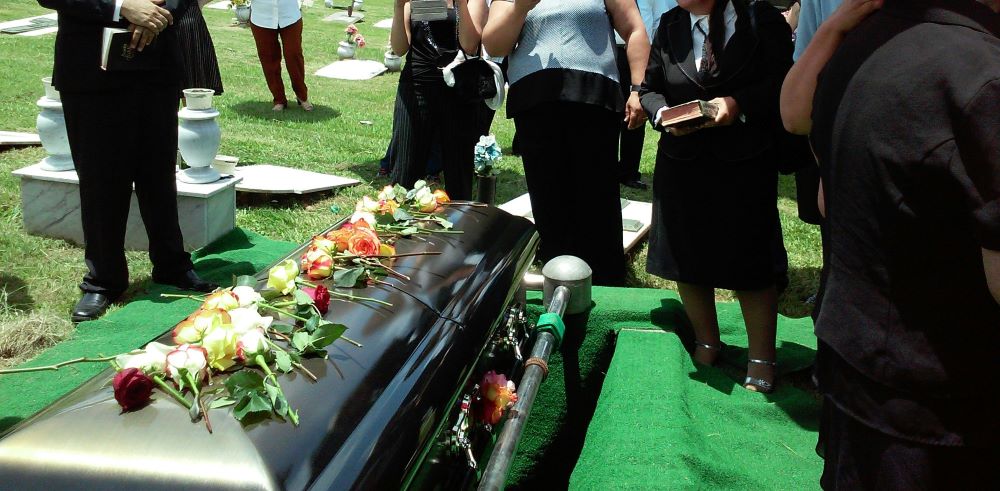
My grandfather died mere days after I finished reading the chapter "On Death" from Martin Shaw's new book Liturgies of the Wild: Myths That Make Us. As we prepared to bury the dead, I felt as though Shaw was speaking directly to my embodied experience.
"We miss the needed consciousness that sitting with a dead body will sober and sanctify us into," he writes. "We haven't been done a favor by having the end of life ushered out of sight."
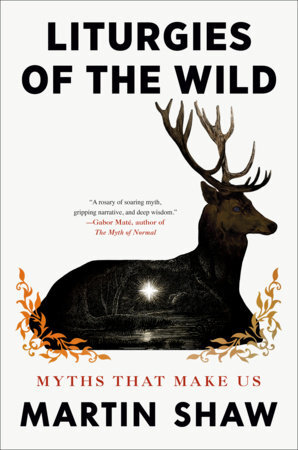
In his newest book, the mythographer and prolific author reacts to a culture that avoids facing the reality of death. We would rather believe stories that insist death can be cheated, avoided and brushed off rather than stories that demand we confront our inevitable end.
Shaw's words haunted me as we planned my grandfather's funeral; they rang loud and persistent in my ears as I stood before the open casket. In that time, in that place, the end of life was hard to miss. Right there was the body with which I had been so urged to sit. Now what?
"Be extravagant and protracted and real in your grief," Shaw advises. "Don't let a chance like this go by. This is a time outside of time, and extraordinary things can happen."
A funeral is both commonplace yet uncommon, an apt representation of Shaw's point, that stories encompass all we are and do, things both monumental and mundane. Interrogating which stories we allow to shape us is necessary, urgent work.
"How do you make a real human being?" Shaw asks early in his book. "And what is that?" We might have a flippant response to the first question and roll our eyes at the second, yet, looking out at our world today, it seems we have collectively forgotten what it means to be human and what it means to share our humanity.
The answer to his question, Shaw insists, is story. Story has shaped human beings since the beginning of time; story connects and informs us. But not just any story: myth.
'Be extravagant and protracted and real in your grief. … This is a time outside of time, and extraordinary things can happen.'
—Martin Shaw
"A myth is a story that speaks of our relationship to the gods, the earth, the animals, the elements, fellow humans," Shaw says. "They orientate. They are the soil that children-as-plants are meant to be grown in."
True myths, the author contends, mature us. These are the stories that have no easy answers, but have meaning and marvel in spades; they are the stories that reflect back to us the challenges we know we must face.
Too often, though, we settle for myths that "challenge nothing, and engage only in a rather tedious celebration of ourselves," Shaw laments. After all, the mythic structure demands a return; after we've left home and gone out into the unknown, we necessarily come back and share with others all that we've learned. The story isn't about "me" as much as it is about "we."
Liturgies Of The Wild is a call to recover these once instinctual stories, a challenge to see in our own lives the thread of myth and an invitation to awaken to the mythic qualities of our own existence.
For Shaw, an Orthodox Christian who returned to faith later in life, these mythic tropes are not an accident. This is how God works; this is what we see in the life, death and resurrection of Jesus Christ. But we have to do the work. We have to return to the source. "We are forgetting the epic story we are tuned for," he writes.
Advertisement
Shaw's work has settled into my soul, and I continue to chew on the richness of his way of proceeding. His words surface during moments of great import — the funeral of my grandfather, for example — but so, too, do they bubble up in quiet, simple moments. The chapter "On Prayer" invites us to consider more intentionally the Sign of the Cross, an encompassing physical act of pointing to all that is, Heaven and Earth, a crossing in the most meaningful way.
"A Crossing should literally be a crossing-over into mythic ground," Shaw insists. "An attention that makes the daily luminous."
I think about that every time I make the Sign of the Cross now as I settle into prayer both routine and revelatory. How is this moment an invitation to recenter myself on the myth that connects us all? How might I cross from my own daily monotony into something more, something bigger, something universal?
How do you make a real human being? A human is made up of, and formed by, stories. But those stories ultimately point beyond themselves, beyond any one person, to another world: to God and the story God continues to dream for us. The more we are able to grow in the rich emotional soil of these stories, the more we are able to behold the things such myths might reveal in our daily, shared lives.