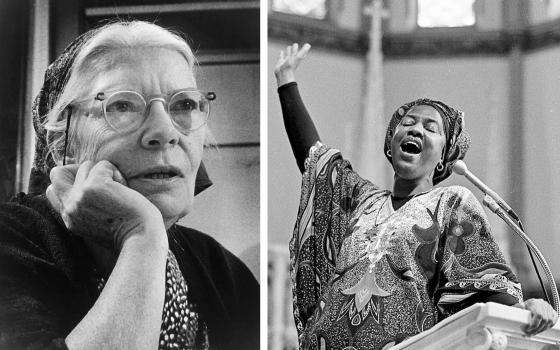

AB Hernandez, a transgender student at Jurupa Valley High School, competes in the high jump at the California high school track-and-field championships in Clovis, Calif., May 31, 2025. (AP/Jae C. Hong, file)

by Maxwell Kuzma
Playing dodgeball in the school gymnasium. Swinging the bat in your Little League baseball team. Shooting hoops on the YMCA basketball court. Running track in high school. These are quintessential experiences of many children, not just the ones who grow up to become LeBron James, Michael Phelps or the Williams sisters. And while these early encounters with athletics rarely involve roaring crowds or gold medal ceremonies, they offer something just as important: formative opportunities for physical movement, teamwork, communication and confidence-building.
But what if there was something about you that made it harder to place you neatly on "the boys' team" or "the girls' team," or placed you on one that made you deeply uncomfortable? What if the attention wasn't on how you played, but on whether you were allowed to be there at all? That kind of scrutiny would make it difficult to stay present in the game — and could push someone away from sports altogether.
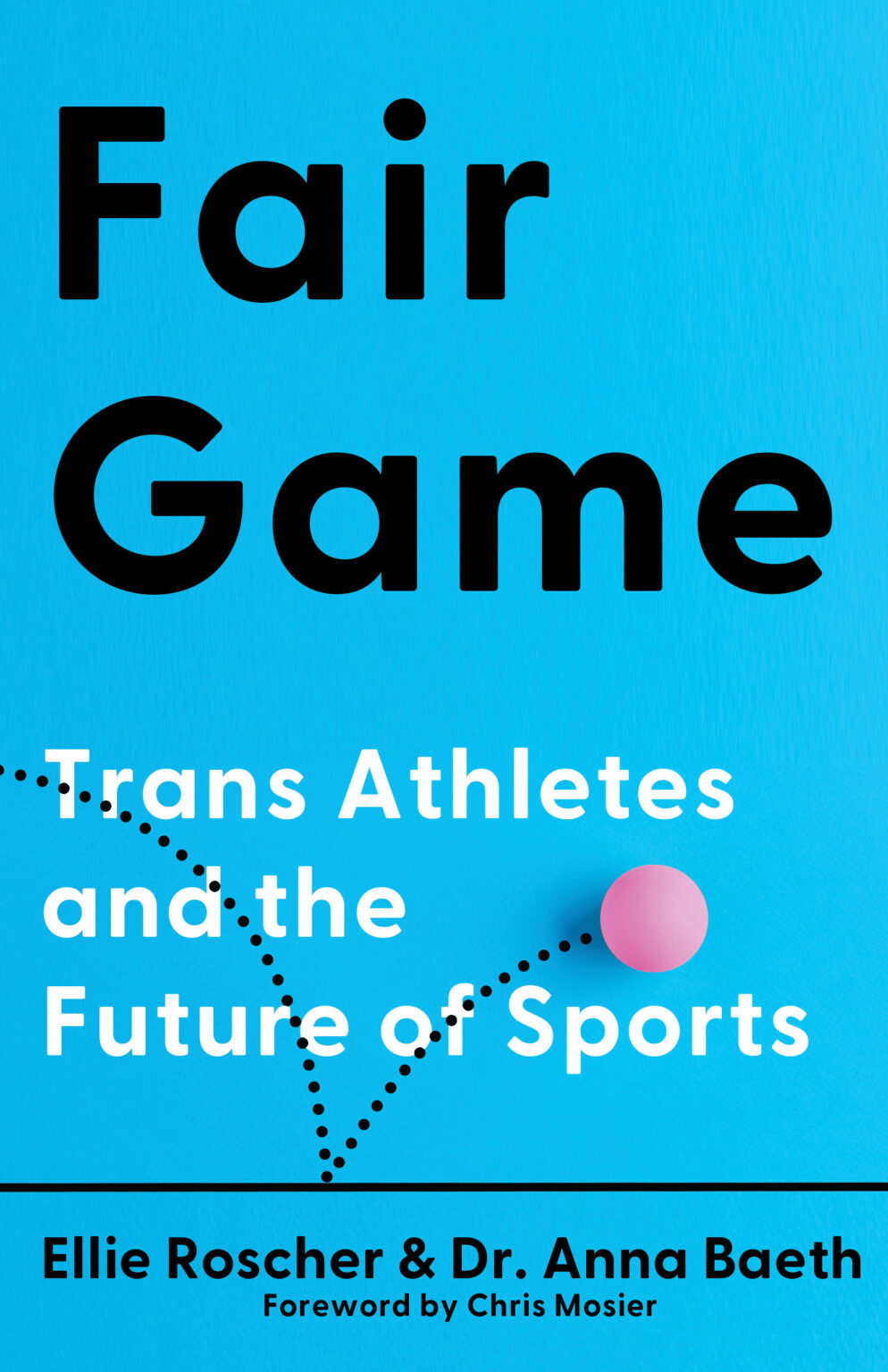
This is just one dimension of the broader conversation about transgender athletes taken up in Fair Game, a new book by Ellie Roscher and Dr. Anna Baeth, with a foreword by Chris Mosier, the first known trans athlete to represent the United States in international competition. Thoroughly researched and rigorously argued, the book offers a striking account of the hostile political climate fueled by scapegoating and misinformation, and counters it with the substantial body of evidence showing that trans inclusion strengthens athletic communities for everyone who participates.
Grounding their work in verifiable data and personal accounts, Roscher and Baeth demonstrate that the political firestorm surrounding transgender athletes is manufactured outrage that does nothing to actually support or protect women's sports. Focusing only on transgender athletes distracts from larger and long-standing fairness issues that could be better addressed by looking at chronic underfunding, pay inequity and lack of resources for women's teams. Moving beyond what Roscher and Baeth describe as a "scarcity mindset" opens the possibility of reimagining sports as spaces where all athletes can test the limits of their bodies within fair, thoughtful and genuinely competitive structures.
Fair Game takes on four myths about transgender athletes. The first, that large numbers of trans people are taking over sports, has driven new rules and restrictions that end up hurting many athletes, not just transgender ones. But the data shows that trans athletes are not suddenly flooding sports teams. In reality, the number of trans athletes is very small: less than 0.002% (10 of 500,000) of U.S. college athletes and even fewer of recent Olympians (0.001%) identify as trans.

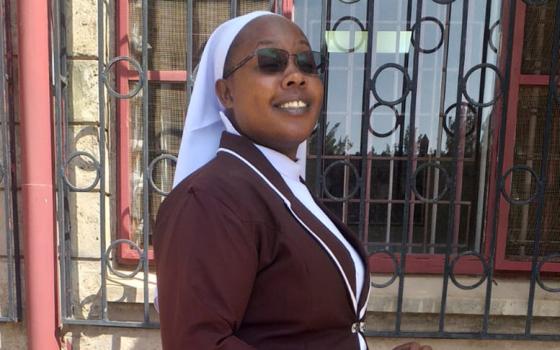
"Fair Game" includes a foreword by Chris Mosier, the first known trans athlete to represent the United States in international competition. (Wikimedia Commons/CCA 2.0/Collision/Stephen McCarthy)
Next, the book addresses the myth that trans female athletes have an automatic physical advantage. Roscher and Baeth carefully review the research that shows the complicated nature of the idea of "advantage." The authors point out that differences between athletes exist in many forms, including economic privilege, access to training, mental health resources and, yes, physical stature — but the latter is not relegated to trans athletes alone. Michael Phelps, for example, has a long torso, massive wingspan and shorter legs, creating less drag and more propulsion when he swims. He also enjoys the advantage of double-jointed ankles and lower lactic acid production.
Third, the authors examine the myth that transgender athletes pose a danger to other competitors in locker rooms and bathrooms. They show that this fear is contradicted by evidence (no such assault has ever been reported) and has led to increased policing of women's bodies, forcing many girls and women — transgender and cisgender alike — to prove their gender in invasive and harmful ways.
Finally, the book looks at the concern that transgender athletes threaten girls' and women's sports. Roscher and Baeth present research showing that trans women are not taking over or destroying these spaces. Rather, they argue that when sports become more inclusive, they become safer, more supportive and more equitable environments for everyone who participates.
I was especially moved by the authors' use of vignettes, which center the lived experiences of transgender adults and children, some pursuing professional competition, others simply hoping to participate in sports at the local level. Across these stories and direct interview quotations, trans people consistently describe a baseline anxiety about how they are perceived and whether they will be allowed to participate at all, even as they offer strikingly beautiful reflections on the profound joy of playing sports and the gift of their bodies. Many speak about how physical presence in their bodies through sports helps them process difficult emotions and deepens their capacity to connect with others.
Focusing only on transgender athletes distracts from larger and long-standing fairness issues that could be better addressed by looking at chronic underfunding, pay inequity and lack of resources for women's teams.
Roscher reflects on this explicitly in her author's note, reflecting on how immediately recognizable the language of embodiment is among trans people, and how central embodied experience is to healing and wholeness. The embodiment language resonated with me as a transgender man, both physically and in the sense of exploring the spiritual journey of transition. Early in my transition, bike rides were an important way for me to feel presence and peace in my body, which I experienced spiritually as divine communion.
Advertisement
Transgender people are no strangers to political hostility or intense scrutiny simply for existing. We are real people, not the caricatures so often circulated in media and political discourse. Within Catholic contexts, official doctrine like Dignitas Infinitas continues to misunderstand the science of trans and intersex identities, while repeated warnings from Pope Francis and others about the boogeyman of "gender ideology" reinforce the confusion.
Yet, Catholic social teaching already affirms the inherent dignity of transgender people, and Francis met with many transgender individuals, including myself. That offered a tangible model of what it can look like to welcome LGBTQ people — one that Pope Leo XIV is attempting to carry on. Importantly, Francis also took a modest but meaningful step toward inclusion in a 2023 Vatican Document clarifying that transgender people may receive baptism, serve as godparents and act as witnesses at Catholic weddings. Inclusion in the life of the church and within sports is possible and supports human dignity.
For anyone who has wanted to learn more about transgender people in sports, Fair Game offers an accessible and compelling entry point. The authors' integration of personal stories from a wide range of trans athletes adds a deeply human dimension, grounding the research in the voices and experiences of those most directly affected.