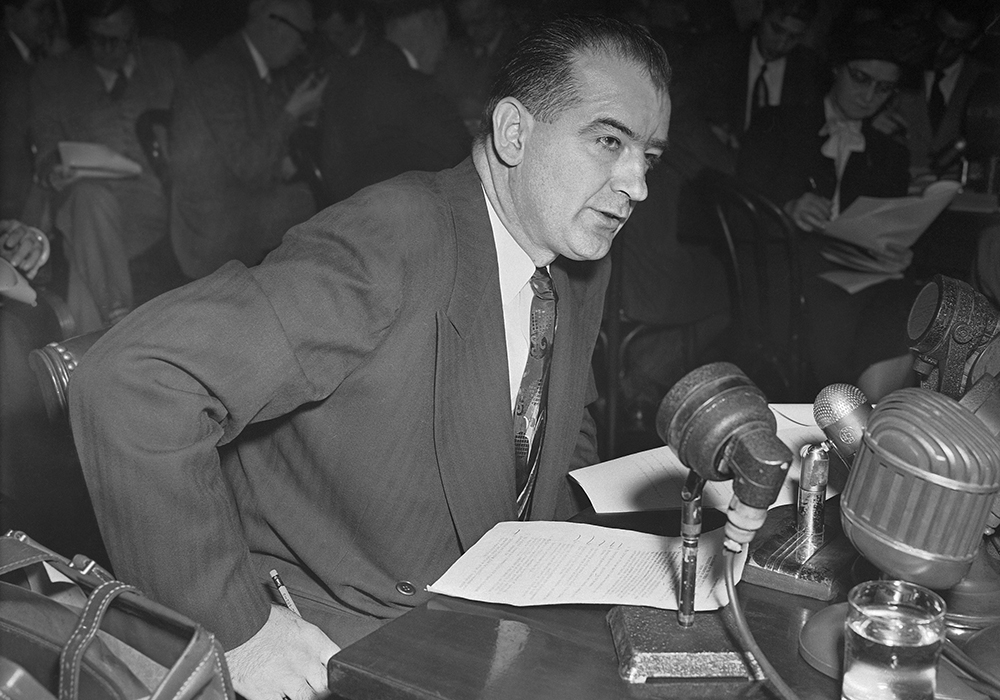
In this file photo, Sen. Joseph McCarthy, R-Wis., accuses Haldore Hanson, key State Department official, of "pro-Communist" activities dating back to 1938, during a Senate foreign relations subcommittee, March 13, 1950. Author Clay Risen explores Congress's investigation of Communism in the federal government and Hollywood in the 1950s in his book Red Scare. (AP photo/Herbert K. White, file)

by Jason Berry
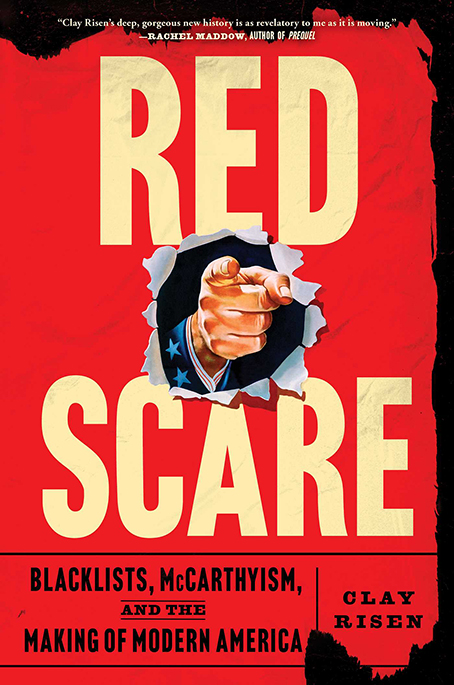
Georgetown graduate Clay Risen is a noted historian and veteran New York Times reporter. His current book, Red Scare: Blacklists, McCarthyism, and the Making of Modern America explores Congress's investigation of Communism in the federal government and Hollywood in the 1950s, and the demagoguery behind the late Wisconsin Sen. Joseph McCarthy's largely unproven allegations. In a telephone interview with NCR, Risen discussed parallels between that era and today.
This interview has been edited for length and clarity.
NCR: You write that Franklin D. Roosevelt gave J. Edgar Hoover support for expanding the FBI's counterespionage work after World War II. When Harry Truman became president, you write that Hoover considered him "a hayseed and accidental occupant of the Oval Office who would soon be swept aside. Truman, in private, called Hoover's FBI 'the Gestapo.' He thought Hoover's worries about Communist infiltration were just fearmongering." Do you consider Truman prescient on the FBI as a domestic intelligence agency that lost its guard rails?
Risen: Definitely. Truman had a very pragmatic but idealistic view of the American public: that people were down-to-earth and unlikely to embrace Communism. He saw Hoover as fundamentally different, having paranoid beliefs about the public, that crime waves and Communists were about to take over. Having watched the FBI expand in the 1930s and World War II, Truman was not eager to see it grow further. He saw Hoover as a great danger, an empire builder for personal and ideological reasons.
Given the changes Kash Patel has made at the FBI, including firing FBI agents who worked with the special counsel investigating President Trump, does Truman's term of "the Gestapo" apply to what we're seeing today?
I think Truman would be appalled at what we're seeing today. Hoover was an institutionalist with a particular view of the FBI, but he was not a partisan in narrow ideological terms. He was very capable of tacking between a Roosevelt, a Truman, an Eisenhower and a Kennedy. He was about the FBI.
The difference with Patel is that he is not focused on the FBI; he's a loyalist to Trump and, to a larger extent, an ideological fellow traveler with MAGA. For all the valid criticisms of Hoover, there were things he was not willing to do. Hoover truly believed in law and order, the professionalism of the FBI to investigate and root out criminality. I think Patel has a different view of things.
My grandfather was in the FBI and my grandmother worked for the FBI. I have a lot of respect for it, particularly for rank-and-file agents. On the other hand, I have a cousin who was hounded by the FBI, Jim Risen, a Times journalist in the 2000s (now with The Intercept). The FBI is famous for its mistakes, but it should also be lauded for its professionalism. Over the last nine months we've watched longstanding agents being fired for political reasons, which I find depressing. It makes me concerned for the future of this organization that has the power and capacity to do great damage to civil liberties in the United States, with its code of conduct at risk of rapid erosion.
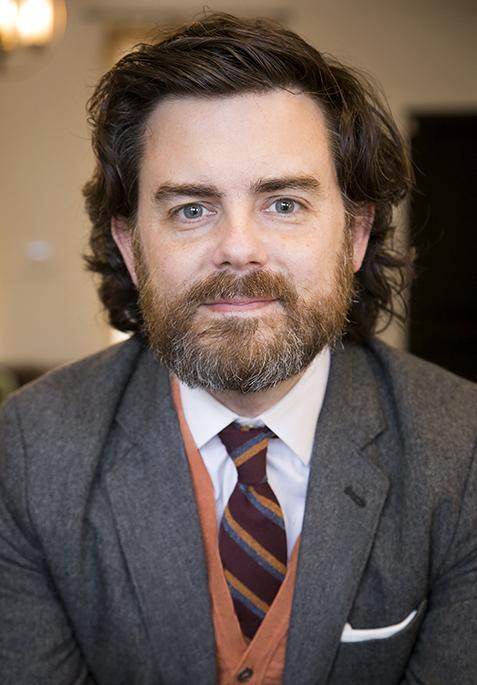
Clay Risen (Courtesy of Simon & Schuster/Kate Milford)
You write about Richard Nixon's use of red-baiting attacks on Helen Gahagan Douglas to win a California senate seat in 1950, a time when "anti-Communist hysteria had gripped the nation." Do you consider MAGA an ideological descendant of the red-baiting hysteria?
Yeah, I do. Both have a strong antipathy toward New Deal and liberal governance. MAGA's DNA rejects a fundamental premise of government to actively ameliorate the worst excesses of capitalism. Unemployment benefits and old age benefits are among a lot of things the market doesn't do. Capitalism doesn't provide parks, infrastructure, medical security and public goods we need in a modern society. The core of the New Deal was about fulfilling those needs. MAGA has undertones of the Red Scare in its point of attack, wanting to wind back to a 1920s version of America. The New Deal embodied a real turn in American life with the embrace of civil rights, women's rights and a more egalitarian and cosmopolitan view of American life. That really set off a lot of the red-baiters. The hard right is fighting the same fight some 80 years later.
Your book notes Hollywood screenwriters, actors and directors whose careers were wrecked for Communist Party sympathies, or past memberships, under the long arm of the House Un-American Activities Committee. "Newspapers ate it up," you note. In a CBS report, Edward R. Murrow did an expose of McCarthy that damaged his credibility. Prior to that, do you think the press was co-opted in its coverage of McCarthy and the Red Scare?
I think three things were going on. Some of the press was co-opted; a lot of reporters and editors saw McCarthy as great content, guaranteed front-page material. He sold papers. They didn't examine whether he was legitimate.
Another category of people believed in him. He was aggressively Catholic; you had the Legion of Decency screening Hollywood films for moral content. That was the operating environment. We have this image of post-war journalism as a kind of golden age of objectivity, but in the early 1950s some papers were on one side or the other. The Chicago Tribune was very hard right, not only in editorials but in slant of coverage.
In the third category were most papers: They didn't know how to deal with him. They knew he was dangerous, selling falsehoods, but they were used to a certain kind of deference to public officials. Yet here was somebody taking advantage of the press to manipulate the public. It took a while for reporters and editors to deal with that. I wish I'd spent more time with this question in the book. There was a lot of debate among editors across newsrooms: Can we say he's a liar? Can we offer counterevidence? In that way, McCarthy had a silver lining. Now we expect newspapers to be more independent, aggressive and skeptical of power.
Advertisement
Given your research findings, do you think Dwight Eisenhower could have gone after McCarthy earlier and perhaps defused some of the John Birch Society zealots? Or was the use of Red Scare tactics against civil rights advocates years later inevitable?
Eisenhower could have been more aggressive. He really dawdled in taking on McCarthy. It didn't come from a place of fear; he had no problems confronting him. What held him back was a shared antipathy toward Communism. He also assumed a certain amount of goodwill on the part of politicians; he believed people in government service were there for good reasons. It took him a while to realize that McCarthy was fundamentally a bad actor, and that it was up to him to do something about it. I think Eisenhower deserves some of the credit for maneuvering McCarthy's downfall, but he could have saved the country a lot of agony if he'd done it earlier.
Do you see Trump's MAGA movement gaining momentum?
It's hard to say. So much is wrapped up in the president and his performance in office. That will be an important metric for how the movement goes. History is full of charismatic leaders who fall. After Alexander the Great died, three generals split up his territory and claimed to have his legacy and then the Romans swept in and took it over. Is there a literary analogue here, where Trump leaves a fractured and non-energized movement? Maybe. Another possibility is that someone does follow through, or there is enough energy within the movement to keep it going with whatever comes after Trump. But look at Italy in the last 20 years. Berlusconi was the force, and his movement was the power center. Once he left, everything withered. We might see something similar in America.