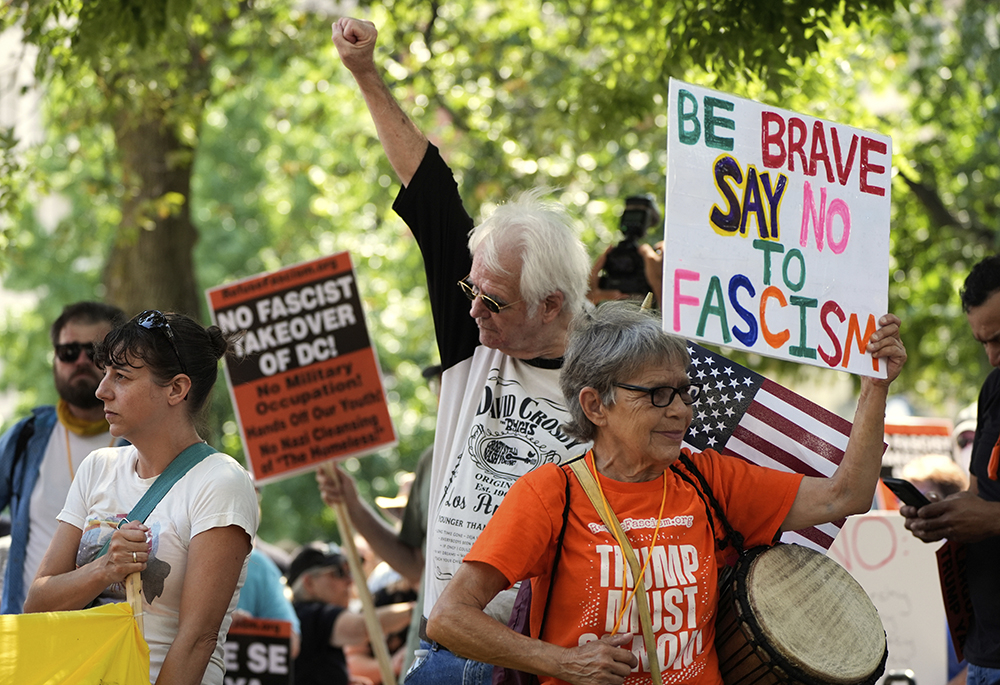
Activists carry signs during a protest against President Donald Trump's federal takeover of policing of the District of Columbia, Saturday, Aug. 16, 2025, in Washington. (AP photo/Alex Brandon)

The one-year anniversary of Donald Trump's reelection and return to power prompts a question: is the United States sliding toward fascism or are we already there?
That the question is now asked so casually and frequently is an alarming reminder of the perilous nature of our present moment. At the least, we are living in an authoritarian epoch; not only in the United States, but globally. So perhaps this is the right time to ask what books and films can offer context and history, instruction and even hope, during this trying moment.
Fortunately, there are plenty.
A good starting point is philosopher Jason Stanley's Erasing History: How Fascists Rewrite the Past to Control the Future. While published during the 2024 election cycle, Stanley's study draws on the first Trump term and its aftermath to sound the alarm about creeping fascism in the United States.
The book begins with a question: Why is history so often disruptive to authoritarian goals? Stanley argues it is because history "provides multiple perspectives on the past." By contrast, he says, "Authoritarianism's great rival, democracy, requires the recognition of a shared reality that consists of multiple perspectives." The exposure to such perspectives, Stanley says, means that "citizens learn to regard one another as equal contributors to a national narrative."
The American narrative is complex and often troubling, Stanley argues. While noting the historical parallels between the present day and 1930s Germany, Stanley repeatedly says that the roots of American fascism can be found in our troubled legacy of racism. (An often overlooked fact is that American Jim Crow laws served as models for Nazi racial legislation.)
"What the United States is experiencing today," Stanley argues, "is a return to Jim Crow practices to intimidate Black citizens and voters from taking part in public life. Unlike the Third Reich, the Jim Crow regime was never resoundingly defeated and dismantled."
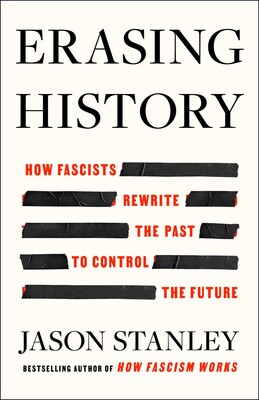
If racism and white supremacy have helped lay a foundation for American fascism, Stanley makes a strong case for a counterbalance based on education promoting the strengths of a multicultural society.
Drawing on the scholarship of his late father, the sociologist Manfred Stanley, Jason Stanley affirms a vision of "civic compassion" as a way to "resist the slide into cruelty."
Such a "slide into cruelty" is helped by fascist education, whose themes, Stanley argues, include national greatness (and by extension national exceptionalism); national purity (usually of one race or religion); national innocence (the refusal to reckon with a nation's faults or shortcomings); strict gender roles (which deny agency to women and to LGBTQ people); and vilification of those on the left (who are seen as "enemies within").
"Fascist education is education for mobilization," Stanley argues. "Like fascist propaganda, it prepares citizens for violence, in defense of a leader, an ethnic group, or a religion."
Stanley, it should be noted, is one of several American academics who recently left Yale University to teach in Toronto. Stanley said he left out of frustration and worry over the current U.S. political climate. Speaking to The New York Times, Stanley said, "You know you're living in a fascist society when you're constantly going over in your head the reasons why you're safe."
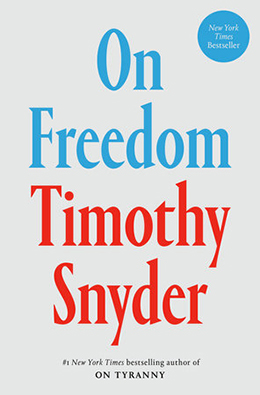
Another leaving Yale was the renowned historian and commentator Timothy Snyder. He said his decision stemmed from personal and not political reasons, telling the Yale Daily News, "I was not and am not fleeing anything."
Still, Snyder’s recent book, On Freedom, echoes many of Stanley's themes. Snyder argues that tyrannies tend to normalize anxiety and try to quell the anxieties by asserting that they are protecting citizens from the threatening "Other."
Stanley and Snyder's insights echo an earlier and perilous time and place: mid-20th-century Europe.
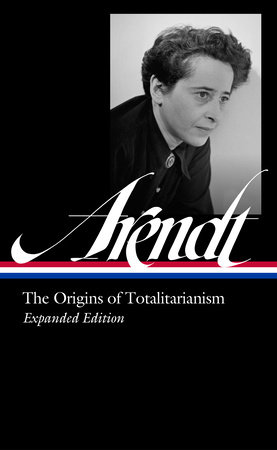
One of the best guides for reflecting on the period when fascist and authoritarian regimes terrorized and brutalized Europe is the German-American philosopher Hannah Arendt's landmark The Origins of Totalitarianism, first published in 1951 and now re-released in an expanded edition published by the Library of America. (Kudos to the library for having the courage and foresight to re-publish this work now.)
Though not an easy read, Arendt's reflections and considerable demands on the reader yield great rewards. While it is important to acknowledge that Arendt — a Jewish war refugee who immigrated to the United States in 1941 — was writing during and about a particular time in history, it is not hard to find prescient insights applicable to today's reality.
Arendt writes movingly, for example, of the role social loneliness plays in attracting people to totalitarian movements, and tellingly of a leader's outsized role in totalitarian politics. In that world, she writes, "politics is a game of cheating" and the first commandment is that the leader is always right. "The chief qualification of a mass leader," she argues, "has become unending infallibility; he can never admit an error."
The legacy of such thinking grounds several new documentary films exploring totalitarian themes. In Apple TV's "Riefenstahl," the lies, evasions and rationalizations of the famed German film director Leni Riefenstahl and her relationship with Adolf Hitler are put on full display.
It is not surprising to see that, even late in life, the director of such pro-fascist works as "Triumph of the Will" rationalized her relationship with her Nazi overseers. Nor is it surprising that the new film uncovers far deeper Nazi sympathies by Riefenstahl than she admitted in her long life. (Riefenstahl died in 2003 at the age of 101.)
The documentary, directed by Andres Veiel, is filled with weird moments, like Riefenstahl's renewing a friendship with Albert Speer, the Third Reich's minister of armaments and war production. Speer, convicted during the 1946 Nuremberg trials, was released from prison in 1966 after serving a 20-year prison sentence for war crimes.
In a letter, Riefenstahl coos to her "Dear Albert" and treasures what seems to be a renewal of a flirtatious relationship. In this and other glimpses of a strange life, the corrosive effects of having served a brutal regime seem to be beyond Riefenstahl's moral capabilities.
One of the best observers of the mid-century epoch was, of course, the English novelist, essayist and journalist George Orwell, who is the subject of the new documentary "Orwell: 2+2=5," directed by Raoul Peck and also on Apple TV. (The title derives from Orwell's depiction in his novel "1984" of "Big Brother" bending objective truth to his regime's purposes.)
A busy and image-laden work, the documentary makes clear that Orwell, a democratic and anti-Stalinist socialist, bequeathed to the world sharp insights about political power and totalitarianism. Those insights are all too relevant today in a world of expanding right-wing authoritarian power and media supplication.
Perhaps there is no better example of those dynamics than in Russia, which Stanley calls today's "most clearly fascist nation."
In the new documentary "My Undesirable Friends: Part I — Last Air in Moscow," someone declares that Russian President Vladimir Putin has turned the country into a Russianized North Korea. It's a perceptive remark in a film examining how courageous journalists try – or tried – to work around authoritarian rule in today's Russia.
The five-and-a-half hour documentary, seen in two parts, recently had a long theatrical run in New York City and is not yet available for streaming. But it deserves to be.
Directed by Julia Loktev, a Russia-born American, the film follows the work and fortunes of a group of journalists, most of them young women and most of them working for the independent television channel TV Rain, which reported critically on the Russian government but was shut down by authorities following Russia' full-scale invasion of Ukraine in February 2022. (The channel is now based in exile in the Netherlands.)
Advertisement
Filmed on an iPhone in classic "cinéma vérité" style, the documentary takes its title from the fact that the journalists were labeled "undesirable" (as well as "foreign agents") by the Russian government, a charge met with gallows humor by the journalists, sometimes even on the air.
Some of the most moving episodes come in the film's last two hours, which depict life during the early days of the Russian invasion of Ukraine. Like many Ukrainians I have met on reporting assignments since 2022, the Russian journalists, pre-invasion, pushed aside thoughts that the invasion would actually occur. Hoping against hope, and perhaps in denial, they thought somehow it would not happen.
But when it did, the Russians knew the regime's heavy hand would soon be upon them – yet that knowledge did not stop them from reporting. The journalists tried their best to report truthfully on the invasion; no easy feat given that the televised lies of Russian government officials are on breathtaking display in the film. (The "special military operation," as it is called, was in response to Ukrainian aggression, they said. In a remarkable irony worthy of Orwell, one of Putin's public justifications for the invasion was in countering what he called Ukrainian fascism.)
In a remarkable irony worthy of Orwell, one of Putin's public justifications for the invasion was in countering what he called Ukrainian fascism.
The journalists' dedication – not to mention their solidarity with each other and other Russians – is extraordinary, even in the face of probable exile. In a telling moment, they stake out one of the jails where anti-war protesters are being held. Huddled together in the midst of a cold Russian winter's night, the young women meet a sympathetic Muscovite who offers them the use of his bathroom and says, "This feeling of powerlessness permeates everything."
At another point, the mother of one of the journalists laconically observes, "Somehow I didn't think that it would turn out this way."
How many Americans have said similar things in the last year during "Trump Redux"? As the world has come to grief over the rise of authoritarianism and fascism, feelings of powerlessness and baffled incredulity are all too common. Perhaps reading, viewing, thinking and reflecting on these themes can prompt action, leading to a better, more hopeful and more generous time.