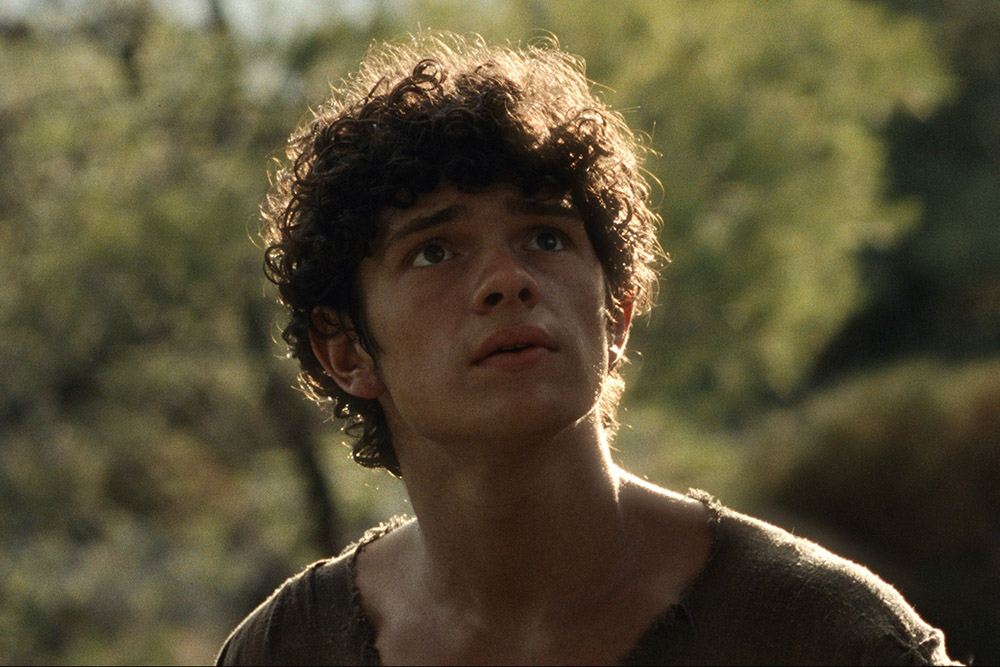
Noah Jupe as the Boy in "The Carpenter's Son" (OSV News/Magnolia Pictures)

When we see the Boy (Noah Jupe) take a life, only a grasshopper, he holds the insect in his hand, studying its fragile body with something like wonder. Then he crushes it. The sound is small, but the silence that follows feels enormous. He looks down at what he's done, takes a deep breath and brings the insect back to life. The miracle isn't triumphant; it rings with horror as the boy is realizing his immense power for the first time.
Lotfy Nathan's "The Carpenter's Son," which is being touted as a psychological horror film, is actually about a different kind of horror: the moment a child becomes aware of their capacity to love and to destroy.
During an interview with NCR over Zoom, Nathan explained that he took inspiration from the Infancy Gospel of Thomas, an apocryphal text that imagines Jesus as a child who doesn't yet understand his strength.
"It paints a very petulant, confused child," Nathan said, adding that he didn't want to make a one-to-one adaptation of the gospel because "on its own, it would be way too much." Instead, he said, "I took the fundamental thing, which is that at a certain age Jesus would have been reckoning with his strength and his power and his sense of autonomy."
This isn't the Jesus of Renaissance paintings or pious imagination; he's a teenager who has never been taught what to do with power.
The result is one of the most haunting and human portraits of Christ committed to film. Nathan's film unfolds with the confidence of Scripture and the curiosity of adolescence. Its rhythms are slow and assured, moving through the exile of the Holy Family in Egypt (the opening sequence feels out of a thriller) toward a future we already know and can do nothing to stop.
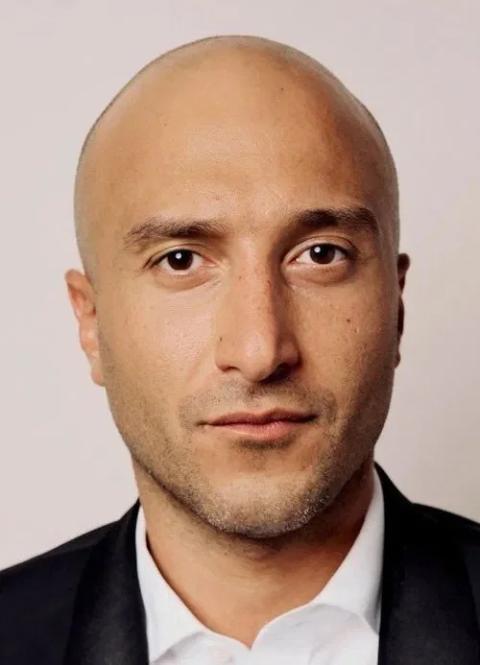
Lotfy Nathan (Magnolia Pictures)
The horror, therefore, lies in the inevitability: We know what lies ahead, and Nathan refuses to cushion us with the usual comforts of prophecy or forced foreshadowing.
The director didn't approach "The Carpenter's Son" as a departure from his earlier work, even though it's a period piece set in a remote desert village. "It feels like such a leap," he said, "but I think there are some commonalities. It's the family. There's always this family unit that's in danger of breaking apart."
His earlier films "12 O'Clock Boys" and "Harka" are, in different ways, about boys forced into adulthood too early. In each, rebellion becomes a language of survival. Nathan recognizes this through line only when others point it out. "I think maybe I'm stuck in that period of my life," he said with a quiet laugh.
In the documentary "12 O'Clock Boys," a teenager named Pug rides through Baltimore on his dirt bike, defying authority and gravity in equal measure. In the drama "Harka," a young Tunisian man named Ali (Adam Bessa) inherits his father's debts and responsibilities. Both are stories of boys facing systems larger than themselves (poverty, capitalism, history) and having to decide who they will and can be within them.
Nathan's latest film simply moves that struggle into a different century. Jesus, as played by Jupe, is another boy on the edge of adulthood discovering that rebellion and compassion are intertwined.
Advertisement
Jupe's performance is a marvel of restraint. He plays Jesus as a boy of about 16, openhearted, curious and visibly frightened by what stirs inside him. This isn't the Jesus of Renaissance paintings or pious imagination; he's a teenager who has never been taught what to do with power. His miracles are not moments of transcendence; they feel more like waking up as a teenager and realizing the pitch in your voice has dropped or not recognizing your own smell.
The film's setting amplifies that tension, as most of "The Carpenter's Son" takes place in a small desert village, its houses made of wood and mud, the interiors dark and almost womb-like. Joseph, played by Nicolas Cage, is often shown trying to keep his son safe inside, as if locking him in might protect him from what's to come.
"It's really about people trying to live in their roles," Nathan said about the production design, explaining that he instructed every department to "keep it all very distilled, close to the ground." That groundedness gives the film its strange realism. This Holy Family is composed of flesh-and-bone refugees rather than static icons.
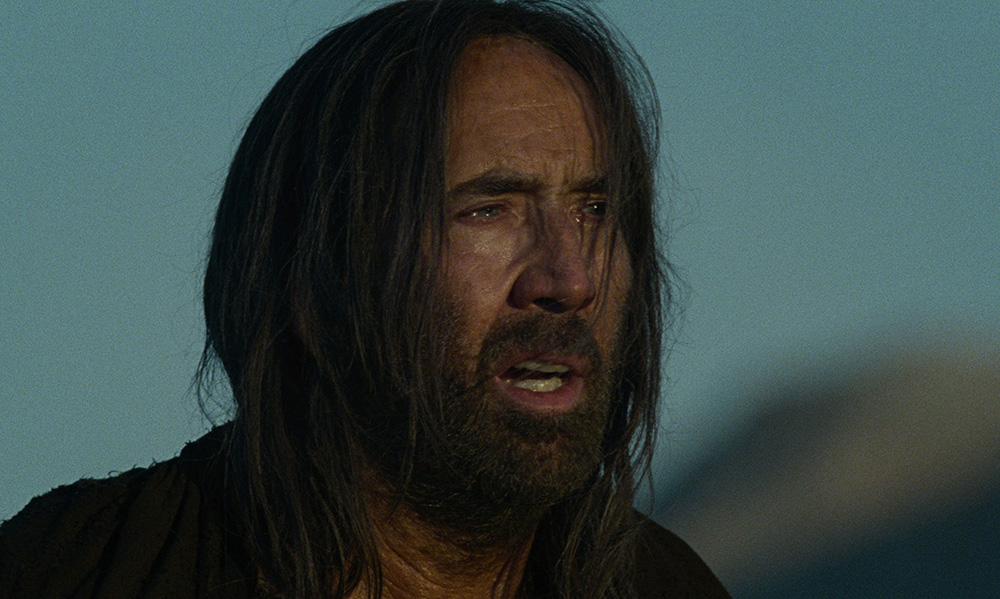
Nicolas Cage as the Carpenter in "The Carpenter's Son" (OSV News/Magnolia Pictures)
Cage's Joseph is extraordinary: a father who understands that he cannot protect his son forever. He moves from fierce overprotectiveness to quiet acceptance, and the transformation is devastating. It may be the most complex performance Cage has given in years.
FKA twigs, as Mary, is a revelation; her presence is contemplative, her strength expressed through stillness rather than speech. Nathan said that he and twigs, as he calls her, worked to understand Mary as "a fundamentally steadfast figure, with grace, self-assurance, and confidence and strength, but kind of in silence at times as well."
That sense of humanity extends to the film's visual style, which has a palette in earthy and pale colors, reminiscent of medieval paintings, ochres, umbers and skies that look brushed with smoke. Nathan was raised Coptic Orthodox, a branch of Christianity rooted in Egypt and marked by its devotion to ritual, iconography and endurance.
"I grew up around a lot of Christian imagery," he recalled, expressing his passion for drawing St. George killing the dragon when he was a kid. "Those were the first graphic images I was exposed to." The influence is everywhere in "The Carpenter's Son," from the way light falls across a face to the moments when characters pause waiting for revelations that never come.
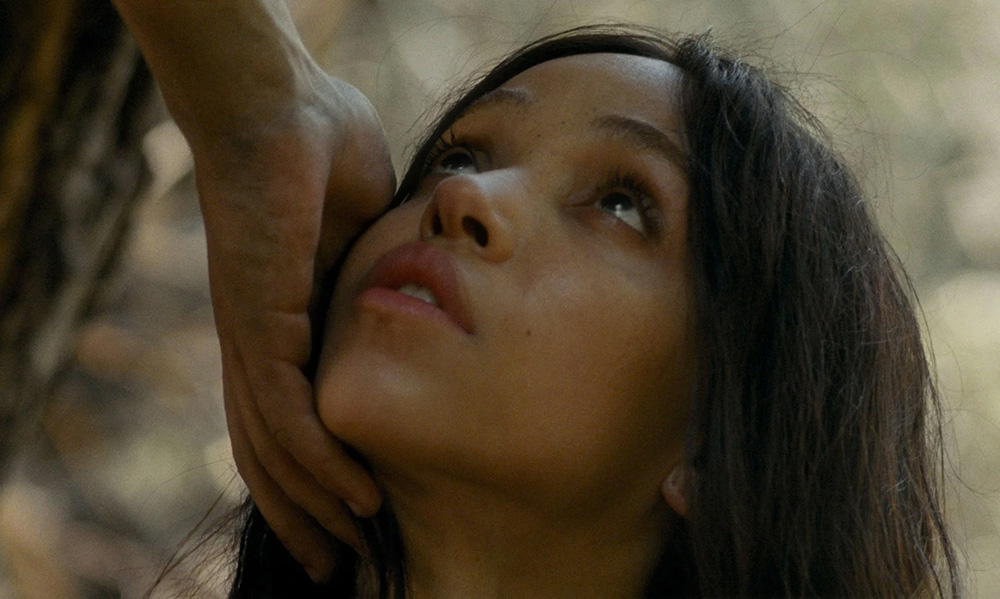
FKA twigs as the Mother in "The Carpenter's Son" (Magnolia Pictures)
Nathan's fascination with Coptic imagery also connects to his approach to faith. The Coptic Church is one of the oldest Christian traditions in the world, and it carries a theology of survival, a belief that holiness is found in endurance, and that beauty emerges from persecution and persistence. That philosophy runs through Nathan's work, whose saints are teenage boys at the brink of revolt.
Reflecting about the film's horror elements, Nathan paused. "It's a pretty brutal story," he admitted. The horror is in realizing you have more power than you imagined, as growing up, in this film, is a kind of rebellion against God, parents and the idea of innocence. The Holy Family here is bound by a love that can't save them from pain.
"The Carpenter's Son" ends with quiet awe, as the story obviously closes with a sense of inevitability. We know what will happen to this boy and that knowledge breaks the heart. Yet there's something redemptive in Nathan's restraint. He never turns the story into spectacle; instead, he invites us to sit with the Holy Family in their uncertainty.
Nathan's film may carry the structure of exile, discovery and future, but what stays is the feeling of standing at the threshold of discovering that the world contains everything horrible and beautiful at once. "It's about people trying to live in their roles," he said.
That description could apply to every character he's ever filmed: boys on bikes, young men in the streets of Sidi Bouzid, a teenage Christ discovering the cost of compassion.