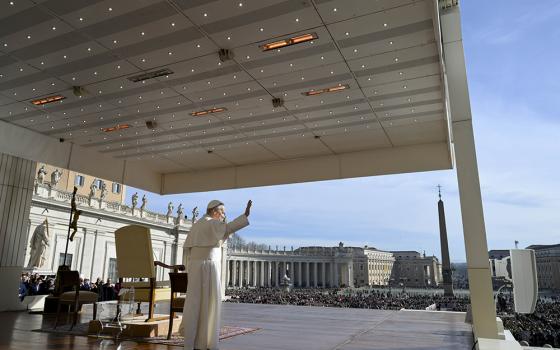
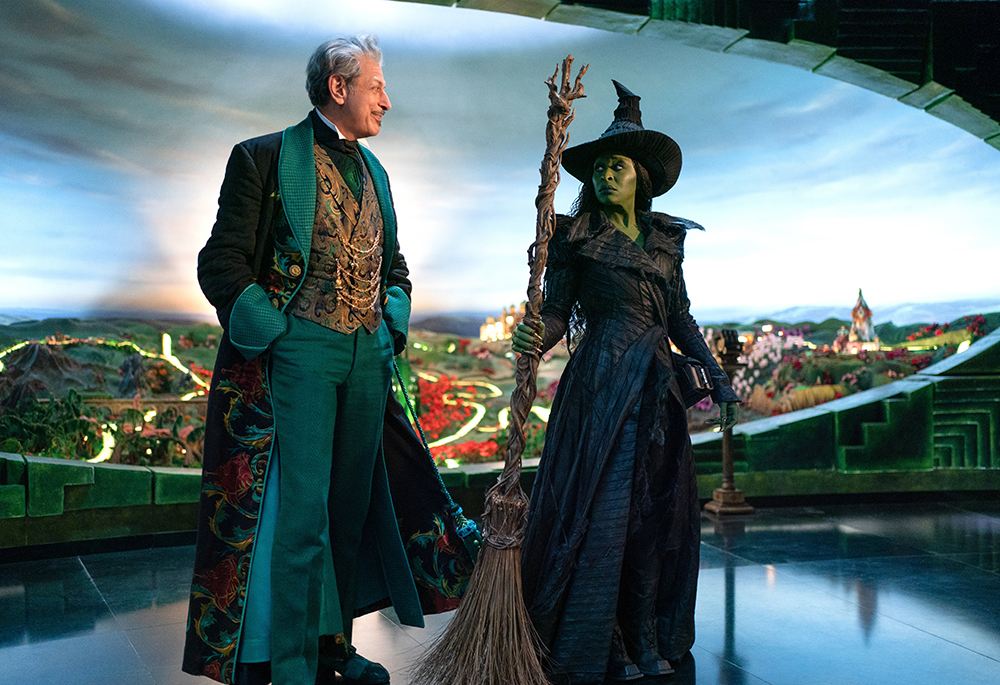
Jeff Goldblum is The Wizard of Oz and Cynthia Erivo is Elphaba in "Wicked: For Good." Moviegoers will head to theaters this weekend (Nov. 22) to see "Wicked: For Good" on the big screen. Author Gregory Maguire wrote the original source material, Wicked: The Life and Times of the Wicked Witch of the West, and its sequels. (OSV News/Universal)

by Jim McDermott
Earlier this year I had an experience that I suspect I share with many musical theater fans of the last 20-plus years. Having seen the musical "Wicked," I turned to the novel by Catholic author Gregory Maguire upon which these stories were based.
But rather than a passionate and effervescent tale of women's empowerment, I found myself confronted with a murky world filled with unsettlingly modern events and situations. Maguire initially paints the so-called Wicked Witch Elphaba Thropp in ways that play upon not just the characters' assumptions about evil, but our own. By the end we the readers are implicated in her mistreatment.
The three book sequels to Wicked: The Life and Times of the Wicked Witch of the West, which follow the descendants and friends of Elphaba over many decades, proved the same. Each is filled with human longing and failings that hit painfully close to home. And that, it turns out, is the real genius of Maguire's work. Like a magic mirror, it reflects ourselves back at us in ways that reveal and challenge our self-deceptions.
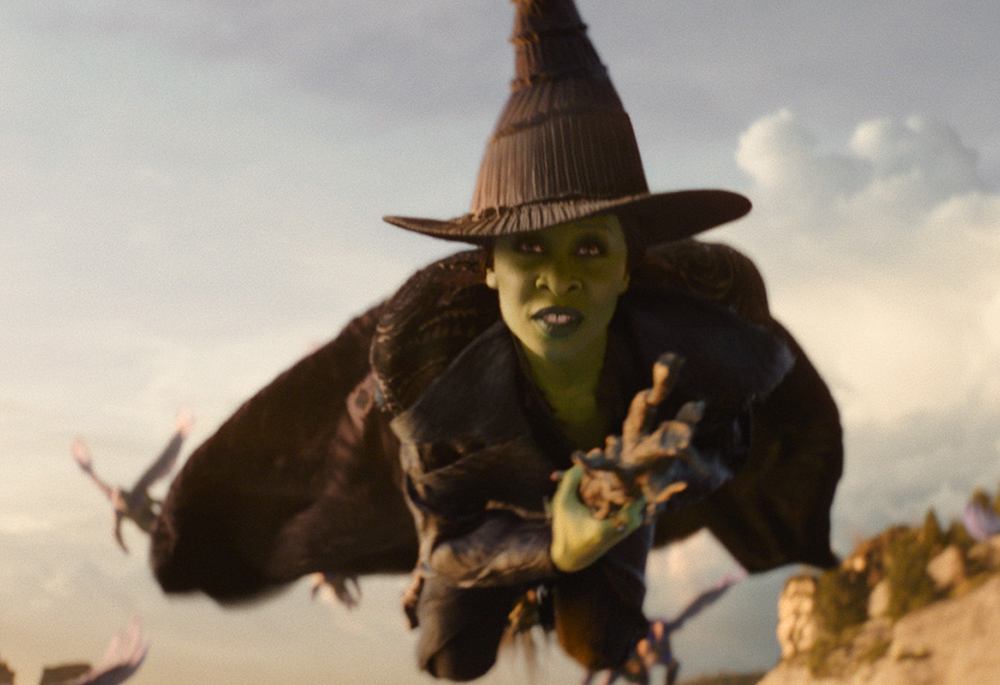
Cynthia Erivo is Elphaba in the film "Wicked: For Good." Jim McDermott writes about the genius of Wicked author Gregory Maguire's work: "Like a magic mirror, it reflects ourselves back at us in ways that reveal and challenge our self-deceptions." (Universal Pictures)
In Son of a Witch, Elphaba's son Liir struggles to figure out his place in the world. Having been raised by a woman who had tremendous power and effect in society, Liir finds himself to be a nobody in comparison. Lacking his mother's power or place, he is of no real significance, and no one should expect much of him. A Lion Among Men tells the story of Brrr the Cowardly Lion, from his life spent alone in the woods to far past the years of L. Frank Baum's original book The Wonderful Wizard of Oz. Where Liir insists he is of no importance in the world, Brrr's frequent refrain is that other people's struggles are not his fight.
In his Summa Theologica, Thomas Aquinas insists that every choice is a moral one. Even the most seemingly banal of decisions are ultimately either for good or for ill. Maguire's characters want to dismiss or deny that truth, in ways that are deeply recognizable. There's nothing I can do about the Trump administration, I tell myself, I have to just wait it out. Also, I know that guy on the street wants some cash, but I've got my own stuff going on.
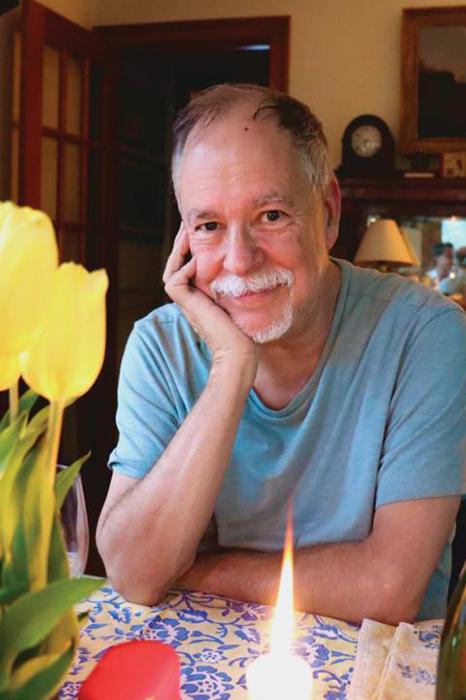
Author Gregory Maguire (Luke Maguire)
Where it's easy for me to let myself off the hook, Maguire proves steely in his resolve to force his characters to face the moral consequences of their choices. Liir, who eventually enlists in the Ozian army, entrusting fate to give him the purpose he lacks, ends up being ordered to commit a horrific war crime. Meanwhile Brrr abandons people who end up coming to great harm.
These reckonings are brutal; and, in a certain sense, both Liir and Brrr learn that their initial premises are true. They are not larger-than-life heroes. They are not going to wake up one morning and stop the fascist tyrant who comes to control Oz after the Wizard leaves. (One of the most disturbing aspects of the Wicked Years book series is the degree to which it resembles the growing authoritarianism and oppression of the United States today.) But that doesn't mean they don't have a responsibility to those around them, or that their choices have no impact. And as they embrace those truths, they find the purpose and sense of community for which they'd been searching.
In one of the quadrilogy's most moving sequences, the normally timid Brrr decides for the first time not to run away, despite finally having a pretty good reason for doing so. With the front of the war bearing down upon him, he stops to help strangers, a choice that puts him in grave danger. Yet there's a lightness and a freedom to him in that moment unlike anything he's previously known. In a clever twist on Baum's The Wonderful Wizard of Oz, Maguire's characters too learn that growth is not granted by a wizard, but by the willingness to sacrifice oneself for others.
Advertisement
Doing a small bit of good will not save the world, it's true. But that kind of calculus is itself the problem, Maguire insists. Doing good helps someone, and that's what is important. Maguire's final novel in the Wicked Years series, Out of Oz, portrays a motley bunch of characters who mostly exist on the margins of the conflict now going on all around them, with little obvious power to affect anything — and little desire to, either. They just want to survive and protect each other. But having learned from their failures, when the war does finally come to them, they are ready to leap in and help the other "little people" of the world, while those swept up in the grander narratives of kingdoms and their leaders don't even recognize they're there.
"Wicked: For Good" the sequel film seems poised to break box office records, as mobs in pink and green rush the theaters this weekend to watch a newly empowered Elphaba confront the vicious tyranny at the heart of Oz. Think pieces will be written about the horrifying resonances between Maguire's Oz and Donald Trump's America. But when he wrote Wicked and its sequels, Maguire was actually chasing not despots, but his readers.
For Maguire, the magic of life is not to be found in some technicolor fantasyland somewhere over a rainbow, but in the goodness that we discover and reveal in this world through the smallest of choices that we make.