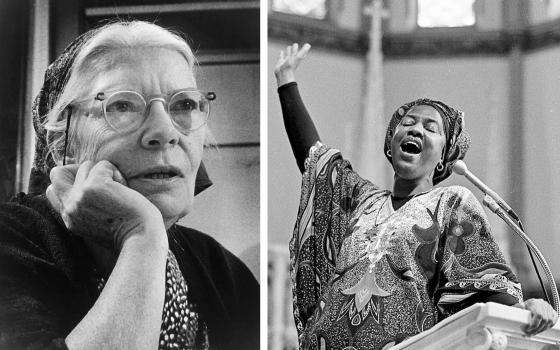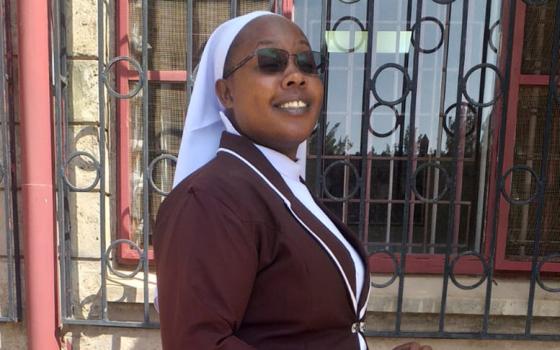
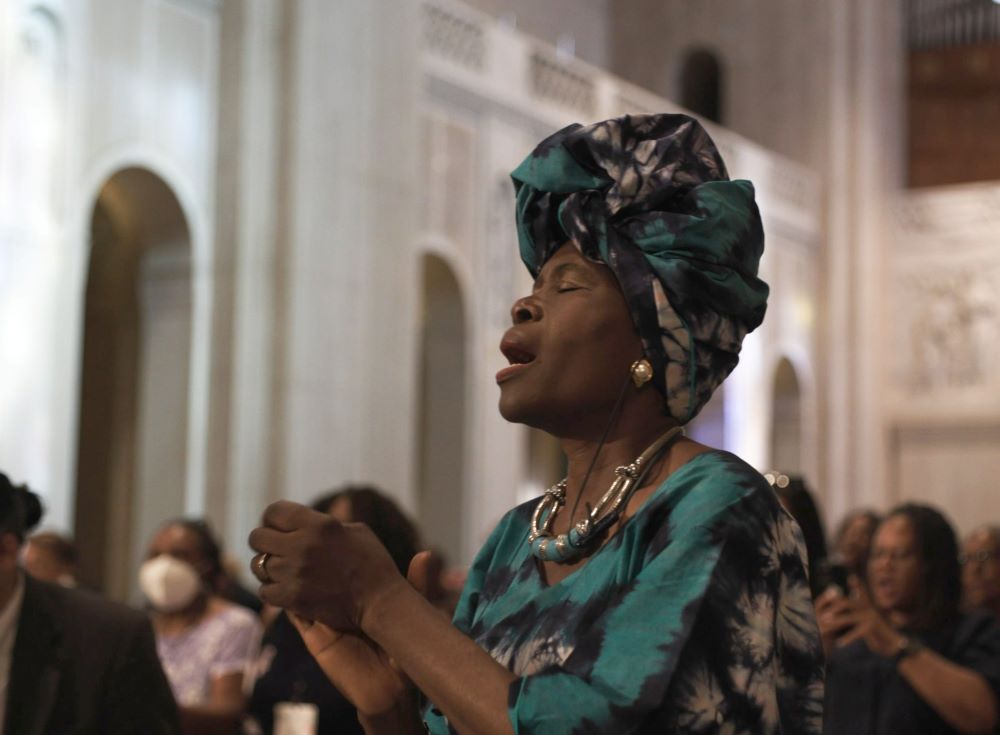
This is a still from the recently released documentary "Trailblazers of Faith: The Legacy of African American Catholics" from the Black and Indian Mission Office in Washington. It tells the story of how African American Catholics have been able to embrace their faith without abandoning their own culture. (OSV News/Courtesy Black and Indian Mission Office)

OSV News
One of the unique aspects of Native American families, said Fr. Maurice Henry Sands, is that not only are extended families quite large, it's also possible to know everyone's name.
The soft-spoken Detroit archdiocesan priest has been executive director of the Washington-based Black and Indian Mission Office since 2015. He is a member of the Ojibway, Ottawa and Potawatomi tribes, which are together known as Anishnaabe. He grew up on Walpole Island on the border between Ontario and Michigan.
He's one of six children, and both his parents were from large, close families. This has given him 30 uncles and aunts, and if the category is considered somewhat loosely among those ranks, 90 cousins.
"Among Native Americans, we keep track of all our relatives," Sands told OSV News.
So he knows all his cousins? "Yes."
All their names? "Yes. That's been a great help to me, staying grounded in my work and in my culture."
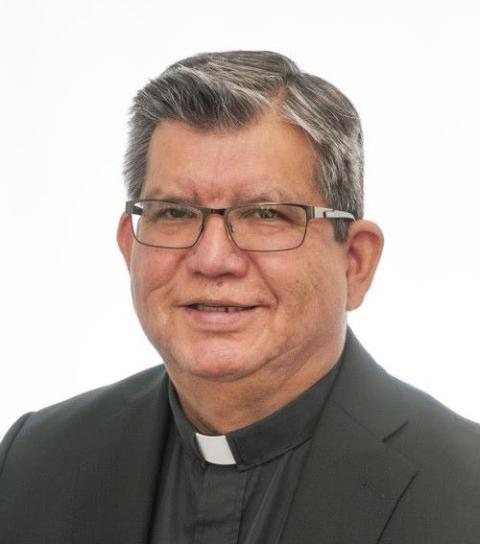
Fr. Maurice Henry Sands, seen in an undated photo, has been the executive director of the Washington-based Black and Indian Mission Office since 2015. (OSV News/Courtesy Black and Indian Mission Office)
The Black and Indian Mission Office is getting a boost from two new half-hour documentaries, "Trailblazers of Faith: The Legacy of African American Catholics" and "Walking the Sacred Path: The Story of the Black and Indian Mission Office." Both are now playing on the Augustine Institute's subscription service Formed. Trailers of the films can be viewed on the mission office's website.
Sands hopes the movies will help fundraising.
While both movies acknowledge the long, ugly history of American racial prejudice they also address evangelization to minority communities.
"They have a legacy of suffering," New York Cardinal Timothy Dolan says in "Walking the Sacred Path." "We also have to be practical in coming to their assistance."
"Trailblazers of Faith" tells the story of how African Americans have been able to embrace the Catholic faith without abandoning their own culture. A particular focus is on the Baltimore-based Oblate Sisters of Providence, the first Catholic order in the U.S. for Black women.
The film also focuses on the pioneering ministries of Venerable Mother Henriette Delille of New Orleans, who founded the Sisters of the Holy Family; Servant of God Julia Greeley, who was born into slavery and after her emancipation later moved to Denver, where she became known for her devout Catholic faith; Venerable Fr. Augustus Tolton, the first U.S. Catholic priest publicly known to be Black and who served as a parish priest in Chicago; and Servant of God Sr. Thea Bowman, a native of Mississippi who was a Franciscan Sister of Perpetual Adoration and was nationally known as a dynamic evangelist before she died of cancer in 1990.
They are among seven Black Catholics with active sainthood causes — dubbed the "Saintly Seven."
Sands, who had earlier careers in accounting and investment banking, was not familiar with the Black and Indian Mission Office growing up, but learned about it after attending Sacred Heart Major Seminary in Detroit and his ordination in 2005.
Frequent visits from his predecessor, Fr. Wayne Paysse, who discussed Native American issues frequently with him, gave Sands an idea that his career path could be taking a turn. He also became a consultant to the U.S. Conference of Catholic Bishops' Subcommittee on Native American Affairs and what is now the USCCB's permanent Subcommittee for the Promotion of Racial Justice and Reconciliation.
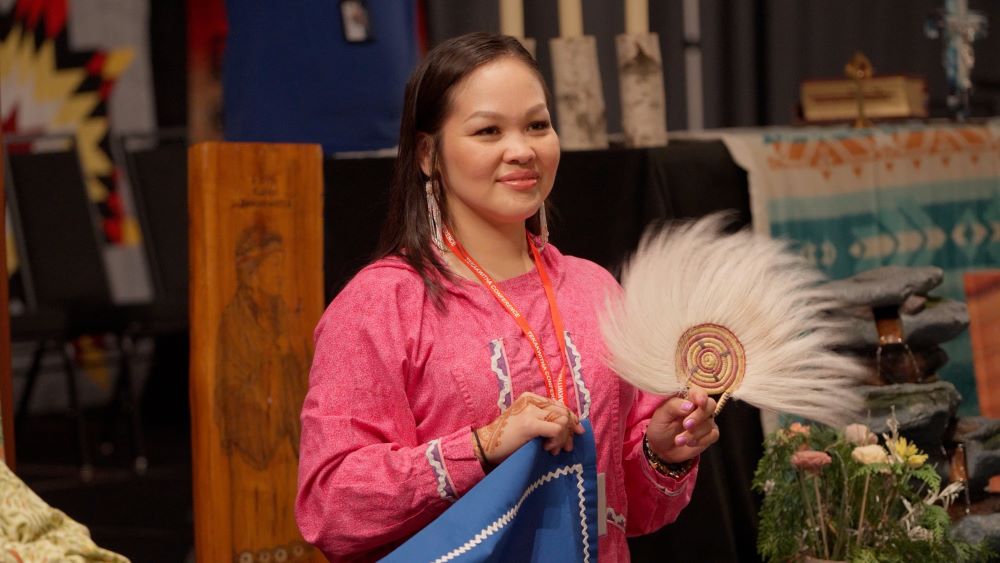
This is a still from the documentary "Walking the Sacred Path: The Story of the Black and Indian Mission Office," recently released from the Washington-based Black and Indian Mission Office. (OSV News photo/courtesy Black and Indian Mission Office)
The Black and Indian Missions Office originated in 1874 as the Bureau of Catholic Missions, with wider goals added in subsequent years. The office is in a brick row house that once belonged to St. Katharine Drexel (1858-1955), the Philadelphia heiress who devoted her life and her wealth to ministering to Native Americans and African Americans as she built missions and schools around the country. She also founded the Sisters of the Blessed Sacrament in 1891.
Sands also is executive secretary of the Black and Indian Mission Collection, the Bureau of Catholic Indian Missions and of the Catholic Negro American Mission Board. The collection, established by the U.S. bishops in 1884, is taken up in most parishes on the first Sunday of Lent.
The office doesn't help build structures. Dioceses can apply for grants funded by the collection to help them minister to and evangelize Native American and African American communities, support Catholic schools, religious education programs and seminary formation, buy catechetical materials or Bibles for classrooms, or provide a stipend for a priest, religious or deacon.
About 700 grants are dispersed twice a year — at the beginning of the year and in the spring. The total dispersed annually now ranges from $7 million to $9 million, with the bulk going to schools.
Advertisement
"I didn't feel isolated" growing up, Sands said. "A lot of the time, I've been the only Indigenous person involved in organizations. It's something I'm accustomed to. I've learned how to live and work and to exist in those kinds of situations."
Sometimes, his assistance is not from the top of an organization, but at the parish level, like when one congregation questioned whether traditional Native American materials could be used to cense an altar.
"You know what smudging is? Native Americans use cedar, sawgrass or sage. These are materials burned instead of incense," Sands explained.
There's no church guidance on materials used for that, so Sands was able to assure them it was OK.