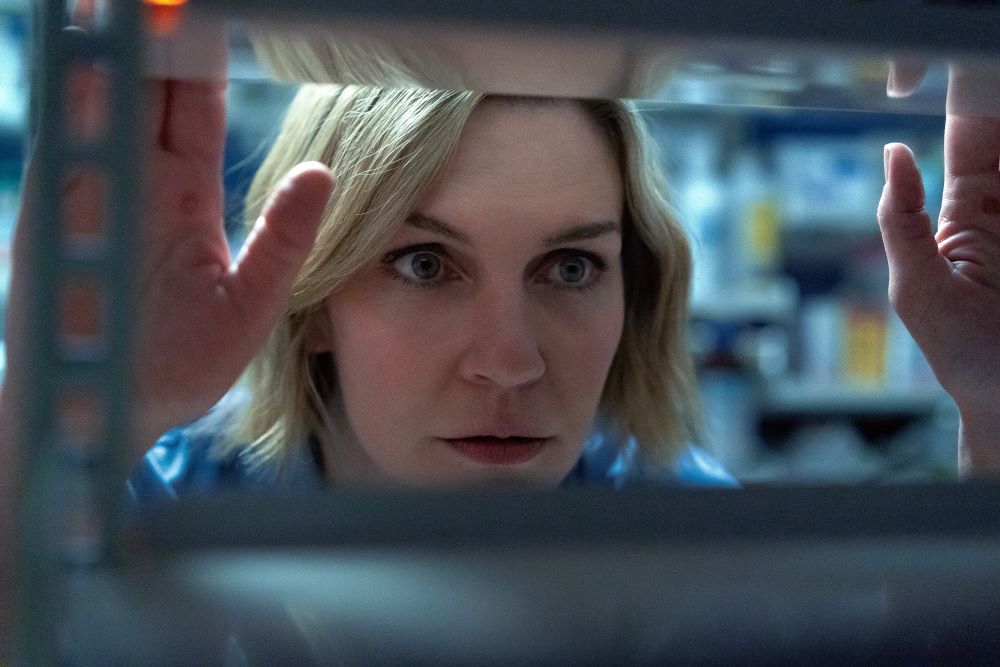
In Apple TV's "Pluribus," Rhea Seehorn plays Carol Sturka, a cranky author who is isolated after an alien virus "joins" the rest of humanity into a peaceful and content hive mind. (Apple TV)

by David Drury
We need parables more than ever.
Perhaps we've grown too accustomed to a cultural climate that flattens complexity into right and wrong, sorts people into boxes, draws tribal lines and brandishes scriptural hot takes to justify the unloving ways the vulnerable are treated. When Jesus encountered these behaviors, he couldn't help but say something — and he didn't mince words.
The parables were shock treatments for self-justification and smugness. But when we stop bringing fresh ears to the questions they raise, we might already be drifting into the very blindness they were meant to expose. We need contemporary storytellers to do what the parables originally did — wake us up.
Carol's refusal to "join" the herd isn't acting out; it is an act of holy discernment, and it calls on us to do the same.
Vince Gilligan's "Pluribus" does exactly that. In its first season on Apple TV, writer and producer Gilligan ("The X Files," "Breaking Bad") hooks us with a deeply Ignatian question: Is it better to feel good, or to be free?
Meet Carol Sturka, an irritable grump set up for failure. Despite the fact that she is a successful author in a committed relationship, Carol (played by Rhea Seehorn) can't seem to find much peace in her life. And then, things get apocalyptically worse.
When the dust clears after a night of chaos, we bear witness to the fact that a sort of mind virus or "psychic glue" of unknown origin has "joined" humanity into one collective consciousness — with the exception of Carol. The title of the series refers to e pluribus unum, the Latin phrase meaning "out of many, one." Whether friends, neighbors or strangers, the people Carol encounters look the same as ever, but act as if they share one mind. Not violent or threatening, but exhibiting eerie colony behaviors. Carol retreats into her Albuquerque, New Mexico, home, gravely alone.
"The Others" begin to communicate with Carol, eager to give her comfort and meet her needs, while they figure out scientifically why Carol was not joined in mind along with them, expecting that they will "fix the problem" shortly. Carol is assigned a seemingly compatible guide. When Carol expresses her anguish and outrage verbally, it causes seizures in The Others and even leads to death for many worldwide. Still, they refuse to be angry with her.
We soon learn that a dozen people on earth are like Carol (unjoined), but they don't seem to share her frustration. They see this worldwide change as inevitable, or even a much-needed improvement. Again, Carol expresses aggravation, and again it takes a physical toll
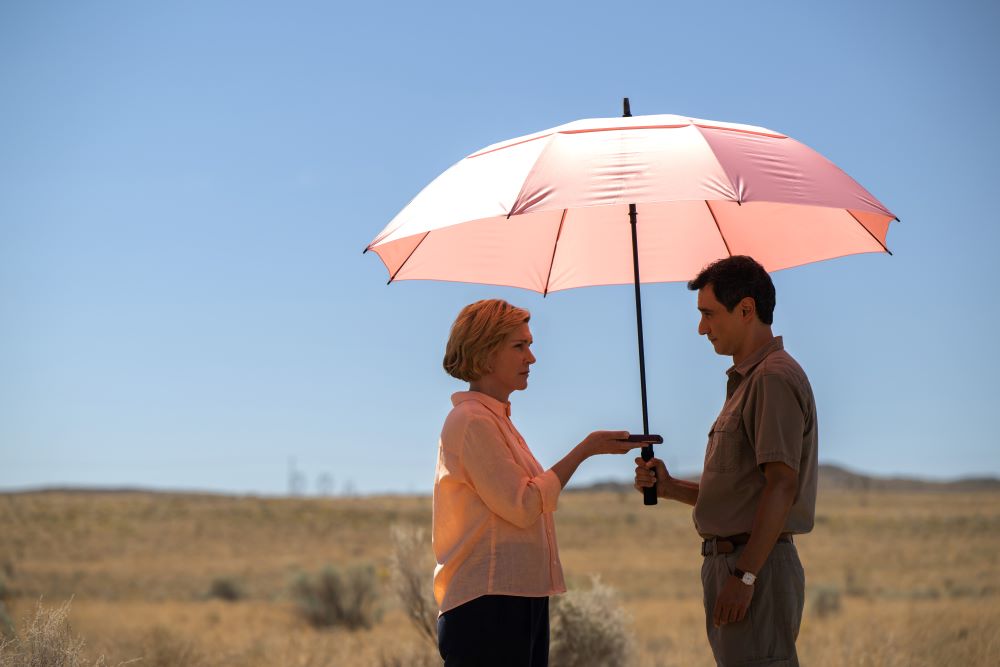
Rhea Seehorn and Carlos Manuel Vesga star in Vince Gilligan's "Pluribus" on Apple TV. (Apple TV)
This is the tightrope walk that sets the series on a knife edge. While Carol has remained a sort of ill-at-ease malcontent, everyone else in the world has seemingly upgraded. They are collectively smarter, nicer, given to serve and bringers of peace. They are happy, measured and benevolent. Carol, meanwhile, is a cataclysmic meteor of emotion. Is she flawed, misguided, intractable? No, she is holy.
In the Parable of the Two Sons (Matthew 21) Jesus asks a question of the chief priests and elders, just after they have challenged his authority. He tells the story of a father who asks his two sons to work in the vineyard. The first son refuses, but later has a change of heart and does the work. The second son agrees to do the work, but does not follow through. "Which of the two did what his father wanted?" asked Jesus.
"The first," the religious leaders answered.
"Truly I tell you," said Jesus, "the tax collectors and the prostitutes are entering the kingdom of God ahead of you."
The parable is a critique of people who appear cooperative, aligned, compliant — but whose hearts and actions don't follow suit. Likewise, it honors those who struggle, resist, question, hesitate — but ultimately act in truth. The second son gave assent, but did not live into truth. The first son exercised restraint, brooded and tested the spirits before ultimately acting.
Carol's resistance, her refusal to collapse into easy alignment, echoes the biblical tradition of the faithful dissenter: the son who says no before he says yes, the prophet who resists the crowd, the disciple who questions. Her discomfort may be the very sign that she is still capable of love.
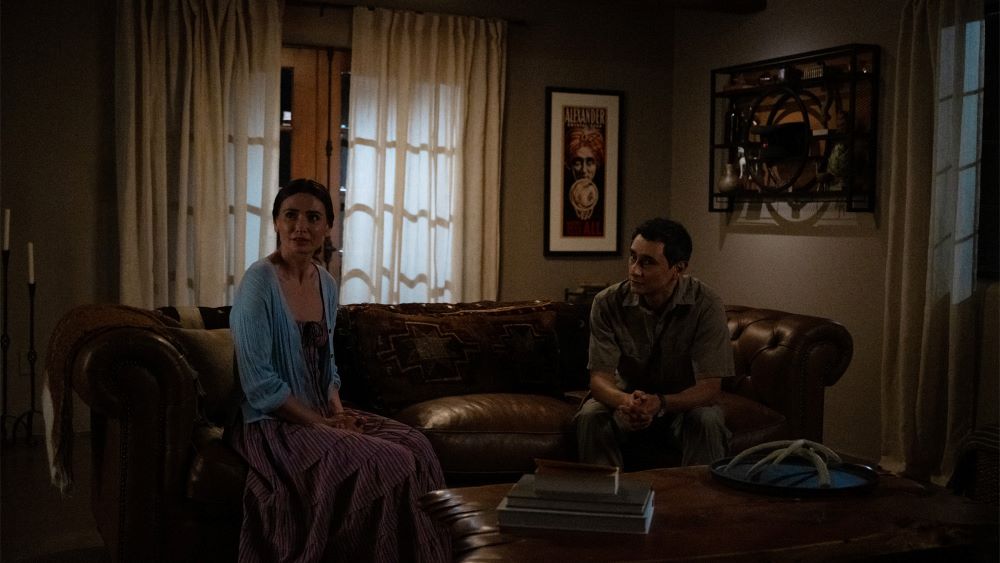
Karolina Wydra and Carlos Manuel Vesga appear in "Pluribus," now streaming on Apple TV. (Apple TV)
True obedience comes from interior freedom, not external conformity. While The Others seemingly have every angle on kindness and provision as it relates to Carol, they don't "see" her. They aren't curious about her frustrations. They can't sit with her in her grief, and ultimately, they don't know how to offer eye-level understanding to her journey. While they have ostensibly gained the whole world, they remain at a loss with Carol.
This is our clue that, alongside Carol, we have entered a world where perfect harmony masks spiritual emptiness, where communal unity smothers genuine love, and where the refusal to "join" becomes an act of holy discernment. Through Carol's resistance, the series invites viewers into an Ignatian examination of conscience: the difference between counterfeit peace and true shalom, between conformity and freedom, between collective assurance and the curious, attentive love Christ calls us to offer one another.
Advertisement
"Pluribus" presents a seemingly benevolent hive mind — always cheerful, always affirming. As protagonist, Carol wavers between the ease of going with the flow and an isolated (and costly) freedom. She evokes the moral tension of our own cultural moment, in which we're constantly urged to "join" politically, religiously, digitally, algorithmically. Discernment asks us to pause, resist the easy path and test the spirits.
The hive mind's relentless positivity is a false peace, an anti-shalom that is unable to meet Carol in her existential struggle. It comforts, but does not care; it speaks, but does not listen well. An Ignatian lens might help us identify that as spiritual desolation. Cheerfulness without presence is not love. It is avoidance. Carol's refusal to "join" the herd isn't acting out; it is an act of holy discernment, and it calls on us to do the same.