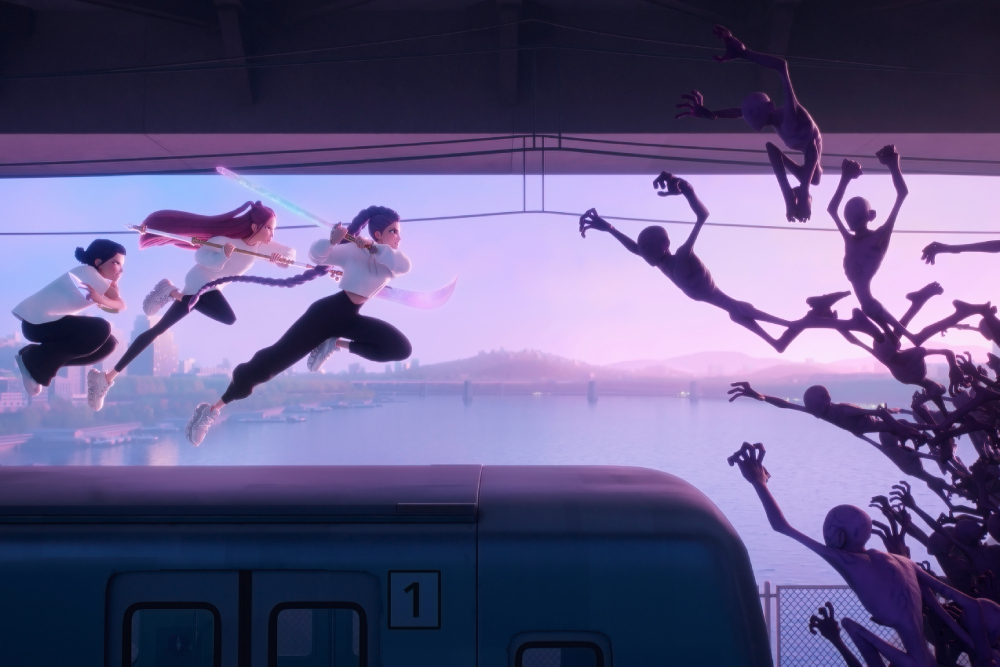
The popular Netflix film "KPop Demon Hunters" centers young women navigating a social spirituality, with themes of shame, vulnerability and acceptance. (Netflix)

by Alli Bobzien
As I scrolled Netflix for some background entertainment to accompany my evening of folding laundry, a catchy tune and vivid imagery grabbed my attention. "KPop Demon Hunters" was on, and my laundry was set to the side.
In this summer's wildly popular movie, a talented K-pop girl band called HUNTR/X battles to keep demons out of the human plane and protect the souls of their fans. Their music creates a barrier between the demon and human realm; when the barrier turns golden, the world will be secure. But two problems stand in the way of their success: the new K-pop sensation the Saja Boys, a rival band made up of demons, and the dark secret of their bandmate Rumi, who is half demon herself.
While you'll certainly find the classic humor of anime-style teen media — heart eyes popping, exaggerated enthusiasm over snacks, adorable animals — the story centers the complexities of a social spirituality, particularly exploring shame, vulnerability and acceptance. The storyline of three young women fighting invisible spiritual battles struck me as familiar; after all, we Catholics have a rich tradition of feisty female saints battling it out with dark forces.
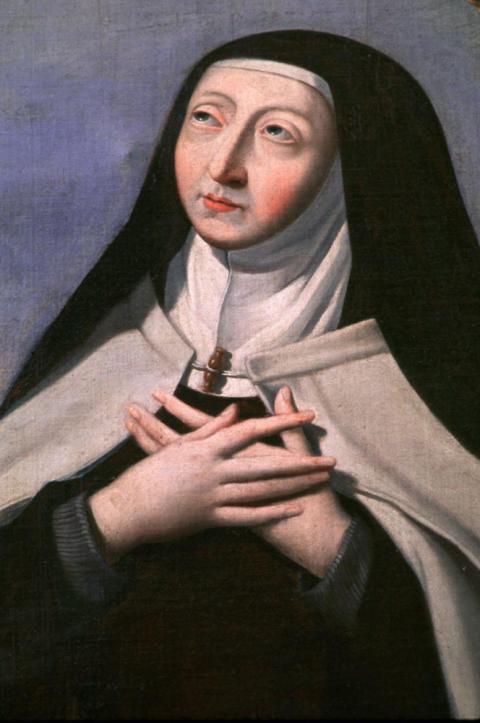
St. Teresa of Avila, mystic and founder of the Discalced Carmelites, and the first female declared doctor of the church, is depicted in a church in Troyes, France. (CNS/Crosiers)
While far from a bedazzled K-pop singer (although, the way she describes her adolescence, it's fair to speculate that she might have aspired to such a role in her youth!), Teresa of Avila is one such example of a female saint familiar with spiritual warfare. A mystic and contemplative Carmelite nun from the 1500s, Teresa wielded prayer as her weapon of choice against the forces of evil.
In her book The Way of Perfection, she writes, "Believe me, sisters, the battle never comes soon enough for the soldiers of Christ. I allude to contemplatives, and people who practice prayer. They have little fear of open enemies, knowing them well already and being aware that such foes have little power against the strength given them by God through which they always gain the victory."
Teresa relied on God's power within her, and understood that it is through our connection to God in prayer that we are strengthened and protected. Like the effortlessly cool HUNTR/X singers, Teresa would willingly jump into battle with demons for the sake of protecting others.
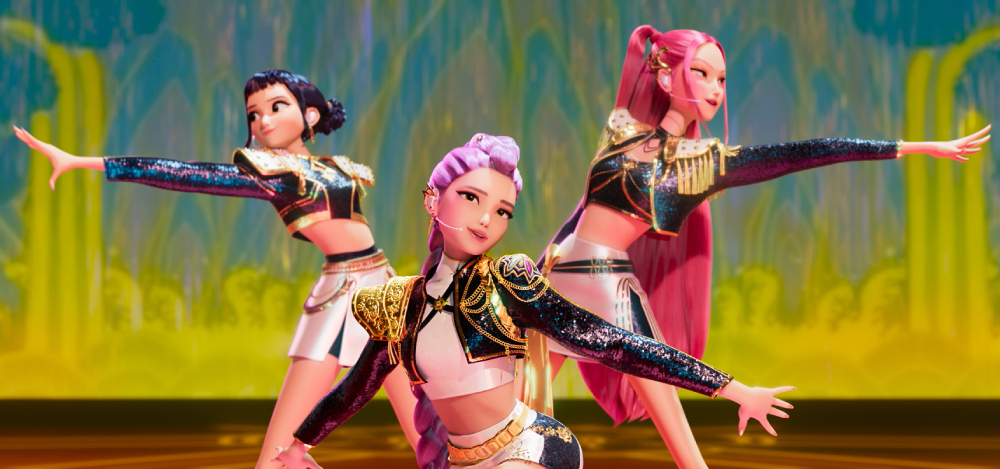
When they aren't selling out stadiums, Kpop superstars Rumi, Mira and Zoey use their secret identities as demon hunters to protect their fans from a supernatural threat. Together, they must face their biggest enemy yet — a rival boy band of demons in disguise. (Netflix)
In the movie, Rumi struggles with whether to tell her bandmates about her half demon heritage, operating under the belief that "our faults and fears must never be seen." This secrecy is a thread throughout the movie, ensuring that HUNTR/X's appearance to the fans — and even to one another — holds a veneer of perfection, fragile sheen that continues to crack as the bandmates lose their faith in one another and the barrier between worlds weakens. Yet, when Rumi's heritage is revealed and her bandmates, stung by her secrets, turn away from her, it leads Rumi to question a mantra that demands hiding parts of yourself.
Similarly, vulnerability was one of Teresa of Avila's greatest strengths. In each of her books, Teresa shares her faults and fears with God, creating a deep companionship with her Creator. In "KPop Demon Hunters," the demons affect humans by preying on their shame and secrets. When we cannot encounter grace and love, as Teresa did through intimate prayer with God, the voices of the demons become stronger.
Advertisement
As the movie's drama crescendos alongside the Saja Boys' song "Your Idol," the crowd is fully entranced by their performance — and moving toward a furnace of demonic hunger. Then suddenly, Rumi enters, singing her anthem of freedom: "I broke into a million pieces, and I can't go back / But now I'm seeing all the beauty in the broken glass / The scars are part of me, darkness and harmony / My voice without the lies, this is what it sounds like."
And with those vulnerable lines, the spell is broken and the souls are set free.