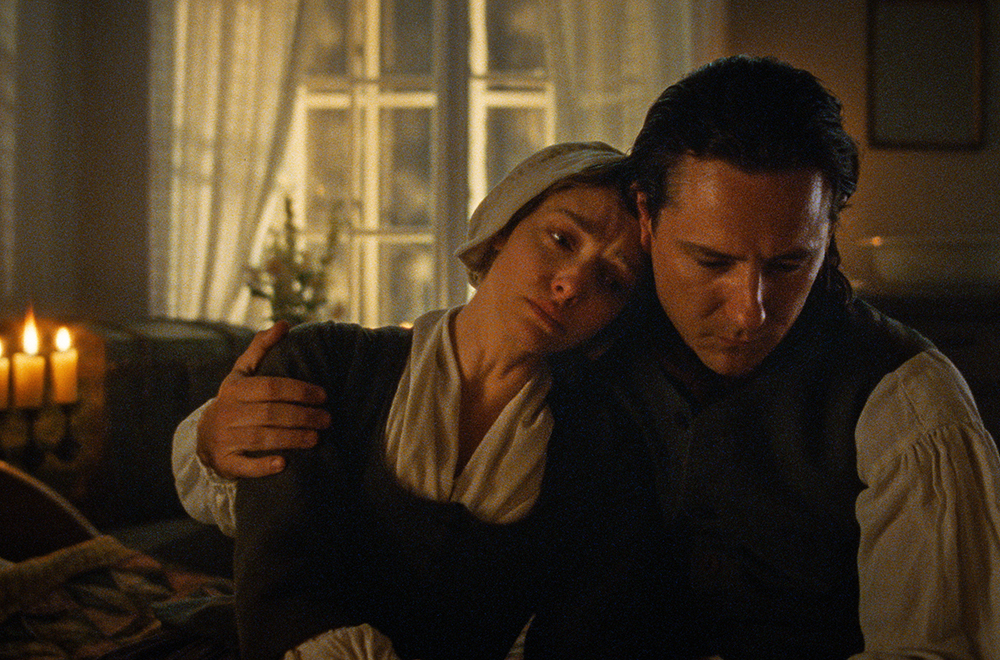
Amanda Seyfried and Lewis Pullman star in "The Testament of Ann Lee." Pullman plays William, the brother of Ann Lee (Seyfried), founder of the Shaker movement. (Courtesy of Searchlight Pictures)

by Zachary Lee
Throughout his career, the actor Lewis Pullman has specialized in characters with a lived-in spirituality. Whether playing a charismatic yet manipulative pastor in "The Starling Girl" or a being with divine powers in "Thunderbolts*," Pullman brings a physicality to the faith of his characters. That skill culminates in dizzying fashion as William, the brother to the founder of the Shaker movement, in director Mona Fastvold's "The Testament of Ann Lee."
Pullman spoke with the National Catholic Reporter over Zoom about spirituality and cinema, character development, and faith and self-doubt in the creative process.
This conversation has been edited and condensed for length and clarity.
NCR: Watching "The Testament of Ann Lee" made me think about what Pope Leo XIV shared not long ago: "The logic of algorithms tends to repeat what 'works,' but art opens up what is possible." He talked about the spiritual possibilities of cinema, so if I could flip that, I'd love to ask you: What are the cinematic possibilities of spirituality? What's exciting to capture of the human soul onscreen?
Pullman: God, that's a beautiful question. I've been lucky enough to play a few characters who are grappling with some sort of religious journey. It immediately kind of gives you a plethora of intentions and questions that your character might be asking, as well as mantras. With this film, it's really interesting to see how Mona [Fastvold] deals with it, because the spirituality is very practical and on earth, but then it's very ethereal at times and sort of esoteric. Watching everything unfold, you don't know if you're seeing what Ann is thinking she's experiencing or what is actually happening.
I also think about how Thomasin McKenzie plays Mary Partington, who acts as an unreliable narrator; she bears witness to what Ann goes through, but can we entirely trust what we're seeing? Mona really captured the reality of characters going through these massive human experiences and got creative in trying to convey those truths.
The first film I saw you in was "The Starling Girl." I'm not sure if your character Owen would be a Shaker, but I find it interesting that both characters have sincerity and complications in their faith. What excites you as an actor when you can revisit similar archetypes or themes but with different filmmakers?
At first, I was thinking, "Would Owen be a Shaker?" Owen was so fixated on a more playful and less structured type of worship. He had more of a wandering search rather than one driven by ritual. He wanted to give himself to the kind of feeling that God's presence is almost in the wind. I think that there is something there in the Shaker movement that he would have perhaps enjoyed, but it's interesting with the themes that you end up as an actor, as a creative, in that you do end up getting swallowed into these worlds that there are these bizarre through lines.
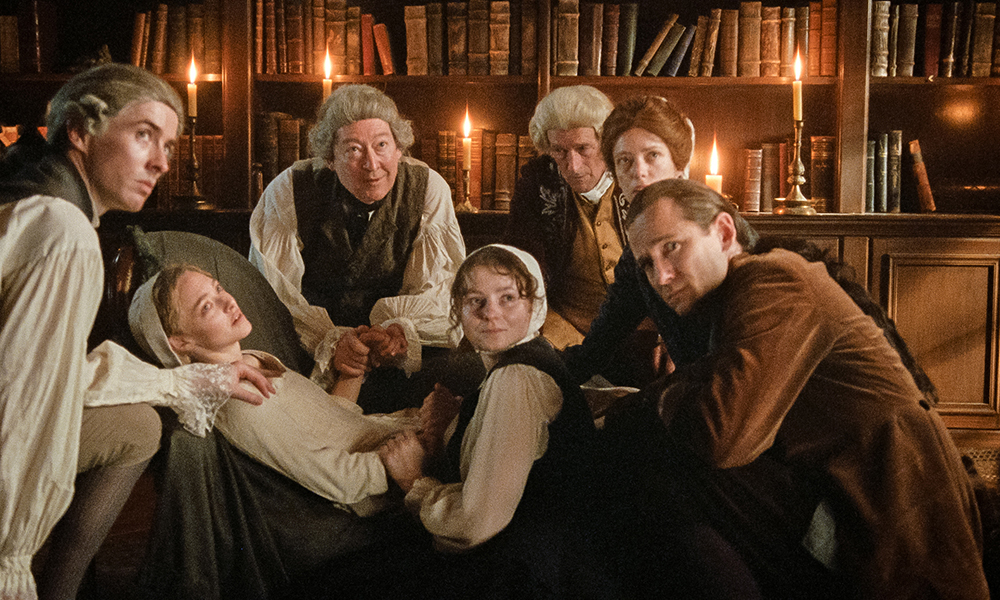
From left: Matthew Beard, Amanda Seyfried, Scott Handy, Thomasin McKenzie, Jeremy Wheeler, Stacy Martin and Lewis Pullman appear in "The Testament of Ann Lee." (Courtesy of Searchlight Pictures)
It makes me wonder when people are casting me: "What is it about me that's drawing this material to me, energy-wise? Can people see it in my face when I'm asking these questions about spirituality? Can people feel it in my aura that these are questions that I ponder? Are these stories coming to me, or am I going to them?"
Laurel [Parmet] is one of my favorite filmmakers of all time, and she has a remarkably beautiful approach to filmmaking, which is very different from the beautiful way Mona guided us. I'm getting different experiences, but I'm grateful for that.
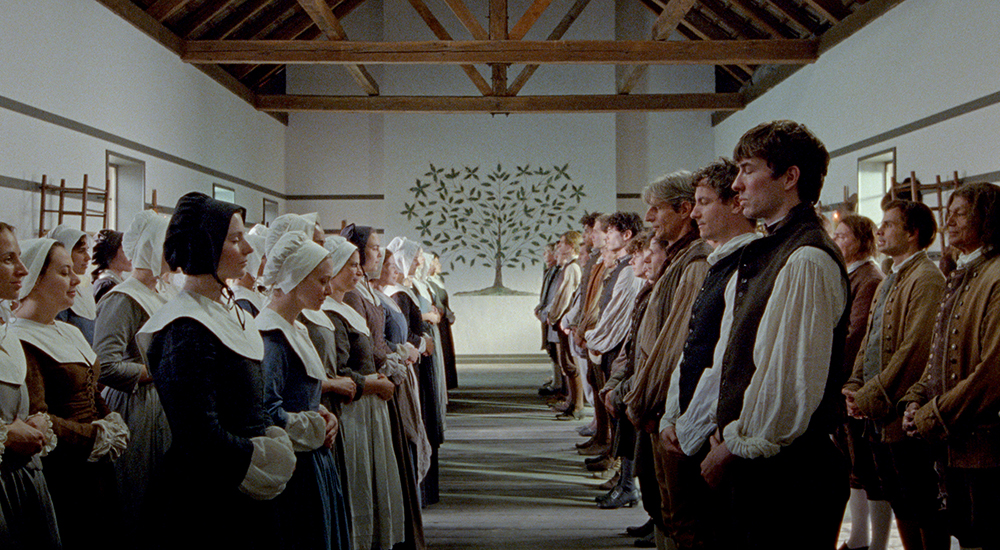
The ensemble is pictured in a still from "The Testament of Ann Lee." Lewis Pullman described the spirituality in "Ann Lee" as both practical and esoteric. (Courtesy of Searchlight Pictures)
I was struck by the scene between you and Amanda [Seyfried] discussing the exile of Anne's niece [played by Viola Prettejohn] from the group. It's one of the few times that William questions Ann's leadership. How did you, Amanda and Mona approach that scene, given that up until this point, William has been nothing but supportive?
That's one of my favorite scenes as well. There are a couple of anchors where we planted Ann and William's relationship, and that scene was an important one. Amanda and I talked about what makes their sibling relationship so specific. It's so different from a friendship, and it's so different from a romantic relationship.
What struck me about it was that William's support complicates this idea that solidarity means you're just saying yes and supporting what the person says. Support means putting a mirror up to the person you love; it means pushing back. It means holding the responsibility of knowing someone since they were born and knowing them almost better than anybody. That's a big responsibility. It's a gift, and it's also something that William, as a brother, has a duty to. He's someone who has known Ann from the moment she came onto this Earth and, in some ways, can be the most accurate reflection of her.
Advertisement
Mona has talked about how the road to making this film was an arduous one, how she's had to have faith in this story. Have you reflected on the role and importance of faith in the creative process?
I think where faith lies consistently, project to project, is feeling like I'm starting all over again from scratch. As I go through my career, I think less of "Oh my gosh, if I get sick on set, how much money will go down the drain? Is that my fault?" Sometimes I'll get caught in this trap that if I'm the worst part of a movie, then it will drag the movie down. The more I do this work, the more I realize that the only remaining consistency for me is collaboration, and that allows me to lose myself in it. I've learned to decenter myself in some way and learn what it means to work with the whole.
I'm not a very good individual artist. I really work best when I can have that kind of energetic exchange where we push and pull each other into a place we never thought we were capable of, or we at least never thought we would venture. I love going to the dark, weird corner of our brains with collaborators; we might not think we would ever go there, but we can, and we can prove there's light there because we've gone with someone else.
"The Testament of Ann Lee" is now playing in theaters.