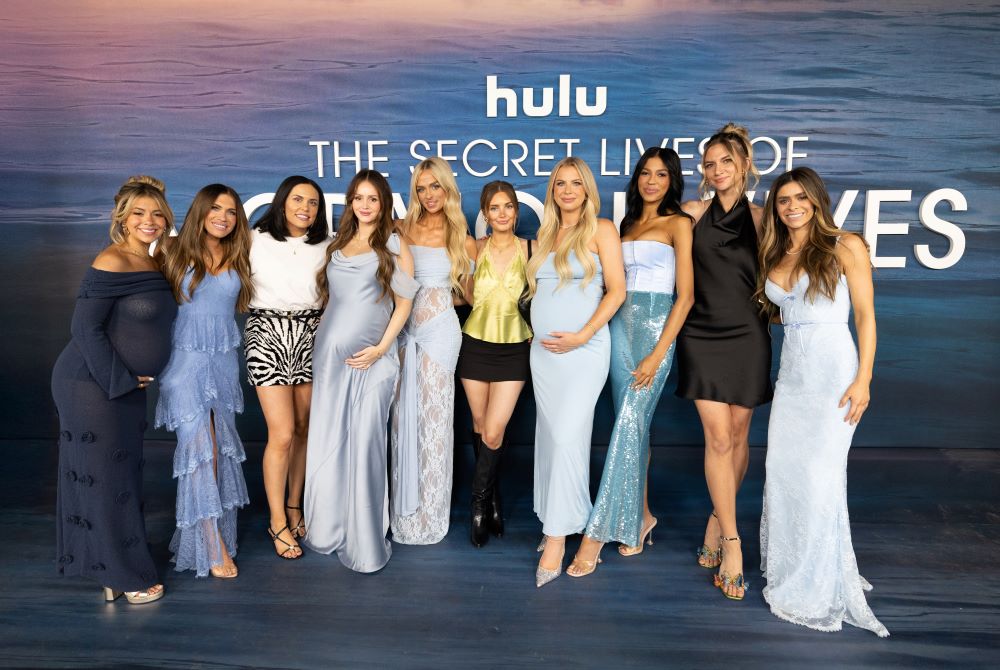
The women of 'The Secret Lives of Mormon Wives' pose together in Los Angeles in May. (Disney/Hulu/Brandon Ogden)

by Elizabeth Hamilton
The popular series "The Secret Lives of Mormon Wives" is back, debuting a third season in mid-November that continues to push the boundaries of what reality TV can address, including contract negotiations, serious mental health issues and allegations of sexual assault. If viewership numbers of past seasons are any indicator, this will be one of Hulu's most watched shows over the holidays. It seems we can't get enough of the drama stirred up by Utah's Botoxed Mormon influencers.
The show, which premiered in September 2024, was born from TikTok videos created by a group of young Mormon women, all wives and mothers, who called themselves "MomTok." The supposed aim of MomTok's dance videos? To empower women in the mostly conservative Mormon community and take on the patriarchy at large. But when the group's leader, Taylor Frankie Paul, shared a live video confessing that she and some of the other women and their husbands were involved in what she dubbed "soft swinging," the focus shifted — and the world became so intrigued that Paul and her friends found themselves with their own television show.
Like most scandals portrayed on reality TV, it is unclear what exactly happened, but swapping partners was apparently involved, to some extent. Since then, we've been watching the women of MomTok have more babies, divorce their husbands, undergo plastic surgery, party with the Chippendales, mix dirty sodas and fight over who gets to be the leader of the group — all in the name of "empowering women."
Exactly what the stars of MomTok hope to empower women for — or from — is never stated outright. But from what we see of their lives, we can deduce that it's mostly economic empowerment with a side of secular enlightenment as they slough off the rules and traditions of their upbringings in the Mormon church.
There's no doubt the women of MomTok are breaking some conservative norms. While they all married young (some as teenagers) and started having children right away, the success of MomTok has provided them with opportunities to earn sizable incomes of their own. At this point, each of the stars are the primary breadwinners in their families. When they talk about the trad wife phenomenon, it's to poke fun at it; many of their husbands are stay-at-home dads.
The Mormon wives might have become wealthy and famous, but they succeeded by playing the rules of the game.
Still, it's apparent that none of the women are particularly good at supporting one another, let alone anyone else. If "The Secret Lives of Mormon Wives" does anything for women, it's to reveal the larger societal influences that have long shaped women's lives: a capitalism that incentivizes brutal competition, changes in technology that afford previously unthinkable opportunities, and that old persistent male gaze. The Mormon wives might have become wealthy and famous, but they succeeded by playing the rules of the game.
These women were clever and lucky enough to use new social media platforms (TikTok, predominantly) to their advantage. Their acquired wealth is, in large part, the result of cushy brand deals. Their looks — often the result of aesthetic enhancements from Botox and breast implants — are manipulated to fit traditional beauty standards. As I watch them grind and twerk around a stripper pole in a party bus, I have to wonder whether their freedom is truly female empowerment or whether their success hinges on looking and behaving in ways that men and the market as a whole tend to prefer. Are they dancing because they want to, or because it's the prescribed path to success?
Here, the show drives home the contradictions inherent to thriving as a self-determined woman. I couldn’t help thinking of America Ferrera's famous "Barbie" monologue, when she points out: "It is literally impossible to be a woman."
The MomTok stars insist they are a sisterhood of moms supporting moms. But in Season Three the show's token villain, Whitney Leavitt, decides she's fed up with the façade. This is a business, she tells us time and again. MomTok isn't about friendship but about making money and getting ahead. Capitalism takes its toll as the women bicker and break long-held friendships over who got the higher-paying contract with Hulu and compete for a spot on "Dancing with the Stars."
Leavitt's unabashed ambition appears to have served her well. She was a "Dancing with the Stars" semi-finalist, a dream come true for the 32-year-old mom who'd recently given birth to her third baby. She was also recently cast as Roxie Hart in Broadway's "Chicago." Impressive, yes; but it is a paltry vision of female empowerment that requires crucifying friendships for a shot at stardom.
"The Secret Lives of Mormon Wives" has tackled difficult topics, including marital abuse and shaming single moms. This season takes on sexual abuse as Demi Engemann claims she was assaulted by a cast member of another Hulu reality TV show, "Vanderpump Villa." If the women are as close and supportive as they claim, they should have long ago established enough trust to believe Engemann's account. But because Engemann is on the outs with the group for seeking a higher salary, Leavitt is the only one to believe her. The others raise the same tired questions we hear time and again: Is she telling the truth? If she is, why did she act friendly toward her abuser after the assault? Why didn't she come forward right away? These are questions strangers might ask, but close friends?
Advertisement
Still, unlike Seasons One and Two, Season Three shows some hope as all of the women are in therapy for issues that include prenatal depression, infidelity, feelings of low self-worth and sexual intimacy. We see some go on weeklong therapy retreats. They have begun talking about their trauma (even if they do not use the term appropriately).
The mental health work seems to have paid off, as the women end the season seated in a circle speaking honestly and forgiving one another. Mikayla Matthews points out that they are each dealing with deep wounds that have led to poor choices. Coming from Matthews, who has been open about being abused as a child, this is a sobering statement that hints at how much suffering lies underneath the glitz and glam.
There is hope yet for MomTok, but they won't find it by catering to the systems that oppressed them in the first place. For, in the words of Audre Lorde, "The master's tools will never dismantle the master's house."