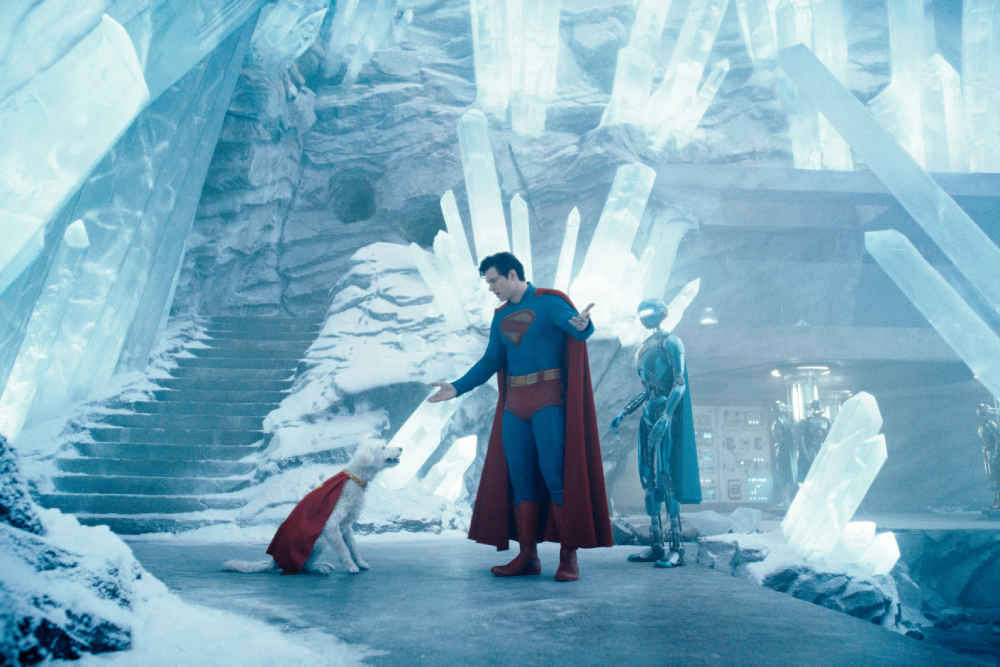
The newest adaptation of "Superman" begins in the aftermath of the hero (David Corenswet) preventing the highly militarized country of Boravia from invading its small neighboring country, Jarhanpur. (Warner Bros. Pictures)

by Calista Robledo
James Gunn's "Superman" holds a mirror to our society. In it, we witness honest, messy and collaborative goodness defeat organized evil.
This summer's adaptation begins in the aftermath of Superman (David Corenswet) preventing the highly militarized country of Boravia from invading its small neighboring country, Jarhanpur. This creates a mountain of political issues for the United States, allied with Boravia, and for Lex Luther (Nicholas Hoult), a tech billionaire who sells arms to Boravia and the United States — and just so happens to hate Superman.
Superman receives criticism for acting on his own volition without consulting the U.S. government. In a heated interview between Lois Lane (Rachel Brosnahan) and an off-duty Superman, Lane presses for answers and explanations. The superhero's rationale for interfering with a sensitive geo-political situation is simple: "People were going to die!"
Protecting humanity is, after all, Superman's life mission; a calling he received as an infant from his Kryptonian birth parents, which we witness via a damaged video early on in the film. But when Luther releases the video in its entirety, Clark Kent is left with an identity crisis; even going so far as to turn himself in to the U.S. justice department, to public jeers of "alien, martian, Kryptonian," proclaimed by law enforcement with the gumption and hatred of a slur.
When Lane learns of Superman's arrest, she conducts research on Luther and enlists the help of a fellow reporter, Jimmy (Skyler Gisondo), and the Justice Gang to rescue Superman from a torturous pocket universe created by the villain and fly the physically and emotionally wounded superhero to his adoptive parents' home in Kansas. In a moving conversation with his adoptive father while there, Clark learns that his innate goodness was indeed not bestowed upon him by his birth parents, but had existed within himself all along.
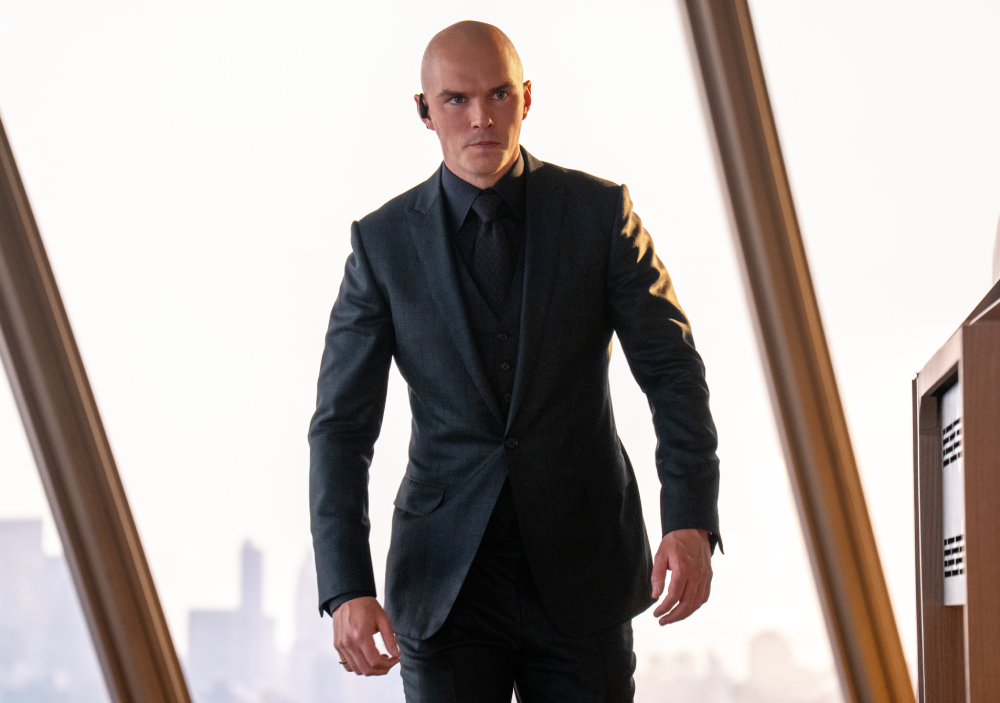
Nicholas Hault plays Lex Luther, a tech billionaire who sells arms — and just so happens to hate Superman. (Warner Bros. Pictures)
As Luther directs the Boravian dictator to begin the attack on Jarhanpur, news outlets show villagers along the front lines against a grand military. Young brown children build a flag and chant "Superman! Superman!," pleading for help from the brink of death in a chilling and eerily familiar sight to moviegoers. Another moment with very real modern resonance occurs as Superman gives a passionate monologue defending his humanity in the face of Luther's derogatory slurs. He might be from another planet, he orates, but he gets scared, feels and loves because he is a human being. Not an alien. A human being.
It is no surprise that Gunn's Superman is being critiqued for being "woke." Superman was created in the 1930s by two Jewish teenagers, Jerry Siegal and Joe Shuster, who had been inspired by the stories of Hercules and Samson to create a character with supernatural strength and the power to do good and fight evil. First published during the rise of Nazi Germany, Superman's service to humanity reflects the legacy of Moses' devotion to the Israelites, part of the creators' cultural lineage. Both Moses and Superman were sent away from their homes as infants to avoid being killed; both raised by another set of parents; both deemed "different."
Advertisement
Gunn's Superman protects a people from genocide, yet he does not do it alone. It is only through a collaborative effort that includes Lane, the reporters of the Daily Planet and the Justice Gang that Luther's evil plans are stopped from coming to fruition. The power is not just in an individual, but through the collective. Characters who once hesitated or proclaimed neutrality eventually follow Superman's innate goodness and Lane's skepticism of power.
"Superman" is the superhero movie not just of the summer, but of this sociopolitical moment of despair, fear, lament and rage. The inspiration here is tangible, sticky, with grit, teeth and muscles; it is real, just as the evil in the movie is real. May we absorb this art fully, and remember what we were made to do: co-create a world of justice, peace and flourishing for all life.