
"The Prophet Isaiah" by Italian School (1800-1899)

It is Lent. If we really want to draw closer to the Lord in this season, and if we really want to help our nation heal the wounds that afflict it, we might all consider giving up the jeremiad as a form of discourse.
The jeremiad is a venerable part of American religious discourse, introduced into this country by the Puritan divines who employed it as a means of ensuring fidelity to the covenant they believed God had established with them. Named for the prophet Jeremiah, a jeremiad is a prophetic indictment that calls a people back to their original covenant.
Sadly, we live in a time when everyone and his sister think of themselves as prophets. Everyone wants to find their "prophetic voice." This forgets that it is God who chooses his prophets, and a genuine prophet, mindful of the enormous burden of such a role, is always reluctant to be so chosen. Isaiah needed to have his lips singed by an angel carrying an ember before he found his prophetic voice. Jonah tried to run away. In our time, people are positively eager to claim the mantle of prophecy. They think it absolves them from the need for careful moral argumentation.
The jeremiad is often linked to another unpleasant form of political commentary, the manifesto. These are easy to spot because they rely overmuch on verbs of urgent collective obligation: We must! We shall! Of course, at the end of a carefully reasoned argument, the use of these verbs is fine, but their overuse is usually a symptom of a lack of respect for both the pluralism of our society and a dismissive attitude towards the need for moral persuasion in public life. Manifestos tend to be intellectually slothful and boring.
Indeed, the algorithms of the internet reward anger and excess over thoughtfulness and reason.
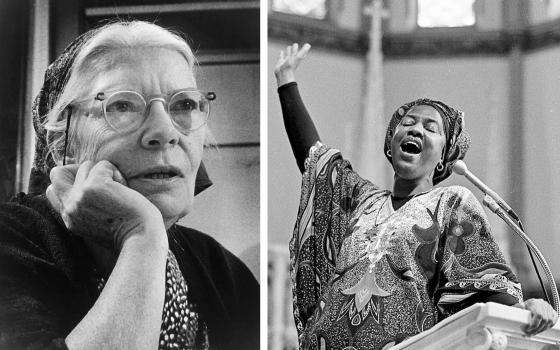
In her masterful book Prophecy without Contempt: Religious Discourse in the Public Square. Boston College professor Cathleen Kaveny exposed the problems with jeremiads and their overuse. Though infrequently used by our Calvinistic forebears, its increasingly common usage today leads to internet clicks, not to moral suasion and the building of political consensus. Indeed, the algorithms of the internet reward anger and excess over thoughtfulness and reason.
Kaveny, commenting on the debate over embryonic stem-cell research, writes:
Nevertheless, it was a mistake for those who read the biological data as supporting the position that an individuated human life begins at fertilization to resort to prophetic rhetoric in their response to those who read that data in a different way. It is one thing to put forward factual, deliberative arguments in favor of life beginning at fertilization; it is another thing entirely to say that anyone who is not persuaded by those arguments is an advocate of the culture of death. This rhetoric of prophetic denunciation obscures the fact that the dispute between at least some of the parties has not been at the level of fundamental moral commitments to the dignity of each individual human being. Instead, it has resolved around the difficult question of when an individual human being comes into existence.
The jeremiad, then, is only really aimed at those already converted, just as the Puritan divines did not preach to non-Puritans. The jeremiad doesn't persuade, it condemns. One of the principal reasons why Catholic social teaching has not had a greater impact on our nation's political life is because those who invoke it often speak as if its claims are self-evident.
The jeremiad is found as frequently on the left as on the right. For the left, the idea that gender is nonbinary, even though most people experience it precisely as binary, is an example of this kind of presumptuous prophecy. On the right, the idea that a nation is only as strong as its borders are impermeable functions similarly.
Most obnoxiously, the person delivering the jeremiad, like their Puritan forebears, inevitably assumes he or she is among God's Chosen and claims divine authority, even if their arguments are easily contradicted by a variety of Biblical citations and several contested factual arguments. The first creation account in Genesis is filled with binaries: Heavens and earth, sea and dry land, night and day, male and female. The Torah and the Christian Scriptures both recognize boundaries between peoples, but they also demand that the stranger be welcomed.
Kaveny also reminded us of the way modernity has flipped our understanding of covenant and divine reward or punishment:
For the Puritans, the breach of the covenant was their prevailing sins, which were more or less uncontroversial; the penalty was the loss of material prosperity. In our era, however, it seems that this structure is completely reversed. The uncontroversial covenantal obligation is to secure the nation's economic and military well-being. Political parties that do so are rewarded with the opportunity to implement their own, contested vision of what counts as virtue and vice.
Here is yet another source of our political sclerosis: Elections are narrowly won, and often as a referendum on the state of the economy but, once elected, politicians enact a host of controversial policies regarding vice and virtue.
A wise friend in the labor movement always reminds me that to get a person from "no" to "yes" you have to get them to "maybe" first. Listening, not denouncing, is the first step in the art of persuasion. If we, as citizens, do not relearn the skill of listening and persuasion, we will have no one but ourselves to blame for the coarseness and the futility of our politics.
So, this Lent, give up the jeremiad. If we can do it for 40 days and 40 nights, maybe we can give it up for good and get back to the business of building the common good.
You are reading a selection from Michael Sean Winters' weekly newsletter. To get the full edition — including the "In the News" link roundup — delivered 24 hours before it appears online, sign up here!
Advertisement