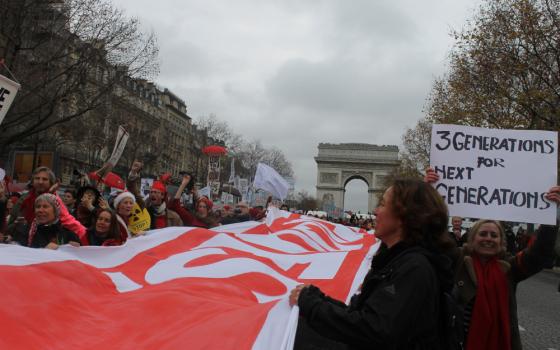
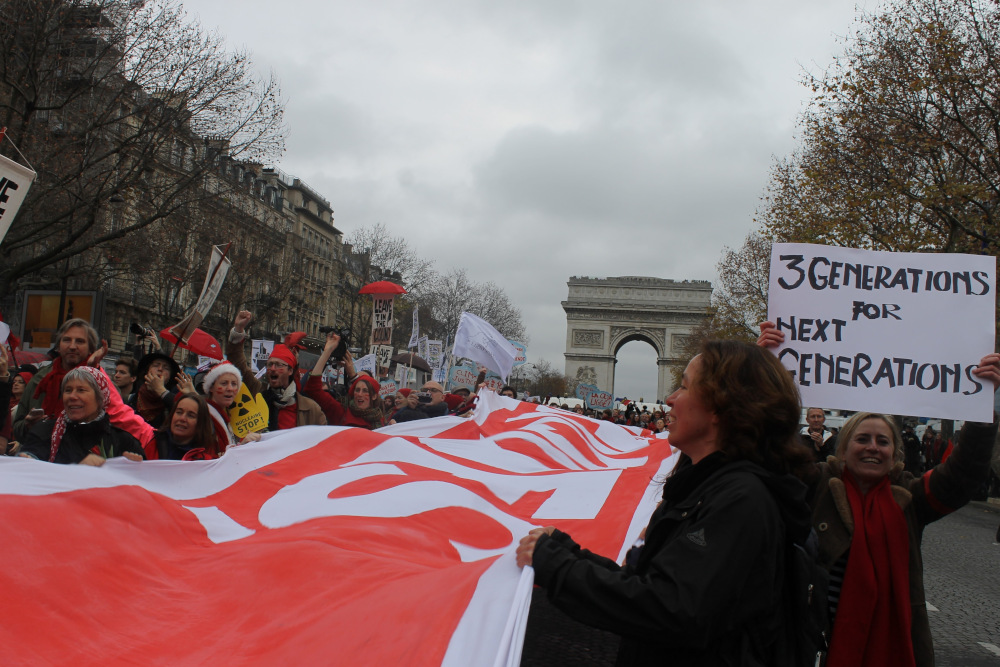
Thousands assembled along the Avenue de la Grande Armee in Paris Dec. 12, 2015, hours before 195 nations adopted the Paris Agreement, which provided a framework for global action on climate change. (NCR photos/Brian Roewe)

Editor's Note: This article originally published in the Dec. 12, 2025 edition of the EarthBeat Weekly newsletter. Get all the news on faith, climate and environmental justice each week in your inbox by subscribing to EarthBeat Weekly.
Friday (Dec. 12) marks 10 years to the day since the world adopted the Paris Agreement, the first global framework binding nearly all nations on Earth, rich and poor, to collectively address climate change.
On that mid-December day a decade ago, in the hours before the deal was reached, I was walking up and down the Avenue de la Grande Armée, one of the 12 thoroughfares that conclude at the iconic Arc de Triomphe in central Paris. It was there that an estimated 10,000 people assembled for a final demonstration at COP21, the United Nations climate summit where the Paris Agreement was reached.
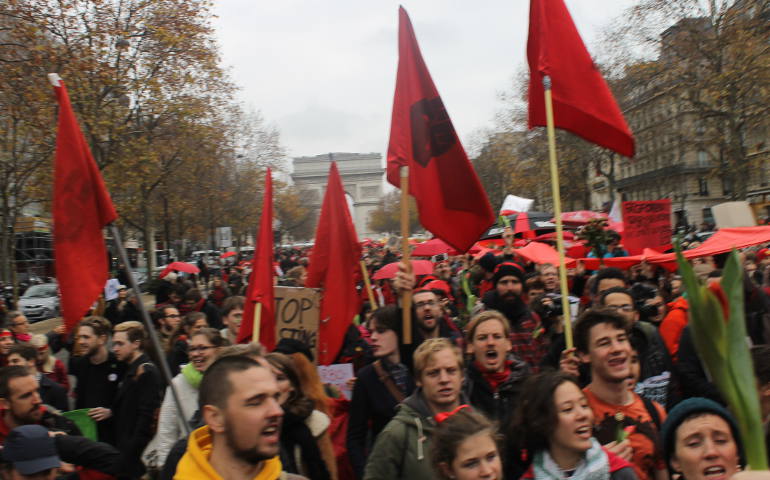
Thousands assembled along the Avenue de lad Grande Armee in Paris Dec. 12, 2015, hours before 195 nations adopted the Paris Agreement, which provides a framework for global action on climate change. (NCR photo/Brian Roewe)
I still remember vividly the scenes, sounds and emotions of that day. The demonstration felt almost like a festive parade, a sense of celebration in the chilly Parisian air as climate activists — including a sizable Catholic and faith presence — chanted and cheered, played music and danced along the famous avenue. A great many people were wearing red, and massive red ribbons stretched for blocks along the street as symbols of demonstrators' own "red lines" and resolve to not quit pushing for ambitious action on climate change, even after the Paris accord was struck.
"Women with flowers in their hair and others dressed as polar bears helped give the ribbon movement, while a woman danced along a tarp with the message 'climate justice' painted on it. Brass bands and drum circles provided rhythm for the chants and cries of 'What do we want? Climate justice! When do we want it? Now!' 'This is what democracy looks like!' and 'The people, united, will never be defeated!' Climate clowns pranced in front of police officers manning the route's end -- to keep it from approaching the Arc de Triomphe -- in hopes of evoking a smile."
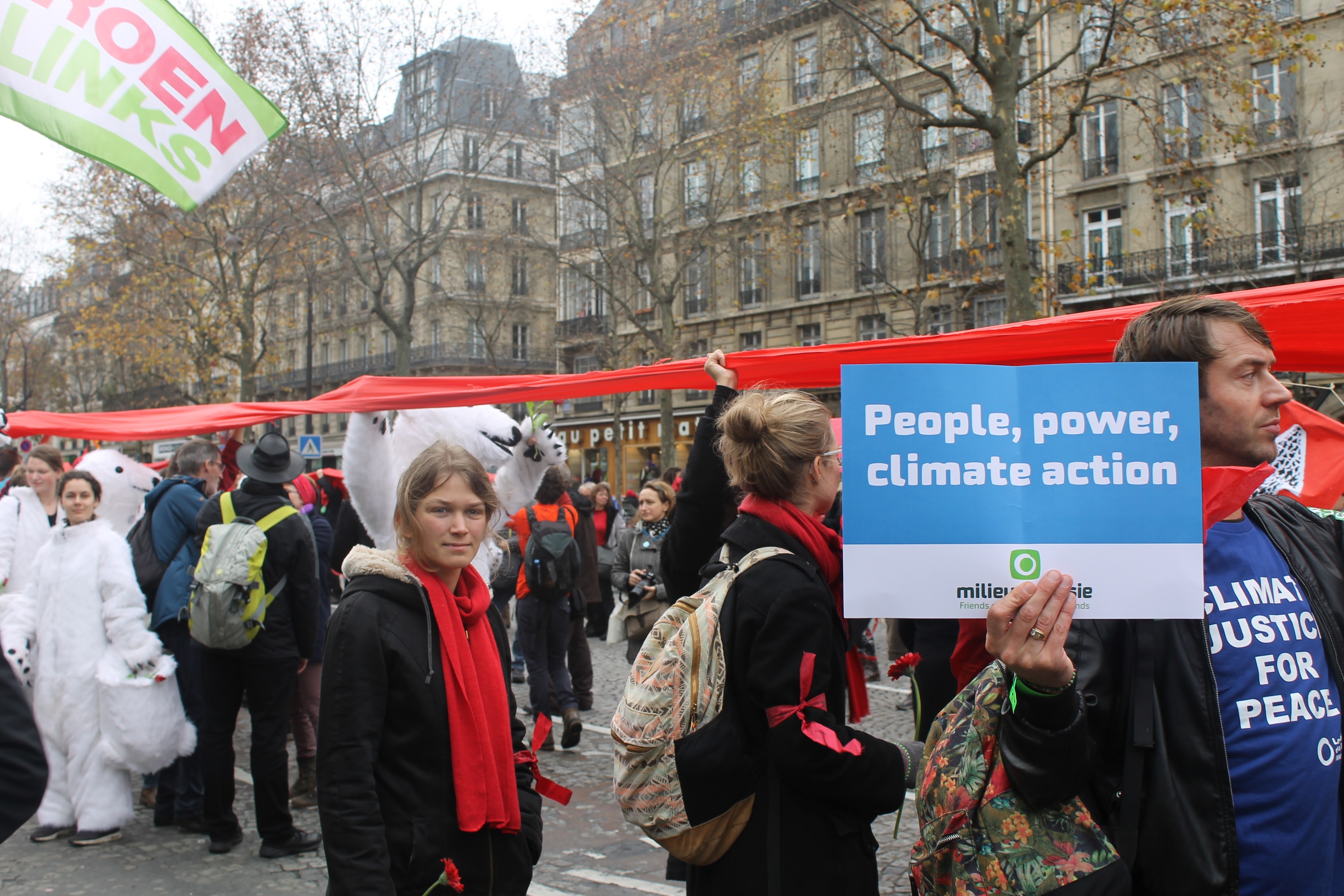
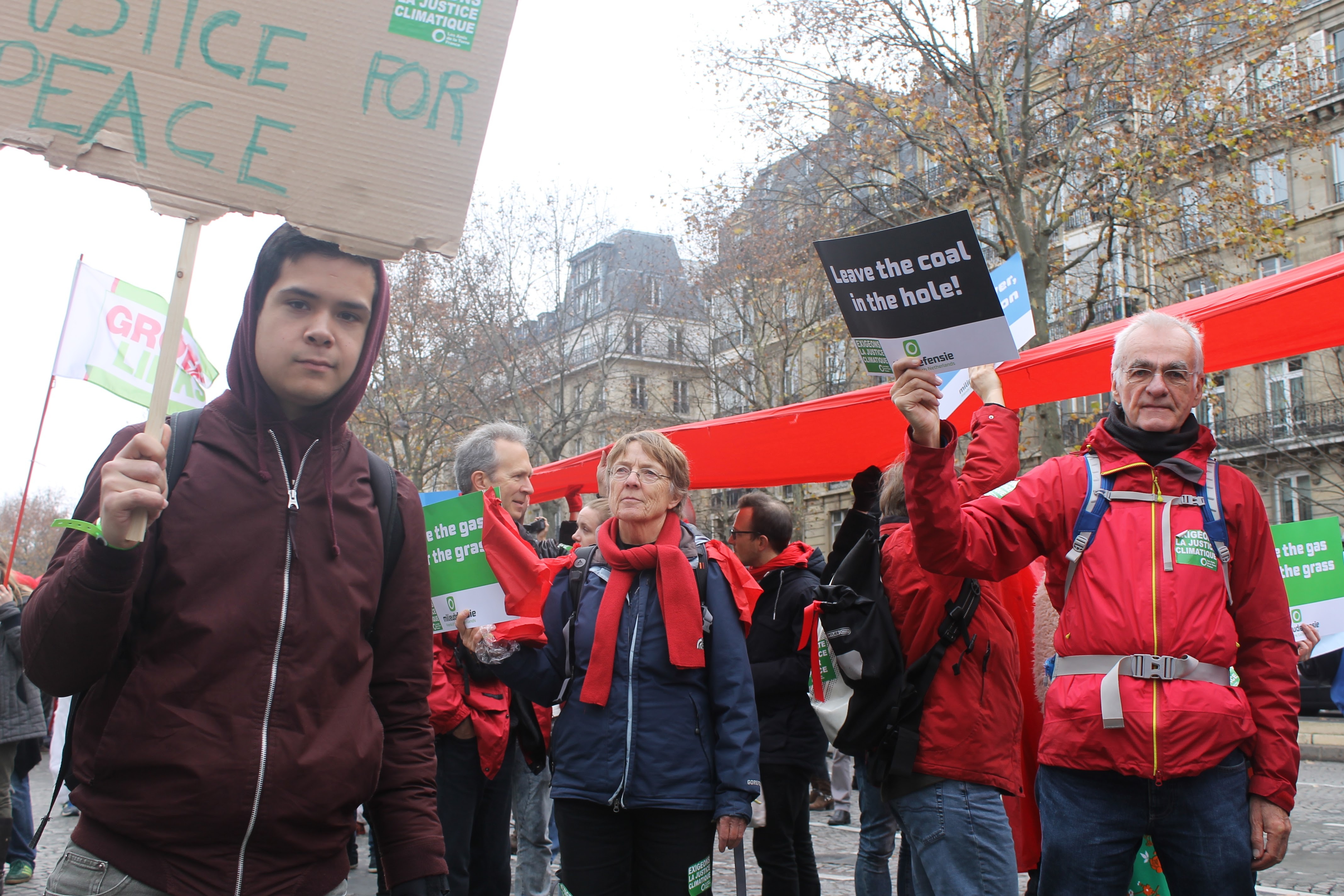
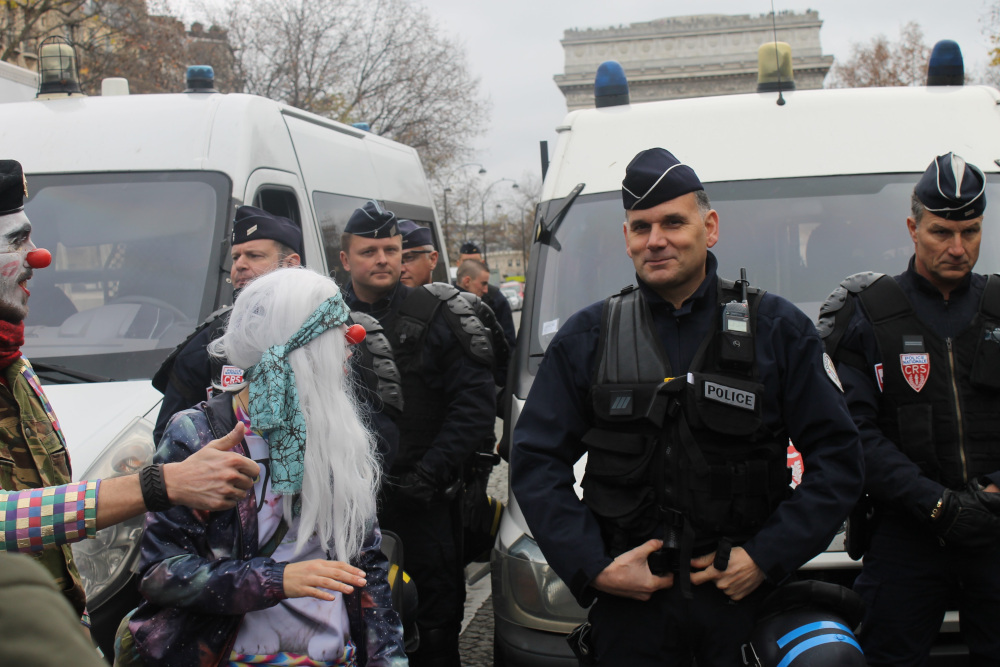
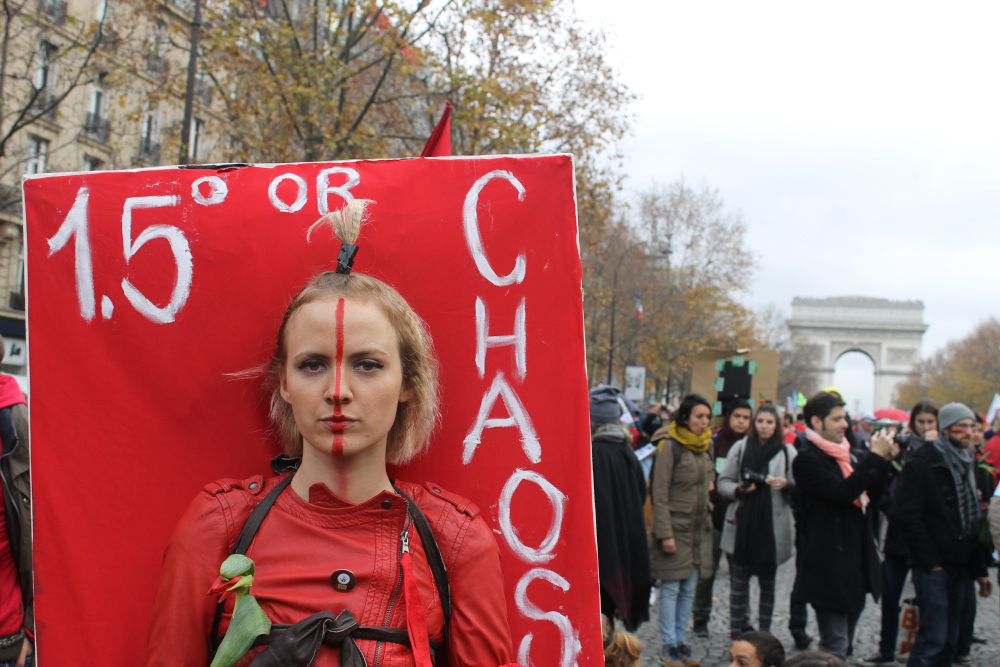
But it wasn't all celebration. There was a solemn moment where the trumpets and tubas went silent as people placed flowers along the long red ribbons in commemoration of people already suffering from climate change. The memory of terror attacks in the French capital a month earlier still lingered in minds and led to the larger police presence. And even as world leaders were on the cusp of gaveling approval of the Paris Agreement, many in the crowd already saw flaws in the deal that have only become more exposed in the decade since.
The world has changed markedly in the 10 years since the Paris Agreement's adoption.
Back in 2015, President Barack Obama and the U.S. were seen as central figures in helping culminate a deal. Today, President Donald Trump withheld a U.S. delegation from the COP30 climate summit in Brazil in November, and is months away from officially withdrawing from the Paris accord for a second time.
Advertisement
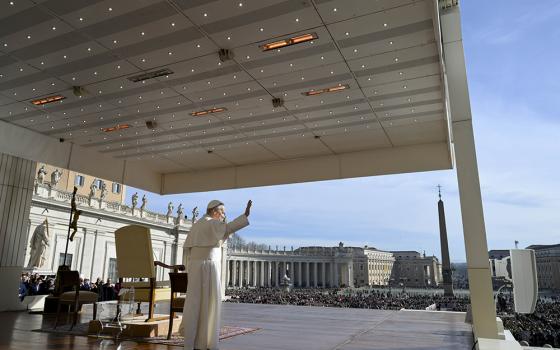
Ten years ago, Pope Francis cheered the Paris Agreement from afar, calling it "historic" and saying "its implementation will require concerted commitment and generous dedication by each one." Months earlier, he timed the release of his encyclical "Laudato Si', on Care for Our Common Home" in an effort to influence the outcomes in Paris. In the years since, U.N. officials and COP21 delegates have pointed to Francis' powerful letter to the world as critical in giving ethical and moral language to debates around climate change and helping break through techno-centric negotiations.
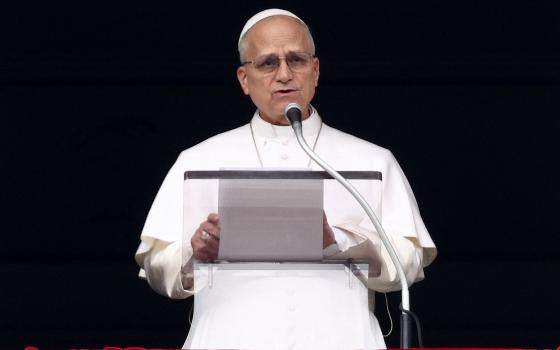
Today, there is a new pope — Leo XIV — and the legacy of Laudato Si' now is in the hands of Catholics worldwide. In his early papacy, Leo has demonstrated he intends to continue Francis' emphasis on environmental concerns, and the Holy See — now a party to the Paris Agreement — has become more engaged in U.N. climate deliberations.
A decade ago, global temperatures were set to eclipse 3 degrees Celsius, or more than double the more ambitious 1.5 C temperature limit that nations enshrined in the Paris accord, a point at which scientists say millions more people will be exposed to more extreme storms, droughts, heatwaves, flooding and wildfires.
Today, temperatures are tracking toward 2.3 C on the low end by the end of the century, if nations follow through fully on their respective national climate plans; it's improvement from 2015, but well short of the trajectory to limit global warming to 1.5 C, which nations acknowledged for the first time at COP30 will likely occur, at least temporarily, in the next decade.
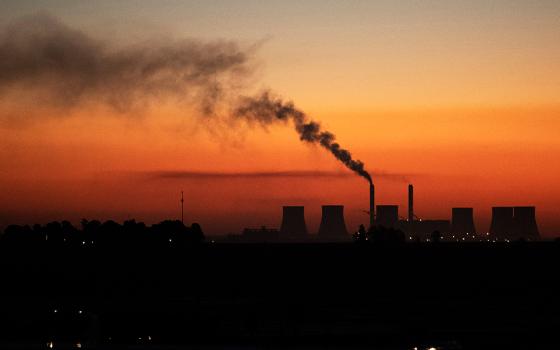
At the Paris Agreement's adoption, some Catholics at COP21 viewed it as signaling "the end of the fossil fuel era." In some ways, that signal has grown in the past decade, as renewables like wind and solar have become cheaper than coal and make up an increasingly larger segment of new energy generation. Still, nations at COP30 again were unable to agree to include the words "fossil fuels" — the primary source of global warming — in the final texts, and countries like the U.S. have sought to double down on fossil fuel expansion.
Assessing where the world stands with climate change 10 years after the Paris Agreement is difficult. But in attempting to do so, it's important to remember, as many observed at the time, what it was: not the end of something, but rather a start.
This is how Neil Thorns, an official with CAFOD (the Catholic development agency of England and Wales) and frequent member of the Holy See delegation at U.N. climate summits, put it back in December 2015 in Paris:
"The draft agreement represents a start towards what Pope Francis calls a global common plan where we put the needs of the most vulnerable first. Now we all need to redouble our efforts to guarantee the safety of future generations."
That sentiment is one that has not changed in 10 years time.
For more reading:
Dec. 12, 2015: Nearly 200 nations adopt historic Paris Agreement, set path for action on climate change
Dec. 11, 2020: As Paris Agreement reaches five-year mark, world 'not doing well' on climate change, Vatican cardinal says
Nov. 26, 2025: UN climate summit in the Amazon falls short on fossil fuel phaseout plan