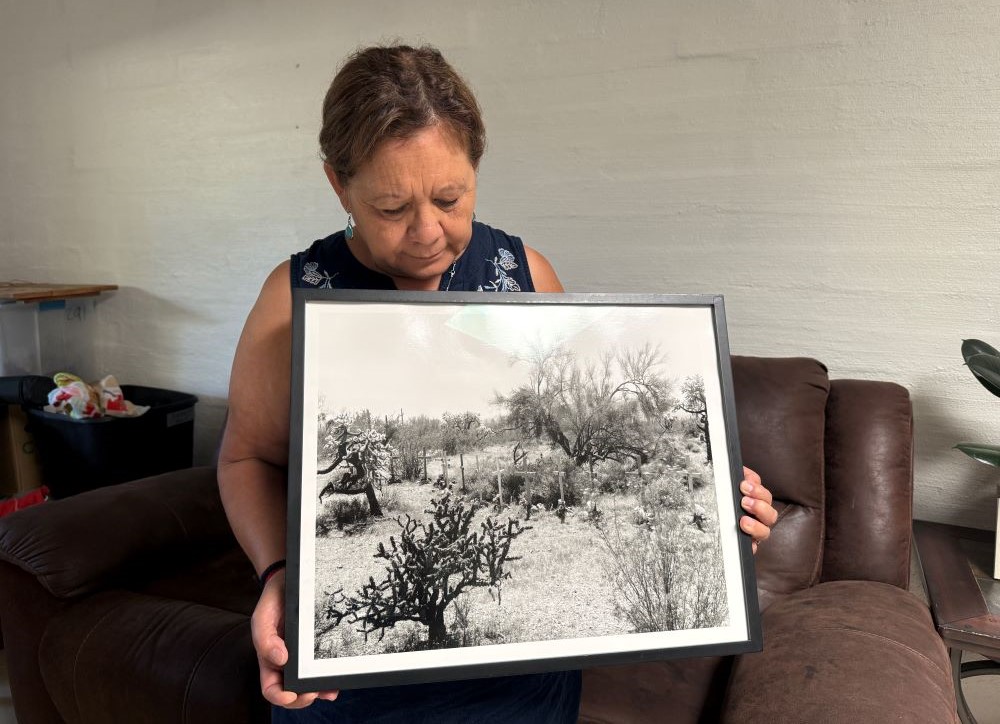
Dora Rodriguez looks at a black and white image of the crosses that mark the site in the Organ Pipe Cactus National Monument where 13 other people in the group she was traveling with died 45 years ago after they were abandoned in southern Arizona's sweltering July heat. (Anita Snow)

by Anita Snow
Hovering between life and death in the sweltering Arizona desert, 19-year-old Dora Rodriguez spent the night under a small tree and repeated a phrase from Psalm 91, the Scripture passage her mother urged her to cling to on her dangerous journey to the U.S. from El Salvador.
"The Lord is my refuge," Rodriguez remembers mumbling over and over as she slipped into unconsciousness 45 years ago after smugglers abandoned her and other migrants in the Organ Pipe Cactus National Monument. Ultimately, only half the 26 people in the group survived.
Now a leading migrant advocate in southern Arizona, Rodriguez wrote in her new memoir that the next thing she remembered was the sun shining brightly, a swirl of vehicles and aircraft, and a man shouting into her face: "Don’t die on me! Don’t die on me!"
She was soon on her way to the hospital and to the start of her lifelong career helping other migrants.
Rodriguez's memoir, Dora: A Daughter of an Unforgiving Terrain, was released July 5 with a lunch and evening reception at an art gallery in her adopted hometown of Tucson, where she is a top leader among the community’s very active migrant advocacy movement.
In her book, Rodriguez describes growing up in a humble family in Santa Ana, El Salvador. There she attended Catholic school and became active in a church youth group that she said was viewed with suspicion by the right-wing military government.
In an interview with the National Catholic Reporter, Rodriguez said she had also befriended a Maryknoll sister in her town. The December after Rodriguez left for the U.S., four North American churchwomen working in El Salvador were raped and murdered by members of the National Guard: two Maryknoll sisters, an Ursuline sister and a lay missionary.
Salvadoran Archbishop Oscar Romero, who spoke out against social injustice and escalating violence by both the government and leftist guerrillas, was assassinated March 24, 1980, as he celebrated Mass in San Salvador. The United Nations Truth Commission for El Salvador in 1993 concluded a right-wing death squad killed the prelate. Romero was canonized as a saint in 2018.
But as the violence ramped up across the country in 1980, heavily armed troops began patrolling throughout El Salvador, including the streets of Santa Ana, on the lookout for suspected "subversives" and sparking widespread fear.
"I knew it was time for me to leave," Rodriguez said during an interview in the modest Tucson townhouse she shares with her husband, David, and their elderly terrier mix Romeo.
With her mother's support, Rodriguez arranged to go north to live with a relative in California but failed in her first two attempts. On the third try, she wound up with a large group that traveled through Mexico and into the Sonoran Desert of southwestern Arizona as July temperatures topped the triple digits.
In her book, Rodriguez chronicles the journey, which turned nightmarish after the group got lost in a remote area of the Organ Pipe Cactus National Monument and ran out of food and water. When the group’s Mexican smugglers left, supposedly to find water, the situation grew horrific. Rodriguez witnessed the Salvadoran smuggler rape and kill three sisters.
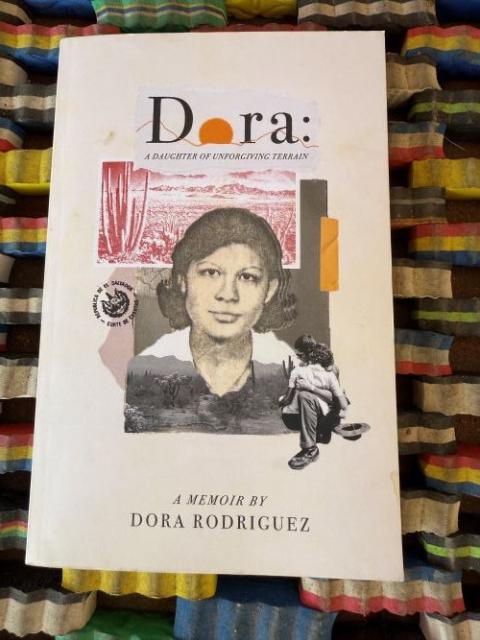
"Dora: A Daughter of Unforgiving Terrain," is a memoir by Salvadoran migrant advocate Dora Rodriguez. (Anita Snow)
As the days progressed, the migrants began to die in the sweltering heat.
Those who survived were rescued just as migrant activism was blossoming in Tucson as the now-retired Rev. John Fife opened the doors of Southside Presbyterian Church to house Central Americans escaping the violent wars then raging across the region. That work was amid the launch of the 1980s sanctuary movement that spread nationwide and into Canada as houses of worship opened their doors to asylum seekers.
Rodriguez and the other survivors were jailed for months in Tucson on charges of entering the U.S. illegally and to be available as witnesses in the federal trial of two Mexican migrant smugglers who abandoned the group. The smugglers were convicted on smuggling charges. Once freed, Rodriguez was placed for a year with a Spanish-speaking family before eventually marrying her high school sweetheart, who had immigrated separately to the United States and had permanent U.S. residency.
Rodriguez, now 65, later obtained her green card, then U.S. citizenship, and had five children. Her first two marriages ended in divorce before she happily remarried for a third time a decade ago. Today, she says, her family — and especially her four grandchildren — are "my world."
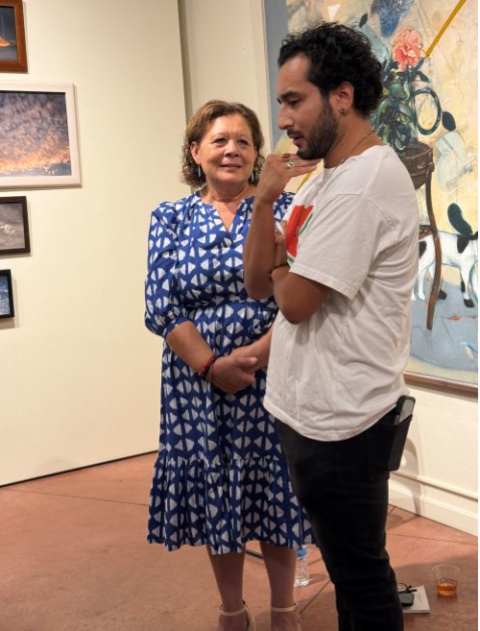
On July 5 in Tucson, Arizona, Dora Rodriguez talks with fellow Salvadoran-born migrant poet and Tucson resident Javier Zamora, who published his own memoir, "Solito," three years ago.(Anita Snow)
The all-volunteer group that she heads, Salvavision, continues to help house and feed asylum-seeking families as their requests to remain legally in the U.S. are processed in federal immigration court in Tucson.
She said her intent is to put a human face on the migrant experience even as President Donald Trump's administration increasingly demonizes newcomers and rolls out raids to round up and deport them.
Rodriguez said she felt compelled to write about her own harrowing experience after Trump launched his first presidential campaign in 2015 describing all migrants as violent criminals.
"I hope this story brings awareness and empathy for migrants," Rodriguez said. "Without empathy, who are we? We need each other," she said.
Advertisement
Rodriguez is saddened by the ongoing crackdown by the U.S. Immigration and Customs Enforcement that has sparked fear in immigrant communities. ICE's actions prompted Bishop Alberto Rojas of the San Bernardino Diocese to issue a rare decree freeing members of the diocese from the Sunday and Holy Day obligation to attend Mass when they fear "potential immigration enforcement actions by civil authorities."
Weeks earlier, federal agents arrested migrants on church property in two parishes of the diocese that encompasses San Bernardino and Riverside counties.
In one of the largest operations since Trump took office in January, federal agents in military-style gear faced off against protesters as they arrested more than 360 people at two Southern California farms July 10. One farmworker from Mexico died after falling from the roof of a greenhouse.
"This journey — my journey, has been one of tragedy, resilience, hope and humanity," Rodriguez writes in the book. "And as I look back, I understand that this is not just my story. It's the story of all of us — struggling, surviving, and showing up in solidarity."