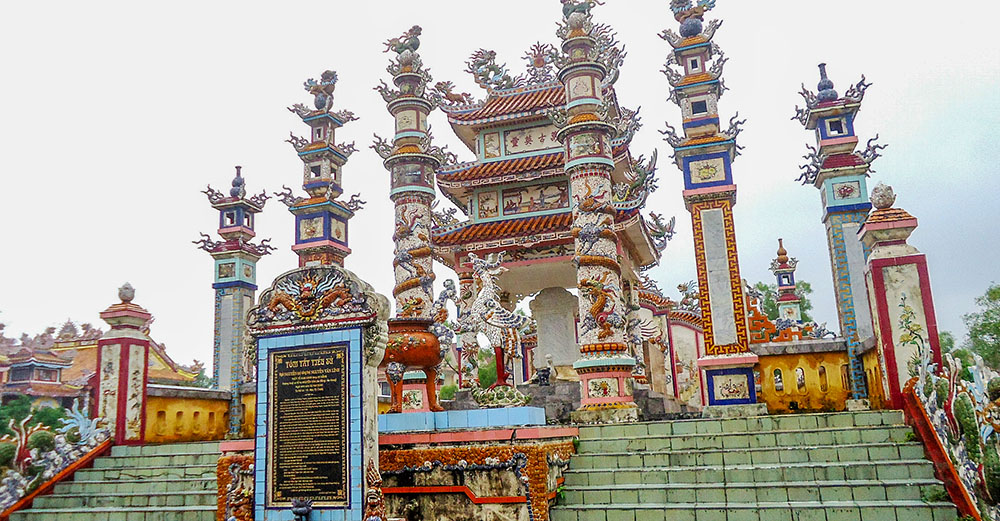
The tomb of Nguyen Van Linh, one of An Bang's founding ancestors, who died in 1588. The 100-square-meter tomb was restored by villagers in 2008 as part of efforts to preserve the community's ancestral heritage. (Joachim Pham)
Along a stretch of white coastal dunes outside the former imperial city of Hue, rows of ornate mausoleums rise against the horizon, their colorful facades glinting under the central Vietnamese sun.
Locals call this 25-hectare burial ground with nearly 400 temple-like tombs the "City of Tombs."
From afar, it looks like a forgotten ancient capital. Up close, the ceramic mosaics, dragons, crosses and statues of saints tell a more intimate story — one of faith, migration and filial devotion that binds generations across oceans.
About 35 km southeast of Hue lies An Bang Cemetery, where families — many with relatives in Canada and the United States — have transformed ancestral resting places into vivid expressions of love and gratitude.
As a local saying goes, "In life, one needs a good home, and in death, a fine tomb." Building a family grave is considered a sacred duty. Locals believe it not only honors the dead but also shapes the fortune and reputation of the living. For them, constructing an impressive tomb expresses filial piety and the hope that ancestors will bless their descendants with peace and prosperity.
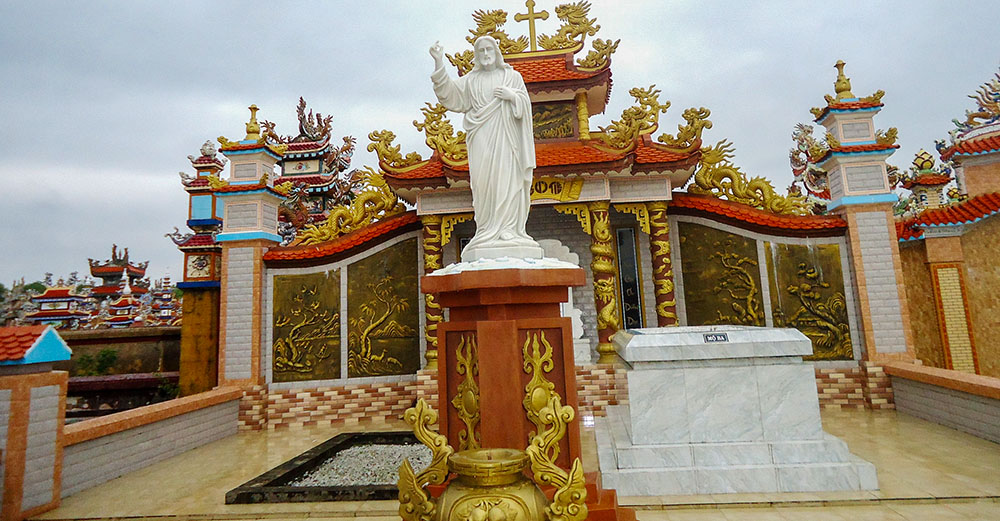
A statue of Jesus stands between the graves of Paul Van Cong Phuc's parents. His father rests to the right, while his mother, still living, regularly visits the site to pray. (Joachim Pham)
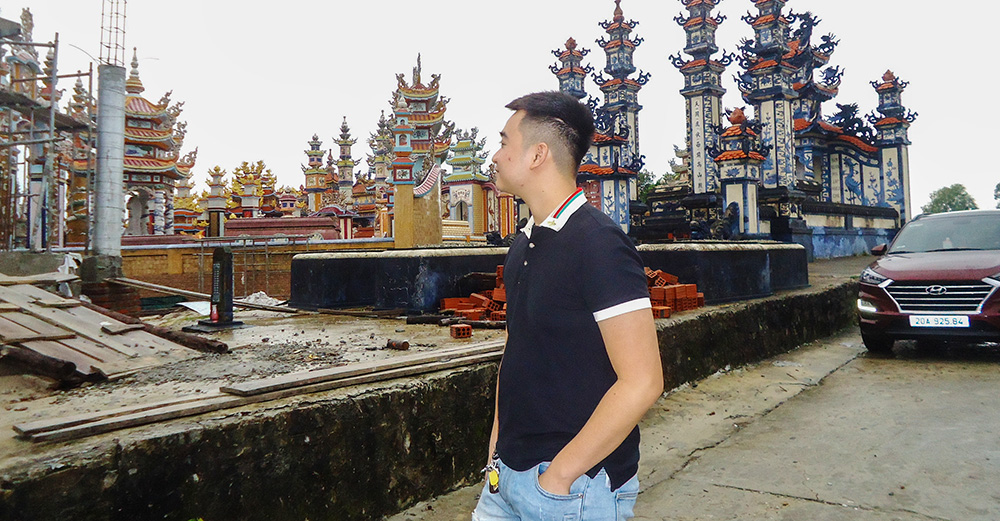
Luke Pham Van Quoc visits his grandfather's grave at the cemetery on Oct. 25, 2025, pausing amid the rows of elaborate tombs that stretch toward the sea. (Joachim Pham)
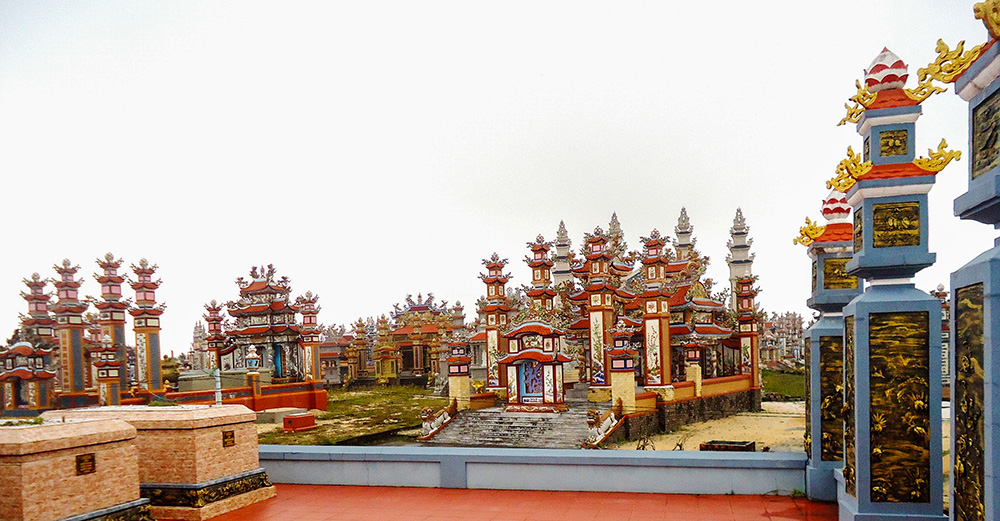
Part of An Bang Cemetery stretches across 25 hectares of white coastal dunes outside the former imperial city of Hue. Since the early 2000s, nearly 400 temple-like tombs in different sizes and architectural styles have risen from the sand — as grand tributes to the dead and expressions of filial devotion. (Joachim Pham)
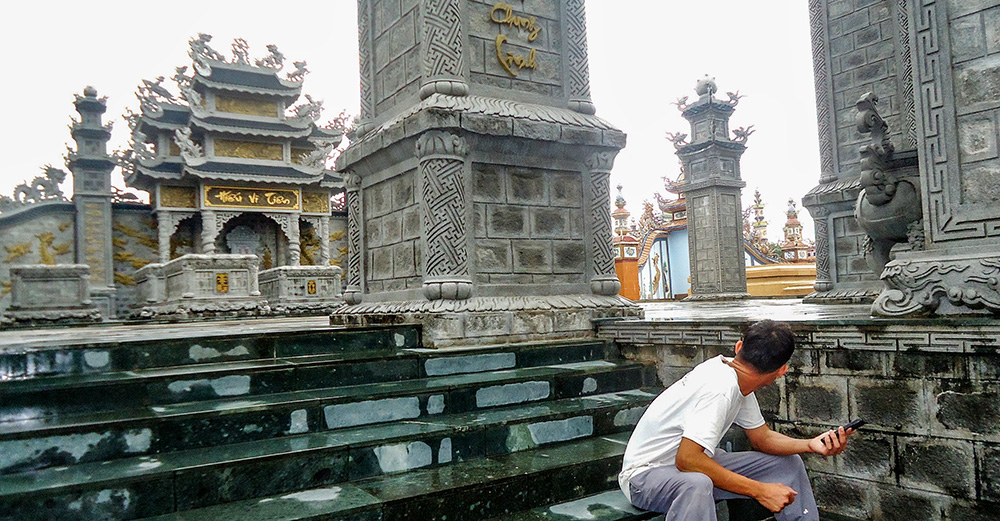
A caretaker tends a family mausoleum on Oct. 21, 2025. Such caretakers are often hired to keep the tombs clean and the offerings fresh throughout the year. (Joachim Pham)
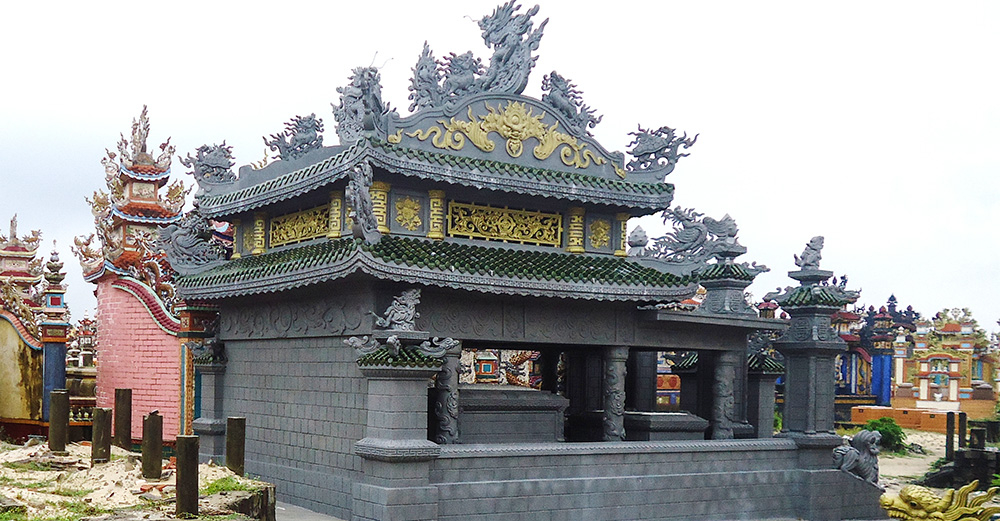
Built in 2018, this 30-square-meter tomb — the smallest in the cemetery — cost 450 million dong (US$18,000). Its modest scale contrasts sharply with the monumental tombs rising around it. (Joachim Pham)
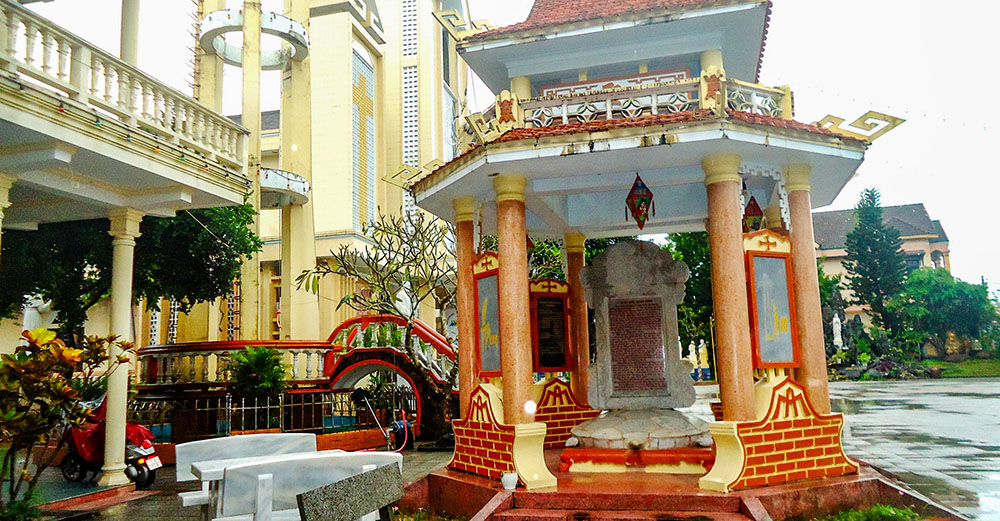
This memorial stele house honors Martha Le Thi Bao, the first person in An Bang village to be baptized, in 1894. Located beside Sts. Peter and Paul Church, the Asian-style shrine features a stone stele resting on the back of a turtle, symbolizing wisdom and longevity. (Joachim Pham)
These temple-like structures range from modest 30-square-meter plots to sprawling 400-square-meter complexes, costing from tens of thousands to several hundred thousand dollars.
Many are funded by Vietnamese immigrants who resettled in North America after the Vietnam War ended in 1975. In the early 2000s, as their families prospered abroad, they began sending money home to build or restore ancestral tombs — fulfilling promises to their forebears.
Architecturally, the grandest mausoleums draw inspiration from the imperial tombs of the Nguyen dynasty (1802-1945). Yet each reflects a family's faith, taste and aspiration, resulting in a striking diversity of forms. Many feature Catholic imagery — crosses, statues of the Virgin Mary, Jesus, angels and saints — while others incorporate motifs from Buddhism, Taoism and even Islamic or Tibetan traditions.
Advertisement
The result is an otherworldly mix of devotion and artistry, where Gothic arches stand beside tiled pagoda roofs and celestial beasts guard ornate gates.
Paul Van Cong Phuc said he and his siblings in the United States built an 80-square-meter mausoleum for their parents and grandparents at a cost of 1 billion dong (US$40,000) in 2020. The tomb combines Asian and European designs, with carvings of the four sacred creatures — dragon, qilin, turtle and phoenix — symbolizing nobility, good fortune, longevity and harmony.
"We built such a large tomb to repay our parents and grandparents, who blessed us with a safe escape to America in 1978," Phuc said. "We believe the souls of the dead remain with the living, watching over them in times of need."
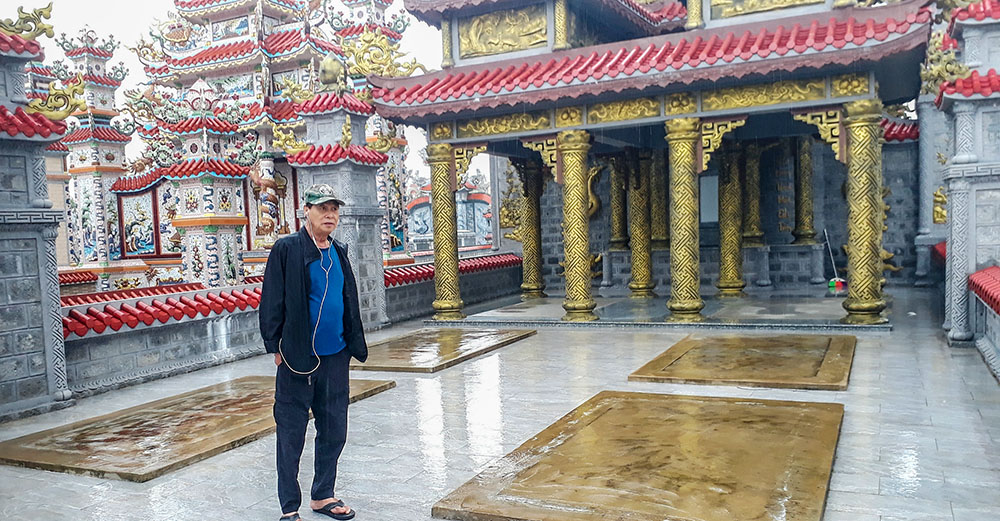
Le Tan Tha stands inside his family's newly built 100-square-meter tomb on Oct. 25, 2025. The resting place is designed for him, his wife and their two children — all still living — reflecting a tradition of preparing one's final home in advance. (Joachim Pham)
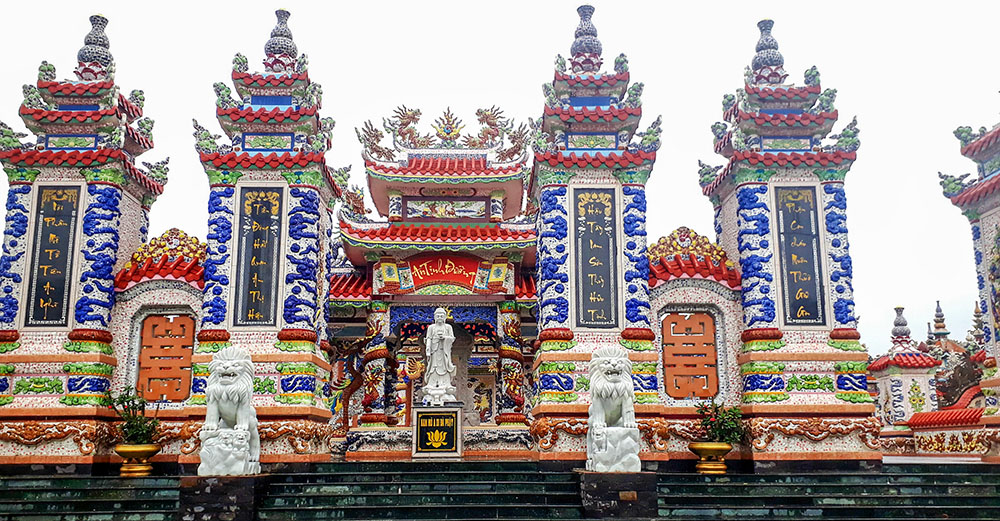
The temple-like tomb of 88-year-old Ho Thiet's family stands as a striking landmark in the cemetery. At its entrance is a stone Buddha, two carved lions and ornate pillars decorated with Buddhist symbols, dragons and poetic couplets. (Joachim Pham)
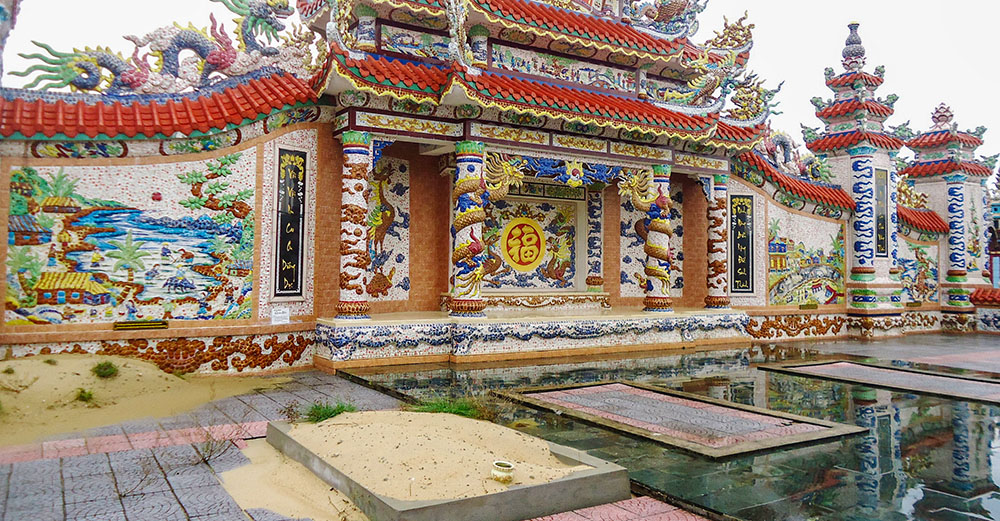
Inside Ho Thiet's family mausoleum are four empty chambers reserved for him, his wife and their son in the United States — a gesture blending earthly family ties with anticipation of reunion in the afterlife. (Joachim Pham)
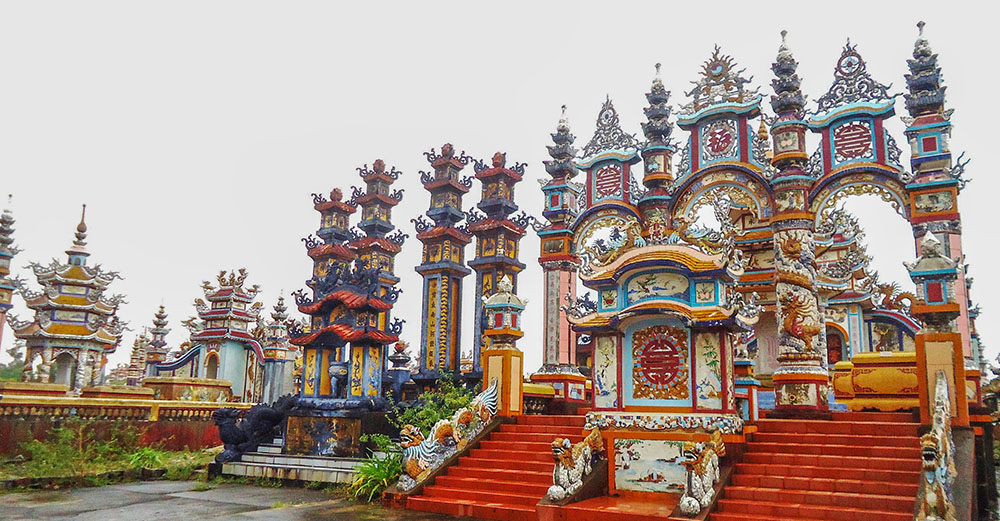
An ornate triple gate adorned with delicate carvings marks the entry to a family mausoleum. The structure merges pagoda-style architecture with Confucian and Taoist motifs, embodying harmony between the spiritual and earthly realms. (Joachim Pham)
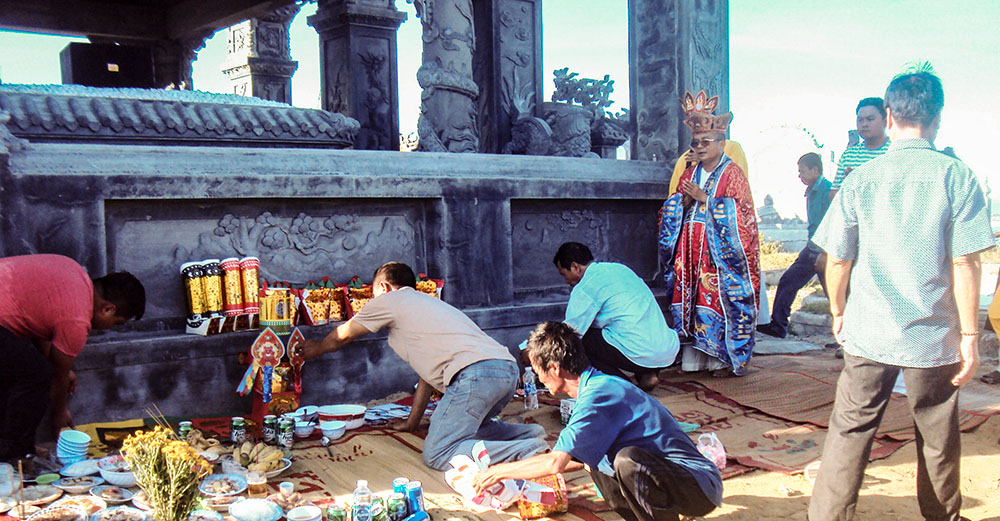
A Confucian family prepares food offerings and burns votive paper at their ancestral tomb on Oct. 21, 2025 — a common ritual to honor the deceased and invite their blessings. (Joachim Pham)
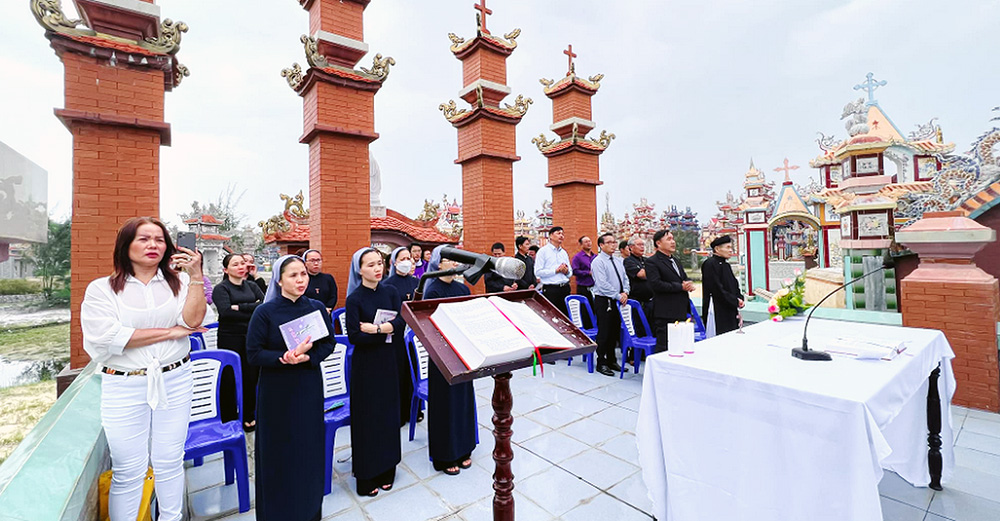
Daughters of Mary of the Immaculate Conception sisters join other people in prayer at An Bang Cemetery on Jan. 30, 2025, during the Lunar New Year celebration, offering gratitude for ancestors and hope for the year ahead. (Joachim Pham)
For many families, building a tomb during their lifetime is both an act of foresight and a source of pride.
The largest mausoleum belongs to 88-year-old Ho Thiet and his wife. Built in eight months at a cost of 3.9 billion dong (US$148,000), it spans 100 square meters and includes four chambers — one each for them and their two sons who live in the U.S.
"This is our eternal home, and that's why we named it An Tịnh Đường — a peaceful place to return to," said Thiet, who has five children and seven grandchildren living abroad. "We believe death is heaven's will. We are happy to see our home before leaving this world."
For locals, faith takes shape in architecture, ceramic mosaics and ornate decoration — where religious devotion and ancestral reverence merge into stories of love, legacy and eternal homecoming.