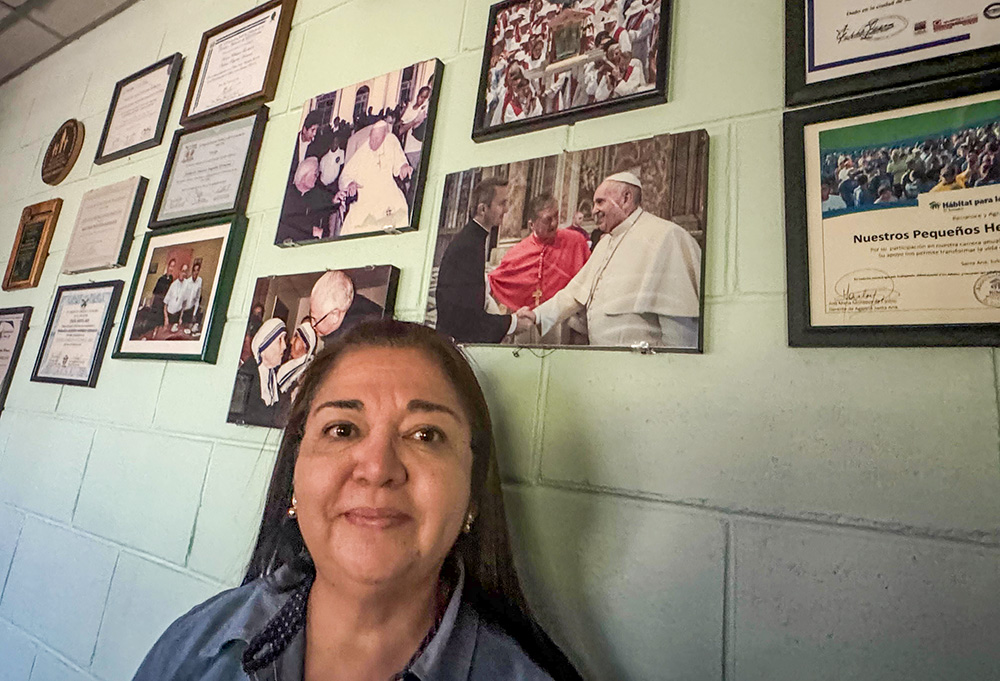
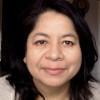
Brenda Méndez, director of programs for Nuestros Pequeños Hermanos in El Salvador, talks about her time working with New York City Archbishop-elect Ronald Hicks on Jan. 19, 2025, in Texistepeque, El Salvador, with photos of him in the background. Hicks spent five years in the country as the organization's regional director for Central America. Méndez said that he arrived at the site to listen and to support staff. (NCR photo/Rhina Guidos)
by Rhina Guidos
Karen de Figueroa still remembers the day Ronald Hicks arrived in 2005. The staff had arranged for a group of children to wave two small flags as the young priest stepped out of the car from the airport. One flag from El Salvador, their country, and the other from the U.S., his country.
"A car arrived and we saw this blond man in shorts, a shirt and sandals, get out of the car. ... He waved and we waved ... and we wondered, who is this? And we waited for a priest, wearing gray and black, to get out of the car and then someone said, 'He's the priest. He's the priest!' "
Over the next five years, in tiny Texistepeque, population 19,000, they would come to know up close the future archbishop of New York.
To some, the New York seat is a coveted spot in Catholic Church circles, but it matters little, if at all, to those who know Hicks as Padre Ron, loved by staff and young Salvadorans, many now grown, who found a home and a family at Nuestros Pequeños Hermanos (Our Little Brothers and Sisters). The nonprofit near Texistepeque in northwest El Salvador is part of an international project that since the 1950s has cared for orphaned, abandoned and vulnerable children in Latin America. Though initially focused on boys, it now also helps girls.
It was an organization Hicks had become acquainted with when he took a year off from the seminary when he was discerning the priesthood in the 1990s. U.S. priest Fr. William Wasson founded Nuestros Pequeños Hermanos in Mexico after an experience with a 15-year-old boy who took money from his church's poor box because he was hungry. Hicks volunteered at the site in Mexico so he could learn Spanish, but he gained more than a second language, and they gained a devoted supporter.
"He fell in love with it," Brenda Méndez, the organization's director of programs in El Salvador, told National Catholic Reporter Jan. 19.
Advertisement
More than an organization, NPH, as its staffers and participants like to call it, has been a haven for children who have struggled with their families or who may not have one at all, they say. In El Salvador, tíos, or "uncles," are mentors to the pequeños, or "little ones." The goal: to provide a favorable environment, holistic in scope, in terms of food and nutrition, mentorship and spiritual guidance, to put vulnerable children on a path to education and a stable life. But it goes beyond that, some participants say.
Álvaro Mejía, an NPH graduate in El Salvador, told CNN in December that for him, it has provided a way of life, of using one's life to do good for others without questioning who they are.
Past participants like Mejía have ended up working for the organization, including in leadership roles, fulfilling a dream of founder Wasson: to have them help those in similar dire circumstances, Méndez said.
Some have started families of their own, and without an extended clan, NPH often fulfills that role and maintains touch with them the way a family would, she added. A few pequeños have migrated, mostly to the U.S., she added, but they have kept in touch with one another in a new land, made their own support circle and hosted gatherings, including some that Hicks is said to have attended.
The organization's goal of helping others seemed in line with what a young Hicks, about to become a priest, wanted to do with his life when he arrived at the NPH site Mexico in the early 1990s, said José Juan Lizarde. He got along so well with him that he started taking Hicks along to parties, celebrations and dances on the weekends.
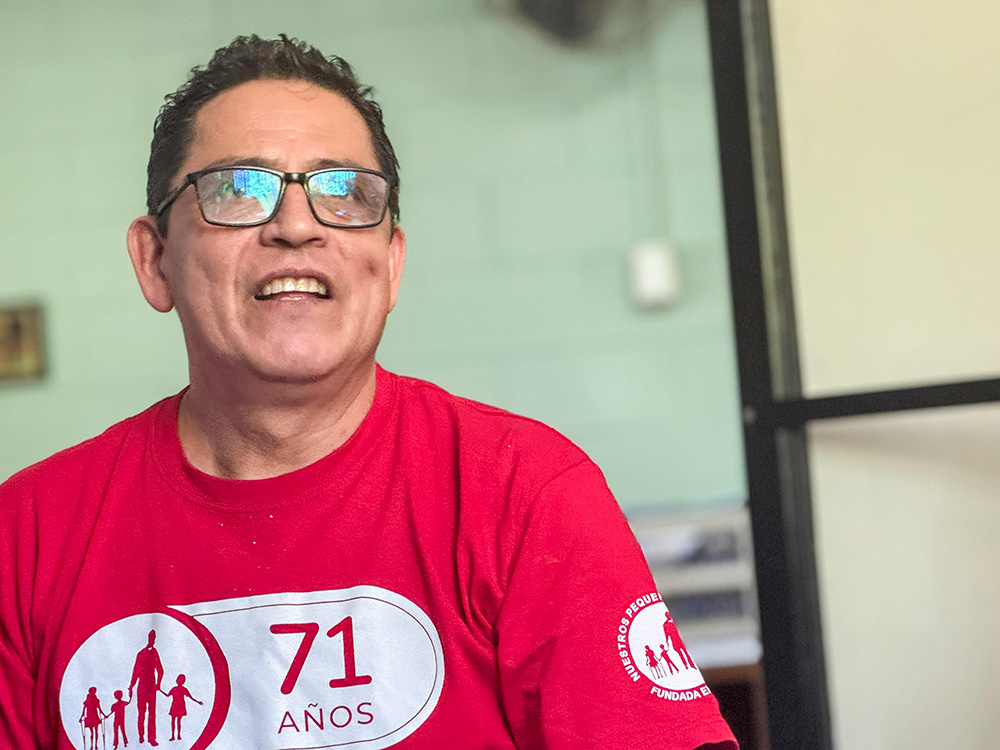
José Juan Lizarde speaks warmly Jan. 19, 2025, in El Salvador about meeting Ronald Hicks in Mexico before he became a priest. Lizarde considers Hicks a brother, a great friend who has remained close to his family even as his responsibilities as a bishop have increased. (NCR photo/Rhina Guidos)
Hicks "couldn't dance and so he'd say to me, 'Teach me [to dance] and I'll teach you English,' " Lizarde said.
Lizarde taught him to dance cumbia, then salsa, then other dances popular in Latin America.
But one day that ended when Hicks told him he was returning home to the U.S. to be ordained.
"I said, 'Where? No. No. I don't believe you! Why? You're handsome and everybody likes you,' " Lizarde jokingly remembers.
He recalls Hicks telling him: "I really want to be a priest. ... I want to be a part of a greater family."
After Hicks left for Illinois, where he was ordained a priest in 1994 for the Chicago Archdiocese, the two stayed in touch and reunited when Hicks went to El Salvador to serve as NPH's regional director for Central America from 2005 to 2010. Lizarde by then had moved to the site in El Salvador. He married one of the teachers in the organization and had children.
Though NPH's El Salvador campus is along a rocky, dusty, bumpy, unpaved road lined with concrete block and cement houses and a few farm animals, the campus itself is a bit of an oasis. Willowy trees line the entrance toward the main office, surrounded by a K-9 grade school, a clinic, a chapel almost as big as some town churches, dormitories, a farm, a huge soccer field, and gardens. School buses take some of the children to and from Santa Ana, a large city center nearby where some continue with higher education.
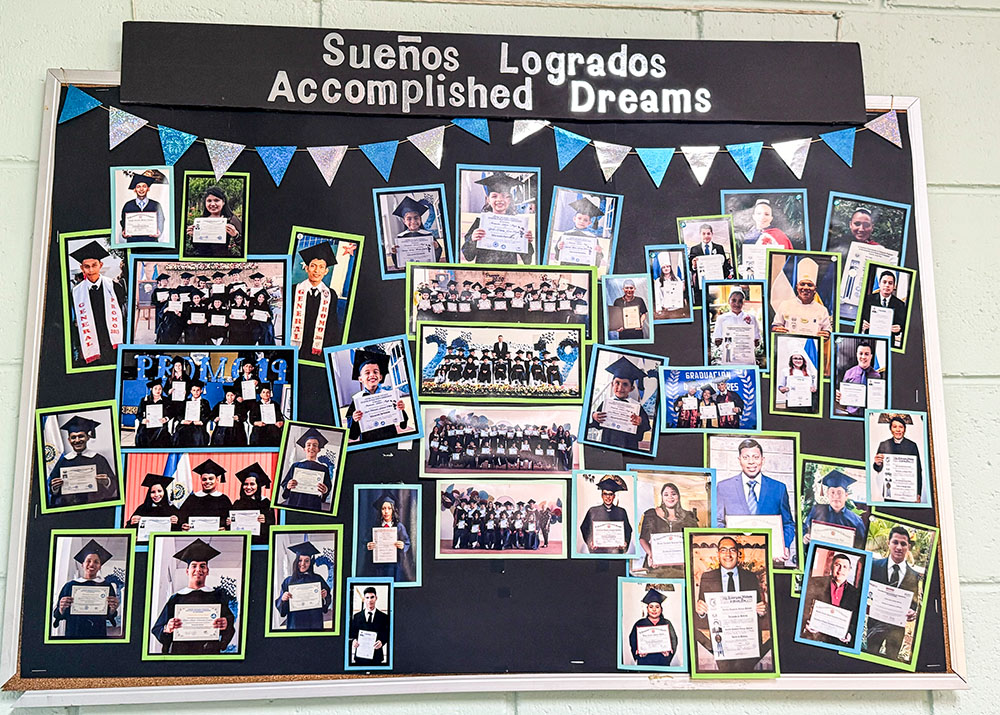
On Jan. 19, 2025, photos show graduates of Nuestros Pequeños Hermanos in Texistepeque, El Salvador. New York City Archbishop-elect Ronald Hicks spent five years in El Salvador as regional director of Nuestros Pequeños Hermanos for Central America from 2005 to 2010. (NCR photo/Rhina Guidos)
Though much of Hicks' work was administrative, he was the glue that kept the staff together, caring for them so that they in turn would do the same with the children under their care, staffers said. He didn't arrive wanting to change the way they ran things, Méndez said, but as a guide who listened and gently pointed at a spiritual lens through which they could look at things.
"He was respectful of the structures in place, went to a lot of our meetings to listen. ... In the spiritual aspects, he helped us a lot," Méndez said.
And he still managed to be present to the children as a priest and an adult who cared for them, she added.
Being able to provide that environment on the campus was important, said Méndez. And though he has an easygoing manner, he's also very serious, disciplined and deeply rooted in faith and prayer. It wasn't a surprise when he announced that he was going to build a chapel on the premises.
"He put his touch on the smallest of details, the colors, the pews. ... His friends came to help, his family came, he looked for funding, he took us on a search for the crucifix, the paint, everything," Méndez said.
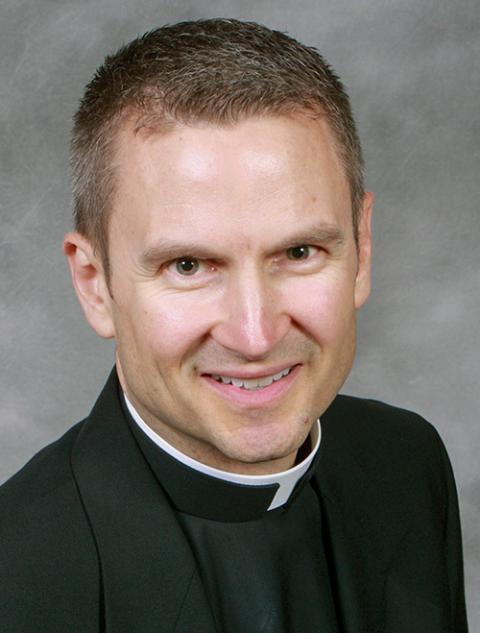
Then-Fr. Ronald Hicks in 2014 (CNS/Chicago Archdiocese)
Over the years, his parents and other family visited; he was happy to introduce them to all things related to St. Óscar Romero in the country, said Lizarde, who firmly believes that if Hicks had a choice, he would have stayed there for good.
But after five years, his archdiocese in Chicago came calling in 2010. When Hicks left the campus, staffers lined the same road where the children had welcomed him five years earlier. It was 2 a.m. and many had camped out without Hicks knowing. With white handkerchiefs, they waved goodbye as the car that came to get him for the airport left, de Figueroa remembers.
After he returned to Illinois, Hicks continued visiting his friends in El Salvador several times a year.
Even with a busy schedule, "he would move heaven and earth to be with the kids" for celebrations such as graduations, quinceañeras, and anniversaries important to the NPH world, staffers said.
His visits have become fewer as his episcopal responsibilities have increased. But Hicks still has a house on the premises with a sign that says "Casa Padre Ron," where he has a statue of the Virgin Mary in the back garden and a large decoration of St. Romero on a side wall. He regularly keeps in touch with the staff.
They're proud of their friend, NPH staffers said, but they told him they are worried his new post in New York will mean he'll have even less time to visit.
"I sent him a congratulations by WhatsApp," Lizarde said. And even though he said he would have understood if Hicks was too busy to respond, he was surprised to receive a quick reply, thanking him.
"He said he was nervous, anxious," Lizarde said.
Méndez, too, sent him a message. She said Hicks reassured her that the move may have benefits for his visits, saying: "There are a lot of direct flights to El Salvador from New York."