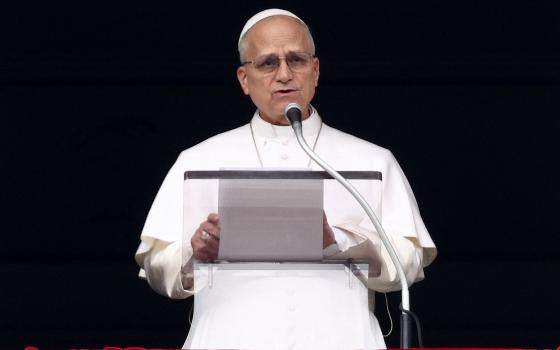
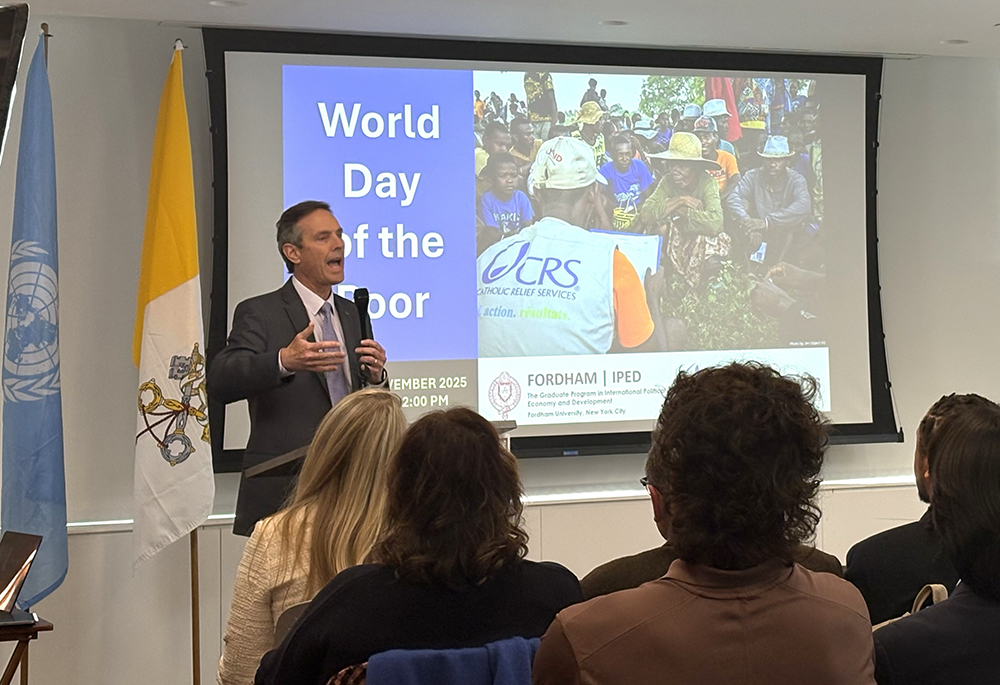
Sean Callahan, CEO of Catholic Relief Services, speaks at an event for the 2025 Fordham Pope Francis Global Poverty Report at the Church Center for the United Nations in New York, Nov. 14, 2025. The event commemorated World Day of the Poor, which is celebrated Nov. 16. (NCR photo/Camillo Barone)

The global fight against extreme poverty has stalled for a second consecutive year, according to the 2025 Fordham Pope Francis Global Poverty Report, which tracks access to seven basic human needs identified by Pope Francis: water, food, housing, employment, education, gender equity and religious freedom.
The analysis, compiled by researchers at Fordham University's Graduate Program in International Political Economy and Development and just presented at the United Nations, shows that the global poverty gap remains fixed at 25.5%, halting the modest recovery that began in 2023 after pandemic-era setbacks.
The report paints a mixed but increasingly polarized picture of human deprivation. While access to drinking water, education and adequately paid employment improved slightly, conditions worsened in two critical indicators: access to food and religious freedom. Housing and gender equity also showed no signs of progress.
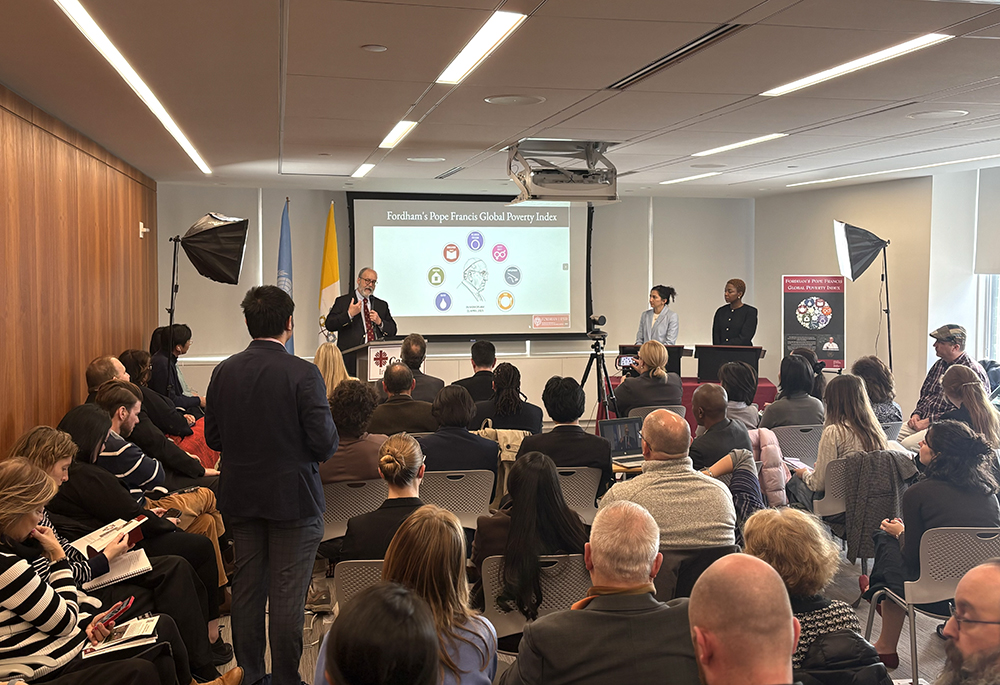
Henry Schwalbenberg, director at the Graduate Program in International Political Economy and Development at Fordham University, presents the 2025 Fordham Pope Francis Global Poverty Report at the Church Center for the United Nations in New York, Nov. 14. (NCR photo/Camillo Barone)
Speaking to the National Catholic Reporter, Henry Schwalbenberg, the report's director, warned that political shifts among the world's wealthiest nations are playing a significant role in the slowdown.
"Something has shifted, and it's the U.S. government that is turning away from the fight against global poverty, and the other countries in Europe say they are focusing more on the problem in Ukraine," he said.
"That makes me think that the key thing you need to do now is more advocacy," he said. "We have to kind of push against the tide and say we have to focus on it."
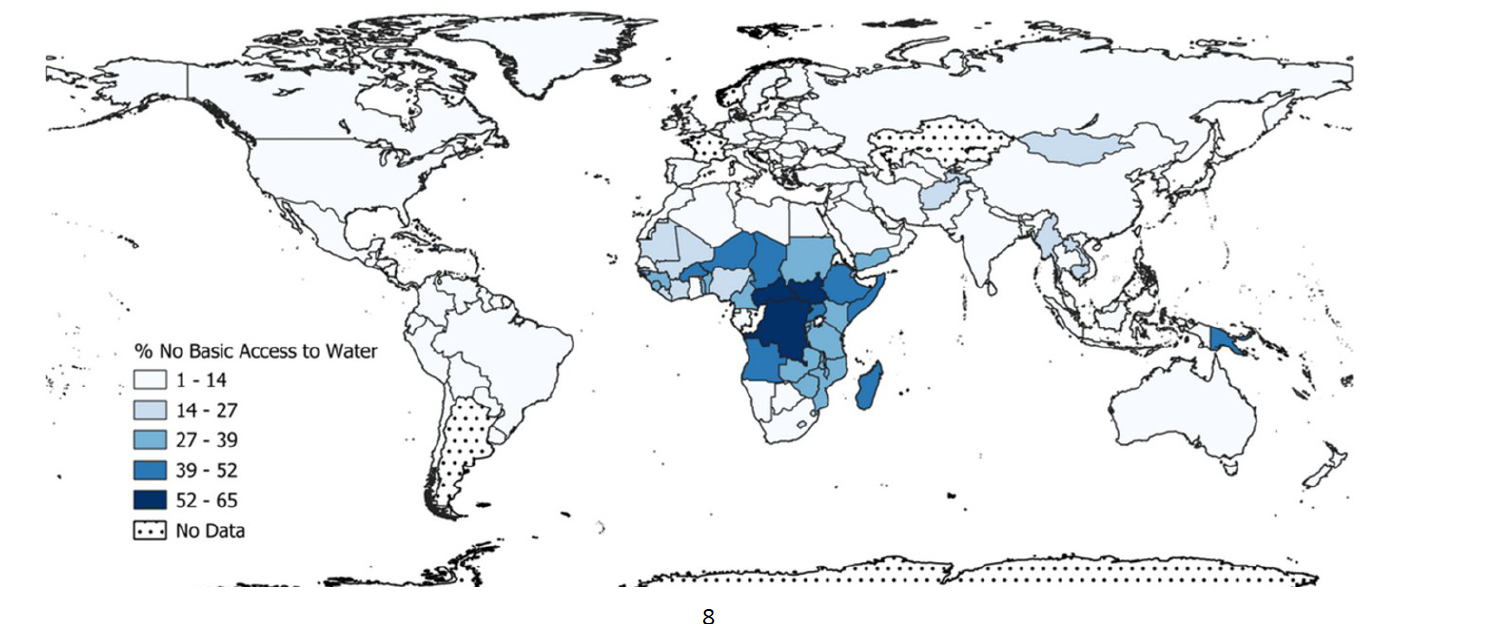
Click the infographic to view a map of the percentage of the population lacking basic access to drinking water in 2022. (Source: 2025 Fordham Pope Francis Global Poverty Report)
Water, food and housing inadequacies
In 2022, about 707 million people — 8.8% of the global population — lacked basic access to drinking water, defined as water collected from an improved source within a 30-minute round trip. Although this represents an improvement over the last decade, the burden of deprivation remains overwhelmingly concentrated in Sub-Saharan Africa. The Democratic Republic of the Congo leads the global ranking for water scarcity, with 64.9% of its population lacking basic access. Nine of the ten most water-deprived countries are African.
The report notes a strong correlation between water access and several sustainable development goal (SDG) outcomes, including lower poverty rates, reduced maternal mortality rates, and greater financial inclusion. According to researchers, water access is one of the most reliable indicators of a country's overall development trajectory.
Food insecurity continues to deepen. The report estimates that 730 million people — 9.1% of the world — were undernourished in 2022, marking a fifth straight year of rising hunger. Somalia and Haiti top the list of most food-insecure nations, each with more than half of their populations unable to meet basic caloric requirements.
The data suggests multiple compounding drivers behind the global trend: conflict, inflation, climate shocks and pandemic disruptions. Undernourishment displays a strong positive correlation with infant mortality, maternal mortality and reduced educational performance, underscoring the cross-sector consequences of food deprivation.
Roughly 16.4% of the world's population — 1.3 billion people — lived in inadequate housing in 2023, including dwellings without proper floors, roofs or walls. The report warns that progress in improving shelter has stalled. Chad, the Central African Republic, and Burundi have the highest rates of inadequate housing, all above 70%.
Because housing quality ties closely to sanitation, water access and exposure to disease, the stagnation in this indicator raises concerns about broader public health and social stability.
Employment weakens, education improves and gender inequality worsens
The global labor market has not fully rebounded from the COVID-19 crisis. The report finds that 21.4% of the global labor force — about 810 million people — lack adequately remunerated employment, defined as work paying above the poverty wage of $3.65 per day or, alternatively, access to stable work. While the distressed labor rate is lower than its 2020 peak, improvements slowed notably in 2024.
Madagascar, the Democratic Republic of the Congo, and Malawi face the highest rates of distressed labor, with more than 80% of workers lacking sufficient employment. Employment also shows strong statistical ties to other indicators, especially nutrition and water access.
On a more positive note, adult literacy continues to improve globally. Approximately 767 million adults — 12.6% of the global adult population — were illiterate in 2023, a decline from preceding years. Nonetheless, Sub-Saharan Africa remains the epicenter of global illiteracy, with Chad, Mali and Burkina Faso posting literacy gaps above 65%.
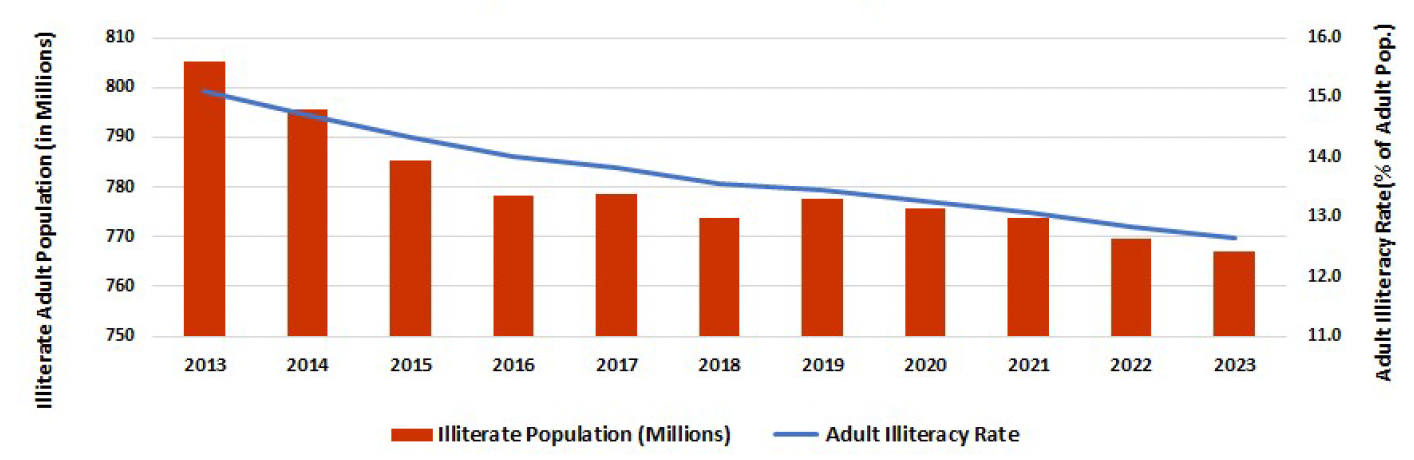
Click the infographic to view a graph of world adult illiteracy rates. (Source: 2025 Fordham Pope Francis Global Poverty Report)
Education outcomes also show the most consistent alignment with SDG progress, correlating strongly with reduced poverty, improved maternal health, and higher financial inclusion.
One of the report's most troubling findings concerns gender equity. According to the World Economic Forum's Health and Survival Index, 51.3% of women and girls — approximately 2 billion people — in 2023 lived in societies with severe gender discrimination.
Azerbaijan, China, Vietnam, Qatar and India rank among the most inequitable, driven by skewed sex ratios and health disparities. Gender equity was the only indicator in the report with no strong statistical alignment to SDG targets, suggesting structural gaps in global development frameworks.
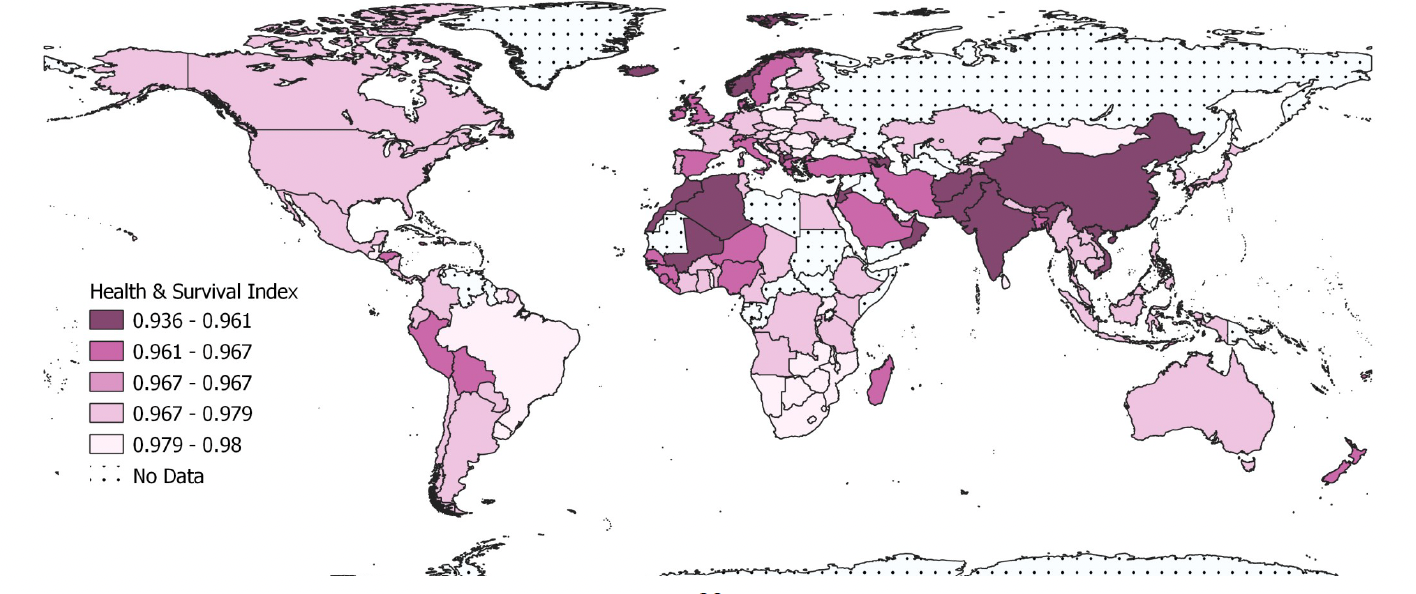
Click the infographic to view a map of the health and survival gap between women and men (2023). (Source: 2025 Fordham Pope Francis Global Poverty Report)
Religious freedom declines for majority of humanity
The report identifies the erosion of religious freedom as one of the most alarming trends. Based on government restrictions measured by the Pew Research Center, in 2022 59% of the world's population — more than 4.7 billion people — lived under regimes that severely limit religious expression. China, Egypt, Afghanistan, and Iran top the list of countries with the strictest constraints.
Unlike the material deprivation indicators, religious freedom shows almost no correlation with income or the Human Development Index, implying that economic growth does not automatically foster civil liberties.
The rise in global hunger and the erosion of religious freedom — two of the most alarming findings in the new report — reflect what Schwalbenberg sees as a core insight of Francis' original framework. By pairing material deprivation with civil liberties, Francis was signaling that "both are important, and we need to be unified about both political or civil or religious freedoms and both real physical needs," he said.
While most people naturally view hunger as the most urgent concern — "if you're hungry and you can't function, then that's the most basic need" — Schwalbenberg said that the scale of declining religious freedom is equally dire, with "half of the world's population" now living in countries struggling to protect it.
Schwalbenberg argued that the priorities embedded in the "Pope Francis index" remain intact. He pointed to Pope Leo XIV's new encyclical Dilexi Te as evidence of it. "I see Leo's new encyclical Dilexi Te as a very strong continuation of this work from one pope to the next pope," he said.
Advertisement
Catholic Relief Services CEO Sean Callahan, a keynote speaker at the presentation of the 2025 report at the U.N., said these trends mirror what Catholic Relief Services teams are facing in countries where conflict, climate shocks and inflation have compounded human need.
"We're trying to stimulate local production as much as possible," he said to NCR, describing a reorganization designed to push more of the agency's budget directly to communities most affected.
Complicating the landscape further, recent government funding cuts have forced Catholic Relief Services to make difficult choices about which programs to maintain. Callahan said the organization is consolidating operations and relying more heavily on local Catholic partners to help set priorities.
"We see where we can assist them in their priorities locally, and then try to invest more in those areas," he explained, noting that Catholic Relief Services also coordinates with the broader Caritas network to avoid duplication and maximize coverage in crisis zones.
The transition has brought painful adjustments. Callahan said the internal restructuring has meant saying goodbye to valued staff, while local partner organizations have also been forced to reduce personnel. Yet the upheaval has underscored the resilience of Catholic Relief Service's relationships on the ground.
"Although they definitely need the resources, the relationship is the most important thing. Let's keep that relationship strong so that we can continue to work together," he said.