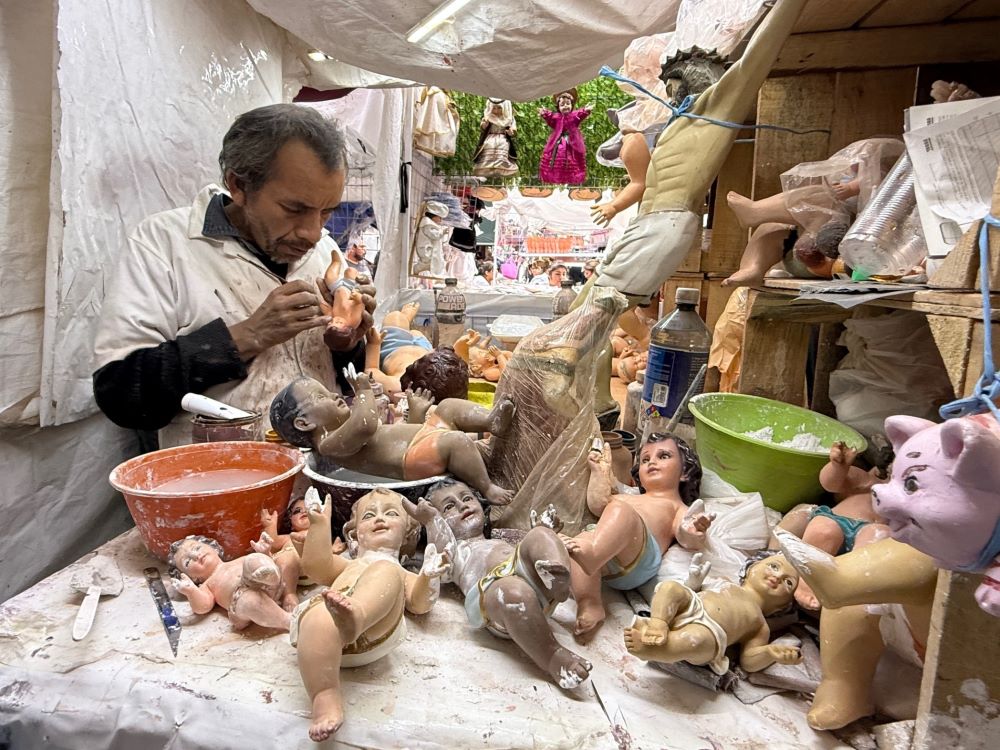
An artisan repairs a Baby Jesus figurine at a Mexico City market Jan. 27. Other damaged figurines await plaster and paint to prepare them for presentation at church on Candlemas, celebrated Feb. 2. (Anita Snow)

by Anita Snow
Hundreds of plaster Baby Jesus figurines are scattered around scores of stalls in the Niños Dios market of Mexico's capital, where many of the city's Catholic faithful go early each year for help in preparing their own Niños Jesús for presentation at church Feb. 2.
Candlemas, known in the Spanish-speaking world as El Día de la Candelaria, is a special day for Catholics in Mexico, who embrace the long-held local tradition of bringing their own beautifully dressed plaster Christ Child to their parish for a blessing. These figurines are also often displayed in a family's home nativity scene.
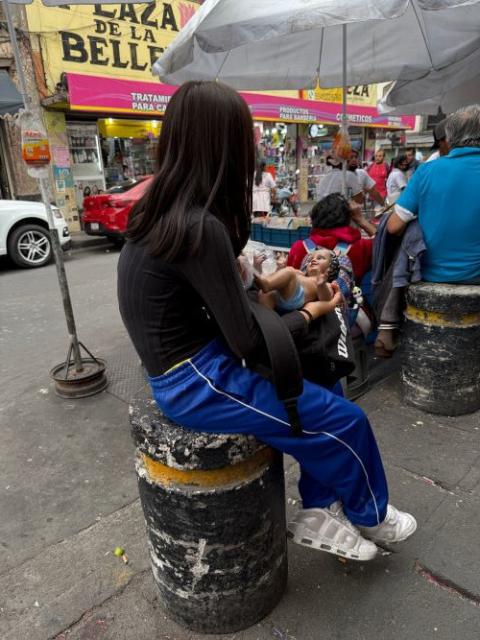
A young girl sits with her Baby Jesus figurine Jan. 27 outside a Mexico City market that sells, repairs and dresses the plaster likenesses of the Christ Child for a blessing on Candlemas, celebrated Feb. 2. (Anita Snow)
Candelmas marks 40 days after Jesus was born and he was taken to the temple to be presented to God.
In Mexico, the plaster Niños Jesús are typically dressed in lacy and ribboned white gowns, like those worn for baptisms, especially the first year the figurine is owned. In subsequent years, people have dressed their Niños Jesús as a guardian angel or a favorite saint, such as St. Toribio Romo, the patron of Mexican migrants.
At the market, some vendors sell clothing to dress the Christ child as a doctor or scholar.
Candlemas is also a day for parties, with the tamales purchased by those who found a plastic Baby Jesus inside a piece of Kings Cake, which in Mexico is a ring-shaped fruitcake called a Rosca de Reyes. The treat is shared at homes, schools and workplaces to mark Epiphany Jan. 6.
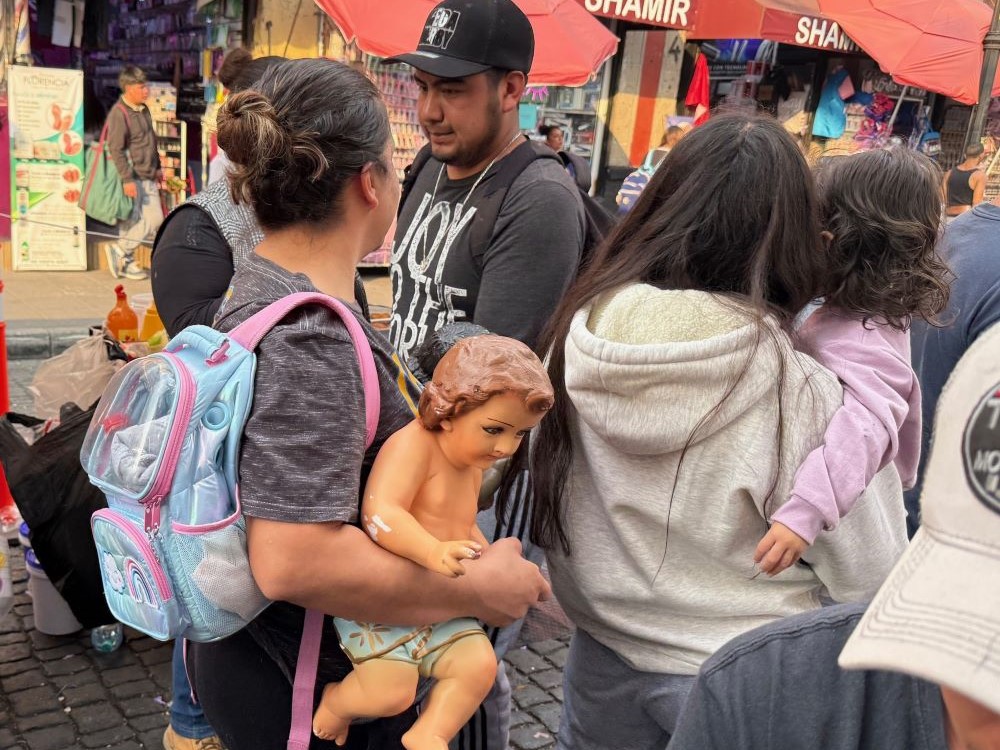
A woman carries her damaged Baby Jesus figurine Jan. 27, next to another woman carrying a toddler, to a Mexico City market that repairs the plaster dolls that represent the Christ Child that are taken to church for a blessing by the priest on Candlemas, celebrated Feb. 2. (Anita Snow)
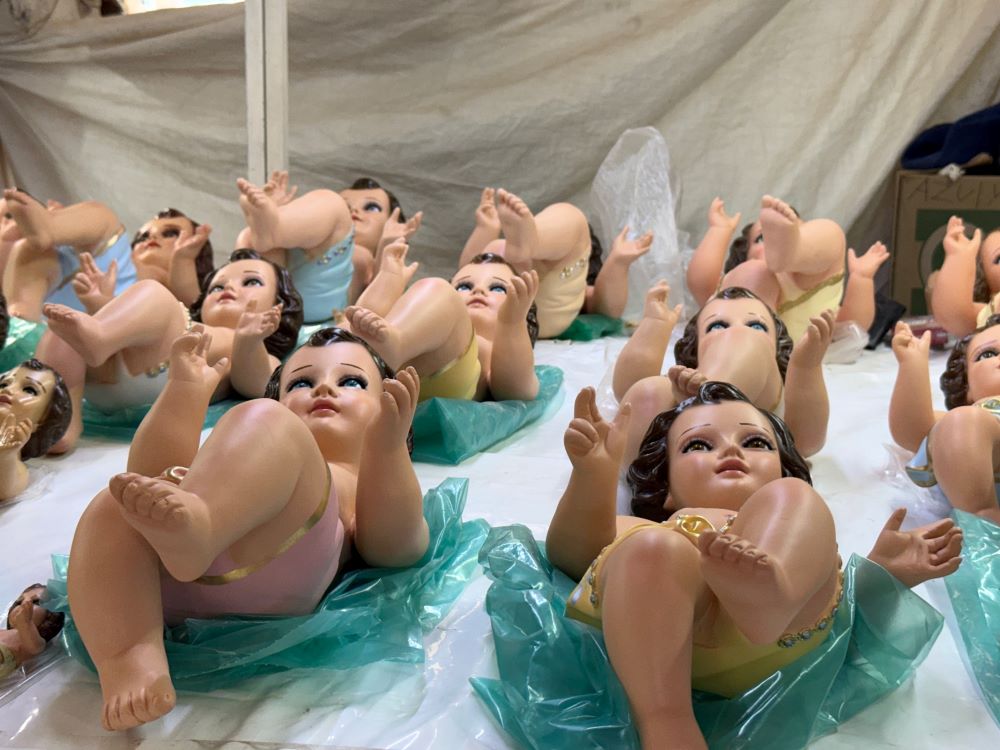
Baby Jesus figurines rest on their backs on Jan. 27 at a Mexico City market that sells the plaster representations of the Christ Child to be presented at church for a blessing on Candlemas, Feb. 2. (Anita Snow)
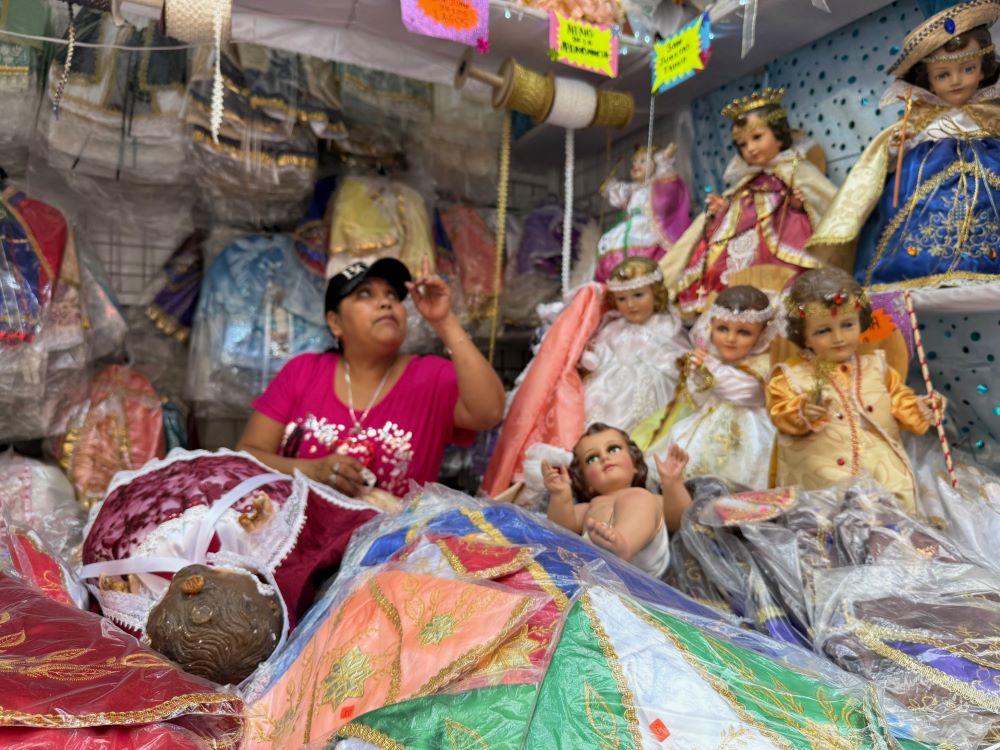
A vendor looks at some of the Baby Jesus figurines and outfits for sale Jan. 27 at a Mexico City market dedicated to preparing plaster dolls that represent the Christ Child for presentation at church on Candlemas, Feb. 2. (Anita Snow)
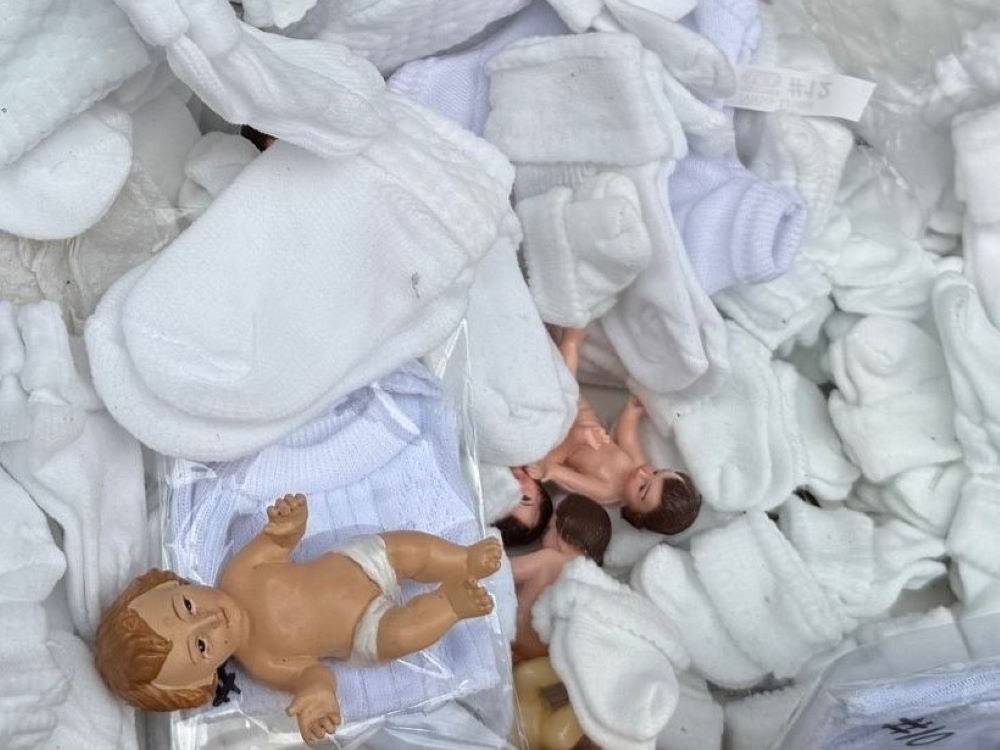
Socks and booties are for sale Jan. 27 at a Mexico City market dedicated to dressing and repairing plaster dolls representing the Christ Child for their presentation at church on Candlemas, Feb. 2. (Anita Snow)
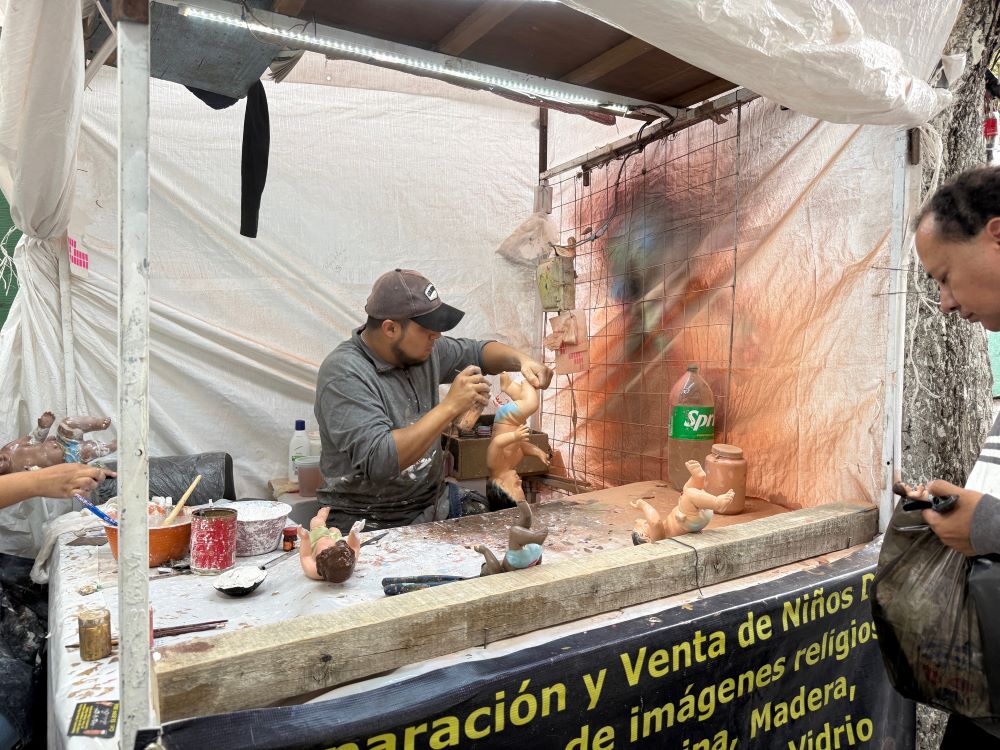
An artisan applies a fresh coat of spray paint to a Baby Jesus figurine Jan. 27 while a customer waits at a Mexico City market that repairs, sells and dresses the plaster representations of the Christ Child to be taken to church for a blessing on Candlemas, celebrated Feb. 2. (Anita Snow)
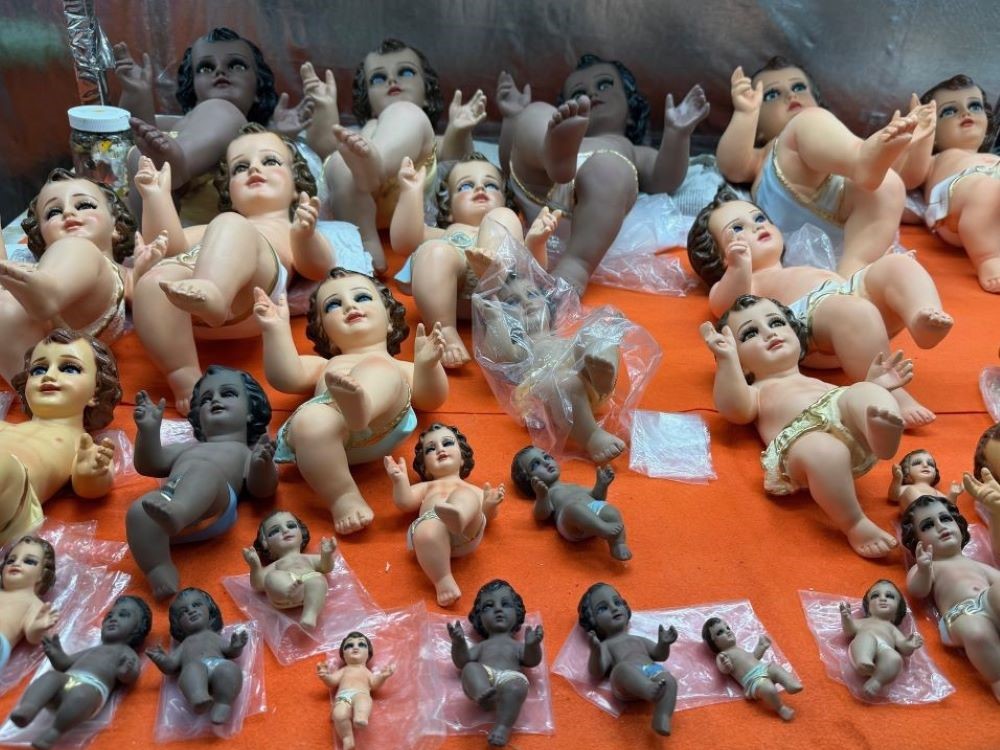
Baby Jesus figurines are displayed Jan. 27 at a Mexico market where the plaster dolls are sold, repaired and dressed for a blessing at church on Candlemas, celebrated Feb. 2 to mark 40 days after the birth of the Christ Child and his presentation at the temple. (Anita Snow)
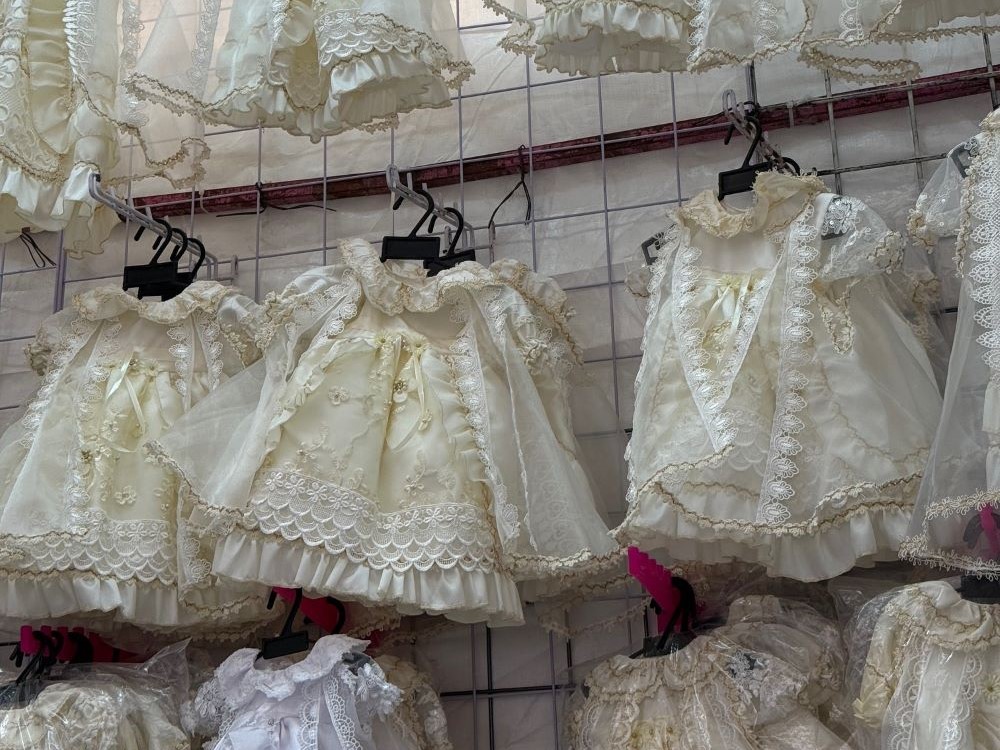
Traditional white gowns worn by Baby Jesus figurines on Candlemas for their presentation for a blessing at church hang Jan. 27 in a Mexico City market dedicated to the sale, repair and dressing of the plaster dolls. (Anita Snow)
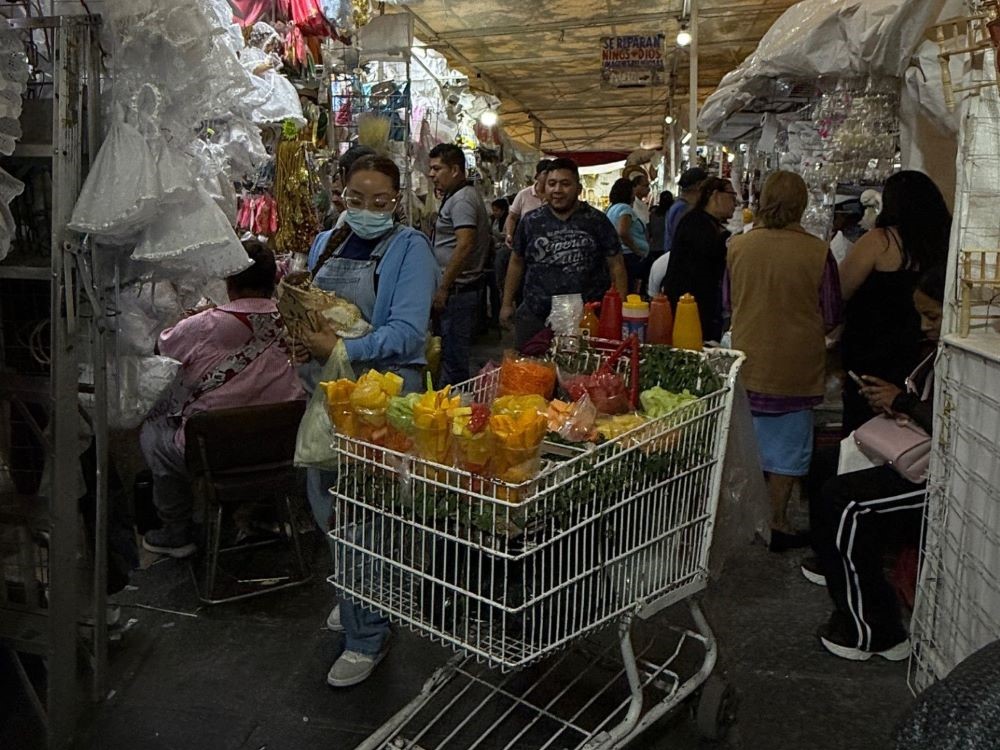
A fruit vendor navigates his cart Jan. 27 in the aisle of a Mexico City market dedicated to preparing Baby Jesus figurines for presentation at church on Candlemas, Feb. 2. (Anita Snow)
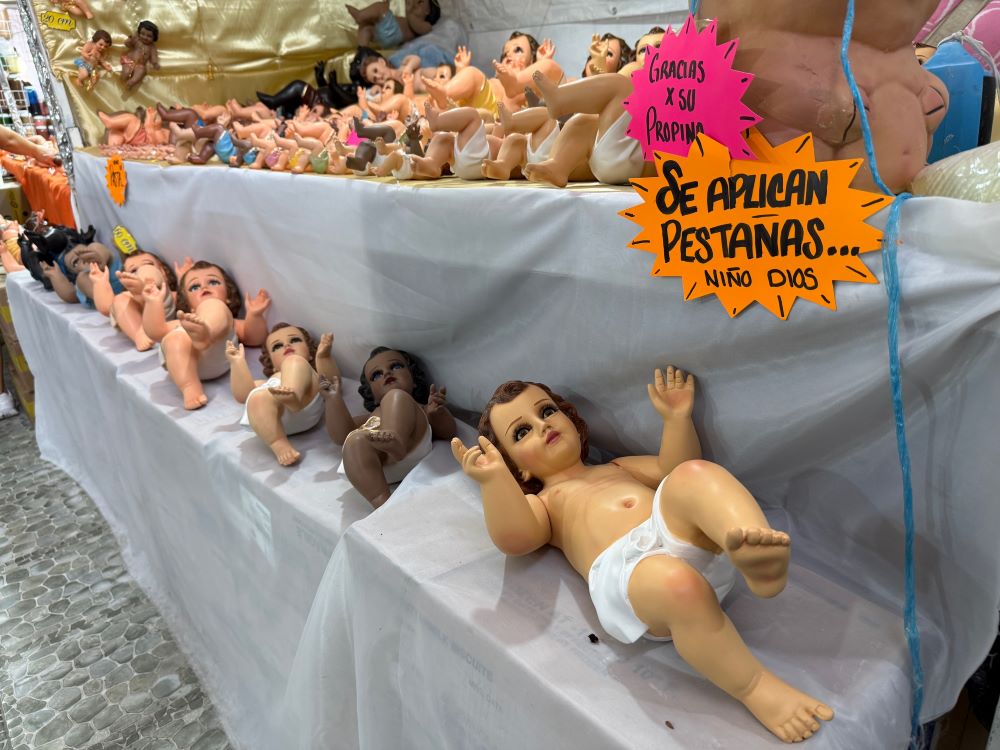
Baby Jesus figurines are displayed for sale at a Mexico City market Jan. 27, 2026 in the days leading up to Candlemas, celebrated Feb. 2. The signs read: "Thank you for your tip" and "Eyelashes applied, Baby Jesus." (Anita Snow)
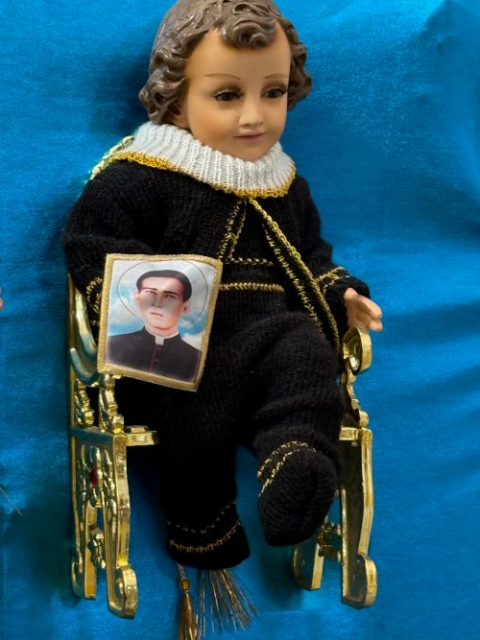
A Baby Jesus figurine dressed as the patron of Mexican migrants, St. Toribio Romo, is displayed Jan. 27 at a Mexico City market. (Anita Snow)
At the Mexico City market, expert artisans use a bit of plaster to fix an aging Baby Jesus figurine that may be missing an arm, foot or nose, or give the doll an entire fresh coat of spray paint in a variety of flesh tones from white to black.
There are special kits to create thick black eyelashes over a Niño's blue or brown eyes, as well as fresh undergarments, booties and golden crowns. There are even woven baskets and wooden thrones to transport the Niño Dios to church in style.
On the street outside the market, women sell a variety of candles people can bring to church for a blessing as well. Candles that have been blessed are said to bring prosperity and are kept in the home for the rest of the year.
Advertisement