
(Unsplash/Marc-Olivier Jodoin)

by Brian Fraga
Staff Reporter
They may not identify with any religious tradition, but sizable percentages of religiously unaffiliated people, the so-called "nones," believe in God and in life after death, according to a new Pew Research Center report.
The report also indicates that large numbers of nones across the world on occasion pray and attend religious services, and that they believe in the power of ancestral spirits and in the possibility that nature can have spiritual energies.
Those are just some of the findings in a new 57-page report, released Sept. 4 by the Pew Research Center Report, titled, "Many Religious 'Nones' Around the World Hold Spiritual Beliefs."
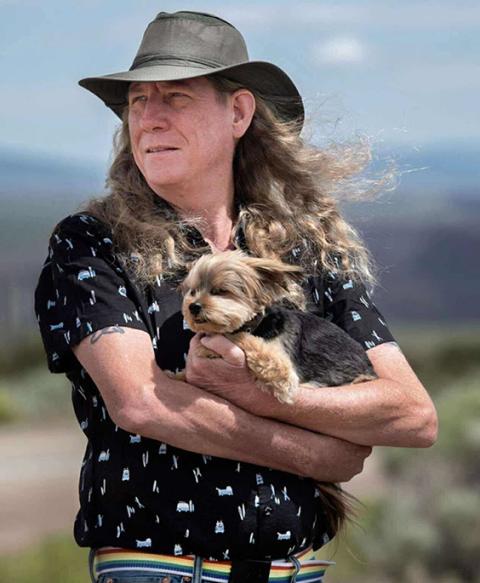
Jess Williams of Las Cruces, New Mexico (Courtesy of Jess Williams)
Though they are not as religiously observant as people who identify with a faith tradition, the Pew report underscores the diversity of religious attitudes and practices among nones, whose views run the gamut from avowed atheists to agnostics and those who answer "nothing in particular" when asked about their religion.
"Pew Research Center conducted this study to better understand the religious and spiritual beliefs, practices, and views of the growing number of people around the world who are religiously unaffiliated," the report states.
The report analyzes surveys of religiously unaffiliated people conducted from 2023-24 in 22 countries, with nones being represented from North America and South America, Europe, Africa, Asia, India and Australia.
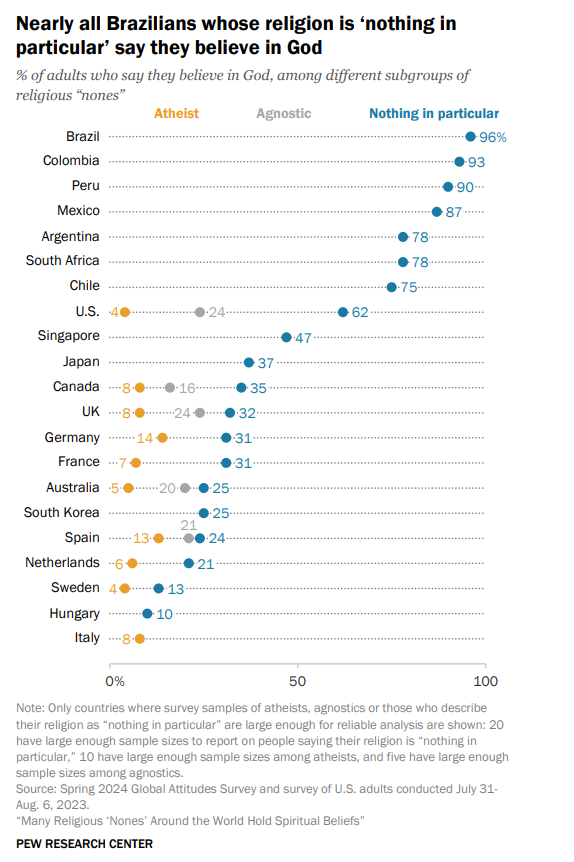
Within the broad category of nones, those who identify as atheists are less likely than agnostics or people who describe their religion as "nothing in particular" to hold some spiritual and religious beliefs.
"I take my jeep out to the desert. That's my dirt church," said Jess Williams, 66, a resident of Las Cruces, New Mexico, who identifies as an atheist. Raised Methodist, Williams said he rejected organized religion at 19 and has lived happily "ever after" since.

Caleb Weiner, attorney in general practice in Brockton, Massachusetts (Courtesy of Caleb Weiner)
But Caleb Weiner, an attorney in Massachusetts, spirituality is a part of his life despite the fact that he identifies among the religiously unaffiliated. Weiner, raised by nonobservant Jewish parents, said he prays most days and that he admires the figure of Jesus Christ.
"I'm a big fan of the man from Galilee, like an enormous fan," Weiner said
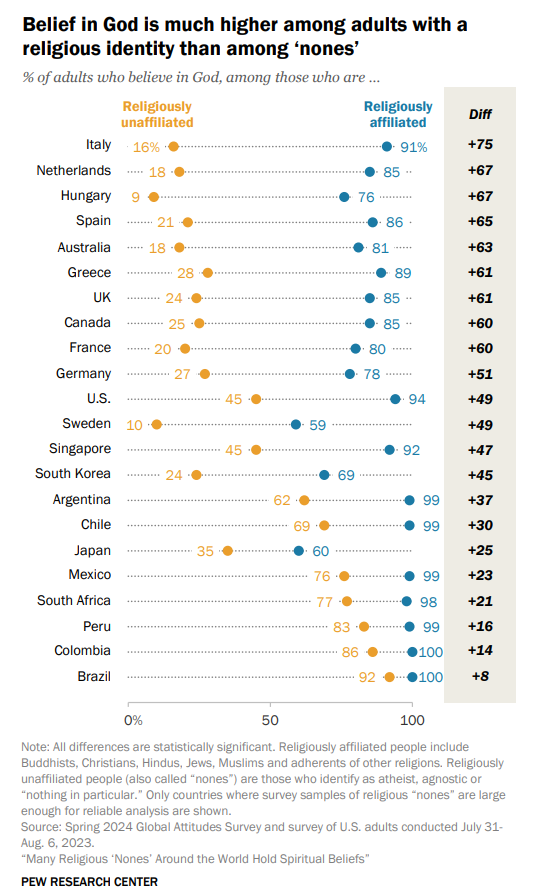
The report found that at least a fifth of religiously unaffiliated people in most of the 22 countries surveyed said they believe in God. In the United States, just slightly less than half, 45%, of nones say they believe in God.
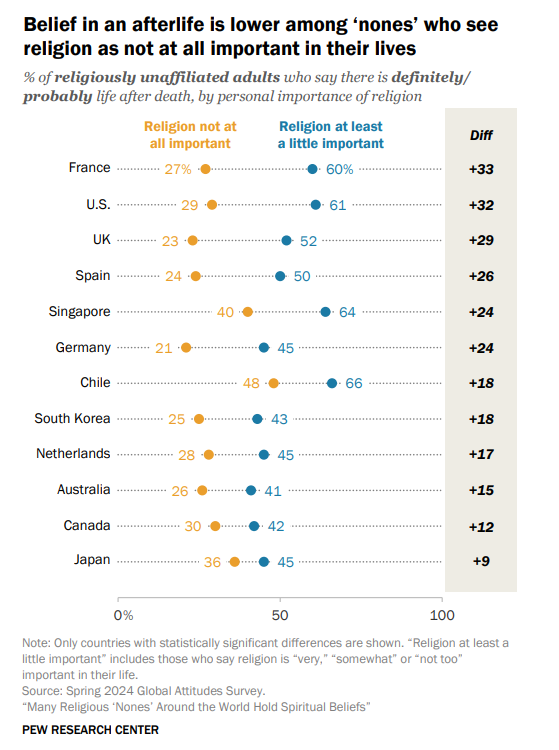
In seven countries, one-half or more of all nones also said they believe in life after death. Those who said that there is "definitely" or "probably" an afterlife range from 19% of unaffiliated adults in Hungary to 65% in Peru.
In addition, large shares of nones in several countries said "there is something spiritual beyond the natural world, even if we cannot see it." The report states that 61% of nones in Mexico and 65% in Brazil expressed this belief. In the United States, 54% of the unaffiliated population said that nature can have spiritual energies.
About a quarter or more of the religiously unaffiliated in most countries believe that the spirits of ancestors can help or harm them. In South Africa, 81% of nones expressed a belief in the power of ancestral spirits.
Another relatively common belief among people who do not affiliate with any religion, according to the Pew report, is that animals can have spirits or spiritual energies. In Greece and several Latin American countries, at least three-quarters of nones believe animals have spirits.
Nones also seek out fortune tellers and horoscopes at about the same rate as their religiously affiliated compatriots, according to the Pew report. In Mexico, for example, 12% of adults in each group said they use those methods to try to predict the future.
But while accounting for the varying levels of spiritual practices and beliefs, the Pew report found that religiously unaffiliated people still are less likely to pray, attend religious services, and believe in the possibility of life after death.
"In general, religiously unaffiliated people are less likely to hold spiritual beliefs, less likely to engage in religious practices, and more likely to take a skeptical view of religion's impact on society than are Christians, Muslims and people who identify with other religions," the report said.
Advertisement