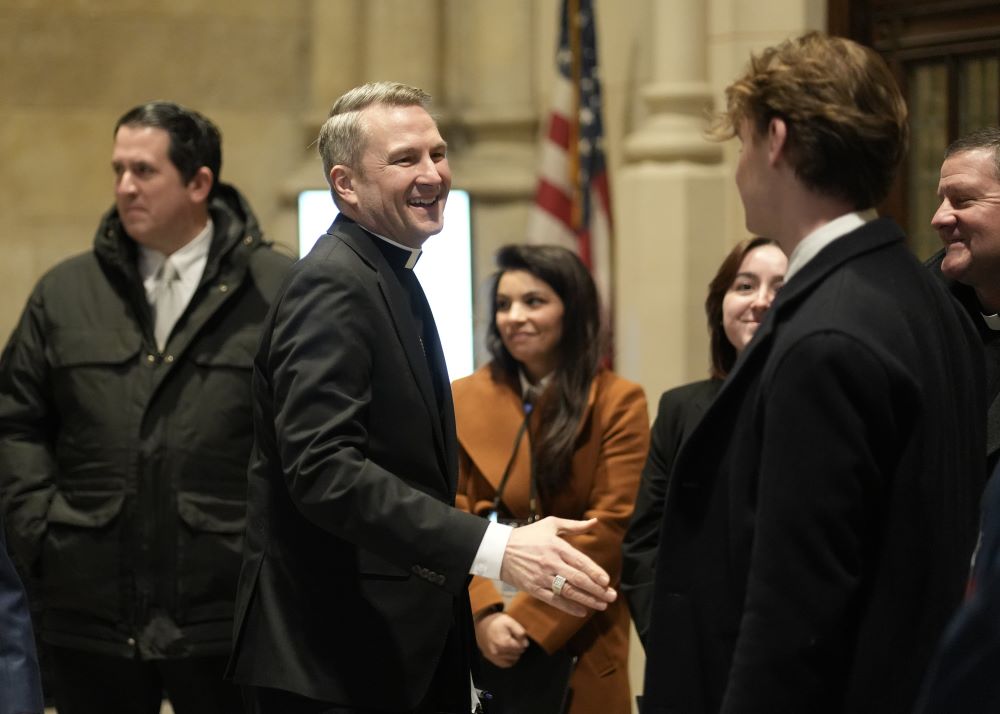
Archbishop-designate Ronald Hicks greets people as he arrives for a news conference at St. Patrick's Cathedral in New York City Feb. 5, a day before he was to be formally installed as the archbishop of the Archdiocese of New York. (OSV News/Gregory A. Shemitz)

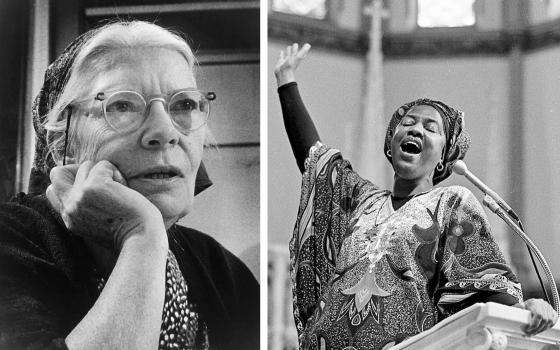
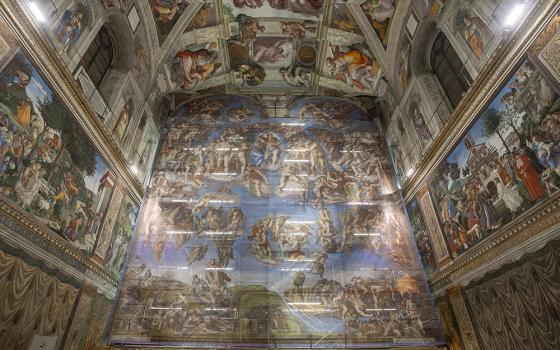
Archbishop-designate Ronald Hicks stood before murals at the entrance of St. Patrick's Cathedral in New York depicting St. Frances Cabrini, Dorothy Day, first responders of 9/11 and immigrants from past and present and saw a reflection of both his own story and the story of New York.
"It just reminded me of my own family immigrants who came here from Germany and from Ireland and from Poland and it also reminded me of people I've met along the way during my time in missionary work in Latin America," Hicks said. "What it reminded me of is that people still look to that golden door for hope and for opportunity here in the United States."
The incoming archbishop, who will become the 11th leader of the Archdiocese of New York, used his pre-installation press conference Feb. 5 to sketch the pastoral tone he hopes to set: rooted in simplicity, shaped by evangelization, attentive to immigrants and the poor, and focused on building a missionary church that reaches outward.
Pope Leo XIV on Dec. 18 appointed Hicks, 58, to succeed Cardinal Timothy Dolan, whose resignation was accepted after he reached the mandatory retirement age of 75 in February 2025.
Hicks said the days surrounding his installation are meant first and foremost as moments of prayer rather than self-promotion. Tonight (Feb. 5), the archdiocese celebrated vespers and tomorrow (Feb. 6) Hicks will be officially installed as archbishop at a Mass expected to draw more than 2,000 , including about 90 bishops, seven cardinals and roughly 400 priests.
'I'm called here to be a pastor. I'm called here to be a shepherd, and as shepherd, my desire is to be a good shepherd.'
—Archbishop-designate Ronald Hicks
"Tonight is not a time for setting an agenda or me promoting my vision, but it's a time to ask for God's blessing in prayer and doing so together," he said. At his installation Mass, he plans to highlight gratitude and the mission of the church, while repeatedly referencing Pope Leo XIV and pledging collaboration with his vision.
Hicks described that mission in distinctly outward-looking terms. "I'm going to talk just about being a church who's made up of missionary disciples who want to go out and make disciples, and also to pass our faith on to the next generations," he said. "We're going to talk about a church that builds bridges, goes out to the peripheries, engages the world and lives her mission — a missionary church."
The liturgies themselves will reflect that outlook, including bilingual elements. Drawing on three decades of priesthood in which the Hispanic community has been central to his ministry, Hicks said he intentionally preaches partly in Spanish.
"I want to communicate to the world that the Hispanic community is very important in the life of the Catholic Church, and it is also a way to show my respect, dignity and love for the Latin community," he said.
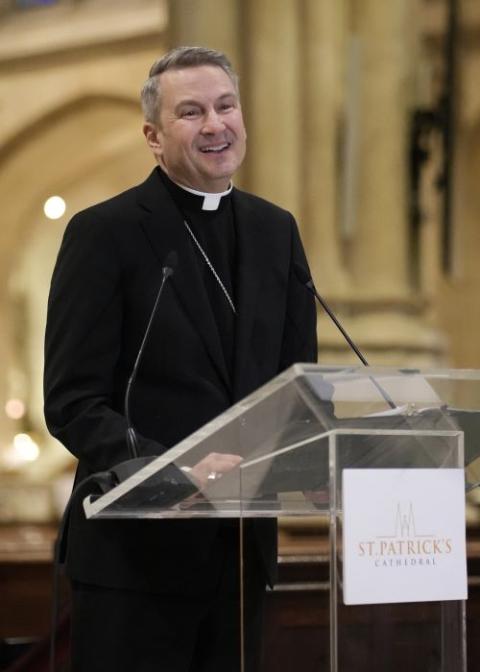
Archbishop-designate Ronald Hicks speaks during a news conference at St. Patrick's Cathedral in New York City Feb. 5. He will succeed Cardinal Timothy Dolan as leader of the Archdiocese of New York. (OSV News/Gregory A. Shemitz)
The first reading at Hicks' installation Mass will be proclaimed by Samuel Jimenez Correas, a Salvadoran orphan who immigrated to Chicago, whom Hicks met during his five years working as a missionary in El Salvador from 2005 to 2010.
Hicks also emphasized the breadth of people who will be present at the celebrations. Alongside Catholic clergy and laity will be representatives from other faith traditions, government, business, labor, education, service organizations, first responders and the arts.
"In other words, who's going to be there? Everyone. Everyone," he said. "To quote Pope Francis, when he would say, who's going to be there, todos, todos, todos. This is good, because New York is a place where the whole world lives and calls home, and the Catholic Church is universal, gathering and engaging everyone."
Asked by the National Catholic Reporter about his message to immigrant Catholics whose voices are struggling to be heard nationally, Hicks framed his response in Catholic social teaching.
"My response comes from a clear understanding in the Catholic Church and our social justice of what is human dignity," he said. "My message is: How do we treat each other with respect? How simply do we see each other as brothers and sisters and use that as a foundation for everything?"
Hicks likewise spoke about bridging divides between rich and poor in a city marked by stark contrasts.
"I think that's the power of Jesus. He loves, knows and reaches out to everyone, everyone, and He wants everyone to be saved," he said.
Coming from the Diocese of Joliet, Illinois, where he served a little over 500,000 Catholics, Hicks acknowledged the scale and global visibility of New York, calling it national and international in its influence. He said he is conscious that his voice now reaches far beyond one diocese, including through the nationally televised Sunday 10:15 a.m. Mass at St. Patrick's Cathedral.
The Archdiocese of New York numbers about 2.5 million Catholics in about 300 parishes, according to its website.
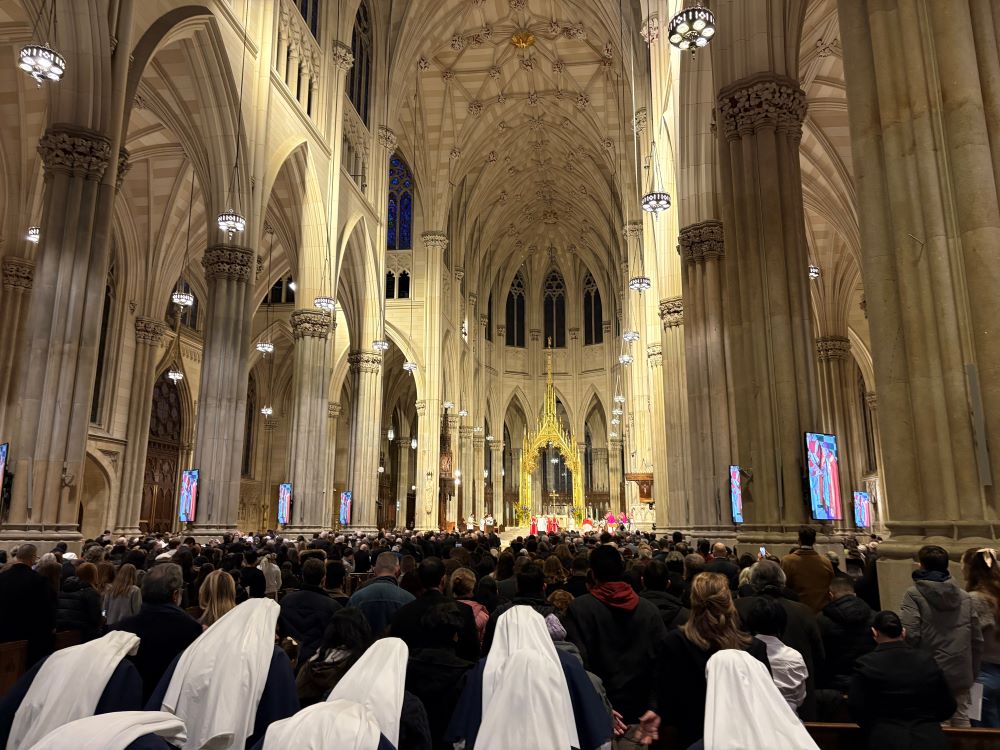
St. Patrick's Cathedral in New York City was filled Feb. 5 as people gathered for vespers the
night before the installation of Archbishop-designate Ronald Hicks as leader of the Archdiocese of New York. (NCR photo/Camillo
Barone)
Despite the visibility and administrative demands of the role, Hicks said he does not see himself primarily as an executive.
"I don't want to be seen as only the CEO or the corporate president of a group," he said. "I'm called here to be a pastor. I'm called here to be a shepherd, and as shepherd, my desire is to be a good shepherd."
As he prepares to take the cathedra and formally begin his ministry, Hicks described his outlook in one word: "providence." He said he trusts that God has been preparing him for this moment and that his task now is to surrender, trust and follow.
"I just want to trust Him and follow Him and continue to do that," he said.
Speaking at vespers on the eve of his installation, Hicks addressed the weight of leadership, acknowledging a mixture of awe, fear, joy and gratitude. In his homily, he set a tone of trust and surrender rather than self-reliance, echoing what he had said in the morning press conference.
His roadmap, he said, is simple: to trust the Lord, to place himself in God's hands, to unite his heart to the heart of Jesus and to seek the Father's will each day in prayer, alongside "good and faithful people."
He offered the homily in both English and Spanish and all the chants and prayers were also held in both languages.
The homily's central image was drawn from the streets outside St. Patrick's Cathedral. Across Fifth Avenue, right outside the main entrance of the cathedral, stands the massive statue of Atlas, the Greek mythology figure, straining under the weight of the world. Behind the altar in the cathedral is a small statue of Jesus, also holding the world — but gently, in the palm of his hand. The contrast is stark, said Hicks: Atlas struggles; Christ does not.
With this image, the archbishop illustrated that the Christian life is about placing everything into the hands of Christ and not relying on one's own strength.
"I do not want to be Atlas," he said.
He invited the faithful to place the archdiocese "with all our hopes, all our wounds and all our future, into the hands of Jesus."
Hicks concluded by asking for prayers as he begins his ministry, promising in return to pray for the people of the archdiocese "all the days of my life."
This story has been updated to include details from the Feb. 5 vespers.
Advertisement