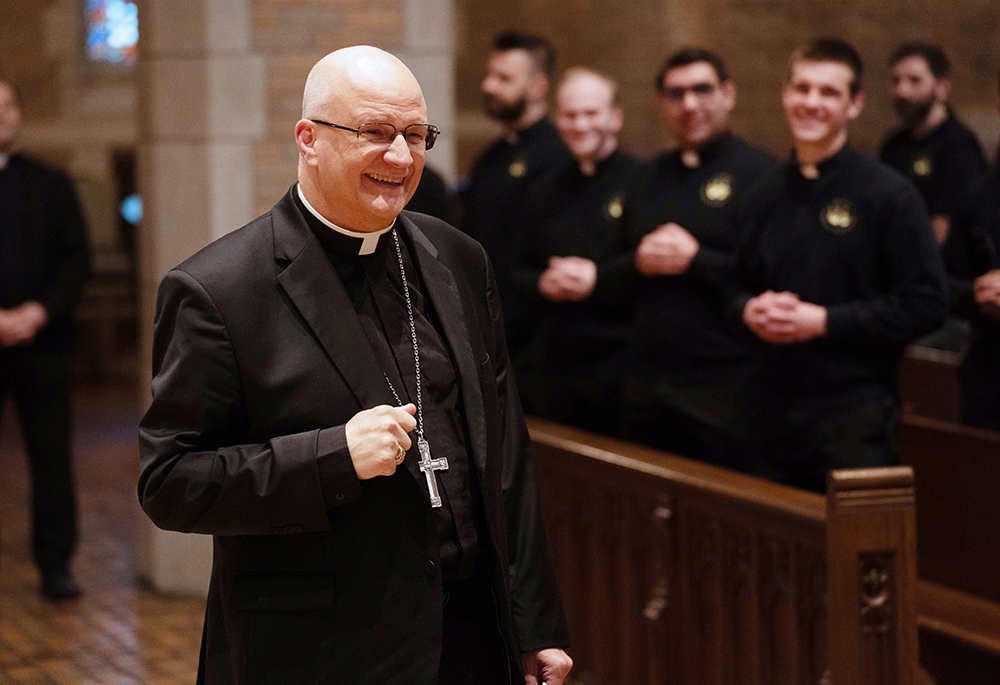
Archbishop Edward Weisenburger greets seminarians in the chapel at Detroit's Sacred Heart Major Seminary on Feb. 11, 2025. Early that morning, Pope Francis accepted the resignation of Detroit Archbishop Allen Vigneron, and appointed the former Tucson, Arizona, bishop to succeed Vigneron. Weisenburger was installed March 18. (OSV News/Detroit Catholic/Valaurian Waller)

The news that Archbishop Edward Weisenburger of Detroit terminated the employment of three professors at the archdiocesan Sacred Heart Major Seminary is creating a lot of buzz in church circles. The removals are long overdue and kudos to Weisenburger, who was installed as archbishop on March 18, for doing it.
The three men terminated are Ralph Martin, Eduardo Echeverria and Edward Peters. All three had cast aspersions on Pope Francis, even questioning his orthodoxy. They did not restrict their criticism to scholarly articles in theological journals; they did so on blogs and in magazine interviews. Whether they intended it or not, and it is difficult to see how they did not intend it, their criticisms contributed to a hostility to Francis that is widespread in certain powerful sectors of the Catholic Church in the United States.
Peter Feuerherd's excellent 2019 story about Sacred Heart being a hotbed of anti-Francis sentiment revealed the extent and the obnoxiousness of that sentiment. I had previously tangled with Peters over the years, for example, when he criticized something I had written about threats to marriage.
There is certainly room in academic circles for criticism of papal teaching, but the criticisms should always be rendered respectfully. I was in seminary when the Vatican took steps to remove Fr. Charles Curran. He was my professor for Moral Theology 101 and he certainly differed from the magisterium on several hot-button issues, but his critique was thoughtful and respectful. Curran was as persuasive when he presented magisterial teaching as he was when he explained his differences. He certainly never claimed that his teaching represented the authentic magisterium and not the pope's.
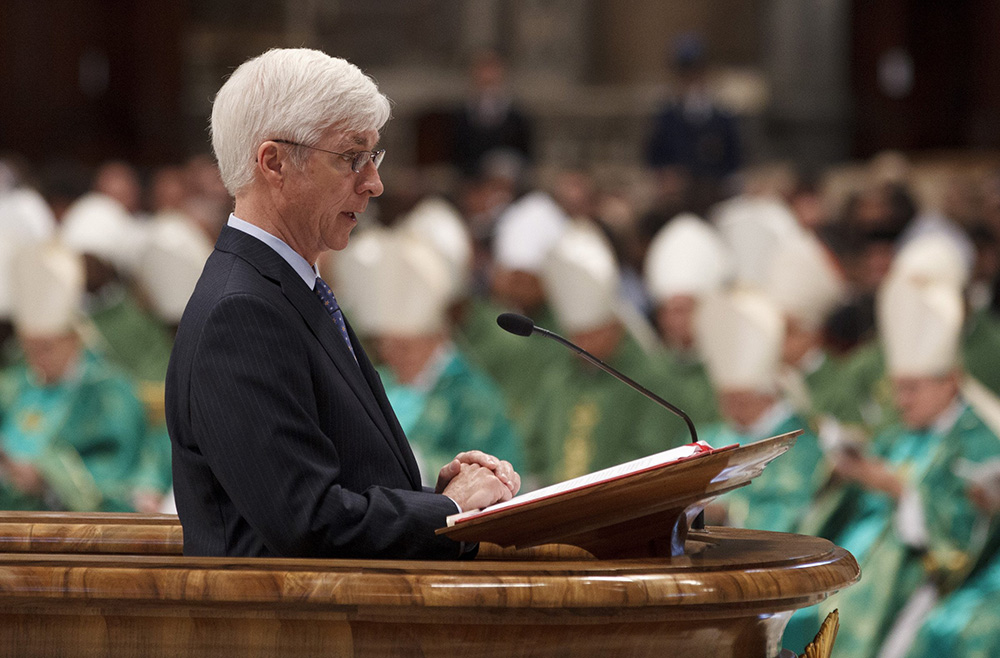
Ralph Martin, then a professor at Sacred Heart Seminary in Detroit, reads the first reading as Pope Benedict XVI celebrates the closing Mass of the Synod of Bishops on the new evangelization in St. Peter's Basilica at the Vatican Oct. 28, 2012. (CNS/Paul Haring)
It would be funny, if it were not so dangerous, that these conservative critics of Francis almost always accuse him of sowing confusion, when it is their attempt to replace the authentic magisterium with their own theology that is the principal point of confusion.
At Crisis magazine, editor Eric Sammons asked: "So why would two distinguished theologians, with no hint of scandal associated with them, be unceremoniously fired from their positions without warning or even explanation?" The scandal is that they were forming priests and priests must be loyal to their bishop as the bishop must be loyal to the pope. That is how Catholic ecclesiology works. The professors were avatars of dissent in a culture built on obedience.
Besides, Sammons' own answer to his question is repugnant: "Simply put, they [the fired professors] dared to criticize the regime, and for that they must be purged." He goes on to deliver harsh, unsubstantiated indictments of the character and leadership of Weisenburger, Chicago Cardinal Blase Cupich and, of course, Francis. Sammons, too, has forgotten that the old joke about being more Catholic than pope is just that, a joke.
Peters posted on X: "My Sacred Heart Major Seminary contract was terminated by Abp. Weisenburger this week. I have retained counsel. Except to offer my prayers for those affected by this news and to ask theirs in return, I have no further comment at this time. Prof. Ed Peters." Counsel? I have not seen his contract, but the U.S. Supreme Court's 2012 decision in the Hosanna-Tabor case granted wide latitude to religious leaders in choosing and terminating teachers of religion. And that decision was 9-0.
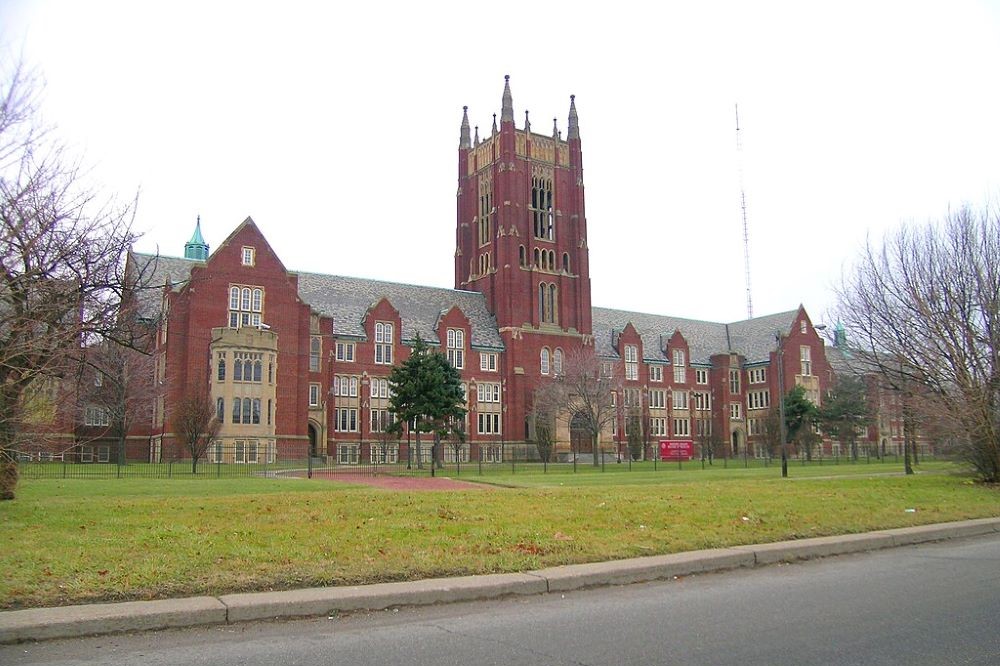
Pictured is the campus of Sacred Heart Major Seminary in Detroit. Ralph Martin and Eduardo Echeverria, prominent theologians who taught there and who have criticized Pope Francis, have been fired by Archbishop Edward Weisenburger of Detroit. (Wikimedia Commons/CC-by-sa/3.0/Andrew Jameson)
If you want to see a bit of the hornet's nest men like Peters have stirred up, read some of the comments on X. There are plenty of appropriate expressions of personal concern for Peters. But there are also plenty of posts that evidence the venom of the anti-Francis brigades he helped to foster. "I do not just hope you win, I hope you destroy this enemy of the Christian religion," read one comment. "I don't think prayer is enough. Catholics need to act on their feet against the modernism and deceitful synodality in the Church. They need to demonstrate loudly and specifically against the archbishop," said another. "His is surely the most disliked archbishop in the world! Total disgrace to the faith!" read a third.
These sectarian attacks are nothing new. In the fall of 2014, German Cardinal Walter Kasper came to the Catholic University of America to give a talk. Speaking about the then-still young pontificate of Francis, he remarked that what for some "is the beginning of a new spring is for others a temporary cold spell."
Advertisement
With the election of Pope Leo XIV, who has pledged himself to continue the reforms of Francis and who worked with the pope on the selection of Weisenburger to lead the church in Detroit, conservative Catholics need to disabuse themselves of the idea that what they perceive as a "cold spell" is "temporary." Francis and now Leo remind us that the church cannot define itself in terms of culture war diatribes, nor reduce our rich ecclesiology to a set of ideological propositions that drive that war. The church preaches mercy before judgment, compassion before condemnation, reaching out before digging in, and it is not heresy to say so.
Firing anyone is never easy. You know you are causing harm to the person who is fired. But there are times when it is necessary, when the person essentially fires himself. It is well known that Sacred Heart Major Seminary has been a bastion of anti-Francis attitudes for years. Those who shaped it needed to go. Weisenburger has ended a scandal, not created one.