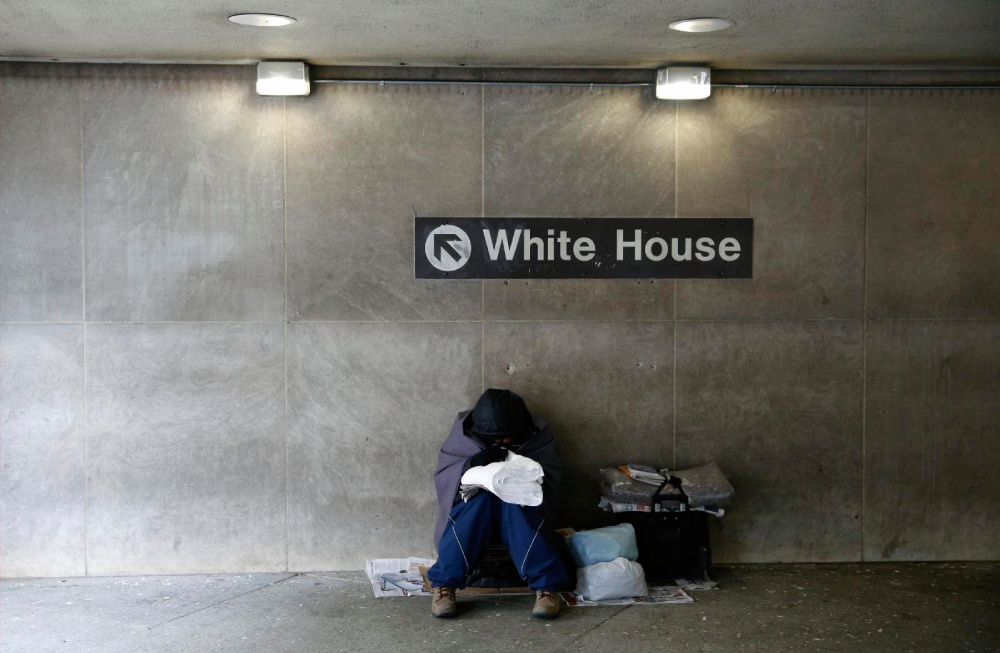
A file photo shows a homeless person trying to stay warm at the entrance of a Metro station near the White House in Washington. (OSV News/Reuters/Kevin Lamarque)

by John Berry
If you are facing homelessness, unemployment or hunger, your life is at the mercy of forces beyond your control. Your everyday existence is influenced by the whims of case workers, charity staff, law officers — and the lawmakers who shape our nation’s policies.
As president of the Society of St. Vincent de Paul USA — one of the largest Catholic charities in the country working to prevent homelessness — I have been reflecting on this dynamic in American politics and political discourse. The dynamic is particularly unhelpful now, when many of those we serve do not have situations that fit into neatly politicized boxes. The most common demographic profile of those on the brink of homelessness, for instance, is “a single custodial adult raising minor aged children.”
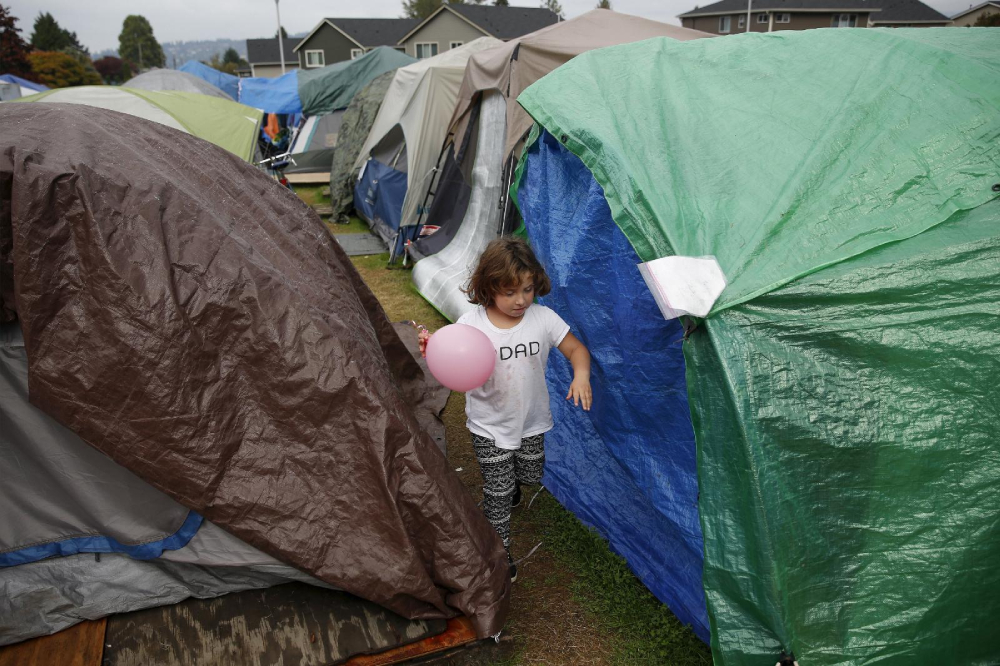
A child is pictured in a file photo playing with a ball at a homeless encampment in Seattle. (OSV News/Reuters/Shannon Stapleton)
Take Jessie Sandau, a single mother in Scottsdale. She had barely been able to juggle work and childcare for her young daughter with a lot of driving. When her car was totaled in an accident, her setup collapsed. Jessie lost her job, leaving her without reserves for rent and food. Her new job would not start for weeks, and she had run out of cash. When friends put her in touch with Society of St. Vincent de Paul Phoenix, she was at her wit’s end.
For single parents facing a crisis, unavailable reliable psychiatric care and the harsh penalties around homelessness do not help. What they need, desperately, is help keeping a roof overhead as they juggle childcare and jobs that do not always pay them enough to live.
Advertisement
These facts remain: In 2024, more than three quarters of a million people were homeless on a single night, and that number is rising. According to Harvard’s Joint Center for Housing Studies, the number of Americans experiencing homelessness increased almost 50% over the past eight years. Another 12 million people are “severely cost-burdened,” and at risk of becoming homeless themselves. The face of poverty is changing, with more seniors, women, single parents and displaced middle-class families among the 5 million people we serve each year.
The urgent challenge that faces us in these bitterly divided times is this: How can we see the homelessness crisis (and similar problems of inequality) more clearly, so as to respond more effectively and humanely?
Thinking through this problem, I am drawn to the example set by Blessed Frederic Ozanam, our Society of St. Vincent de Paul founder. In 1848, Ozanam addressed his French colleagues in words that could have been penned last week, lamenting that “division penetrates everywhere” and even “the best citizens” are hotly divided. Clear insight into reform becomes almost impossible: “the times are so difficult, the problems so serious, the designs of God so hidden.” How, then, does one “get to the root of the evil, and by wise reforms to diminish the causes of public misery”?
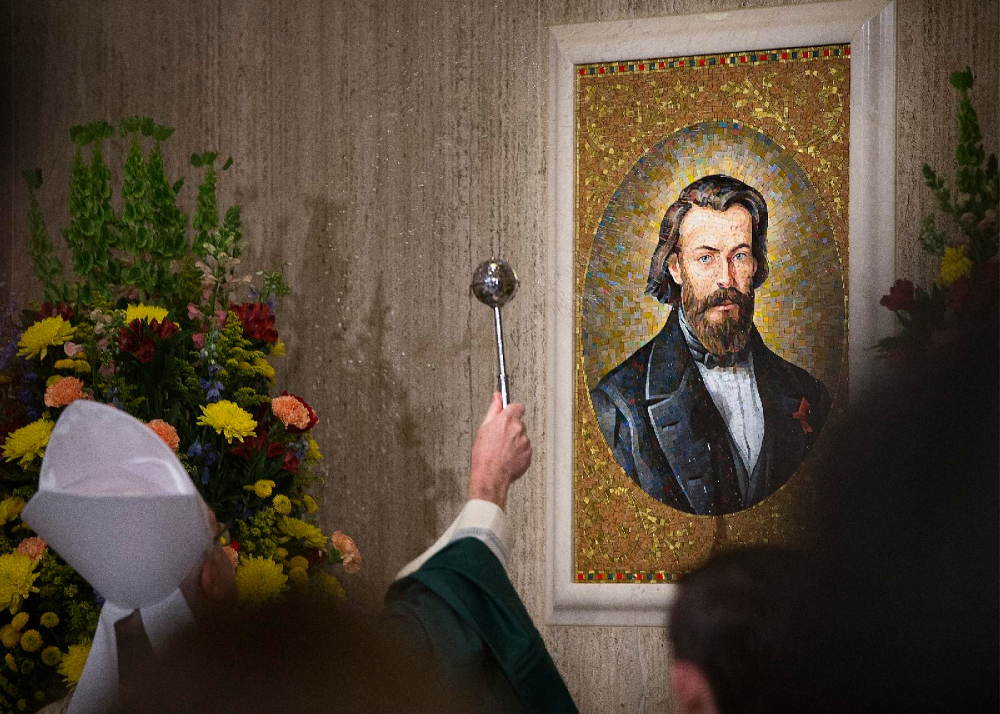
Bishop Donald J. Hying of Madison, Wis., blesses a mosaic of Blessed Frederic Ozanam at the Basilica of the National Shrine of the Immaculate Conception in Washington Jan. 26, 2020. Ozanam was part of a group of young Catholic intellectuals in the 19th century who discussed literature, history and society, while also visiting the poor and sick at home. The group founded what came to be known as the Society of St. Vincent de Paul, which is still active worldwide. (CNS/Tyler Orsburn)
He saw one path forward during his time and — I believe — for our own. We will not learn how to meet the needs of the poor and vulnerable from government reports. We will learn by visiting with them “at home, at school, at the hospital, not in one city only, but in many, in the countryside and in all the conditions.” We learn by caring with them, suffering with them, praying with them and loving them. That is why we must speak with and for them. The personal encounter with those in need obligates us to advocate on behalf of those we serve.
This approach is central to our Society of St. Vincent de Paul USA mission. Across the country, Vincentians spend countless hours each year walking with those living on the margins. People do not come to us — we visit them. We empower our local homelessness prevention programs with the discretionary authority to determine solutions that best fit their unique situation. For Jessie Sandau, $1,350 in rent assistance was enough to keep her family housed.
Too often, advocacy is left to experts, academics and professional lobbying classes who talk about the “big picture” in abstract terms. Political parties think in structures and symbolism, often to the detriment of those whose needs are not being met.

Visitors to the U.S. Capitol rest in the shade on Capitol Hill in Washington June 25, 2025. (OSV News/Reuters/Nathan Howard)
This is why charities like the Society of St. Vincent de Paul USA must not shy away from pursuing policy change. We have a responsibility to advocate for those we serve because the people best equipped to shape effective policies are those who have walked with them. That is the lesson of Blessed Frederic Ozanam: those most intimately familiar with the poor and oppressed must speak out on their behalf.
As the current administration prioritizes sweeping budget cuts, the question of whose voices we trust on homelessness and poverty becomes urgent. Now is the time for those serving vulnerable populations to embrace advocacy — not to ascend the soapbox — but to ensure the silenced voices of our neighbors are heard.