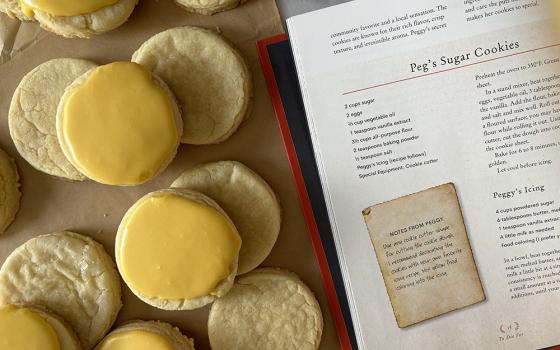
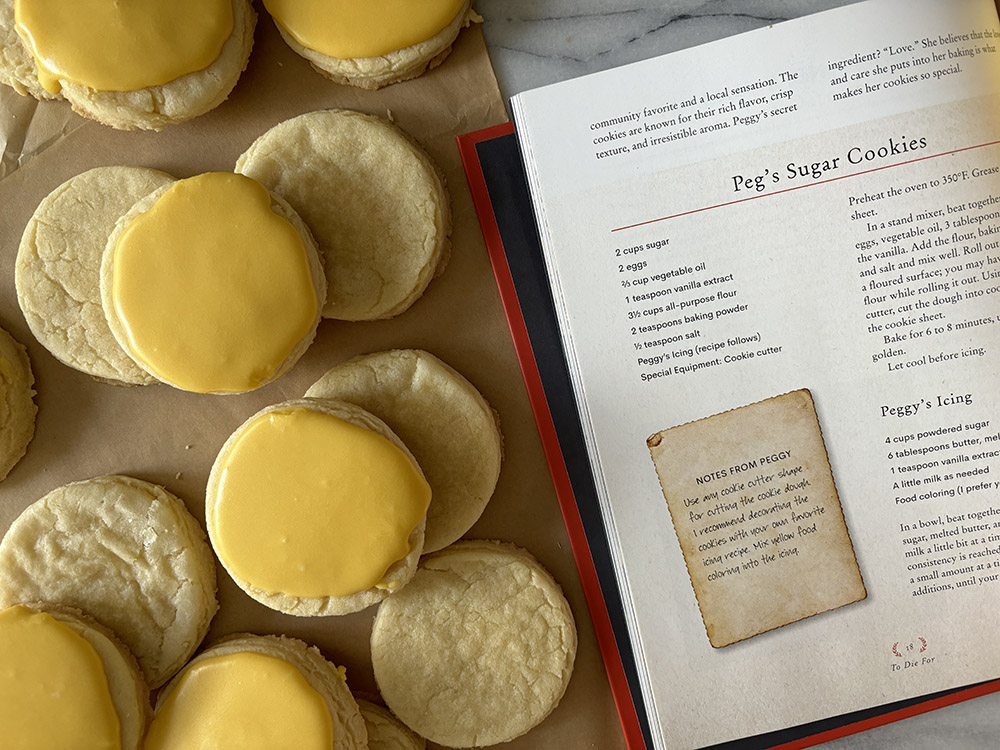
Peg's sugar cookies and her recipe in To Die For: A Cookbook of Gravestone Recipes by Rosie Grant (NCR photo/Olivia Bardo)


I grew up near a cemetery, up on Teaberry Hill in rural Pennsylvania. In the winter, I could spy some of the headstones from my bedroom window, solitary and dusted in snow. Then in the spring the headstones would be covered up as the trees on the hill grew new blossoms. I couldn't see the headstones again until the following winter. This cycle of death and birth would repeat itself again and again, a signifier of the seasons.
My grandparents are buried up on Teaberry Hill, some I knew, others I didn't. As a child I would visit their gravesites, staring at their names etched into granite hearts, hoping to glean some sort of posthumous connection to them.
Months ago, while doomscrolling my Instagram feed, I stumbled upon a hauntingly beautiful video featuring gravestones with recipes etched onto them. Rosie Grant, a researcher and online creator who goes by @ghostly.archive on Instagram and @ghostlyarchive on TikTok, finds gravestones with recipes etched onto them.
It's a way for the departed to leave a piece of themselves behind, to pass on a beloved recipe for loved ones, and even strangers, to remember them.
Grant made it her mission to unearth these recipes, the stories behind them, and keep their makers' memories alive. In her new book, To Die For: A Cookbook of Gravestone Recipes, published by HarperCollins last month, Grant gathered 40 gravestone recipes together and resurrected their maker's stories.
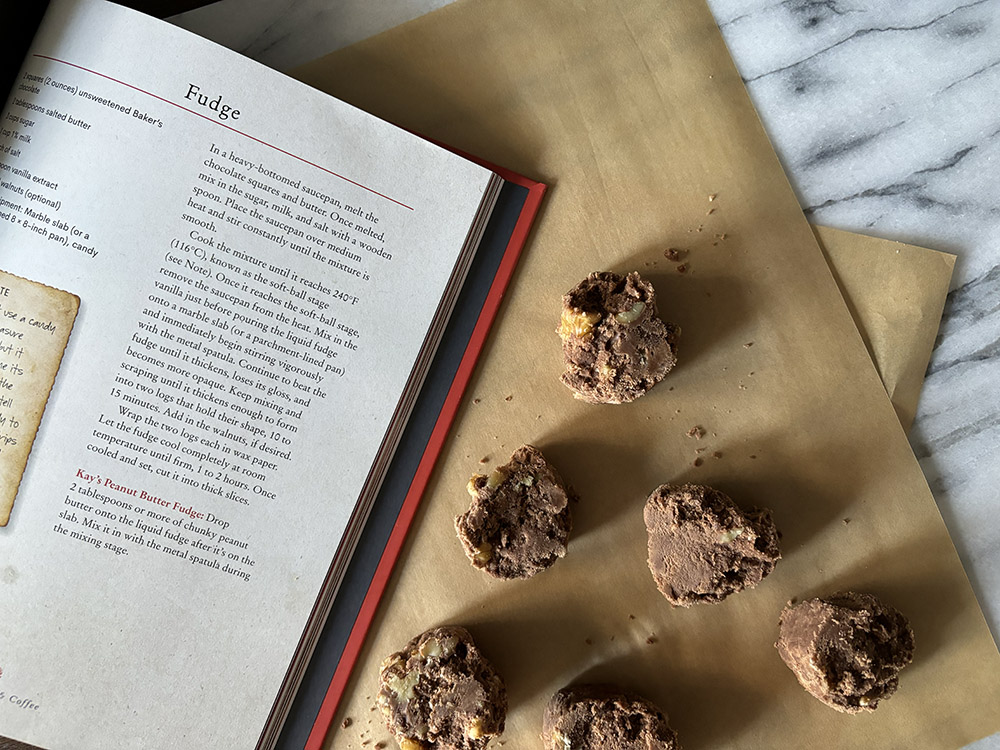
Kay's fudge and her recipe in To Die For: A Cookbook of Gravestone Recipes by Rosie Grant (NCR photo/Olivia Bardo)
"That's the thing about gravestone recipes — they aren't just instructions for food. They're stories, legacies, and connections between the living and the dead. They remind us that even in death, we leave behind pieces of who we are," Grant writes.
I made two of the gravestone recipes myself, Peg's sugar cookies and Kay's fudge.
I followed the recipes carefully, as if each person were there in the kitchen with me, giving me baking tips and tempering my worries about the heat of the fudge bubbling on my stove.
Both recipes reminded me of home. They brought back memories of holiday mornings, when my grandmother would deliver sugar cookies, frosted with delicate pastel icing. Christmas, Easter, Valentine's Day, St. Patrick's Day, she was there at the door, bringing the first sign that the day was special.
Advertisement
Baking is often mistakenly denigrated as frivolity, a pastime for hulled-up housewives. The kitchen is the heartbeat of any place. Baking provides nourishment, connection and memory. Recipes have a profound way of honoring someone's memory and the warmth they brought to the world. What I'd give to have my Grammy's messily chocolate-covered peanut butter eggs again, the ones she gifted every Easter in reused margarine tubs and dented cookie tins. She left behind her recipe for my cousins and I to share. I find memories of her and her kitchen in the recipe. It's my connection back to her.
On All Saints' Day and All Souls' Day, we remember the believers who lived before us. With these gravestone recipes, where food and death meet, we can find a bit of sweetness. Together we can bake with the saints, deepening our communion through food. Imagine sitting cross legged on comfy chairs catching up with St. Hildegard over a plate of her "cookies of joy," still warm from the oven.
As people of faith, we are part of the great chorus of believers, both living and dead. And sharing recipes, even after death, helps to reveal that. We can still remain connected, only in different ways. We may not be sitting across the same table, but we're still breaking bread together.