
The sun sets over the main building and Basilica of the Sacred Heart steeple on the campus of the University of Notre Dame in South Bend, Ind., Nov. 23, 2025. (OSV News/University of Notre Dame/Matt Cashore)
by Karen E. Park
The Catholic intellectual tradition is not built on avoiding difficult arguments. It is built on disputation, moral reasoning and the weighing of competing goods in a fallen world. Catholic moral theology cannot treat empirical evidence of suffering as morally irrelevant. That is why the controversy surrounding Professor Susan Ostermann's appointment at the University of Notre Dame matters so much. It is more than a dispute about abortion — it is a test of whether Catholic leaders will engage substantively with serious historical and empirical claims, even and especially when they strongly reject the policy conclusions drawn from them.
On Feb. 11, Bishop Kevin Rhoades of South Bend issued a statement calling on the University of Notre Dame to rescind Ostermann's appointment as director of the Liu Institute for Asia and Asian Studies, one of the nine institutes and centers that make up the Keough School of Global Affairs at Notre Dame. Since then, at least 10 other bishops have either joined Rhoades in calling for her appointment to be revoked, or amplified his original message including Bishop Robert Barron, Archbishop Salvatore Cordileone and Bishop David Ricken. In addition to these bishops, lay Catholic groups and leaders have weighed in, including Notre Dame's Right to Life executive board, six recipients of Notre Dame's Evangelium Vitae Medal and other Catholic academics and administrators across the country.
Rhoades cannot be expected to condone Ostermann's conclusions regarding abortion, but he can reasonably be expected to engage substantively with the basis of her claims. Instead, his statement repeatedly dismisses her arguments as "outrageous" and "ludicrous" without engaging them or even framing them accurately. This approach does a disservice to Notre Dame, to the pro-life movement and to the moral credibility of the wider church around issues of life and human dignity. It also represents a missed opportunity for serious moral and intellectual engagement.
Rhoades begins his Feb. 11 statement by referring to what he calls the "news coverage, controversy, and outcry" surrounding Ostermann's appointment. He says he has "read many of the op-ed pieces" co-authored by Ostermann which caused him "dismay" because of her "disparaging and inflammatory remarks about those who uphold the dignity of human life from the moment of conception to natural death."
Ostermann's essays, including co-authored pieces in the Chicago Tribune and Salon (which seem to be the ones causing the most dismay) make verifiable historical and epidemiological claims. Those claims deserve engagement. Instead, Rhoades writes he "need not repeat" Ostermann's position. This move both shifts the burden to his followers to discover for themselves what she actually wrote (a burden which will require a Chicago Tribune subscription) while also signaling that they should not bother, because her claims lie outside legitimate discourse.
To simply characterize Ostermann's statements as "ludicrous," "outrageous" and "scandalous" represents a missed opportunity for serious pastoral and intellectual engagement.
Ostermann is a political scientist and attorney trained at University of California, Berkeley, and Stanford Law School. She is widely published and a leader in her field. Rhoades' choice to describe her primarily as an "abortion activist" is therefore misleading. Her academic work focuses on the relationship between state capacity, coercion and law, and on how regulatory enforcement across fields — including public health and environmental regulation — affects vulnerable populations, particularly those marginalized by gender, age or economic status. If Rhoades rejects her conclusions, he should explain why her empirical and historical claims, which are grounded in her extensive training and expertise, are wrong. He does not do so.
The Catholic intellectual tradition cannot be sustained by insulating ourselves from difficult arguments.
The claim that Ostemann has linked the anti-abortion movement to white supremacy seems particularly galling to Rhoades and others. But as Ostermann and Kay note, the 19th-century campaign against abortion was shaped in large part by physician and head of the American Medical Association Horatio Storer (1830-1922). Storer was a white supremacist who warned in his many pamphlets and tracts that if "American" women (meaning white Protestants) limited their families through birth control and abortion, "the children of immigrants" would soon outnumber those of "native-born" Americans.
He wrote, "When one considers the already great proportion of our Catholic population … it is easy to appreciate how rapidly the early Puritan stock is becoming effaced." Storer's arguments framed abortion as a question not only of morality but of national survival and demographic competition, and this argument was indeed grounded in white supremacy.
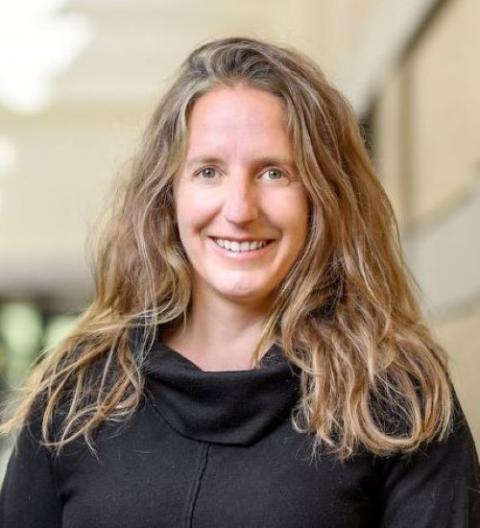
Susan Ostermann has been appointed as director of Notre Dame University's Liu Institute for Asia and Asian Studies. (OSV News/University of Notre Dame/Matt Cashore)
Ostermann and Kay ground a 2022 Chicago Tribune op-ed in World Health Organization data showing that approximately 78,000 deaths annually result from unsafe abortions, or roughly 13% of pregnancy-related deaths worldwide. In countries like El Salvador where abortion is outlawed, women are far more likely to resort to unsafe procedures, increasing maternal mortality.
Ostermann's essays therefore make moral claims formed by empirical evidence: Women die when they are denied access to safe abortions; children already born suffer when their mothers die in childbirth, or when their meager family resources can no longer provide them with sustenance due to the arrival of subsequent children. Again, engagement with this kind of evidence is even more essential when Catholic leaders ultimately reject the conclusions drawn from it.
For two decades, I taught undergraduates Catholic moral theology and the history of American Catholicism. I required my students to read across ideological divides and to trace how moral claims emerged from specific historical conditions. The Catholic intellectual tradition cannot be sustained by insulating ourselves from difficult arguments. In his statement, Rhoades rightly cites both Pope Francis and Pope Leo XIV in defense of the unborn. But it is worth noting how those popes themselves exercise authority.
In Laudato Si', Francis did not merely denounce ecological destruction; he used scientific research, cited empirical data and framed his moral teaching around measurable harm to vulnerable populations. Likewise, in Dilexi Te, Pope Leo XIV reaffirmed the church's unwavering commitment to the dignity of life while articulating that commitment within a broader account of ecclesial history and public policy as well as the material conditions that shape human flourishing.
Both pontiffs speak forcefully about abortion as well as other issues pertaining to the dignity of all life. However, they do so through responsible engagement with lived realities, not by dismissing opposing claims as too "outrageous" to repeat. If papal teaching is invoked to defend the sanctity of life, it should also be invoked to model the intellectual seriousness Catholic moral reasoning demands.
Advertisement
When Catholics invoke "integral human development" — the principle guiding the Keough Center at Notre Dame — they invoke a tradition requiring engagement with lived reality, including data about poverty, health outcomes and structural vulnerability. Catholic social teaching insists that moral analysis account for the full reality of human life. Integral human development requires attention to unborn life as well as to the conditions which allow families to survive and flourish. Catholic teaching on the common good, structural sin and the preferential option for the poor all require taking empirical realities seriously: who lives, who dies and which families bear the greatest burdens. These are the questions Professor Ostermann has dedicated her career to addressing.
None of this requires agreement with Ostermann's conclusions — but those conclusions need to be addressed rather than dismissed outright. The Catholic intellectual tradition is not sustained by declaring some arguments too morally contaminated to repeat. It is sustained by the conviction that truth can withstand scrutiny, argument and evidence.
If Catholic leaders believe their moral claims are true, they should enter the argument honestly, not avoid it by calling it too ludicrous or outrageous to contemplate. At a moment when Catholic institutions are debating identity, authority and credibility in public life, refusing argument is not moral strength. It is a retreat from the intellectual tradition Catholic leaders claim to defend.