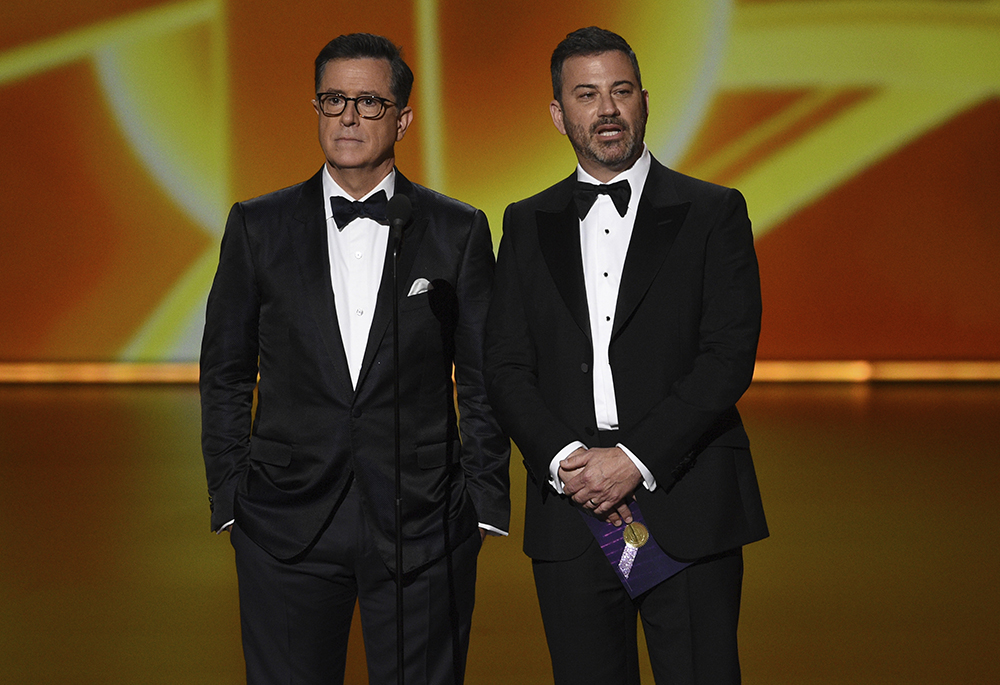
Stephen Colbert, left, and Jimmy Kimmel present the award for outstanding lead actress in a comedy series at the 71st Primetime Emmy Awards on Sunday, Sept. 22, 2019, at the Microsoft Theater in Los Angeles. (AP/InvisionChris Pizzello)

by Denise Murphy McGraw
The debate over censorship in American life is no longer abstract — it is unfolding in real time. Late-night comedians like Stephen Colbert and Jimmy Kimmel have found themselves not only criticized but actively targeted for their satire. With President Donald Trump celebrating when critics are silenced, Catholics must ask what our tradition teaches about free speech, conscience and the common good.
Colbert's Catholicism is central to his comedy. Raised in the church, he lost his faith for a time, then rediscovered it through a transformative encounter with Scripture: "Can any of you by worrying add a single moment to your life-span?" (Matthew 6:27). Colbert has described this as the verse that brought him back to belief. That moment didn't just restore his private spirituality — it became the foundation of a public voice willing to connect humor with conscience.
Colbert often blends faith with humor, discussing forgiveness, humility and prayer. In conversations with Jesuit Fr. James Martin, he has reflected on how suffering and love shape his worldview. On air, Colbert is just as likely to crack a sharp joke about political hypocrisy as he is to cite Scripture. That mixture of levity and seriousness, laughter and faith, is disarming. It gives his comedy a prophetic edge that often echoes the Catholic commitment to solidarity and justice.
Not surprisingly, MAGA-aligned critics often call him "cringeworthy" or "cringey" — a dismissal that avoids his moral critique. The label functions as a way of silencing without engaging, an easy out for those who feel stung by his humor. Yet from a Catholic perspective, Colbert's humor is not cringe but conscience: a voice shaped by faith, reminding viewers that satire can be more than mockery — it can be a vehicle for truth.
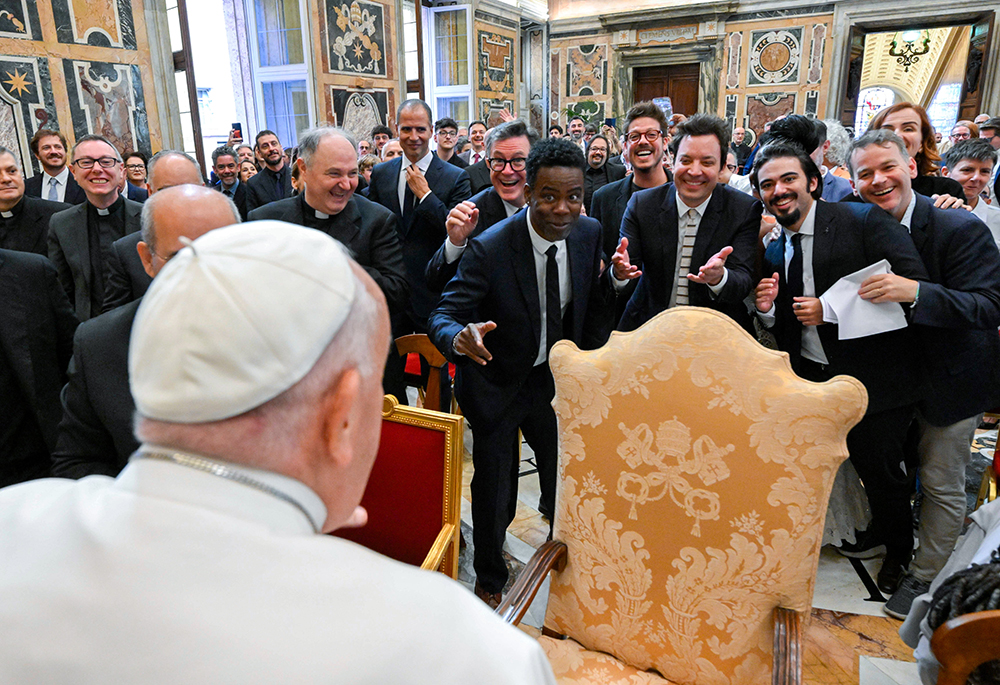
Pope Francis engages in a light-hearted moment with comedians Stephen Colbert, Chris Rock, Jimmy Fallon and other comedians after an audience at the Vatican June 14, 2024. (CNS/Vatican Media)
But Colbert himself has also been canceled in practical terms. CBS announced that "The Late Show with Stephen Colbert" will end in May 2026. While the network cites financial reasons, the timing is hard to ignore — it came just days after Colbert blasted a multimillion-dollar settlement between CBS's parent company and Trump, calling it a "big, fat bribe." Free speech advocates, including senators, have questioned whether the cancellation was politically motivated.
Whether through ratings, regulation or retaliation, Colbert's loss of platform underscores how vulnerable even the most prominent Catholic satirist is to institutional silencing.
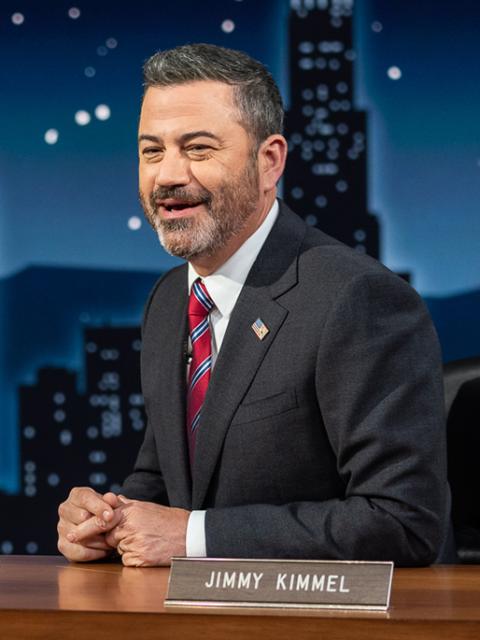
Jimmy Kimmel, pictured in June 2022 (Official White House Photo/Erin Scott)
The experience of Jimmy Kimmel, who is also Catholic, shows how fragile free expression can be in today's political climate. From Sept. 17-22, ABC suspended "Jimmy Kimmel Live!" after remarks he made about Trump supporters' response to the shooting of conservative activist Charlie Kirk.
ABC executives announced Sept. 22 that the show would resume the next day after conversations with Kimmel but two groups of ABC affiliates — Nexstar Media Group and Sinclair Broadcast Group which control about 70 stations, or about one-fourth of the nation's ABC affiliates — said they would continue to not run the program.
The suspension decision had followed political pressure, with a Trump-appointed FCC official condemning Kimmel and hinting that broadcast licenses could be at risk.
Trump had celebrated the suspension's announcement, calling it "great news" and insisting other late-night critics should face similar consequences. He went further, claiming networks should not be allowed to air "bad publicity" about him. This is not ordinary political sparring. It is the sitting president of the United States using government power and regulatory threats to silence dissent.
Kimmel's suspension sent shockwaves through the media world. Commentators across the spectrum worried aloud that punishing satire under political pressure sets a chilling precedent. Satire has always played a vital role in democracy, from Mark Twain's quips to "Saturday Night Live" parodies. It holds the powerful accountable by puncturing their self-importance. To remove that safety valve is to weaken democratic debate itself.
Catholic tradition offers a clear framework for evaluating these tensions. The Catechism of the Catholic Church defines the common good as "the sum total of social conditions which allow people, either as groups or as individuals, to reach their fulfillment more fully and more easily." This requires respect for rights, access to truth and conditions that allow free participation in society.
Church leaders specifically cite the need for open communication. Open communication fosters human dignity and builds trust among citizens. A culture where dissent is punished and satire is censored is one that withers. While Catholics recognize that free expression is not unlimited — words can wound and speech carries responsibility — accountability is not the same as censorship. Refining speech serves truth; silencing it serves power.
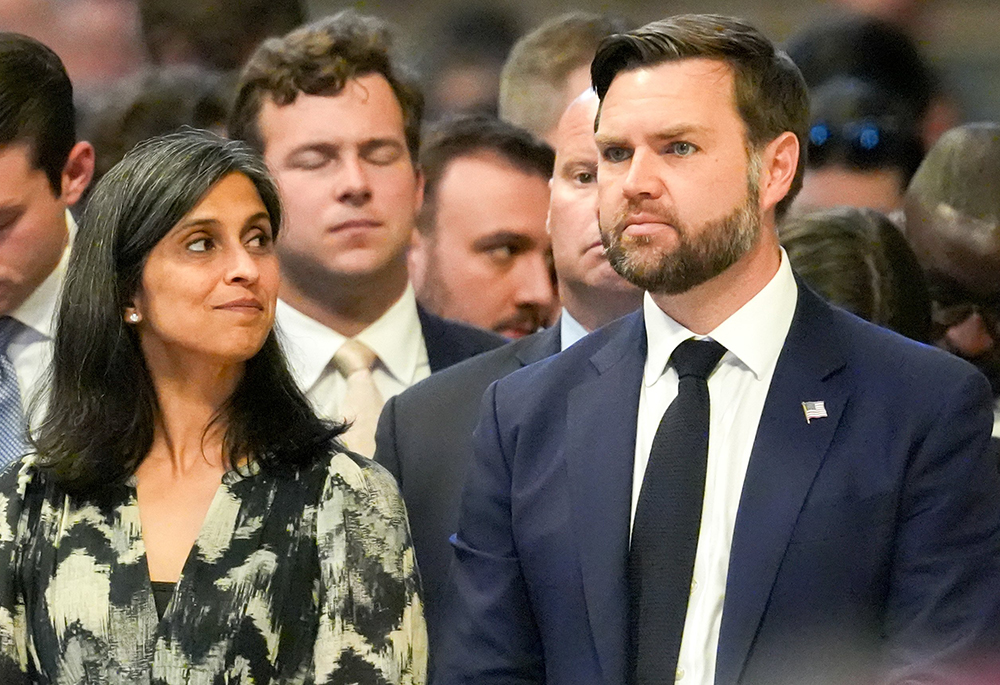
U.S. Vice President JD Vance and his wife, Usha Vance, attend the Liturgy of the Lord’s Passion in St. Peter’s Basilica at the Vatican April 18, 2025. (CNS/Lola Gomez)
This principle applies across the spectrum of Catholic public life. Even Vice President JD Vance, a newly minted Catholic baptized and confirmed in 2019, has claimed Catholic social teaching informs his views on family, work and dignity. His faith, like Colbert's, shapes how he sees the world. That diversity of Catholic witness — whether expressed through satire on stage or policy in the halls of power — shows why freedom of expression is indispensable.
Yet here lies the contradiction: Vance, while professing the Catholic faith, is serving in an administration that actively celebrates silencing critics. The same Catholic tradition he has embraced insists on the protection of human dignity and the fostering of open dialogue. By allowing this suppression of dissent to go on, he risks undermining not only democratic institutions but also the credibility of Catholic witness in public life.
Advertisement
Catholics ought to bring their values into public life by prioritizing human dignity, justice, and democracy. We urge voters to weigh issues such as social justice, immigration, care for creation and the defense of democratic institutions through the lens of Catholic social teaching. Our work emphasizes that Catholic engagement in politics is about protecting the common good, not protecting power.
This perspective matters deeply in a climate where voices are being silenced. We believe voting is not about loyalty to a party or a personality, but about advancing truth, protecting human dignity and ensuring a society where all can flourish. In the current moment, that includes defending the right of comedians, journalists and ordinary citizens to speak truth to power.
Colbert's Catholic witness, Kimmel's temporarily threatened platform and Vance's compromised example all illustrate why it is that, without free speech, even the church's prophetic voice can be muted and the common good itself put at risk.
The U.S. bishops' "Forming Consciences for Faithful Citizenship" reminds Catholics that civic choices must serve the common good, not partisan advantage. That includes protecting space for dialogue, even when it stings.
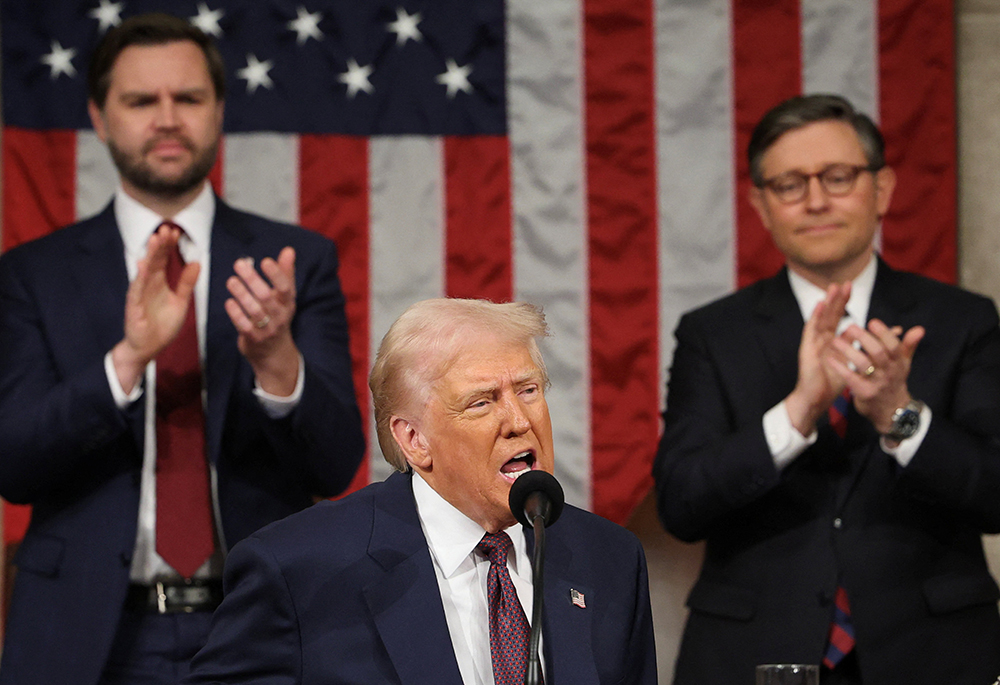
U.S. Vice President JD Vance and House Speaker Mike Johnson, R-La., applaud as President Donald Trump addresses a joint session of Congress at the U.S. Capitol in Washington March 4, 2025. (OSV News/Reuters/Win McNamee)
When a president threatens critics with regulatory punishment and cheers their suspension, Catholics must see this as a violation of the common good. Supporting leaders who welcome critique strengthens democracy. Supporting those who weaponize power against dissent corrodes it. Protecting free expression is part of protecting democracy itself.
The Catholic response to censorship is not to defend every joke or ignore responsibility in speech. It is to insist on conditions that allow truth, humor and conscience to coexist.
Colbert's Catholic-infused satire — mocked as "cringe" and now stripped of its late-night platform — reminds us that comedy can be prophetic. Kimmel's temporary suspension, celebrated by the president, shows how fragile freedom becomes when power muzzles dissent. And Vance's own Catholic conversion reminds us that faith in the public square takes many forms, but also that words about the common good mean little if we permit silencing to prevail.
Catholic voters in particular have a choice. Guided by the principle of the common good, we must reject leaders who equate critique with disloyalty and who celebrate the silencing of dissent. By voting the common good, we affirm that society thrives when many voices are heard, when satire can sting and when even the president can be the butt of a joke.
The Gospel calls us not to fear free expression but to shape it toward love and truth — and sometimes that truth arrives in a late-night monologue.