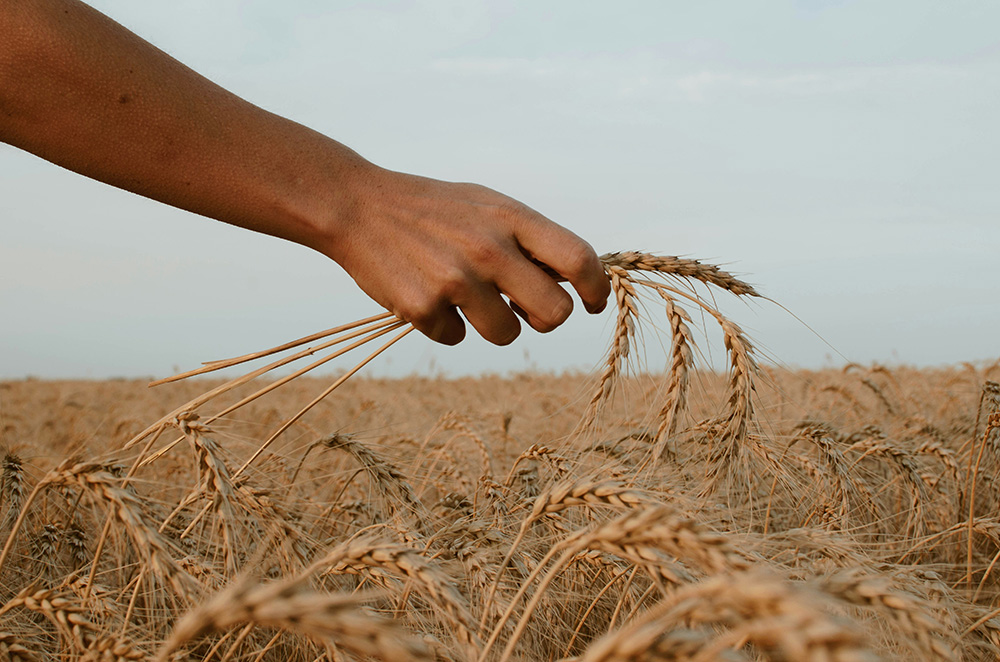
(Unsplash/Paz Arando)

by Maxwell Kuzma
Throughout the country, the season is changing. Cold, brisk nights have begun to arrive as the leaves turn bright orange before they shrivel up and snap underfoot. The first freeze comes, heralding the coming winter as it frosts the tips of the trees and grass, glazing the dawn in a glittering shimmer of ice and light. A timeless cycle is underway, echoing across generations and peoples like a drumbeat: After the flush of summer's bounty, the harvest brings a celebratory feast — a special meal — before the darkness and cold of the winter.
Catholics understand well the significance of a meal. In the Eucharist, the body of Christ is re-membered: Our active participation unites the people of God across time and space in a shared purpose. This foundational mystery at the heart of our faith empowers our recognition that creation, community and justice depend on rhythms of giving and gathering.
As our world continues to advance far beyond the automation and mechanization of the industrial revolution into new technologies and tragedies that unfold before our eyes in real time, our return to gratitude, balance and shared sustenance is both a spiritual and a political act.
In the ancient world, the Mosaic Law commanded landowners to leave the edges of their fields uncut, so the poor and the stranger could take what remained. Every seventh year, the soil itself was to rest and every 50th, a jubilee was called where the land was returned to its original family owners. Debts were also forgiven, preventing the permanent concentration of wealth and land.
These laws carried a profound recognition that the land and its fruit did not belong to those who worked it most efficiently, but to God, who gave it for the good of all. The harvest, then, was a moral covenant, a rhythm of giving that kept greed from turning the fields to dust.
The harvest still has to come from somewhere — from human bodies and finite earthly resources — even when the powerful pretend their wealth is born of genius rather than extraction.
The harvest is also an act of memory — a way of telling the story of who we are and what sustains us. Every culture has gathered around a table to remember the hands that planted and the lives that were lost.
But in America, that memory has been rewritten into myth. The "first meal" we call Thanksgiving remembers the abundance while forgetting the conquest and colonization it took to get there. The stories we tell about the harvest reveal what kind of people we wish to be: self-made or interdependent, grateful or entitled, honest about the cost of our plenty or eager to forget it.
Just as the myths of America hide the violence beneath the feast, so too do spectacles of wealth conceal the labor that sustains them. On Netflix, "The House of Guinness" dramatizes the Catholic-Protestant divide in 19th-century Ireland through the story of a family whose fortune offers them complete separation from the devastating conditions just outside the walls of the mansion. HBO's "The Gilded Age" revels in booming American opulence in the 1800s, distracting us from the poverty, racism and human rights violations pressing at its gates.
These stories remind us that every empire depends on invisible hands: servants, factory workers, coders, cleaners, and all who will never be invited to the banquet in the big house. The gilding, whether hand-poured in gold leaf or digitally conjured on OLED screens, is always designed to obscure the exploitation underneath, artists creating solely at the whim of others, dangerous mining exhibitions deep in the earth.
In our age of techbro, AI billionaires and digital dynasties, the harvest still has to come from somewhere — from human bodies and finite earthly resources — even when the powerful pretend their wealth is born of genius rather than extraction.
Advertisement
When there is no time to rest or reflect, there's no time for discernment. The harvest teaches that every seed takes time to break open, that the ground must rest before it can give again. I've come to know that truth in my own body. As a transgender Catholic, I've learned that vocation and identity are not manufactured, automated or mechanical — they are a divine gift that is embodied, revealed only in time by listening, waiting and trusting deeper ways of knowing. Discernment resembles the mystery and patience of cultivation, waiting to see what will emerge.
The Catechism of the Catholic Church speaks of a "perennial link of charity" between those in heaven, those in purgatory, and those still on pilgrimage — a connection that transcends time, space and even recognition. Every life touches another, every act of care or witness becomes part of the soil from which others may grow.
In that harvest field, holiness is not measured by titles or public acclaim but by participation in this ongoing exchange of grace, where the fruits of one life nourish the next, and no effort of love is ever wasted.
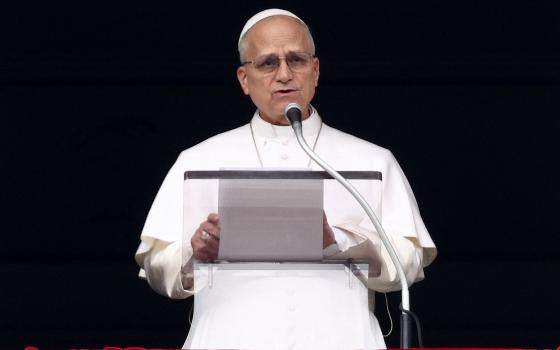
Yet the harvest is also a reckoning. Just as a field that has been exhausted will yield nothing, a society indifferent to its most vulnerable bears spiritual and moral rot. Pope Leo XIV has said, "The dignity of every human person must be respected today, not tomorrow, and the extreme poverty of all those to whom this dignity is denied should constantly weigh upon our consciences."
Humans have disrupted the sacred rhythm of divine abundance. To honor the harvest is to recognize that our labor, wealth and privilege are not just for us; they are part of a covenant with the poor, the marginalized and the generations who come after us. We do not exist only for ourselves. We are a gift from those who came before us, given to those who come after. It's time we start acting like it.