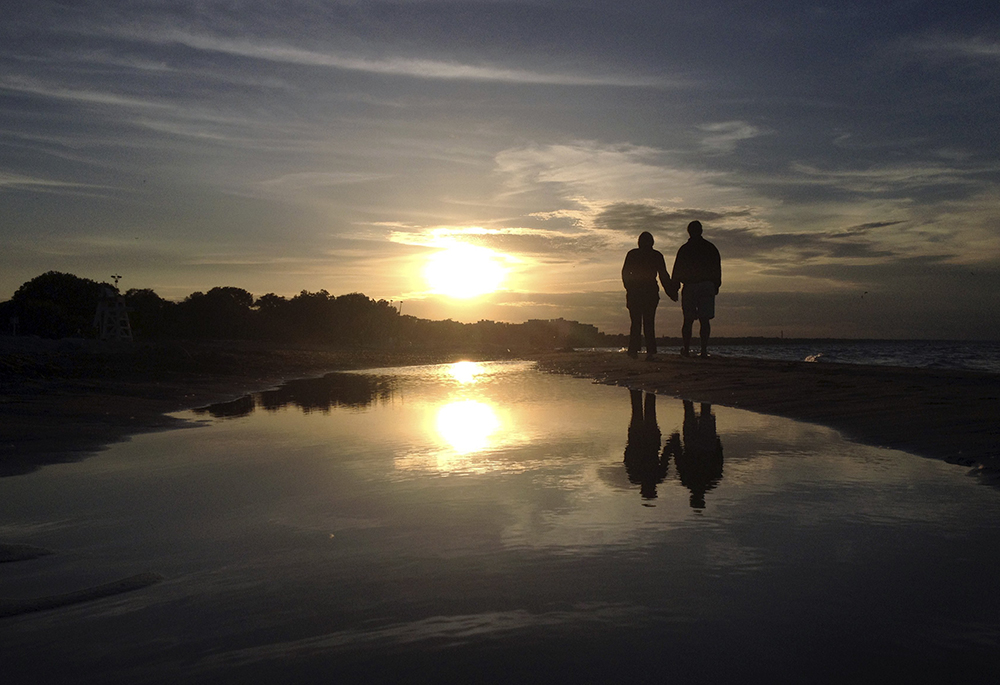
A couple is pictured in a file photo walking along Gillson Beach holding hands as the sun sets in Wilmette, Illinois. "Sometimes I come close to tears, not out of weakness, but from the exhaustion of seeing truth and kindness diminish in public life," writes NCR editor/publisher emeritus Thomas C. Fox. (OSV News/Reuters/Jim Young)

There are mornings when I wake up feeling a heaviness that resembles grief, a dread that the America I have loved and known is slipping away. It's not just the daily onslaught of cruelty and falsehood that weighs on me, but also the quiet acceptance of it — how so many people, even good ones, seem numb to moral decay. My spirit feels drained.
Sometimes I come close to tears, not out of weakness, but from the exhaustion of seeing truth and kindness diminish in public life.
This sadness grows deeper when I think of so many young people who are deprived of memory and history. Too few have seen a time when democracy, although imperfect, felt more hopeful and less cynical. The distortion of history and the erasure of what once was seem intentional — as if those in power know that this void is their greatest ally. The less people know, the less they can imagine something better. I want to reach them — those who haven't experienced a freer, more trusting time — and tell them that cynicism isn't reality.
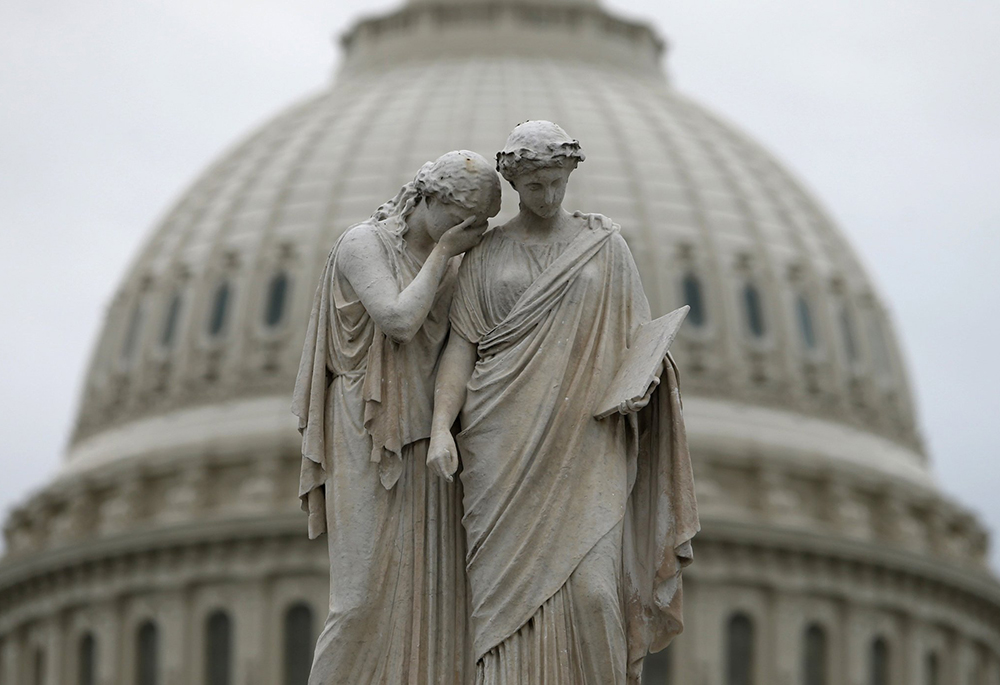
The statue of Grief and History stands near the U.S. Capitol dome in Washington, in this 2013 file photo. (CNS photo/Reuters/Kevin Lamarque)
Yet on the other hand, I see ordinary people — young and old and in between — committed to standing up for freedom, decency and truth. They march, organize and pray, holding onto a fragile but fierce conviction that democracy is still worth fighting for.
That flicker of hope is often shadowed by despair. I sometimes catch myself thinking that only collapse can expose the rot — that we might have to lose everything before truth is visible again. I know the danger of such thinking, yet I also know its honesty. Despair can burn away illusion. It can leave us bare before what is real.
Advertisement
What we are living through is more than a political crisis; it is a spiritual reckoning. Our idols — wealth, dominance, certainty — are being exposed as hollow. The lies that sustained them no longer hold. It feels, as Thomas Merton once wrote citing Nicholas Berdyaev, like a time when we must "be human in this most inhuman of ages." Amid such a painful time, the answer from someone like Merton would not be retreat but contemplation — the clear-eyed refusal to hate.
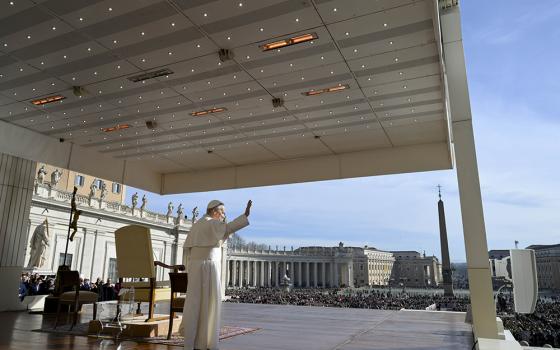
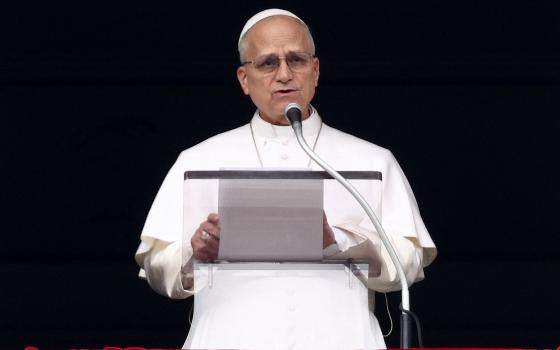
And now, Pope Leo XIV, in his brief time in office, has spoken with the same moral clarity. His first exhortation on poverty was not just about charity but about justice — the measure of love in public life. It is a gift to have a global voice, including an American one, that speaks with compassion and conviction, reminding us that truth belongs not to the powerful but to the poor, to those who still listen with their hearts.
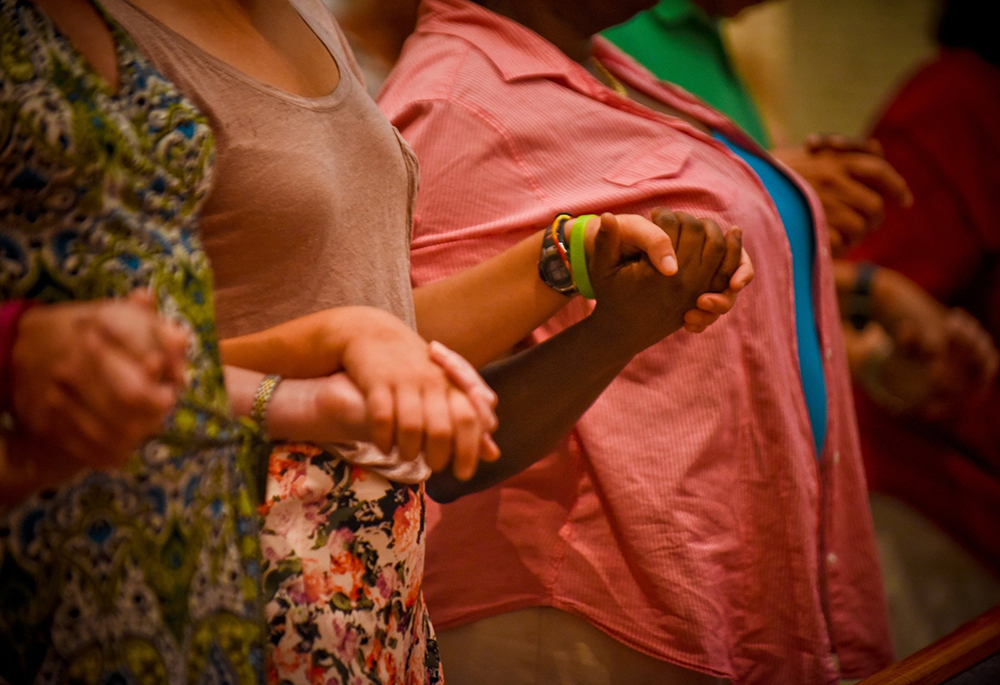
Congregants are pictured in a U.S. parish praying for peace, in a file photo. (OSV News/Catholic Herald/Juan C. Medina)
It helps me to name and touch this grief — to attend to it as one might attend a funeral. There is something sacred about mourning together, about letting sadness and loss be shared in public, where embraces are possible and tears are allowed. We need comfort in each other's grief over what is happening.
This shared expression — this willingness to face loss together — is both needed and life-giving. It restores our humanity. It says that even when institutions fail, compassion does not. It says that what binds us is not victory but tenderness.
Despair, then, is not always a sign of failure. It can be the beginning of transformation — the moment when optimism gives way to something sturdier and more faithful. Hope, real hope, is not naive expectation but moral defiance. It is the decision to keep believing that goodness still matters, that decency still counts, that truth will not be erased.
Perhaps this is where we are now — not at the end of history, but in the painful labor of its renewal. The task is not to restore what was, but to give birth to what could be.
I do not root for catastrophe; I root for awakening. I do not wish for collapse; I pray for courage. But I know that sometimes the two are intertwined — that the unmasking of falsehood may require a kind of civic dark night.
Perhaps this is where we are now — not at the end of history, but in the painful labor of its renewal. The task is not to restore what was, but to give birth to what could be. Every act of decency, every gesture of solidarity, every insistence on truth is a small resurrection. Yes, I come to these days with mixed feelings. But maybe mixed feelings are part of faith itself — the ache of living with eyes open, heartbroken yet still stubbornly hopeful.
Hope, in the end, is not the absence of despair. It is the choice to walk through it, hand in hand, toward the light that will not go out.
Hope, in the end, is not the absence of despair. It is the choice to walk through it, hand in hand, toward the light that will not go out.