(Unsplash/Annika Gordon)

by Scott Hurd
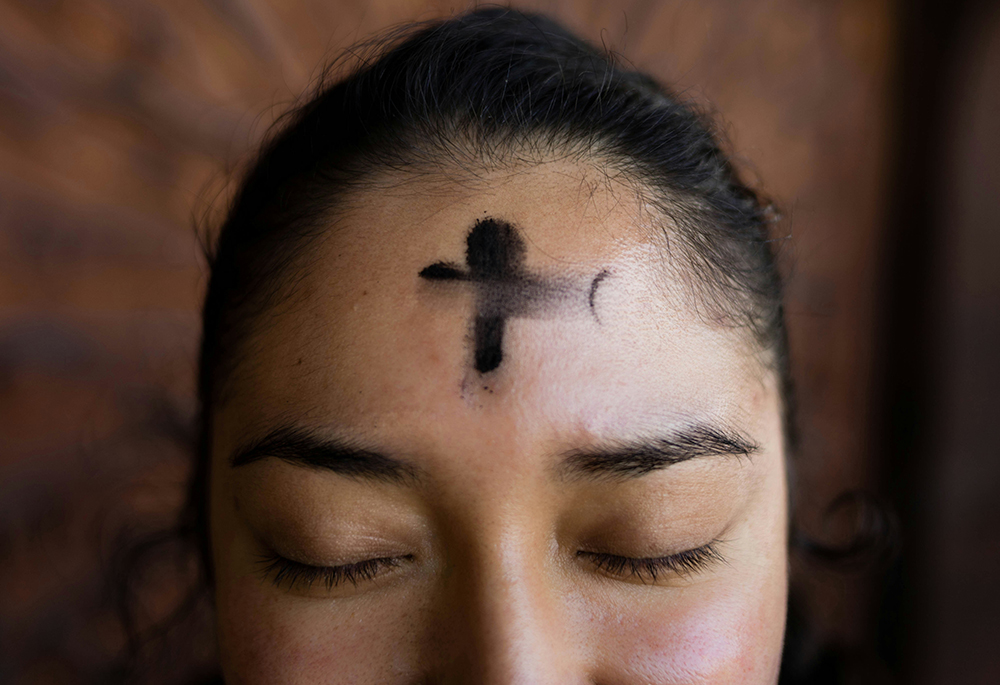
This Lent, will you "unplug " and "recharge" your religious "batteries"? Try to find the "bandwidth" for daily Mass? "Rewire" your prayer life or "reboot" your spiritual reading? Lent is, after all, a chance for an "upgrade" to a better, holier you: "Version 2.0," if you will.
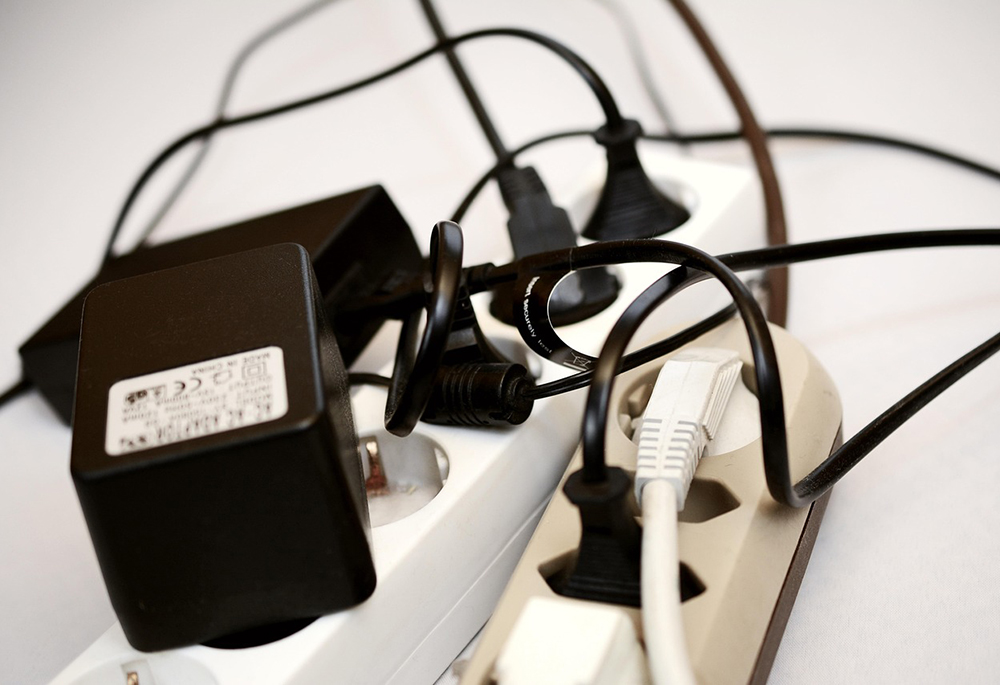
Sound weird? That's because I've described typical Lenten goals with the computer jargon that's crept into our everyday talk. And I'm just as guilty of using it as anyone else. Which is why I'm making an appeal: This Lent, let's give up referring to ourselves as if we're machines. Because we aren't! But plenty of people think that we are — with serious consequences.
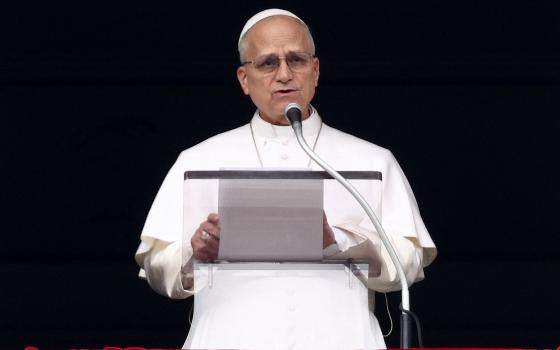
Pope Leo XIV seems to appreciate the threat, especially as AI creeps into more corners of our lives. In asking why life's busyness often leaves us feeling exhausted and empty, he said: "Because we are not machines, we have a 'heart.' " And he pointedly reminded the Italian bishops that "the person is not a system of algorithms: he or she is a creature, relationship, mystery."
(Pixabay/congerdesign)
But not everyone shares this understanding of the human person. To some — especially in tech circles — we are in fact "machines" driven by a "system of algorithms."
Consider the response made by Sam Altman, CEO of ChatGPT's parent company, OpenAI, to an influential academic paper's claim that, unlike humans, AI chatbots don't understand what they generate because they're simply "stochastic parrots" that mimic their training data.
Altman didn't buy it. To mock the authors' conclusion, he turned to "X", the social media platform owned by his OpenAI co-founder, Elon Musk. "i am a stochastic parrot," Altman tweeted, "and so r u."
In other words, according to this billionaire tech titan, human beings are really no different from unthinking machines. You and I are simply computers whose output parrots our input. And nothing more.
Advertisement
That's something to keep in mind, should you use Altman's ChatGPT. Because, according to Antiqua et Nova, the Vatican's doctrinal note on AI, "Technological products reflect the worldview of their developers [and] owners."
Beliefs like Altman's are nothing new in the tech world. As a young MIT professor in the '70s, author Sherry Turkle told Erik Erikson, Pulitzer Prize winning psychoanalyst, that she was studying how computers change people's ideas of themselves. "Engineers, they're not convinced that people have an interior," Erikson replied. "It's not necessary for their purposes."
Pope Francis was aware of such thinking. In his encyclical "Laudato Si', on Care for Our Common Home," he warns of a "technocracy … which sees no special value in human beings." One which, for instance, insists that human beings are no different from parroting machines.
To counter this, Francis concluded, what's needed is an "adequate anthropology" that honors humanity's "unique capacities of knowledge, will, freedom and responsibility." Such an anthropology honors human dignity. Because machines don't possess dignity. But men and women do.
(Pixabay/Bruno Henrique)
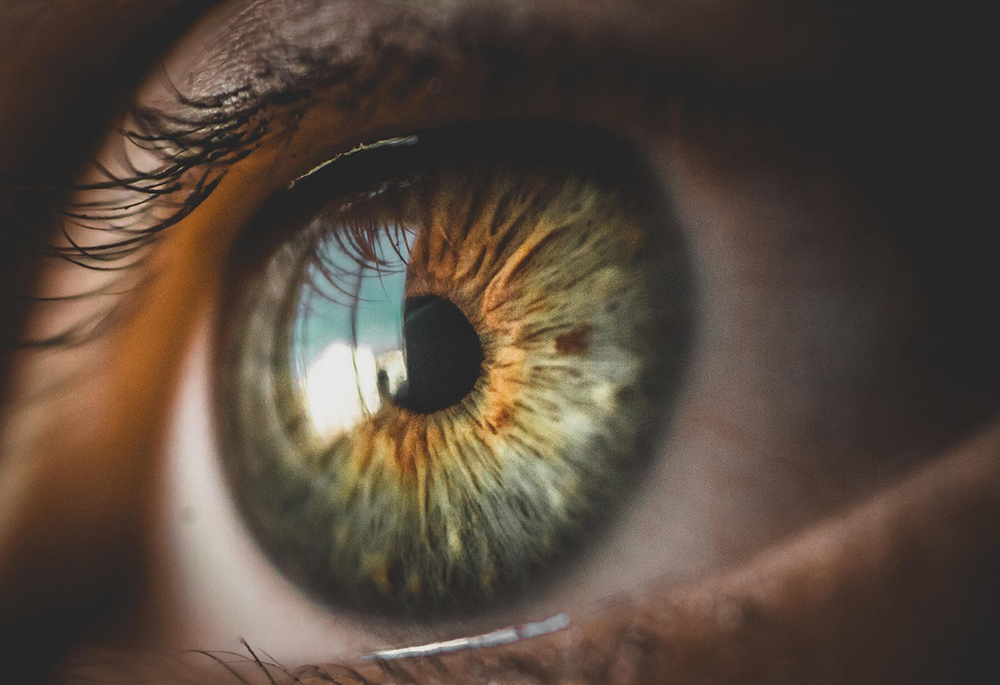
It's Christian conviction that human beings are created in God's image. That means that unless God is just a giant computer in the sky (cue the jokes about God dwelling in "the cloud"), then you and I are something far, far greater than stochastic parrots. Which is why, according to Antiqua et Nova, "AI is but a pale reflection of humanity."
As Antiqua et Nova continues: "AI should not be seen as an artificial form of human intelligence but as a product of it." While impressive and potentially useful, AI is simply a sophisticated tool that reflects humanity's God-given ingenuity and creativity. We shouldn't imagine AI to be something more than it is — or imagine ourselves to be something less than we are.
The costs of misunderstanding this are high. For if human beings are nothing more than machines — stochastic parrots — then it's easy to justify replacing us with other machines that can do certain things better and faster. And it means that, in spite of appearances, we really don't have any moral agency, or even the ability to think for ourselves. Because machines don't think.
Yet there are those who think that we don't think either (pun intended). "The real question is not whether machines think but whether men do," wrote the Harvard behaviorist B.F. Skinner, considered by some as the most influential psychologist of the 20th century. "The mystery which surrounds a thinking machine," he said, "already surrounds a thinking man."
Skinner would agree with Sam Altman: Human beings are stochastic parrots. Because of that, Skinner rejected the concept of free will and concluded that human behaviors and choices are shaped and reinforced by rewards and punishments — not dissimilar to how AI is "trained." To Skinner, Polly doesn't really want a cracker. Polly is just conditioned to think that it does.
But human beings do think. We have free will. Our character is shaped by choices, not rote conditioning. Our lives are far more than inputs and outputs or data points to be optimized. Machines only simulate what makes us truly human: "poetry, irony, love, art, imagination, the joy of discovery," as Leo has offered.
If we lose sight of this, "human dignity risks becoming diminished or forgotten, substituted by functions, automatism, simulations," to again quote Leo. We become enslaved to efficiency and measure people only by their economic utility. Those who don't measure up — the elderly, the vulnerable, the disabled — are ultimately devalued and discarded.
Consider what The Lord of the Rings author J.R.R. Tolkien said to a reporter who asked what made him "tick." "I don't tick," he replied. "I am not a machine. (If I did tick, I should have no views on it, and you had better ask the winder.)"
Rapid changes in our world and its machines can negatively impact how people understand themselves and others. As people of faith, we have an opportunity to push back and offer a compelling vision of the complex and beautiful creatures that we are. And it can start with how we refer to ourselves.
Consider what The Lord of the Rings author J.R.R. Tolkien said to a reporter who asked what made him "tick." "I don't tick," he replied. "I am not a machine. (If I did tick, I should have no views on it, and you had better ask the winder.)"
We aren't machines either, and that's a truth we can honor this Lent. It is, after all, a season for renewal. Just not for a "reboot."