(Unsplash/Priscilla Du Preez)

by Daniel P. Horan
Like so many other people, I have been reflecting on the life, teaching and legacy of Pope Francis since his death in April. While his pastoral ministry focused on mercy and inclusion ("todos, todos, todos"), his love and concern for the poor, the renewal of the church through synodality and his magisterial teaching on care for creation will certainly be long-lasting hallmarks of his pontificate, lately I have been remembering the many times he drew our attention to the transformative, challenging and inspiring power of sacred Scripture.
In September 2019, Pope Francis issued a largely underappreciated moto proprio titled Aperuit Illis, which established the Third Sunday in Ordinary Time each year as "the Sunday of the Word of God." It may seem like an odd celebration to establish given that every Sunday is, in a liturgical sense, very much a "Sunday of the Word of God," but I believe the intended point was one of concentration and focus.
Just as every Sunday can rightly be described as Corpus Christi Sunday, both for the Eucharistic presence and the assembly's embodiment as the body of Christ, nevertheless we set aside a particular Sunday in June each year to attend to this doctrinal theme. To this end, Pope Francis wrote:
Devoting a specific Sunday of the liturgical year to the word of God can enable the Church to experience anew how the risen Lord opens up for us the treasury of his word and enables us to proclaim its unfathomable riches before the world.
He also noted that this new commemoration "should not be seen as a yearly event but rather a yearlong event, for we urgently need to grow in our knowledge and love of the Scriptures and of the risen Lord, who continues to speak his word and to break bread in the community of believers."
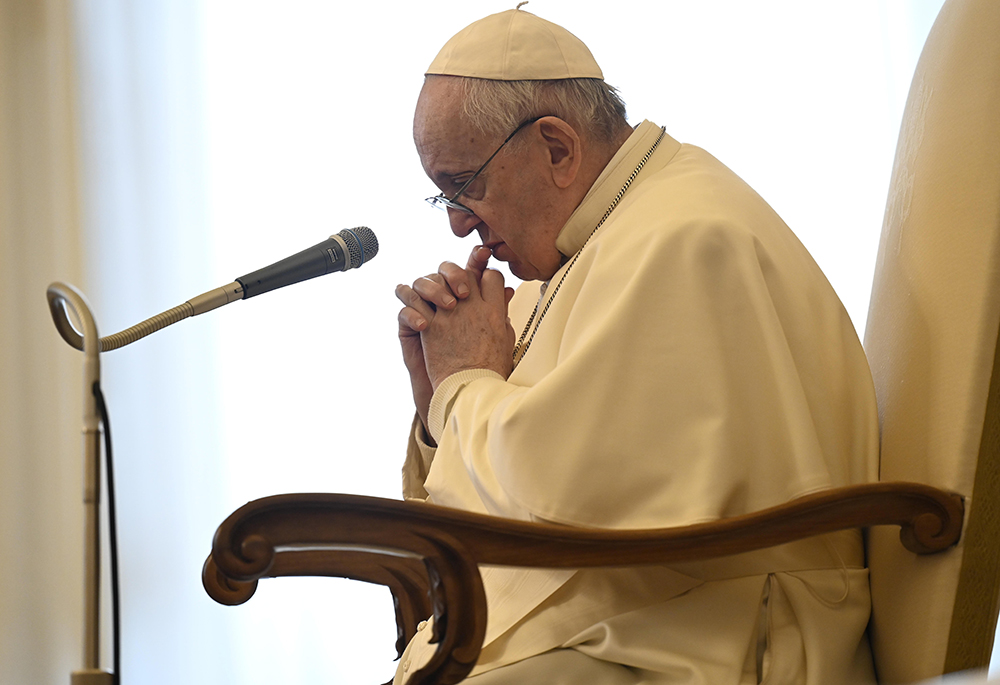
Pope Francis leads his general audience in the library of the Apostolic Palace at the Vatican Jan. 27, 2021. Francis continued his series of talks on prayer, reflecting on the theme "Praying with Sacred Scripture." (CNS/Vatican Media)
As the pope observed in the moto proprio, too often it is only at the Sunday liturgy that many Catholics regularly hear the Word of God. While it can be a stereotype to cast Catholics as unfamiliar with the Bible, especially when contrasted with our Protestant neighbors, Pope Francis admits that this is sadly often the case. He wrote that, when it comes to the homily at Mass, "For many of our faithful, in fact, this is the only opportunity they have to grasp the beauty of God's word and to see it applied to their daily lives."
For as important and thoughtful as the lectionary cycle of readings are, hearing short excerpts weekly or less frequently is not sufficient for becoming familiar with the Word of God. Furthermore, this pseudo-familiarity with Scripture bred by well-meaning Catholics who believe hearing three readings and a psalm every Sunday or attending Catholic schools is sufficient to "know the Bible" results in skewed (and sometimes strange) interpretations and presumptions about what Scripture actually says and means.
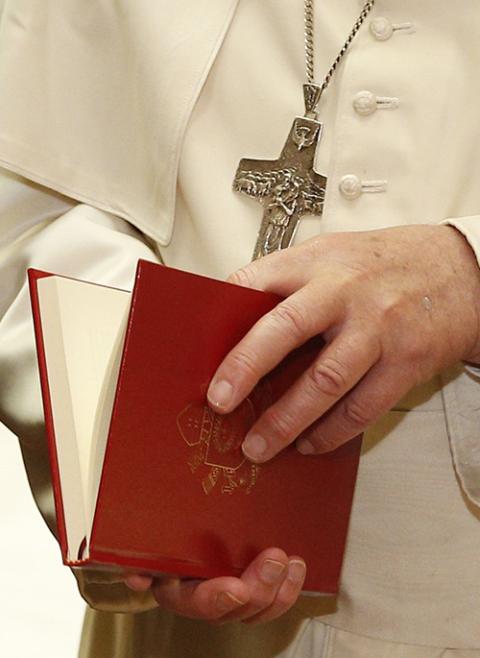
Pope Francis holds a copy of his exhortation Evangelii Gaudium ("The Joy of the Gospel") in this file photo from 2014. The document, published Nov. 24, 2013, commonly is described as presenting the vision for Pope Francis' pontificate. (CNS/Paul Haring)
Like Pope Francis, I have long believed that the liturgical homily is a key time for addressing this spiritual and scriptural lacuna, for helping the congregation to not just better understand the Scripture but see its contemporary relevance and the movement of the Holy Spirit. This is something Pope Francis emphasized early in his pontificate in the apostolic exhortation Evangelii Gaudium ("The Joy of the Gospel").
One of the things I am fond of reminding my students and others is that what Jesus was preaching in the Gospels was intentionally unsettling; it disrupted the status quo and challenged his hearers' preconceptions about God, society and themselves.
In a homily on Jan. 22, 2023, Pope Francis commented on the call of Jesus to repentance: "His Word shakes us, disturbs us, incites us to change, to conversion." He added: "Here is Jesus' invitation: God has come close to you; recognize his presence, make room for his Word, and you will change your outlook on life."
The year before, on Jan. 23, 2022, the Holy Father was even more direct about the intentionally disruptive character of authentically listening to the Word of God. He said that the Word of God changes us, bringing peace to those needing consolation but also disruption for the comfortable and complacent. "If, on the one hand it consoles us by showing us the face of God, on the other, it challenges and disturbs us, reminding us of our inconsistencies. It shakes us up."
What Jesus was preaching in the Gospels was intentionally unsettling; it disrupted the status quo and challenged his hearers' preconceptions about God, society and themselves.
This aspect of Pope Francis' teaching aligned with the insights that theologians, ethicists and biblical scholars have been offering the faithful for generations.
I think of the late Methodist Scripture scholar Walter Wink, whose commentaries on the parables of Jesus highlighted the profoundly nonviolent character of his teaching and ministry. Wink's exegesis of Jesus' Sermon on the Mount, which led to his coinage of "Jesus' Third Way" of nonviolence, remains striking and prophetic today. Anyone who has read his 1992 modern classic Engaging the Powers: Discernment and Resistance in a World of Domination is transformed by the radical message of the Prince of Peace that has been dulled by our own inability to hear Jesus' costly preaching today.
Advertisement
I also think of St. Joseph Sr. Elizabeth Johnson's famous book She Who Is: The Mystery of God in Feminist Discourse, which was also published in 1992. Johnson's careful scriptural exegesis and theological reflection unveils the powerful presence of female images and metaphors for God throughout the Bible. For those who have convinced themselves that only masculine language for God is orthodox and such a position is supported by Scripture, Johnson's classic work offers incontrovertible biblical evidence to the contrary. One of the key takeaways is that God is always bigger than we can imagine and certainly not confined to our limited horizons, whether by gender or anything else.
Another scholar who comes to mind is the renowned protestant ethicist Stanley Hauerwas who, in his 1993 book Unleashing the Scripture and elsewhere, has called Christians to attend to the moral imperatives of Scripture and the fundamental challenge of Jesus' teaching. Known to be provocative (a pedagogical style that certainly captures one's attention), Hauerwas rightly reminds us that we — especially those of us in the United States and other affluent Western societies — have too often domesticated the Gospels and refashioned Jesus' difficult and challenging message into something that merely reaffirms our own worldview and outlook.

(Unsplash/Anna Hecker)
There is also the Jewish scholar of the New Testament Amy-Jill Levine, who taught for decades at Vanderbilt University Divinity School and now teaches at Hartford International University for Religion and Peace. Anyone who thinks they know what Jesus' most famous parables are about (think of "the prodigal son," "the good Samaritan," etc.), must read Levine's extraordinary 2014 book Short Stories by Jesus: The Enigmatic Parables of a Controversial Rabbi. What is most shocking and exciting about this volume are the many details, questions, implications and contexts that often go overlooked or ignored by modern Christian readers and hearers of the Gospels.
Levine, like Hauerwas, Johnson and Wink, helps us to see anew that which the Holy Spirit is inviting us to consider but that we too often disregard.
While I could continue listing other scholars who help us to see what is both ancient and new about Scripture, I agree with Pope Francis when he cites St. Ephrem: "Who is able to understand, Lord, all the richness of even one of your words? There is more that eludes us than what we can understand. We are like the thirsty drinking from a fountain. Your word has as many aspects as the perspectives of those who study it."
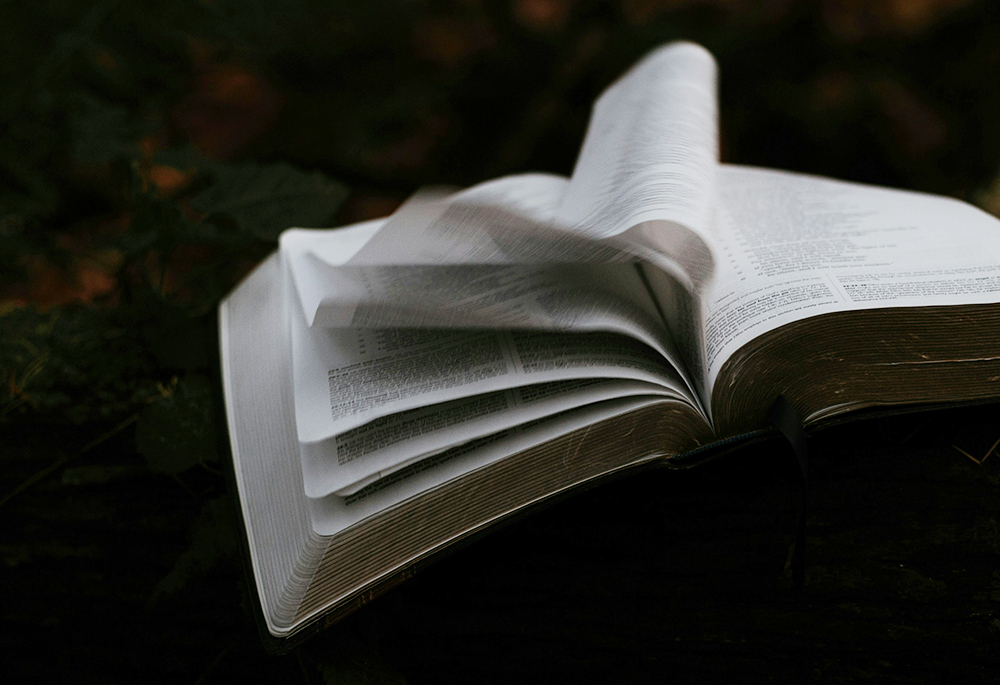
The meaning and challenge, consolation and disruption, beauty and mystery of the Word of God is inexhaustible. It takes a lifetime of study and prayer, which Pope Francis encouraged all the baptized to do. So, let's pick up the Bible again and open our minds and hearts to recognize the disturbing and life-giving power of Scripture, and risk being changed by God in the process.