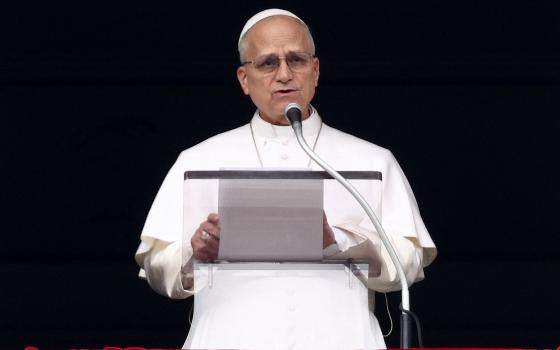
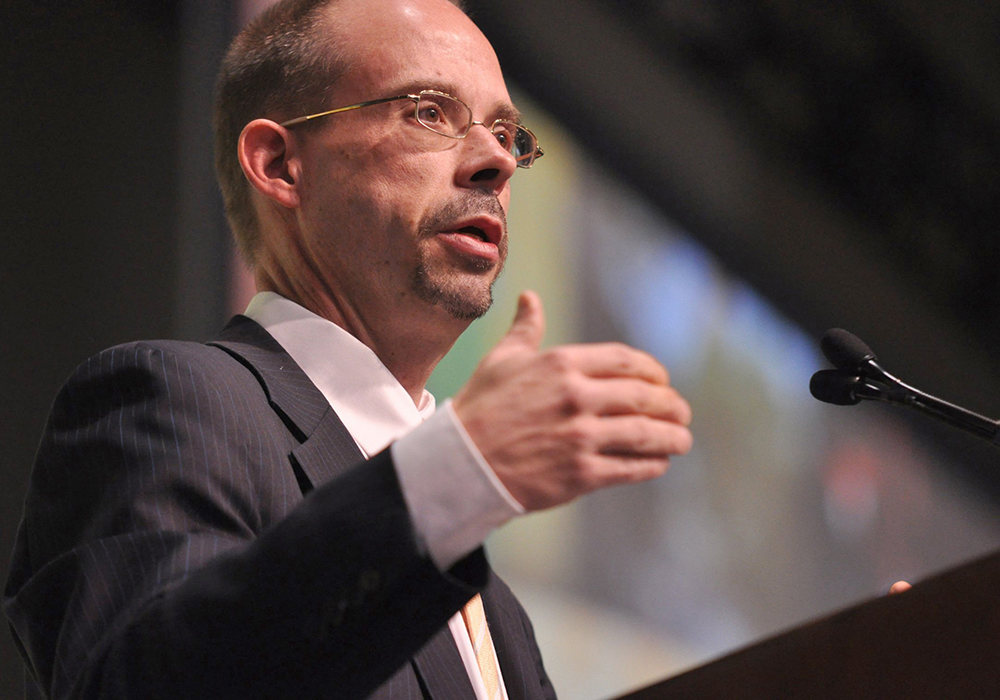
John L. Allen Jr., longtime Vaticanista and editor-in-chief of the Catholic publication Crux, died Jan. 22, 2026, at age 61. He is pictured in a 2009 file photo. (OSV News file/The Texas Catholic/Jenna Teter)
One day in 1996, while working as managing editor at National Catholic Reporter in Kansas City, Missouri, I received a call from an aspiring freelancer.
He said he was a teacher at a Catholic high school in Los Angeles and was also moderator of the student newspaper. His pitch: a story about how Catholic high school newspapers are often censored.
I'm sure there was an eye roll on my part. He had scant journalism experience, was personally engaged in the topic, and I could only foresee a future that would end with me paying him a kill fee and never using the story.
But I've always had a soft spot for freelancers, so I offered a deal: I would not commit to using anything, but, since he was attempting to build a freelance base, I would be happy to look at whatever he put together and give him my best critique.
In a matter of days, I received a story from this guy named John Allen that went well beyond what I might expect from a more experienced journalist. He had made the story feel national, quoting numerous well-known experts, and deftly handled tensions extant over just how much freedom should be afforded student newspapers at Catholic high schools. It was a really well done, interesting story that was published Dec. 13, 1996. He even included a follow-up memo with more details about his sourcing and suggestions for future stories.
If his piece was any indication, this guy had enormous potential.
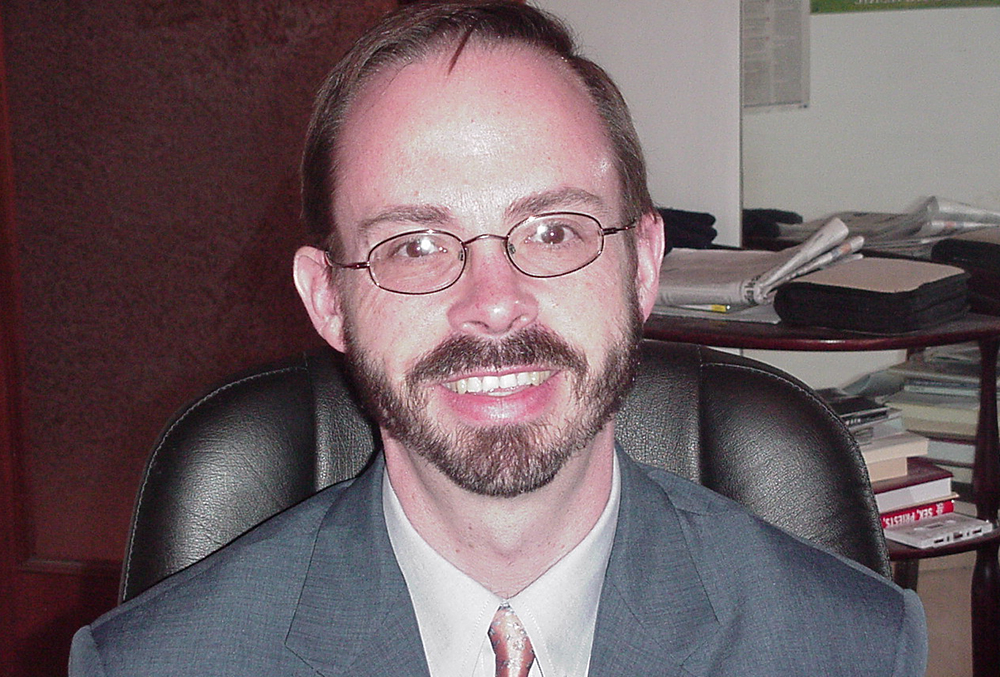
John L. Allen Jr. is pictured in an undated photo. (Wikimedia Commons/CC BY-SA 3.0)
Much has been written since John L. Allen Jr.'s death on Jan. 22 about his storied career as a Vatican expert. But his work during the few years that preceded his move to Rome provides an understanding of why, when the time arrived, he was a natural choice for that assignment.
After I received John's first offering, I called him back quickly and apologized for my assumptions and asked him if he'd like to do more. He was eager to get going and the work flowed in soon after.
Thus began my long professional relationship and friendship with one of the most remarkable young journalists I've ever worked with.
Welcome to Kansas City
When a full-time opening became available the following year, Allen was an easy hire. The only reservation Michael Farrell, then editor, voiced was that "this kid seems too good to be true."
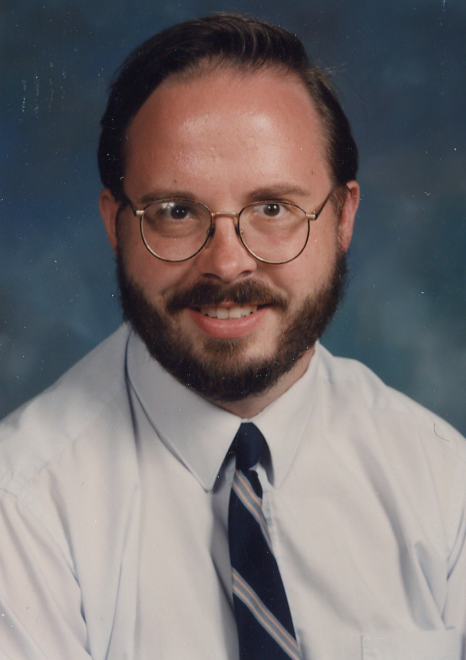
John L. Allen Jr. in the 1990s (NCR file photo)
The John Allen who showed up at our office in Kansas City with his first wife, Shannon Levitt, had grown up in Hays, Kansas. He had graduated with a degree in philosophy from Fort Hays State University and a master's in religious studies from the University of Kansas. He was a Jayhawks fan and loved Midwestern fare.
He often started his day with a visit to his favorite local diner followed by a stop at LaMar's Donuts, a Kansas City landmark, where he would pick up a pastry that looked a bit like a small baseball bat. (I think it necessary to note here that the svelte John L. Allen Jr. of sophisticated palate came later, during his years in Rome.)
"If there's something in life more pleasurable than a doughnut, I'd like to hear about it," he wrote in 1999 for his column, The Truth Is Out There. "One deep-fat-fried mouthful is usually enough to convince me of the design argument for the existence of a Supreme Being. … As Homer Simpson said, 'Doughnuts have made me the man I am today.' "
On to the serious stuff
That light side showed up occasionally. But the pudgy guy who sat with his back to the rest of the newsroom, arms pounding like out-of-control pistons as he typed out stories with his two pointer fingers, was already wading into very serious material.
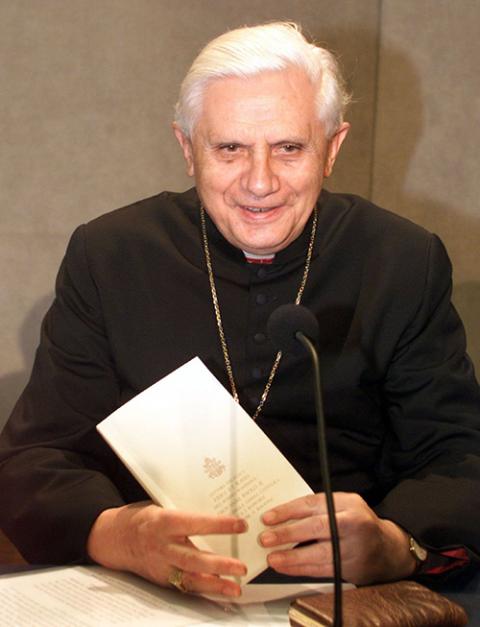
Cardinal Joseph Ratzinger presents a copy of Pope John Paul II's latest encyclical, Fides et Ratio (''Faith and Reason''), at the Vatican Oct. 15, 1998. (CNS/Reuters)
Essential to reporting on the church at that time was an understanding of the undercurrent of fear and the divisions that had begun to infiltrate our institutions. In conversations during the late 1990s with prominent theologians and some bishops I would often hear descriptions of the fear that had started to permeate Catholic academic circles. Some theologians had simply stopped doing serious work in certain areas for fear of being hauled in for questioning by the Vatican's Congregation for the Doctrine of the Faith, headed by Cardinal Joseph Ratzinger.
Allen was bumping up against those tensions increasingly in his reporting. An August 1998 version of his column was headlined, "Worried reform is dead? Not this weekend, Baby!"
He wasted no time jumping into the fray:
Not long ago, Cardinal Francis George of Chicago made the cryptic remark that "liberal Catholicism is an exhausted project." Though it was never clear exactly what that meant, if George thinks the dream of church reform inspired by Vatican II has collapsed, he should have grabbed a cab and shown up at the Cabrini Retreat Center. … It would have been clear that rumors of the death of aggiornamento have been greatly exaggerated.
The report went on at length describing a Call to Action-sponsored "Next Generation" retreat that explored a wide range of topics and how they affected young adults' attitudes toward and connection with the church.
A month later, he broke what I consider one of the most important stories of that era, reporting that a group of men had undercut years of research and work by international experts and simply reworked the language of the liturgy used in the United States. The U.S. bishops had already approved allowing some uses of inclusive language, and the longstanding International Commission on English in the Liturgy, or ICEL, composed of biblical and language experts, was still working on the translations.
Advertisement
What Allen dug out was a stunning sabotage of that process. The headline: "On the lectionary, 11 men made the deal."
He reported that 11 men had met the year before in the Vatican for two weeks and simply rewrote the texts we now use in liturgy, undercutting six years of debate and research, as well as the will of the U.S. bishops.
His core findings:
- Only one of the 11 men – no women were included – held a graduate degree in Scripture studies;
- Two members of the group were not native English speakers;
- At least one of the advisers was a graduate student at the time of the meeting;
- Several members of the group had a history of objecting to inclusive-language translations, including two of the American archbishops and the lone Scripture scholar.
"What has also become clear is that the elaborate consultative process used in developing English-language translations for nearly three decades meant little," he wrote. "Powers in Rome handpicked a small group of men who, in two weeks undid work that had taken dozens of years."
He was inexhaustible, his curiosity without limit, his facility for handling waves of complex material in record time just beginning to become apparent.
He followed up that story with an extensive examination of Michael Waldstein, a conservative Austrian intellectual and the only Scripture scholar among the 11 revisers of the liturgy.
What caught my attention and that of other editors was that he was managing to develop sources and pull together groundbreaking international stories from his little corner of the newsroom in Kansas City. And he didn't hesitate to talk to everyone.
In October 1998, I sent him to Salzburg, Austria, to cover a national assembly of Catholics that "voted in overwhelming numbers for what amounts to a sea change in their church."
Huge majorities of the assembly, "drawn from all walks of life and all regions of the country — endorsed ordination for married men, freedom for couples to chose which method of birth control is right for them and allowing divorced and remarried Catholics to receive the sacraments" among a host of other initiatives.
He filed prodigious amounts from the conference and even did a charming feature on the city. He was inexhaustible, his curiosity without limit, his facility for handling waves of complex material in record time just beginning to become apparent.
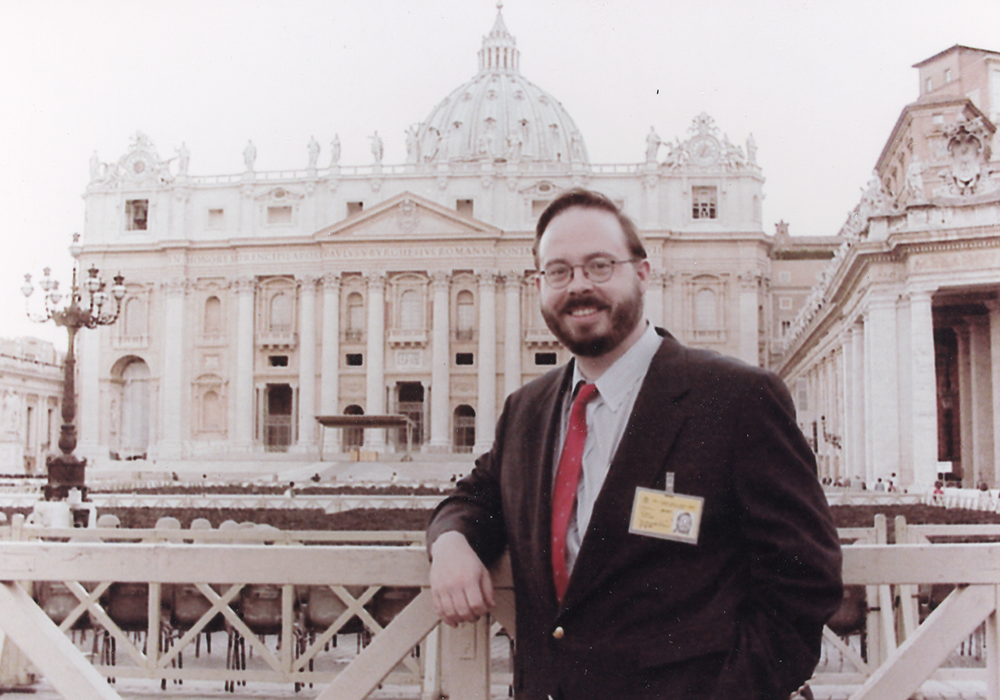
John L. Allen Jr. poses for a photo in front of St. Peter's Basilica circa 2000, when he was National Catholic Reporter's new Rome correspondent. He worked for the National Catholic Reporter 1997-2014. (NCR file photo)
It was also about this time, if memory serves, that he, in his words "resurrected his academic German" to begin researching original sources for what would become the first English-language biography of Joseph Ratzinger. I think it remains one of the most engaging and thorough treatments of that profound thinker and influencer yet produced. Among the praise and critiques that flowed with the publication in 2000 of Cardinal Ratzinger: The Vatican's Enforcer of the Faith, was a particularly harsh review by theologian Fr. Joseph Komonchak. It knocked the pins out from under the young author.
It was impossible to convince Allen at that point that it would be unreasonable to expect a five-star review of a deep and critical biography of the source of so much fear in the church from someone who was a key part of that culture. If there was a chink in his formidable armor, it was Allen's wish to please in a profession that, if done well, inevitably generates displeasure. Perhaps it was that instinct, as well as the need to keep Crux afloat, that later turned him at times from an exquisite explainer and critic of opaque church cultures to more an apologist for them.
Heading to Rome
The book, the columns, the extensive coverage of so many subjects, the overseas work, including a stint in 2000 to cover a synod, all led to an easy answer to the question: Who could succeed NCR's legendary Peter Hebblethwaite, who had, in his own right, recreated Vatican coverage at a level most would never achieve.
Hebblethwaite had died in 1994. For the next six years, NCR's Vatican coverage had depended on a patchwork of freelancers and, increasingly, John's growing interest in international and Vatican topics.
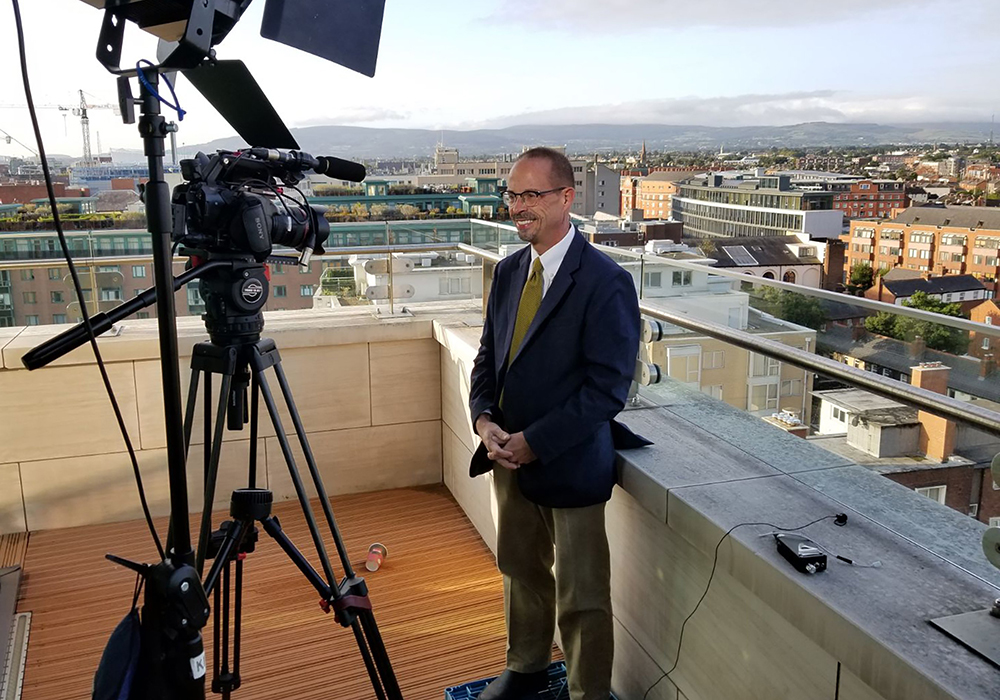
John Allen Jr. is pictured in an undated photo. (OSV News/Courtesy of Ines San Martin)
On July 28, 2000, Michael Farrell announced that John would be moving to Rome as NCR's Vatican correspondent. He noted that "the accumulated effect of his reporting and writing is far greater than one might expect from a three-year stint in a rumpled corner of our Kansas City newsroom. I know from phone calls and notes that a lot of you have been impressed with the quantity and quality of his work. You're not alone. A lot of old hands around here are impressed, too, with the range of issues he has managed to cover and the depth and sophistication he has brought to our news pages." All while also writing the Ratzinger biography due out that fall.
John and his wife had landed in Rome on July 1, and he wasted no time beginning to file from the Eternal City.
The kid from Hays, Kansas, was on his way.