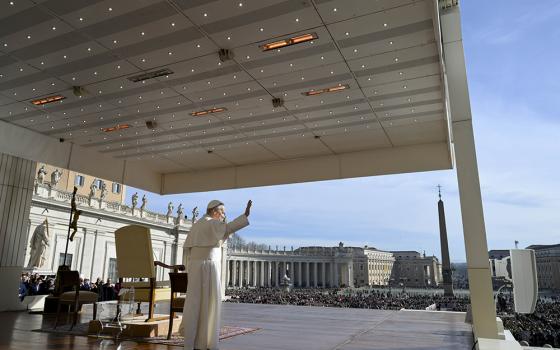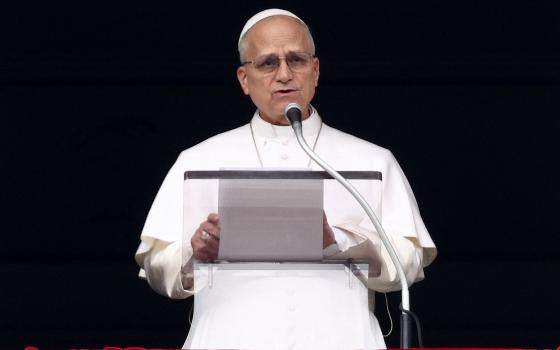
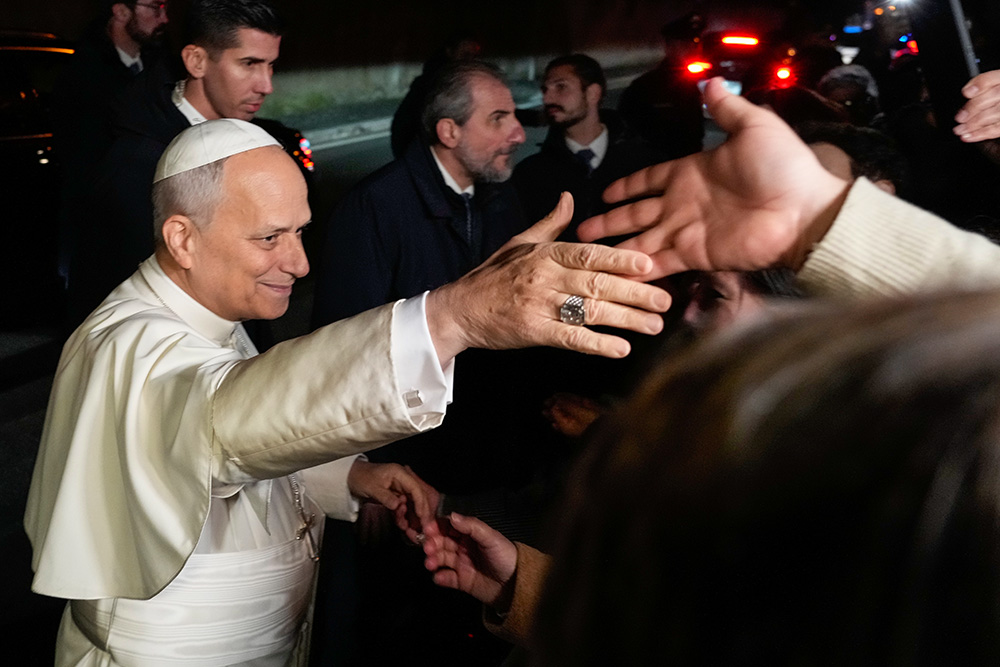
Pope Leo XIV greets people as he leaves the Castel Gandolfo residence in Italy to head to the Vatican Dec. 27, 2025. (AP/Gregorio Borgia)

Looking back at the life of the Catholic Church in the United States this past year, it is easy to conclude that the election of Pope Leo XIV is obviously the most important thing that happened. He is the first pope born in the United States, the fact that he answers questions in Midwestern English means he breaks through in the media in ways his predecessors did not, and already we are beginning to see ways that he is distinctive, different from his predecessors. The Jubilee Year was in full swing at the time of his election, permitting Leo to introduce himself more quickly to the universal church through the weekly flood of pilgrims to Rome.
The reason the cardinals elected then-Cardinal Robert Prevost as pope, however, was because he is committed to the reform agenda that Pope Francis began. From his earliest appearance on the balcony of St. Peter's on May 8 through this autumn when he forcefully defended the consistent ethic of life approach advocated by Chicago Cardinal Blase Cupich, Leo shares the pastoral outlook and commitment to synodality that emerged from the Latin American reception of the 1962-65 Second Vatican Council and was brought to the universal church by Francis.
Perhaps the biggest difference between Leo and Francis is that they were formed in different religious orders. Francis was a Jesuit, who brought many Ignatian sensibilities to his papacy, especially his emphasis on discernment. Leo is a son of St. Augustine and that influence has been noticeable from the start of his pontificate. He cites the great doctor of the church in almost every document and major talk. The explicit Christocentrism of Augustine shines through with Leo in ways more akin to Pope Benedict XVI than Francis.
At 70 years of age, and a young, tennis-playing 70, Leo's pontificate will be hugely consequential throughout the world. But, arguably, the biggest story for the church in the U.S. this year was not the selection of a new bishop of Rome so much as the selection of new archbishops, which began when Prevost was still a cardinal leading the Dicastery for Bishops. Eight new archbishops received their palliums on the feast of Sts. Peter and Paul this year: Richard Henning of Boston; Jeffrey Grob of Milwaukee; Joseph Vásquez of Galveston-Houston; Robert McElroy of Washington; Robert Casey of Cincinnati; Edward Weisenburger of Detroit; Shawn McKnight of Kansas City, Kansas; and Michael McGovern of Omaha, Nebraska.
Advertisement
Since then, three more archbishops have been named by Leo: Mark Rivituso of Mobile, Alabama; James Checchio, coadjutor of New Orleans; and, just before Christmas, the biggest appointment of them all, Ronald Hicks to New York City.
Eleven new archbishops out of 34. Each of them represented at least one step to the left from where their predecessors were, and McKnight and Weisenburger were three steps to the left. Each will now exercise significant influence in the selection of suffragan bishops in their provinces. Each will have more to say about the direction of the seminaries where they send men to train for the priesthood. Each will play a greater role in shaping the direction of the U.S. bishops' conference. For the people in the pews, it is these appointments, begun under Cardinal Prevost and completed by Pope Leo, that will likely have the biggest impact on the life of the church in this country.
The week before Christmas, Michael Murphy, director of the Hank Center for the Catholic Intellectual Heritage at Loyola University Chicago, said something that really stuck with me. "The Catholic Church had just what the culture needed at the time of the pandemic and just what it needs now as it starts to grapple with AI," Murphy told me. "But our church is still in the shadow of the clergy sex abuse mess and so it doesn't get the hearing it should."
In the 1960s and '70s, when the sexual abuse of minors was at its height, these new archbishops were children themselves. By the time they became bishops, the protocols on child protection were in place and the cases of child abuse plummeted. The latest report from the U.S. Conference of Catholic Bishops indicated there were 902 new allegations of clergy sex abuse in 2023-24 reporting year, of which 26 involved current-year minors. The other 876 were claims from adults about abuse that happened in the past.
Most bishops today have learned that clergy sex abuse was a betrayal of the faith that can never be forgotten. They know the importance of listening to the victims and accompanying them. Through it all, they kept the faith and remained happy priests who love their people. Together, Leo and this next generation of archbishops and bishops may help the whole church place the clergy sex abuse crisis in its proper context, something that mostly happened in the past but about which we must remain both vigilant and penitent. Will that realization change the way the culture hears the church's teachings? We can hope so.
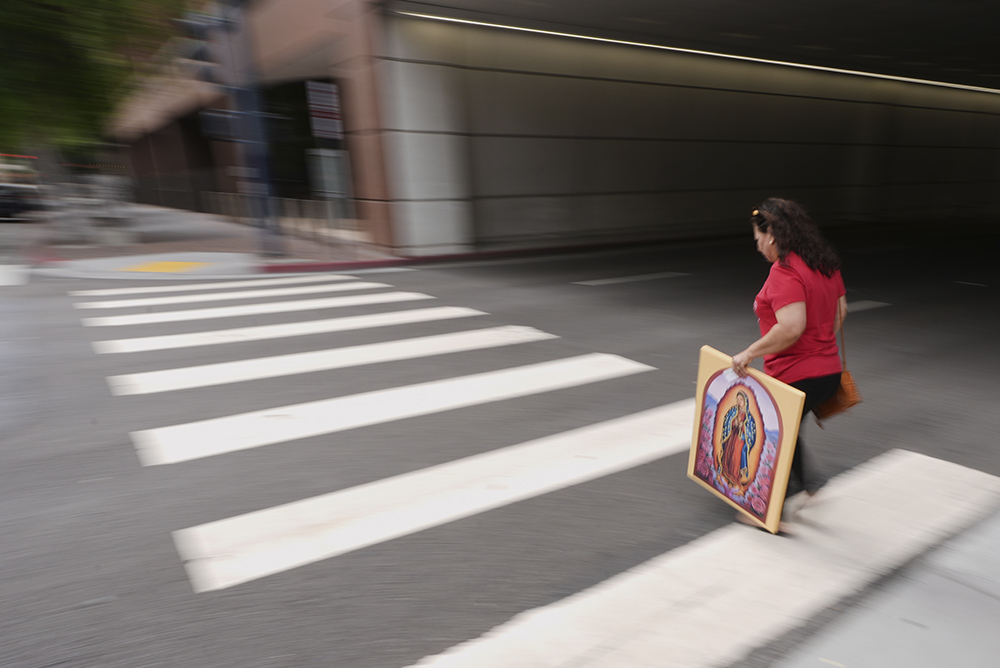
A woman carries an image of the Virgin of Guadalupe after an interfaith group led by San Diego Bishop Michael Pham entered a federal building to be present during immigration hearings June 20, 2025, in San Diego. (AP/Gregory Bull)
The bishops' defense of migrants strengthened over the course of the year. At the beginning of 2025, people did not know what to expect. More than one bishop expressed the hope that U.S. President Donald Trump would essentially do what he did the first term: deport people who would likely be deported by any administration, build some more wall, but certainly not engage in the kind of wholesale attack on migrants we have seen. As the scope of the assault became evident, bishops began to pushback. The most notable response came from San Diego Bishop Michael Pham, who went to the local courthouse where Immigration and Customs Enforcement agents had been detaining migrants who were following the rules, trying to regularize their status and showing up for their court-ordered appearances. When the bishop got there, the ICE agents "scattered." Pham then launched a ministry to make sure migrants are always accompanied by someone representing the Catholic Church.
Before the year was out, the bishops issued a rare joint statement during their autumn plenary meeting in Baltimore. The statement was strengthened by an amendment from Chicago's Cupich, stating: "We oppose the indiscriminate deportation of people." The statement was further strengthened by the decision to produce a video of different bishops reading it. This video broke through on social media in ways bishops' statements do not typically achieve.
The bishops' conference meeting was a mixed bag. The election of Oklahoma City Archbishop Paul Coakley as president of the conference keeps that office in the hands of those who have presided over the diminishment of the conference. Ever since then-Archbishop Timothy Dolan defeated Bishop Gerald Kicanas for the bishops' conference presidency in 2010, the conference has gradually become a shell of its former self. On the other hand, four of the six bishops elected as committee chairs are plainly more supportive of the renewal efforts begun by Francis and being continued by Leo.
There was also a bit of good news about Mass attendance. A study by Georgetown's Center for Applied Research in the Apostolate indicated the percentage of Catholics attending weekly Mass had almost returned to pre-pandemic levels. This confirms anecdotal information that people are returning to church, including more young people.
2025 was, then, an eventful year. It was hard to say goodbye to Francis, but thrilling to witness the election of Leo. The recent appointments of bishops bode well. The conference managed a decent statement on the plight of migrants. And more people are apparently coming to church. On balance, the events of the year lived up to the theme of the Jubilee: It was a year of hope.