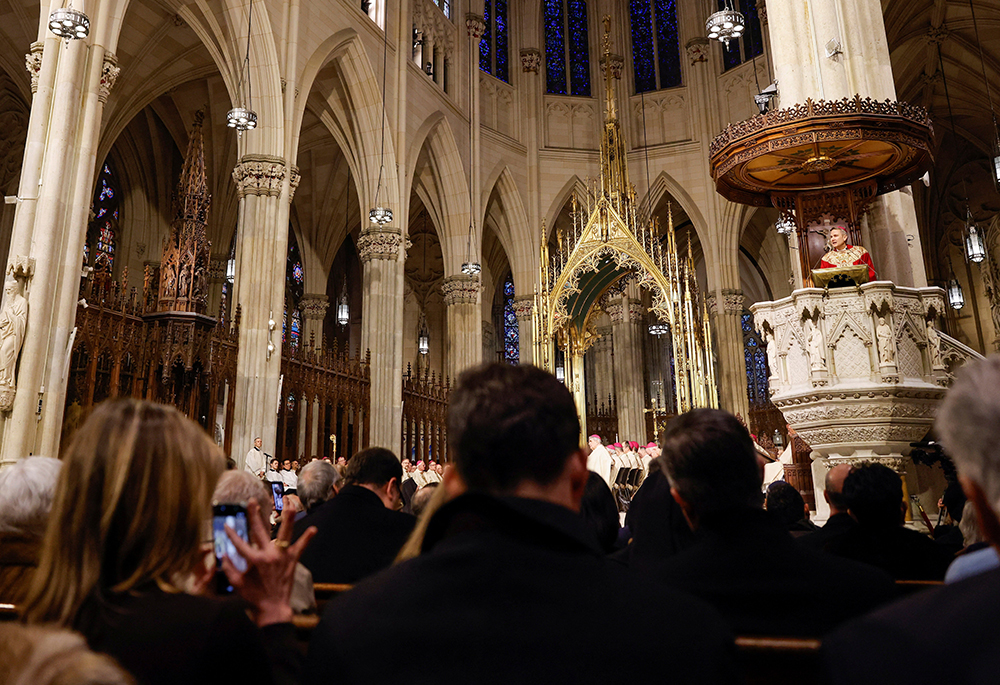
Archbishop Ronald A. Hicks delivers the homily during his installation Mass as the new archbishop of New York at St. Patrick's Cathedral in New York City Feb. 6, 2026. (OSV News/Stefan Jeremiah pool via Reuters)

by Michael J. O'Loughlin
NCR executive editor
New York's new Archbishop Ronald Hicks' relative youth is what struck me most during last week's press conference. At 58, Hicks stands out among leaders, especially compared to the gerontocracy that seemingly governs our country. Perhaps age is nothing but a number, but Hicks's appointment seems like it embodies something more, a shift from another era in the church, one that Pope Francis felt eager to close.
Hicks, who grew up near Chicago just blocks away from where Pope Leo XIV once called home, is unlikely to develop the larger-than-life personality cultivated by his predecessor, Cardinal Timothy Dolan. A fixture on Fox News, Dolan's backslapping demeanor was certainly welcomed by some segments of New York Catholicism. From my vantage point during Friday's Mass (Feb. 6), sitting next to the high altar at St. Patrick's, that was clear. When the cardinal walked out ahead of Mass, rows and rows of priests dressed in white vestments broke into spontaneous applause. Dolan soaked it in. (Some New York City leaders seem to appreciate Dolan's style, as New York's police commissioner, Jessica Tisch, is expected to appoint him a leader of the department’s chaplaincy unit.)
But Hicks' style — more subdued and mirroring Pope Leo — might be what the church and the world needs today.
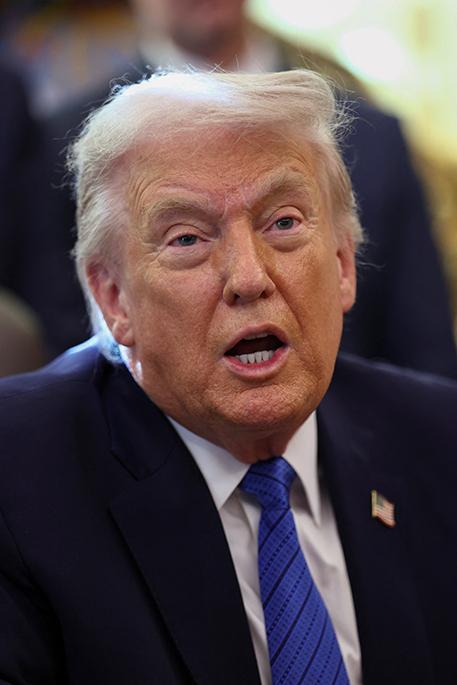
U.S. President Donald Trump speaks in the Oval Office at the White House in Washington Jan. 30, 2026. (OSV News/Reuters/Kevin Lamarque)
Consider this: the morning of Hicks' installation, President Trump was dealing with blowback, even from within his own party, to racist images in a video posted to his social media in the middle of the night; Trump said he did not see the images before they were posted. Later that day, Hicks began his homily in Spanish, praised the multicultural crowd that he said represented the best of New York — and even quoted Bad Bunny, the Puerto Rican entertainer whose halftime headlining provoked so much controversy on the political right. (In the end, Bad Bunny used his halftime show to ask for God's blessing on America and to offer a message of unity: "The only thing more powerful than hate is love.")
Dolan's style was something of a throwback to another era in New York Catholicism, when the church counted among its ranks a larger share of the population and commandeered the media about all sorts of political and cultural debates. When John O'Connor was installed as archbishop in 1984, lining up to receive Communion were the governor and both U.S. senators, with New York's mayor seated in a front pew. That's no longer the case, perhaps evidenced by the absence of most of New York's major political leaders last week. Mayor Zohran Mamdani spent Friday morning at an interfaith breakfast and then meeting with city officials about a cold weather snap; he later posted a congratulatory note to Hicks on X.
Advertisement
While the New York Daily News called the lack of attendance by Mamdani a "snub," perhaps an archbishop with a more subdued affect may better reflect the reality of a more humbled church?
Hicks seems eager to transcend some of the divisions that have plagued the church in recent years, and he has experienced firsthand the realities of a church that will have to do more with less, having completed a controversial round of parish closings and mergers as bishop of Joliet, Illinois. He has the respect of his fellow bishops, who elected him in 2024 to lead the Committee on Clergy, Consecrated Life and Vocations.
Hicks said in his homily Jesus calls on the church to be not a country club, but a missionary endeavor.
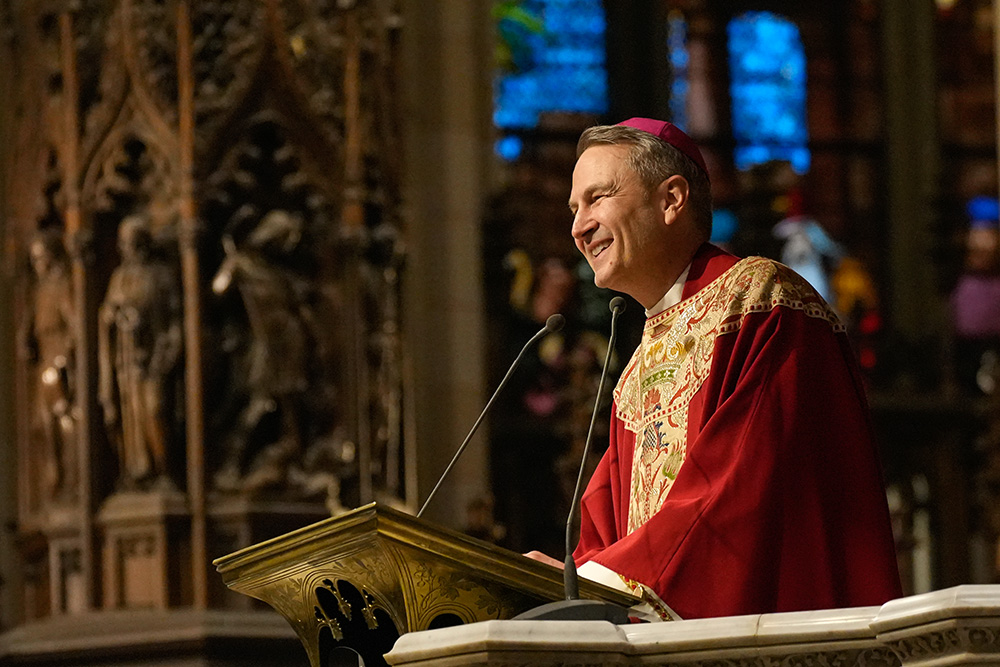
Archbishop Ronald Hicks smiles as he delivers the homily during his installation Mass as the new archbishop of New York at St. Patrick's Cathedral in New York City Feb. 6, 2026. (OSV News/Gregory A. Shemitz)
"We exist to follow Jesus, who fed the hungry, healed those ill in body and spirit, rejected hatred and proclaimed love," he said. What does that look like? Hicks said:
A church that takes care of the poor and the vulnerable. A church that defends, respects and upholds life, from conception to a natural death. A church that cares for creation, builds bridges, listens synodally, protects children, promotes healing for survivors and for all those who have been wounded by the church. A church that shows respect for all, building unity across cultures and generations.
Catholics in New York and elsewhere are searching for clues about how Hicks might govern, insight into where he stands on political, cultural and ecclessial questions.
The biggest clue came, perhaps, from Hicks himself, when he thanked Chicago's Cardinal Blase Cupich, whom Hicks called a mentor. Cupich is, of course, known as one of the closest allies of Francis and is celebrated by Catholics on the left both for his defense of Catholic social teaching and his behind-the-scenes maneuverings as a member of the Dicastery for Bishops that have placed other Francis allies in key positions. Following Mass on Friday, at a reception inside the huge ballroom at the New York Hilton Midtown, it was evident that Hicks is a proud son of Chicago, with a who's who of Chicago Catholicism on hand to celebrate Hicks' rise to "America's archbishop."
During an evening prayer service before his installation, Hicks riffed on the soaring statue of Atlas situated directly across the street from St. Patrick's, contrasting it with a small statue of the child Jesus behind the grand altar, easily holding the whole world in his hands.
As NCR's Camillo Barone summed it up in his report from inside the cathedral, "Atlas struggles; Christ does not."
For his part, Hicks stated: "I do not want to be Atlas." That's promising, as New York Catholics are likely seeking a leader more strongly resembling a shepherd.