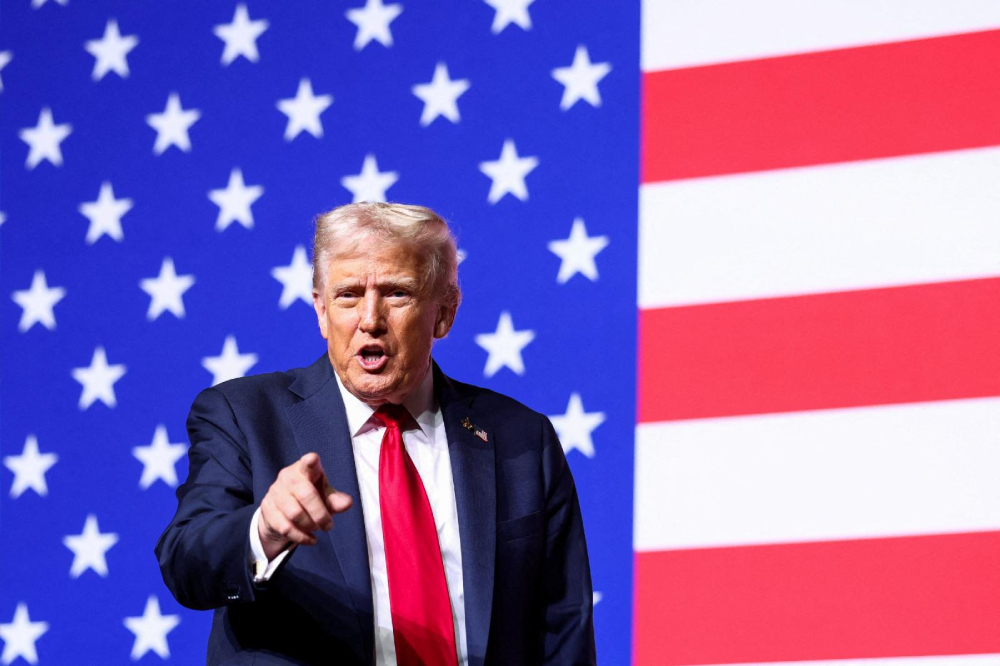
U.S. President Donald Trump gestures after speaking during a meeting of senior military leaders convened by U.S. Defense Secretary Pete Hegseth, at Marine Corps Base Quantico in Virginia Sept. 30, 2025. In an unprecedented gathering, almost 800 generals, admirals and their senior enlisted leaders were ordered into one location from around the world on short notice. (OSV News/Reuters/Kevin Lamarque)

The Washington Post reported this week on the various ways President Donald Trump is using the power of his office to punish states led by Democrats and reward those led by Republicans.
Trump-appointed U.S. Attorneys have secured indictments against former FBI director James Comey and New York Attorney General Letitia James after Trump wrote to U.S. Attorney General Pam Bondi asking why his enemies had not been prosecuted in a "Dear Pam" memo that was mistakenly posted on social media.
In July, administration lawyers told a judge within the Merit Systems Protection Board that it can fire career civil servants at will. Not since the adoption of the Pendleton Act of 1883 has a president claimed such power. President Chester Arthur, one of those late 19th century occupants of the White House, whose names make for a good trivia game, signed the act into law.
And, as I wrote about previously, Trump and Secretary of War Pete Hegseth told generals and admirals that if they disagreed with the administration's policies, they should resign.
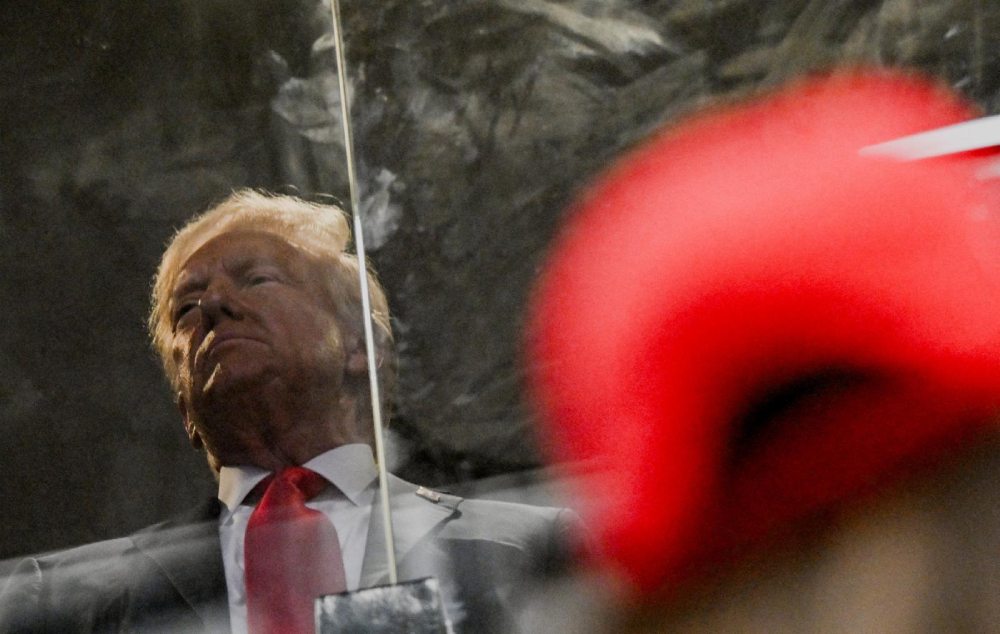
U.S. President Donald Trump attends a memorial service for slain conservative activist Charlie Kirk at State Farm Stadium in Glendale, Ariz., Sept. 21, 2025. Kirk, founder of Turning Point USA, was fatally shot Sept. 10 during an event at Utah Valley University in Orem. (OSV News/Reuters/Caitlin O'Hara)
Politics is about drawing distinctions. And, in America, electoral politics has often been spectacularly nasty. One of the most vitriolic campaigns in history pitted two of our nation's greatest Founding Fathers against each other in 1800: John Adams and Thomas Jefferson. But when Jefferson won that election, and took the oath of office, he used his inaugural address to assert: "All, too, will bear in mind this sacred principle, that though the will of the majority is in all cases to prevail, that will to be rightful must be reasonable; that the minority possess their equal rights, which equal law must protect, and to violate would be oppression. Let us, then, fellow-citizens, unite with one heart and one mind…. We are all Republicans, we are all Federalists."
Such pleas for national unity are not in the current president's repertoire.
Trump's presidency has corrupted everything that is good and shared about our political life, and he seems to relish his own divisiveness. Even at the memorial service for Charlie Kirk, the president showed his smallness, saying, "[Kirk] was a missionary with a noble spirit and a great, great purpose. He did not hate his opponents. He wanted the best for them. That's where I disagreed with Charlie. I hate my opponent and I don't want the best for them." At a memorial service.
Advertisement
Trump's corruption will destroy many of the things that helped keep the country stable and sane for decades and even centuries. One thing is clear: On the morrow of Trump, the restoration of democratic norms must take precedence over any kind of payback. The only way to thread that needle is by a recalibration of the balance of powers. Congress must reclaim its role, which has been diminishing every year since the Second World War, as the first branch of government. That will also require a restoration of some degree of collaboration between the two parties. They must avoid zero-sum approaches and recognize that the future of American democracy rests with their ability to achieve compromises that serve the people. And it will require drafting legislation that will work around the "unitary executive" theory championed by the current Supreme Court.
Our democracy is on the ropes, but it has not been counted out. Trump makes mistakes: His attack on late night TV backfired as even some of his followers expressed dismay at the prospect of government censorship. The Epstein files may yet cripple him in profound ways. The Democrats should win back the House next year, giving them a measure of power they currently lack. The times in which we live are perilous, but not hopeless.