(Pixabay/Rilson S. Avelar)

by Daniel P. Horan
One of the things I have always appreciated about the Confiteor prayer during the penitential act at the beginning of Mass is the way it acknowledges the complexity of sin and moral culpability. In addition to the sinful things we have done, thought and said, we also confess to the sinful acts of omission, or those things that we should have done but failed to do. It is often easier to recognize when we have actively or deliberately harmed our relationship with others or God than it is to hold oneself accountable for the missed opportunities, the avoidance of responsibility or the refusal to get involved.
While the sins of commission and omission we acknowledge in the Confiteor account for a good amount of what we are morally culpable for, what about those times when we willfully refuse to know something, see something or acknowledge something real and important?
Within the Catholic moral tradition there is a distinction between two kinds of ignorance. Invincible ignorance is the lack of knowledge through no fault of the individual. However, vincible ignorance is a lack of knowledge that could be avoided by an individual's reasonable effort and will, but the individual refuses to make an effort to know.
This latter kind of ignorance, sometimes referred to as willful ignorance, is a sinful phenomenon that I have been thinking about a lot recently because it's not discussed as much as I believe it should be in our "information age" of social media and widespread internet access. When we have access to so much information and verifiable knowledge (alongside the false information, AI slop and recycled memes), why is it that some people go to such great lengths to avoid knowing about certain truths, experiences and realities?
In his 1886 book Beyond Good and Evil: Prelude to a Philosophy of the Future, the German philosopher Friedrich Nietzsche explores what he calls the "will to ignorance" or the drive to not know. Nietzsche says that it can be understood as "the occasional will of the spirit to let itself be deceived" in an effort to avoid the truth. According to Nietzsche, not only does will to ignorance mislead the vincibly ignorant individual, but it can also create the conditions for spreading untruths and readying "the spirit to deceive other spirits and to dissimulate in front of them."
When we have access to so much information and verifiable knowledge, why is it that some people go to such great lengths to avoid knowing about certain truths, experiences and realities?
What results is the masking of verity, the cloaking of reality, the suppression of facts in an effort to make oneself feel comfortable or assured, or merely to avoid being bothered by inconvenient truths.
Reflecting on Nietzsche's psychological and spiritual insight in his excellent 2024 book Ignorance and Bliss: On Wanting Not to Know, the historian Mark Lilla writes that this will to ignorance that Nietzsche described can affect all kinds of people "depending on their mood or circumstances." However, he notes, "there are those whose basic psychological posture, so to speak, is to resist new knowledge."
It is this latter type of person — whose "basic psychological posture" is to "resist new knowledge" — that I have been thinking a lot about recently, because I believe naming this phenomenon could help make sense of some of the most egregious forms of discrimination, violence and destruction in both political and ecclesiastical life.
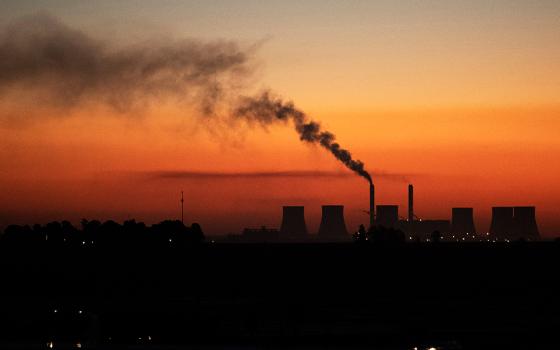
Take, for example, the Trump administration's dismantling of environmental protection policies and the recent decision to pull the United States from the Paris climate accord and dozens of other organizations and treaties related to climate change and ecological protection. President Donald Trump claimed that he authorized this action because these international agreements and efforts "no longer serve American interests."
And yet, Americans still live on the same planet as the rest of the world's population, breathe the same air, need the same sources of clean water and farmable land.
Advertisement
These sorts of actions are not taken because those in power are relying on the best information or are actively seeking the truth about our world and its condition. On the contrary, these kinds of decisions are made from a place of willful ignorance and a desire to not know the unsettling and scientifically sound facts about climate change and its impacts on the human and more-than-human world.
A similar sort of vincible ignorance grounds the rising transphobia and general hatred toward and discrimination against the broader LGBTQ+ community in this country. This is seen not only in the rhetoric and policies of the federal government and some states, but also in the recently adopted Ethical and Religious Directives for Catholic Health Care Services by the U.S. Conference of Catholic Bishops.
In both cases, we have politicians and religious leaders alike who refuse to acknowledge uncomfortable truths, who willfully ignore the experiences and realities of millions of their neighbors and siblings, who preemptively dismiss sound research and scholarship, and instead repeat comforting falsehoods or outmoded theories to shore up their sense of moral righteousness and authority.
Rather than embrace the humility necessary for ongoing, lifelong conversion in faith and knowledge, such politicians and religious leaders choose to stunt their moral and intellectual growth while demonizing the vulnerable people who are most affected by such ignorance. Why is this the case?
As Lilla notes, the "most obvious resistance is rooted in fear." He later adds, "The will to ignorance feeds off of pride and our fear of toxic truths. But it can also, paradoxically, feed off of our desperation to find the One Great Truth that will make all future inquiries unnecessary."
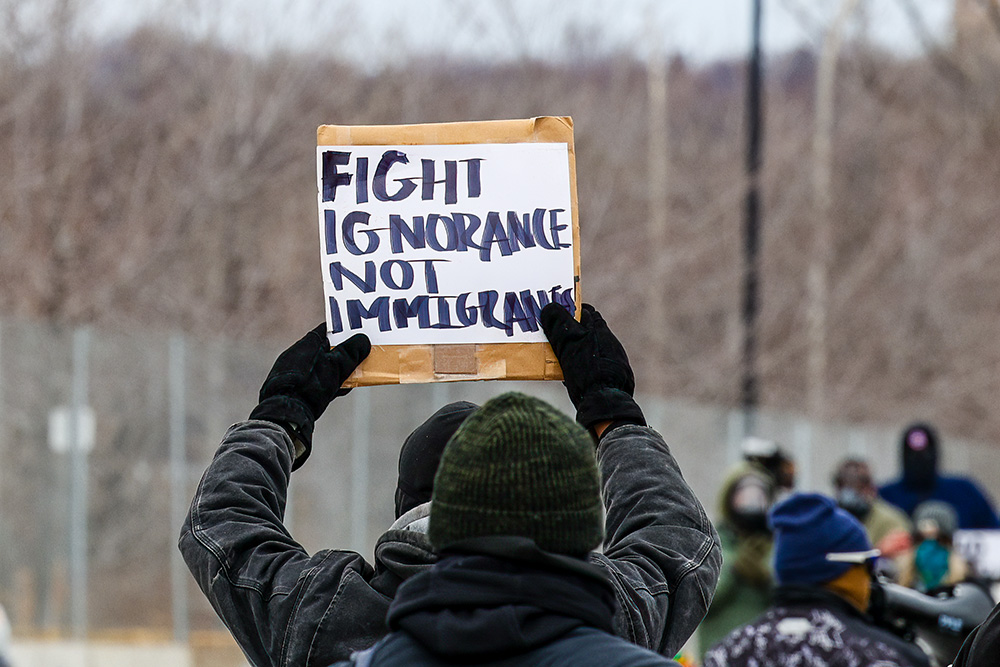
A protester holds a handmade sign reading, "Fight Ignorance Not Immigrants," during a demonstration at Fort Snelling, Minnesota, Jan. 15, 2026. (Dreamstime/Ruhuntn)
While certainly different in many ways, these willfully ignorant politicians and the religious leaders share in common a deep fear of complexity and change.
This is why so many politicians claim a moral right to hunt, detain and deport undocumented people in American cities, despite the simple truth that this nation has been and continues to be built by immigrants.
This is why so many religious leaders scream and yell about the unchangeability of doctrine or ecclesiastical discipline, despite the obvious history of the development of doctrine.
It is no wonder that both political and religious leaders also lean into nostalgic rhetoric and imagination. Some politicians and their followers proclaim their desire to "Make America Great Again," while many religious adherents fight about things like the Latin Mass or insist on the inadmissibility of women to the diaconate, claiming that these are the ways things have always been.
As much as it can seem that these types of people are attempting to hold onto the past or secure some unalterable truth, Lilla explains, "The nostalgic does not so much want to recover something as to lose something. They want to flee what to them tastes like toxic knowledge about the world and themselves."
And so, for those times when we cannot bring ourselves to accept uncomfortable truths that signal change, complexity and development, we may also need to ask God for forgiveness. In both society and church, we ought to examine our consciences not only for what we have done and failed to do, but also for those times when we simply refuse to know. It's never too late to repent and begin again.