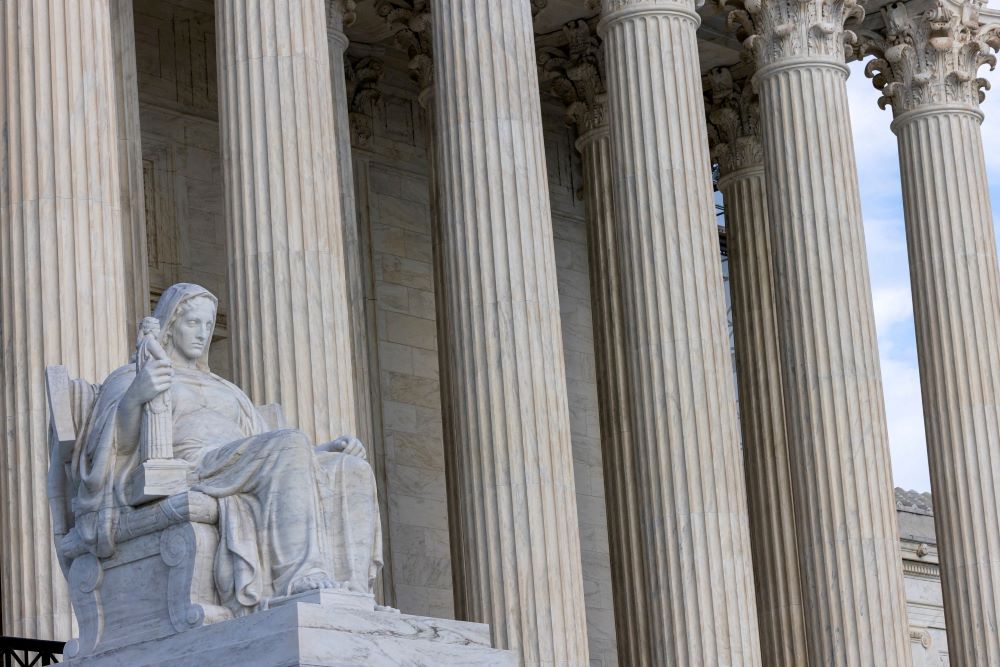
A view of the U.S. Supreme Court in Washington, June 29, 2024 (OSV News/Reuters/Kevin Mohatt)

It is not every day that you see most of the U.S. Supreme Court justices apparently in agreement, but they did just that on Dec. 2 during oral arguments in the case First Choice Women's Resource Centers, Inc. v. Platkin.
The case involves a subpoena issued by New Jersey Attorney General Matthew Platkin seeking information about the donors to a faith-based pregnancy crisis center. Abortion rights groups and their political allies like Platkin allege that crisis pregnancy centers provide what the abortion rights advocates consider misleading information about their services, and are trying a variety of ways to shutter these clinics, including issuing a "consumer alert." The advocates worry that women seeking an abortion might mistakenly go to a pregnancy crisis center and be convinced not to procure an abortion.
New Jersey is not alone. Massachusetts also issued a "Warning about Crisis Pregnancy Centers" on the state website. Illinois passed a law in 2023 specifically forbidding crisis pregnancy centers from giving "misinformation" to clients.
If you don't like crisis pregnancy centers, don't donate to them and don't recommend them.
To be sure, misleading another person is bad. It is, in fact, an intrinsic evil, although it is not necessarily a mortal sin. If a robber breaks into your home, you are free to mislead him concerning the whereabouts of the family silver. But the abortion debate has been characterized by euphemisms for so long that words like "misinformation" are usually carrying water for one side of the debate or another. For Catholics, the phrase "terminating a pregnancy" is misleading because we believe abortion kills a small unborn child.
The issue before the court is also not really about abortion, but about First Amendment rights. In 2018, the U.S. Supreme Court struck down a California statute that required crisis pregnancy centers to inform women that the state's Medicaid program would cover most of the costs of an abortion. The justices held that the government could not force such speech without violating the First Amendment's free speech protections.
The current case is about a different, enumerated First Amendment right: association. According to Amy Howe at the invaluable SCOTUSblog, most of the justices were skeptical of New Jersey's claims that the subpoena would not have a chilling effect on donors who have a right to associate themselves and their money with whichever cause they wish.
Howe writes of an exchange between the chief justice and attorney Sundeep Iyer, who represented New Jersey in oral arguments:
"You don't think," [Roberts] told Iyer somewhat incredulously, "it might have an effect on future potential donors … to know that their name, phone number, address, et cetera could be disclosed as a result of" a subpoena like the one that First Choice received?
When New Jersey's attorney argued that donors were protected because a court would have to enforce the subpoena, Justice Elena Kagan expressed skepticism that an ordinary person would be "particularly reassured by the fact." Justice Katanji Brown Jackson, whom Howe said was more sympathetic to New Jersey's argument than the other justices, nonetheless seemed to lose some of that sympathy when Iyer admitted that the state also contended the crisis pregnancy center would be precluded from seeking redress in federal courts if the state courts had already intervened, that the state was arguing "heads I win, tails you lose."
Advertisement
The case not only scrambled some of the usual alliances among the justices, but also among special interest groups. The American Civil Liberties Union, which has been one of the most vocal champions of abortion rights in recent years, filed an amicus brief siding with the crisis pregnancy centers. The ACLU argued the right to seek redress of any infringement of a First Amendment right in federal courts was the key issue.
The court will likely overturn the subpoena. In 2021 the court ruled on a similar case from California. That was the correct ruling then and overturning New Jersey's overreach is the correct thing to do now. Issues, even contentious ones like abortion, perhaps especially contentious issues, must be argued within the constitutional and legal norms of our democracy. If you don't like crisis pregnancy centers, don't donate to them and don't recommend them. But no one, including the great state of New Jersey, has the right to inhibit the right to association of donors with organizations they favor by threatening subpoenas that would disclose their personal information.