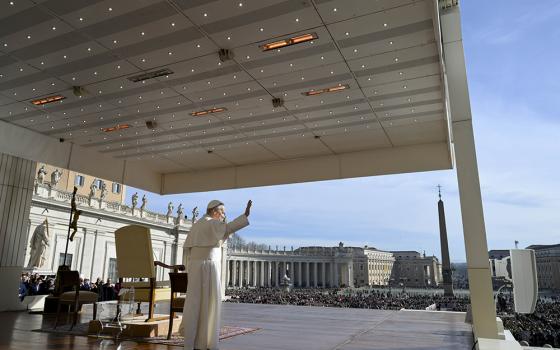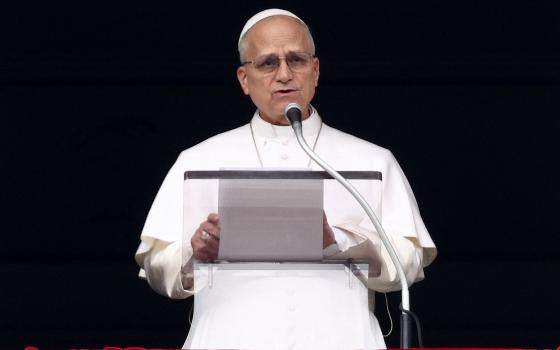
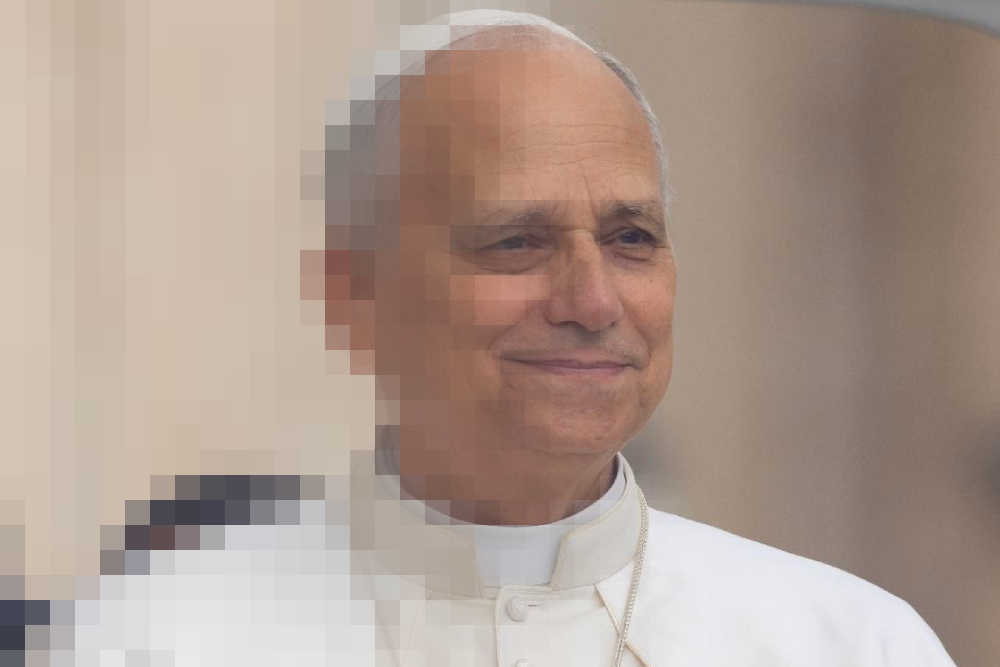
Pope Leo XIV smiles as he rides the popemobile around St. Peter's Square at the Vatican before his weekly general audience Sept. 24, 2025. (CNS/Pablo Esparza)

by Scott Hurd
"I may be AI generated," gushed digital avatar Tilly Norwood at September's Zurich Film Festival, "but I'm feeling very real emotions right now. I am so excited for what's coming next!"
Tilly is an AI-generated character developed by Xicoia, a company promoting her as the future face of acting. Tilly's introduction, however, elicited a firestorm of pushback from those who, unlike "her," are decidedly not "excited for what's coming next." And they can point to Pope Leo XIV's words for backup.

An image of AI-generated actor Tilly Norwood. (Particle6 Group/Xicoia/Instagram/Wikimedia Commons, public domain)
My eldest daughter, a New York-based actress, texted me as soon as she learned about Tilly. "Acting is all about being a human!" she protested. Her sentiments were echoed across the film and theater worlds. "'Tilly Norwood' is not an actor," insisted the SAG-AFTRA actors' association. "The union is opposed to the replacement of human performers by synthetics."
Pope Leo appears to agree. "We must be vigilant in order to ensure that technology does not replace human beings," he said to an October conference of media professionals, echoing an earlier concern that it would be "a big problem" were we to "automate the whole world."
Of course, it's not just actors who feel threatened by AI technology. If Tilly Norwood eliminates acting jobs, some might fear, is mine at risk too? The media is filled with reports about jobs on the chopping block from AI and employers doing the chopping. Young workers are especially vulnerable and, given AI's disruptions, parents find themselves stumped on what career advice to give their kids.
"The 'incredible rate' of AI advancement is hurtling us toward a future many don't want." —Scott Hurd
The consulting firm McKinsey & Co. predicts that AI could eliminate 400 to 800 million jobs in the next five years. That number apparently includes workers at McKinsey itself. Despite both seeing AI as an "existential" threat and pivoting to consulting about AI, McKinsey plans to trim their workforce while introducing 12,000 AI "agents."
Big tech has done plenty to fan the flames of fear. Chainsaw-wielding "Dogefather" Elon Musk, for instance, traumatized federal workers as he slashed their jobs with the Department of Government Efficiency (DOGE) to make way for AI. Sam Altman, CEO of ChatGPT's parent organization, OpenAI, claims that AI will wipe out entire categories of jobs. Similarly, Anthropic CEO Dario Amodei predicts "mass unemployment" due to AI's "moving very quickly."
Anxiety about AI is exacerbated by such rapid change, as Pope Leo himself appreciates. In an interview with Elise Ann Allen of Crux, he describes the "incredible rate" of AI's advancement as worrisome. "Every time I try to say something (on AI), then I read the news the next day, and artificial intelligence has jumped further ahead," he lamented.
The "incredible rate" of AI advancement is hurtling us toward a future many don't want. "Americans loathe AI," blared one MSN headline, and they certainly don't share Silicon Valley's enthusiasm for a smarter-than-human AI "superintelligence." Even having "AI" in a product's description is enough to turn off customers, according to the Washington Post.
"[AI] destroys the purpose of humanity," declared a student in that Post article. Pope Leo shared a similar sentiment in his Crux interview, expressing concern that, with AI saturation, we'll "lose sight of the value of humanity." He took special aim at the "extremely rich people who are investing in artificial intelligence" who are "totally ignoring the value of human beings and of humanity."
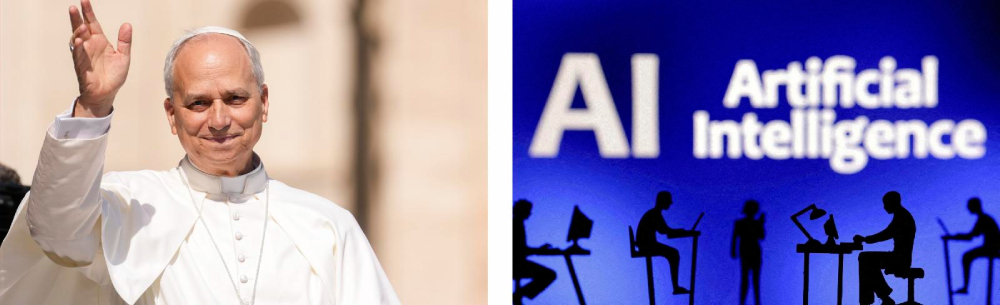
Pope Leo XIV is pictured in a June 4, 2025, alongside an AI illustration. (CNS/Lola Gomez/Reuters/Dado Ruvic)
But human beings are starting to push back — not just against AI but the entire mindset that, in Leo's words, "the digital world is the be-all and end-all." Nearly half of all young adults in the UK long for a world without the Internet, and Gen Z, fearing overreliance on new technology, are embracing vinyl records and CDs. They're also discovering the joys of writing with pen and paper, and taking up "grandma hobbies" such as knitting, crocheting, gardening and jigsaw puzzles.
Resistance to AI itself was on full display late this summer in the public blowback and defacing of many of the 11,000 New York subway ads for "Friend," a wearable pendant that records everything a user says and simulates companionship by responding with AI-generated texts. Protest messages scrawled on posters included "AI wouldn't care if you lived or died," "stop profiting off of loneliness" and other commentaries too colorful to be quoted here.
"Make a real friend" was another protest scribbled on the subway ads, and it hearkens to the growing frustration over tech's efforts and abilities to blur the distinction between what is real and what is fake. Thanks to AI's capacity to sound conversational, mimic voices and generate believable images, we are entering what Leo and others have called a "post-truth" world.
Such falsehoods are everywhere. In "chatfishing," deceptively suave texts from ChatGPT are used to lure in unsuspecting romantic partners. Real estate ads transform fixer-uppers into show-stoppers. Videos of dead celebrities haunt their survivors, and families and friends adopt secret codewords to ensure phone calls for help or money aren't malicious scams.
Advertisement
AI videos pollute the internet. Some are obviously fake, such as one President Trump posted of himself wearing a crown and dropping excrement from a fighter jet on peaceful "No Kings" protesters. Other videos are strikingly real, threatening to amplify political divisions and, as Leo has warned, become a seedbed for "totalitarian rule."
Leo himself has been in so many fake videos that the Vatican has given up responding to them all. They've depicted Leo announcing his resignation, hailing the Antichrist's arrival and delivering a direct warning from God about Trump. Some have hundreds of thousands of views.
It's no wonder, then, that Leo nixed the suggestion that an AI version be made of him so anyone could meet with "the pope" and get answers to their questions. "If there's anybody who should not be represented by an avatar," he said, "I would say the pope is high on the list." Why? "[B]ecause you do end up creating a fake world and then you wonder, what is the truth?"
To his point, perhaps AI's greatest threat is that it will continue to fill our world with what is fake. At Tilly Norwood's introduction, "her" creator exclaimed: "The age of synthetic actors isn't 'coming' — it's here." But that doesn't mean we need to accept it. We can make choices about what we watch, support, consume, create and believe. Pope Leo encourages us: "[W]e are not destined to live in a world where truth is no longer distinguishable from fiction."