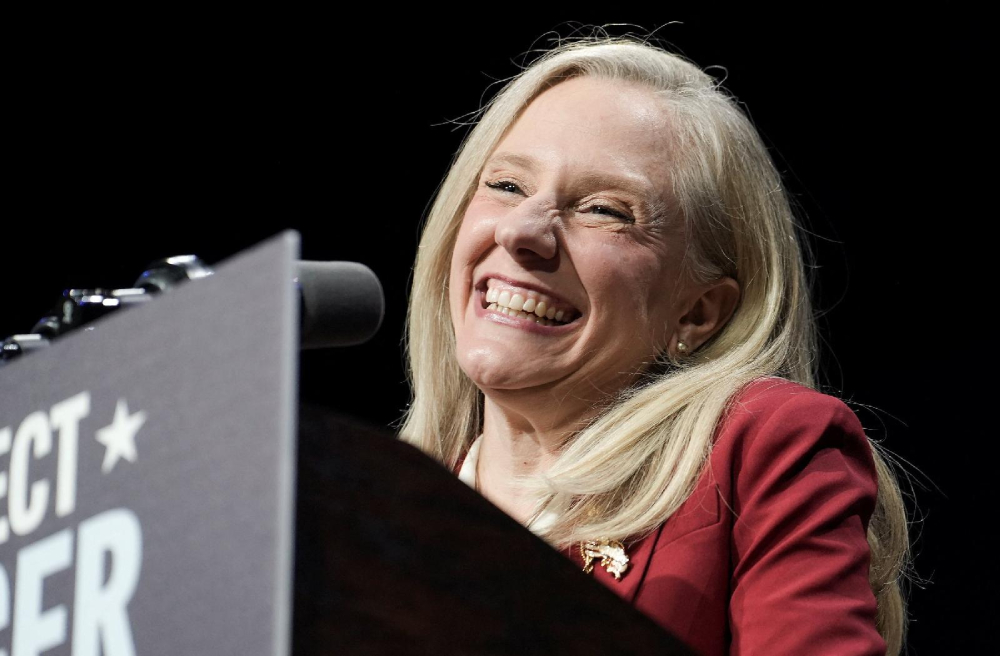
Democrat Abigail Spanberger reacts while giving her victory speech over Republican Winsome Earle-Sears in Virginia's race for governor in Richmond Nov. 4, 2025. (OSV News/Reuters/Jay Paul)

by Daniel P. Horan
The axiom "all politics is local," which the former Democratic Speaker of the U.S. House of Representatives Tip O’Neill popularized nearly a century ago during his first political campaign, appears to be the most reasonable cipher to help us make sense of the Democratic party’s sweeping success last week in a range of off-year elections across the country.
Political pundits and strategists have spent the last week and a half attempting to find a singular rationale that could explain how a famously progressive Democratic Socialist could win the mayoral race in New York city, a former CIA agent and congressional representative could win the gubernatorial race in Virginia to become the first woman to hold that office, and two Democratic candidates for state-wide Georgia Public Utility Board could win their elections by nearly 60% of the vote — all in the same night. In Pennsylvania, Buck’s County elected its first-ever Democratic District Attorney, and Democrats won state-wide judicial elections there too.
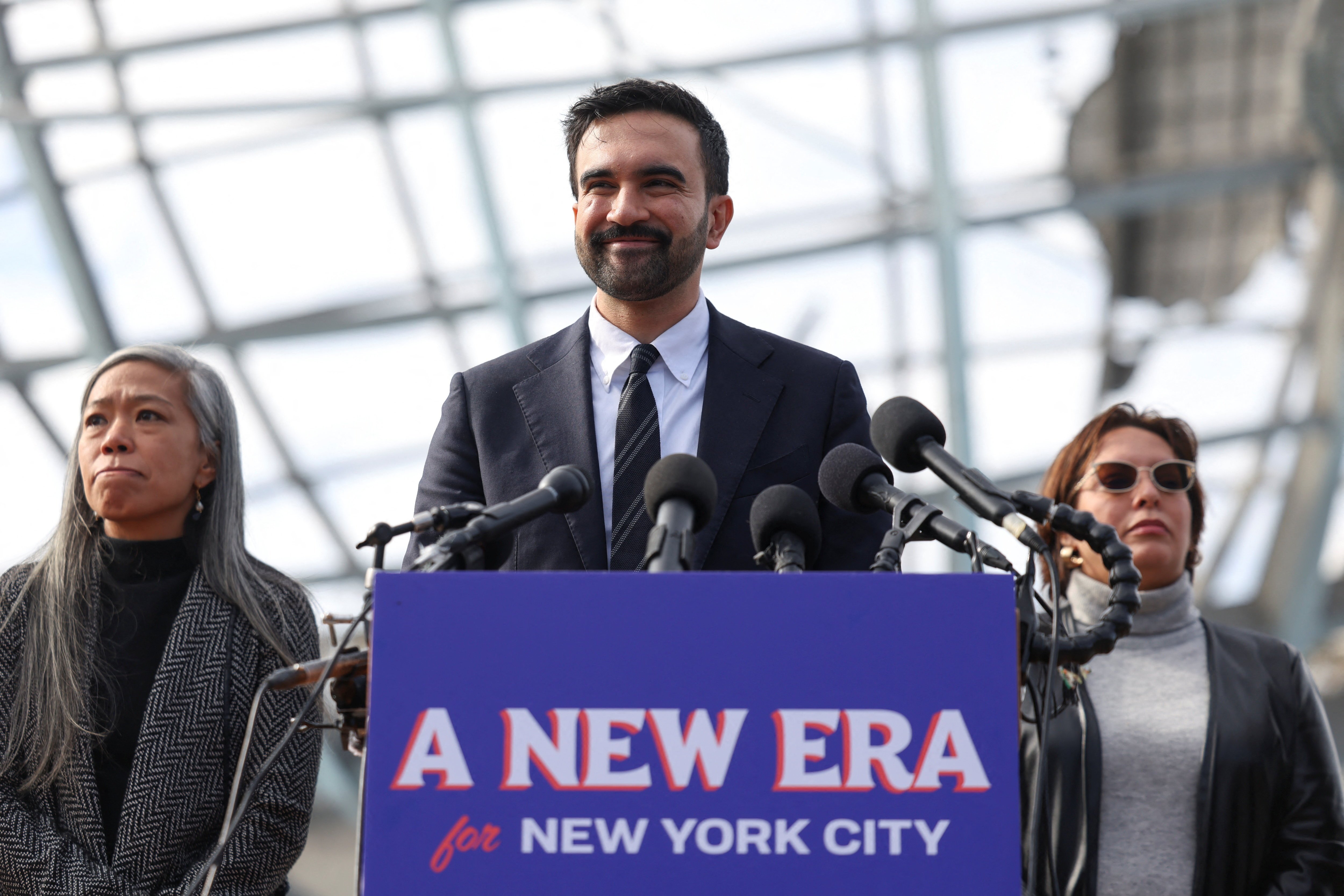
New York City Mayor-elect Zohran Mamdani speaks during a news conference at the Unisphere in the Queens borough of New York City Nov. 5, 2025. (OSV News/Reuters/Kylie Cooper)
I could go on, rattling off landslide Democratic wins across locales in places as diverse as Mississippi, California, South Carolina, New York and Florida. Perhaps the biggest surprise is that there was no single playbook, set of talking points or issue to account for the impressive success. The only thing that many of these politicians and judicial candidates absolutely had in common was their affiliation with the Democratic party.
What struck me was how these successful Democratic candidates paid attention to the particular contexts and needs of their respective constituents. Rather than emphasize a top-down, national-party-platform approach, each political campaign focused on the needs of the electorate that would cast its vote for them and therefore elect this person to represent and govern for them.
While this strategy may seem obvious, for at least the last decade both major American political parties have veered away from O’Neill’s axiom of "all politics is local" and instead created their own hegemonic approach to politics as a litmus test for party orthodoxy — not to mention a gatekeeping mechanism.
For the Democrats, this has been a focus on the national party platform, which has been deployed in recent election cycles as the standard by which any prospective Democratic candidate or incumbent seeking reelection would be evaluated.
"Rather than try to find a shared thread or campaigning strategy that can be replicated everywhere in the country, we should be paying more attention to the particularity of the campaigns and their responsiveness to the needs and concerns of the respective communities they seek to serve." —Dan Horan
For example, as has been widely discussed during and since former Vice President Kamala Harris’s last-minute presidential campaign, her initial run for the office in 2019 included her embrace of positions and talking points widely viewed as unfavorable outside of the Democratic activist and pundit classes (one thinks of the slogan "defund the police," for example). She and many of her rivals found themselves adopting positions, policies or language that they did not authentically embrace but felt pressured to incorporate.
What this has amounted to is a form of gatekeeping by the national party that would allow for no departure from key platform positions. It’s hard to imagine, for example, a pro-life Democratic candidate running for congress or statewide office in 2020. Such a campaign could expect no support from the regional or national party, and likely face a well-funded primary opponent.
Whereas the Democrats increasingly ossified their positions into a kind of ideological hegemony from which no one could depart, the Republicans have been establishing their own brand: one centered around a cult of personality.
It’s fair to say that there is no longer a singular GOP party platform that is recognizable today. The hegemony that has taken hold of the Republican party has been one of an imperial sort, which is centered on the whims and pleasures of Donald J. Trump. Whether exercised explicitly or tacitly, the gatekeeping mechanism has been clear for the Republicans: endorse, flatter and appease Trump — or else.
The range of candidates the Republican party has put forward in race after race over the last decade show that the only position one is required to hold is fealty to Trump himself. This trumps (pun intended) any commitment to fiscal conservatism or social policy.
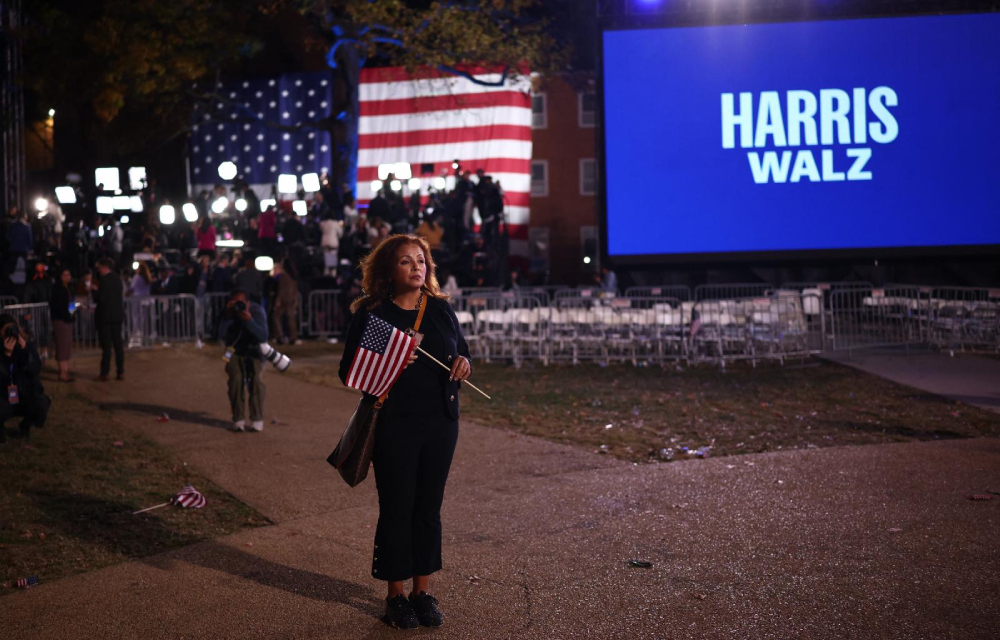
An attendee holds a U.S. flag at the conclusion of an Election Night rally for Democratic presidential nominee U.S. Vice President Kamala Harris at Howard University in Washington Nov. 6, 2024. Harris' Republican rival, Donald Trump, was elected the 47th president of the United States. (OSV News/Reuters/Daniel Cole)
Democrats have increasingly lost ground in both red and blue states in previous years, often because of the limitations imposed on prospective candidates by the party’s ideological hegemony; the reason Republicans lost so badly last week is because of their own. In both cases, but for different reasons, politicians have lost sight of the importance of locality and the real needs and concerns their constituents have on the ground.
This is why I have been so interested in what unfolded last Tuesday. Rather than try to find a shared thread or campaigning strategy that can be replicated everywhere in the country, we should be paying more attention to the particularity of the campaigns and their responsiveness to the needs and concerns of the respective communities they seek to serve.
I’m not the only one to make this observation and encourage this sort of shift in strategy and practice; the New York Times columnist Jamelle Bouie made a similar point in print and on podcasts recently. But the way I want to encourage thought about this shift comes less from the playbooks of political strategists and more from the principles of Catholic Social Teaching. I’m calling it "political campaign subsidiarity."
In short, subsidiarity is the principle that political and economic decisions should be made at the most local level possible, with higher levels of authority intervening only when the more local municipalities or communities cannot effectively handle the situation. The main idea is that those closest to the circumstances know the needs — and, likely, the best responses — better than those further removed from the context.
Advertisement
This principle appears in several encyclicals over the twentieth century, including by Pope Pius XI’s 1931 document Quadragesimo Anno, which was published on the 40th anniversary of Pope Leo XIII’s Rerum Novarum, "On the Condition of Labor."
Sixty years later, Pope John Paul II’s encyclical Centesiumus Annus reiterated the importance of subsidiarity in government, noting:
... the principle of subsidiarity must be respected: a community of a higher order should not interfere in the internal life of a community of a lower order, depriving the latter of its functions, but rather should support it in case of need and help to coordinate its activity with the activities of the rest of society, always with a view to the common good.
While the primary focus of the principle is governmental and economic organization and authority, the same idea can be adopted by political campaigns when approaching the development of platforms, messaging and, ultimately, legislation and advocacy.
This is not a case for political cynicism, whereby campaigns merely craft platforms and statements to pander to their electorates in order to get votes. Instead, politicians must get to know their constituencies and communities at the most personal level, listening to their voters sincerely and with an operating assumption that they know their own needs best.
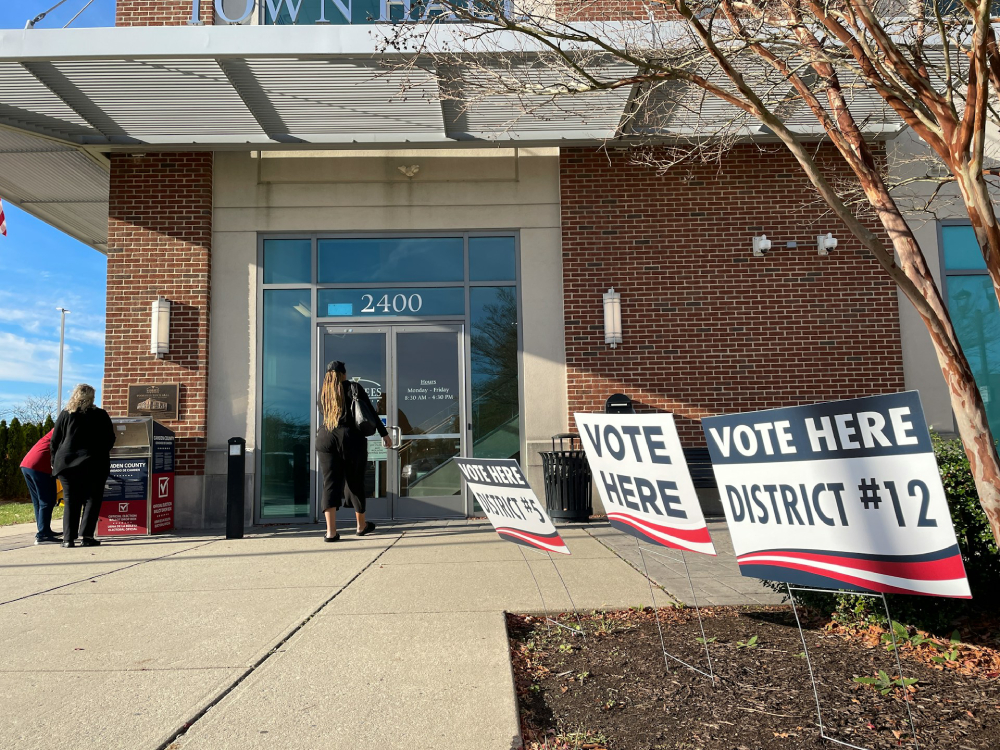
Such an approach would encourage elected officials to truly represent their constituents instead of representing a universal party platform or a single individual’s mercurial and selfish interests. Like the Democratic affiliation shared by the winners last week, there would still be a common party with whom to caucus, but this approach might create room for greater ideological diversity and space for debate, creativity and compromise. The Democratic caucus might resemble a more parliamentary style of collaboration in Washington.
Isn’t this how the Democratic party likes to think of itself: as a large tent, which welcomes a range of people and celebrates diversity? We need more candidates and campaigns like we saw last week, especially as we turn our attention to the 2026 midterm elections. The common good depends on it.